Proinflammatory humoral factors and their role in the pathogenesis of left ventricular hypertrophy in hypertension (literature review)
DOI:
https://doi.org/10.15587/2519-4798.2026.361623Keywords:
arterial hypertension, chronic low-grade systemic inflammation, pro-inflammatory humoral factors, left ventricular hypertrophy, diastolic dysfunction, myocardial fibrosis, prediction of cardiovascular complicationsAbstract
The aim of the research was to consider the role of chronic low-grade systemic inflammation and a list of pro-inflammatory factors (interleukins, chemokines, tumor necrosis factor alpha, adipocytokines, metalloproteinases and their inhibitors, growth and inflammatory factors, etc.) as predictors of the onset and progression of left ventricular hypertrophy and myocardial fibrosis in individuals with hypertension
Materials and Methods: keywords search of native and foreign sources of literature from scientometric databases Google Scholar, Clarivate, Web of Science, Scopus, PubMed and its analysis, considering data from modern European and Ukrainian guidelines of recent years was performed.
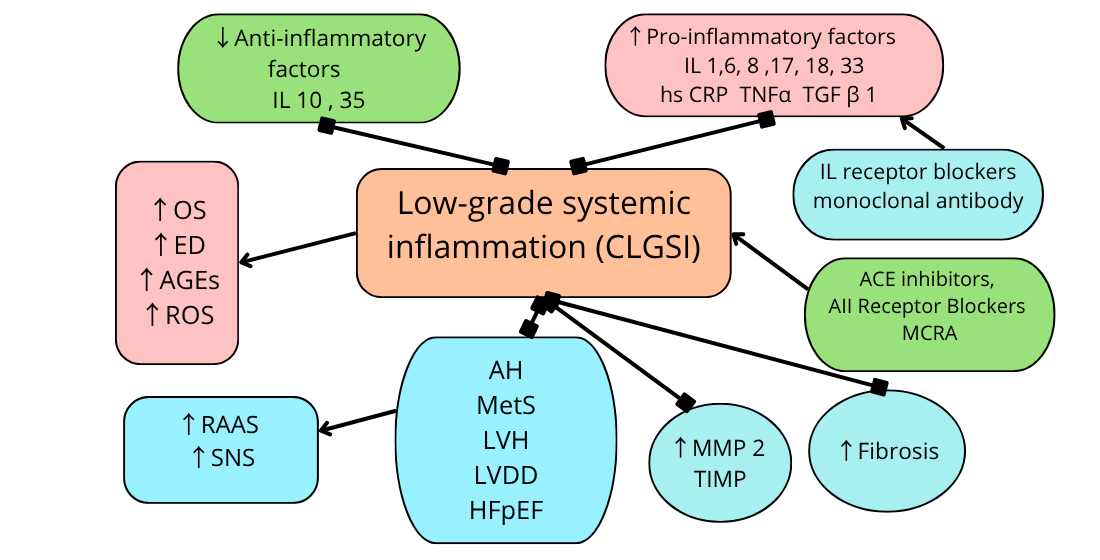
Results and Discussion. Data on the conditional classification of pro-inflammatory and anti-inflammatory cytokines, their activity in hypertensive heart and diastolic dysfunction, a number of traditional pro-inflammatory factors from the superfamilies of interleukins, pentraxins and transforming growth factor beta 1 are considered, as well as new promising biomolecules that are used as indicators of chronic low-grade systemic inflammation, including the experiments on hypertensive animals. The question of the prospects of using a multi-indicator model of pro-inflammatory factors in individuals with arterial hypertension is considered, a brief description of promising targeted therapeutic approaches to inhibit pro-inflammatory mechanisms in patients with is given.
Conclusions. In the research works of the last 10 years, a high scientific interest in the pathogenetically significant role of chronic low-grade systemic inflammation, pro-inflammatory factors in the occurrence and progression of hypertensive heart disease and left ventricular hypertrophy has revealed, and the promise of using biomarkers as their indicators for further personalized treatment on this basis for this category of patients has proven
References
- Mancia, G., Kreutz, R., Brunström, M., Burnier, M., Grassi, G., Januszewicz, A. et al. (2023). 2023 ESH Guidelines for the management of arterial hypertension The Task Force for the management of arterial hypertension of the European Society of Hypertension. Journal of Hypertension, 41 (12), 1874–2071. https://doi.org/10.1097/hjh.0000000000003480
- Cuspidi, C., Facchetti, R., Gherbesi, E., Quarti-Trevano, F., Vanoli, J., Mancia, G., Grassi, G. (2024). Ambulatory Blood Pressure Phenotypes, Arterial Stiffness, and Cardiac Remodeling. American Journal of Hypertension, 37 (12), 978–986. https://doi.org/10.1093/ajh/hpae106
- Chen, Y.-L., Wang, J.-G. (2023). Blood Pressure Variability and Left Ventricular Diastolic Dysfunction. American Journal of Hypertension, 37 (3), 163–164. https://doi.org/10.1093/ajh/hpad114
- Jansen van Vuren, E., Malan, L., Cockeran, M., Scheepers, J. D., Oosthuizen, W., Malan, N. T. (2016). Fibrosis and coronary perfusion – a cardiovascular disease risk in an African male cohort: The SABPA study. Clinical and Experimental Hypertension, 38 (5), 482–488. https://doi.org/10.3109/10641963.2016.1151524
- Ekström, M., Hellman, A., Hasselström, J., Hage, C., Kahan, T., Ugander, M. et al. (2020). The Transition from Hypertension to Hypertensive Heart Disease and Heart Failure: The Prefers Hypertension Study. ESC Heart Failure, 7 (2), 737–746. https://doi.org/10.1002/ehf2.12612
- Díez, J., Butler, J. (2023). Growing Heart Failure Burden of Hypertensive Heart Disease: A Call to Action. Hypertension, 80 (1), 13–21. https://doi.org/10.1161/hypertensionaha.122.19373
- Nwabuo, C. C., Vasan, R. S. (2020). Pathophysiology of Hypertensive Heart Disease: Beyond Left Ventricular Hypertrophy. Current Hypertension Reports, 22 (2). https://doi.org/10.1007/s11906-020-1017-9
- Shenasa, M., Shenasa, H. (2017). Hypertension, left ventricular hypertrophy, and sudden cardiac death. International Journal of Cardiology, 237, 60–63. https://doi.org/10.1016/j.ijcard.2017.03.002
- Hamo, C. E., DeJong, C., Hartshorne-Evans, N., Lund, L. H., Shah, S. J., Solomon, S., Lam, C. S. P. (2024). Heart failure with preserved ejection fraction. Nature Reviews Disease Primers, 10 (1). https://doi.org/10.1038/s41572-024-00540-y
- Moreno, M. U., Eiros, R., Gavira, J. J., Gallego, C., González, A., Ravassa, S. et al. (2017). The Hypertensive Myocardium. Medical Clinics of North America, 101 (1), 43–52. https://doi.org/10.1016/j.mcna.2016.08.002
- Seravalle, G., Mancia, G., Grassi, G. (2014). Role of the Sympathetic Nervous System in Hypertension and Hypertension-Related Cardiovascular Disease. High Blood Pressure & Cardiovascular Prevention, 21 (2), 89–105. https://doi.org/10.1007/s40292-014-0056-1
- te Riet, L., van Esch, J. H. M., Roks, A. J. M., van den Meiracker, A. H., Danser, A. H. J. (2015). Hypertension. Circulation Research, 116 (6), 960–975. https://doi.org/10.1161/circresaha.116.303587
- Guzik, T. J., Nosalski, R., Maffia, P., Drummond, G. R. (2024). Immune and inflammatory mechanisms in hypertension. Nature Reviews Cardiology, 21 (6), 396–416. https://doi.org/10.1038/s41569-023-00964-1
- Zhang, Z., Zhao, L., Zhou, X., Meng, X., Zhou, X. (2023). Role of inflammation, immunity, and oxidative stress in hypertension: New insights and potential therapeutic targets. Frontiers in Immunology, 13. https://doi.org/10.3389/fimmu.2022.1098725
- Drummond, G. R., Vinh, A., Guzik, T. J., Sobey, C. G. (2019). Immune mechanisms of hypertension. Nature Reviews Immunology, 19 (8), 517–532. https://doi.org/10.1038/s41577-019-0160-5
- Wang, L., Cheng, C. K., Yi, M., Lui, K. O., Huang, Y. (2022). Targeting endothelial dysfunction and inflammation. Journal of Molecular and Cellular Cardiology, 168, 58–67. https://doi.org/10.1016/j.yjmcc.2022.04.011
- Della Corte, V., Tuttolomondo, A., Pecoraro, R., Di Raimondo, D., Vassallo, V., Pinto, A. (2016). Inflammation, Endothelial Dysfunction and Arterial Stiffness as Therapeutic Targets in Cardiovascular Medicine. Current Pharmaceutical Design, 22 (30), 4658–4668. https://doi.org/10.2174/1381612822666160510124801
- Millar, S. R., Harrington, J. M., Perry, I. J., Phillips, C. M. (2021). Associations between a protective lifestyle behaviour score and biomarkers of chronic low-grade inflammation: a cross-sectional analysis in middle-to-older aged adults. International Journal of Obesity, 46 (3), 476–485. https://doi.org/10.1038/s41366-021-01012-z
- Li, X., Guo, X., Chang, Y., Zhang, N., Sun, Y. (2022). Analysis of alterations of serum inflammatory cytokines and fibrosis makers in patients with essential hypertension and left ventricular hypertrophy and the risk factors. American Journal of Translational Research, 14 (6), 4097–4103. Available at: https://pmc.ncbi.nlm.nih.gov/articles/PMC9274558/
- Zhu, L., Li, C., Liu, Q., Xu, W., Zhou, X. (2019). Molecular biomarkers in cardiac hypertrophy. Journal of Cellular and Molecular Medicine, 23 (3), 1671–1677. https://doi.org/10.1111/jcmm.14129
- Tang, Y., Shen, L., Bao, J.-h., Xu, D.-Y. (2023). Deficiency of Tregs in hypertension‐associated left ventricular hypertrophy. The Journal of Clinical Hypertension, 25 (6), 562–572. https://doi.org/10.1111/jch.14660
- Dziedzic-Jankowska, K., Pietrzak, R., Szyszka, M., Bujanowicz, A., Stelmaszczyk-Emmel, A., Werner, B., Skrzypczyk, P. (2025). Monocyte-to-Neutrophil Ratio as an Immunological Marker of Left Ventricular Hypertrophy in Children with Primary Hypertension. Journal of Clinical Medicine, 14 (11), 3896. https://doi.org/10.3390/jcm14113896
- Kain, D., Amit, U., Yagil, C., Landa, N., Naftali-Shani, N., Molotski, N. et al. (2016). Macrophages dictate the progression and manifestation of hypertensive heart disease. International Journal of Cardiology, 203, 381–395. https://doi.org/10.1016/j.ijcard.2015.10.126
- Schiffrin, E. L. (2013). Immune mechanisms in hypertension and vascular injury. Clinical Science, 126 (4), 267–274. https://doi.org/10.1042/cs20130407
- Gupta, J., Dominic, E. A., Fink, J. C., Ojo, A. O., Barrows, I. R., Reilly, M. P. et al. (2015). Association between Inflammation and Cardiac Geometry in Chronic Kidney Disease: Findings from the CRIC Study. Plos One, 10 (4), e0124772. https://doi.org/10.1371/journal.pone.0124772
- Adewuya, O. A., Ajayi, E. A., Adebayo, A. R., Ojo, O. E., Olaoye, O. B. (2020). Serum uric acid and left ventricular hypertrophy in hypertensive patients in Ado-Ekiti. Pan African Medical Journal, 36. https://doi.org/10.11604/pamj.2020.36.190.21072
- Uchinaka, A., Yoneda, M., Yamada, Y., Murohara, T., Nagata, K. (2017). Effects of mTOR inhibition on cardiac and adipose tissue pathology and glucose metabolism in rats with metabolic syndrome. Pharmacology Research & Perspectives, 5 (4). https://doi.org/10.1002/prp2.331
- Sriramula, S., Francis, J. (2015). Tumor Necrosis Factor – Alpha Is Essential for Angiotensin II-Induced Ventricular Remodeling: Role for Oxidative Stress. Plos One, 10 (9), e0138372. https://doi.org/10.1371/journal.pone.0138372
- Boarescu, P.-M., Boarescu, I., Pop, R. M., Roşian, Ş. H., Bocșan, I. C., Rus, V. et al. (2022). Evaluation of Oxidative Stress Biomarkers, Pro-Inflammatory Cytokines, and Histological Changes in Experimental Hypertension, Dyslipidemia, and Type 1 Diabetes Mellitus. International Journal of Molecular Sciences, 23 (3), 1438. https://doi.org/10.3390/ijms23031438
- Barbaro, N. R., Fontana, V., Sabbatini, A. R., Ritter, A. M., Faria, A. P., Correa, N. B. et al. (2015). Relationship of extracellular matrix biomarkers with left ventricular hypertrophy in resistant hypertension. Journal of the American Society of Hypertension, 9 (4), e2–e3. https://doi.org/10.1016/j.jash.2015.03.014
- Ribeiro Vitorino, T., Ferraz do Prado, A., Bruno de Assis Cau, S., Rizzi, E. (2023). MMP-2 and its implications on cardiac function and structure: Interplay with inflammation in hypertension. Biochemical Pharmacology, 215, 115684. https://doi.org/10.1016/j.bcp.2023.115684
- M. Ciulla, M., Paliotti, R., Carini, M., Magrini, F., Aldini, G. (2011). Fibrosis, Enzymatic and Non-Enzymatic Cross-Links in Hypertensive Heart Disease. Cardiovascular & Hematological Disorders-Drug Targets, 11 (2), 61–73. https://doi.org/10.2174/187152911798347025
- Sell, D. R., Monnier, V. M. (2012). Molecular Basis of Arterial Stiffening: Role of Glycation – A Mini-Review. Gerontology, 58 (3), 227–237. https://doi.org/10.1159/000334668
- Song, W., Zhang, C., Tang, J., Li, Y., Jiao, T., Lin, X. et al. (2023). Hypersensitive C-reactive protein as a potential indicator for predicting left ventricular hypertrophy in elderly community-dwelling patients with hypertension. BMC Cardiovascular Disorders, 23 (1). https://doi.org/10.1186/s12872-023-03509-z
- Koval, S. M., Mysnichenko, O. V., Penkova, M. Y. (2020). A highly sensitive C-reactive protein and its relationship with features of arterial hypertension in patients with abdominal obesity. Problems of Endocrine Pathology, 74 (4), 60–65. https://doi.org/10.21856/j-PEP.2020.4.07
- Koval, S., Snigurska, I., Bozhko, V., Miloslavsky, D. (2021). The problem of hypertensive heart disease regression in patients with arterial hypertension. Hypertension, 13 (6), 28–34. https://doi.org/10.22141/2224-1485.13.6.2020.223078
- Cortez, A. F., Muxfeldt, E. S., Cardoso, C. R. L., Salles, G. F. (2016). Prognostic Value of C-Reactive Protein in Resistant Hypertension. American Journal of Hypertension, 29 (8), 992–1000. https://doi.org/10.1093/ajh/hpw011
- Zlibut, A., Bocsan, I. C., Agoston-Coldea, L. (2019). Pentraxin-3 and endothelial dysfunction. Advances in Clinical Chemistry. Elsevier, 163–179. https://doi.org/10.1016/bs.acc.2019.03.005
- Mkhize, S. A., Manilall, A., Mokotedi, L., Gunter, S., Michel, F. S. (2024). Involvement of pentraxin‐3 in the development of hypertension but not left ventricular hypertrophy in male spontaneously hypertensive rats. Physiological Reports, 12 (20). https://doi.org/10.14814/phy2.70086
- Mocan, M., Mocan Hognogi, L. D., Anton, F. P., Chiorescu, R. M., Goidescu, C. M., Stoia, M. A., Farcas, A. D. (2019). Biomarkers of Inflammation in Left Ventricular Diastolic Dysfunction. Disease Markers, 2019, 1–14. https://doi.org/10.1155/2019/7583690
- Smykiewicz, P., Segiet, A., Keag, M., Żera, T. (2018). Proinflammatory cytokines and ageing of the cardiovascular-renal system. Mechanisms of Ageing and Development, 175, 35–45. https://doi.org/10.1016/j.mad.2018.07.006
- Wen, Y., Crowley, S. D. (2019). Renal Effects of Cytokines in Hypertension. Renal Fibrosis: Mechanisms and Therapies. Singapore: Springer, 443–454. https://doi.org/10.1007/978-981-13-8871-2_21
- Tanase, D. M., Gosav, E. M., Radu, S., Ouatu, A., Rezus, C., Ciocoiu, M. et al. (2019). Arterial Hypertension and Interleukins: Potential Therapeutic Target or Future Diagnostic Marker? International Journal of Hypertension, 2019, 1–17. https://doi.org/10.1155/2019/3159283
- Bonaventura, A., Moroni, F., Golino, M., Del Buono, M. G., Vecchié, A., Potere, N., Abbate, A. (2024). IL-1 blockade in cardiovascular disease: an appraisal of the evidence across different inflammatory paradigms. Minerva Cardiology and Angiology, 72 (5), 477–488. https://doi.org/10.23736/s2724-5683.23.06390-1
- Zan, Y., Wang, J., Wang, W., Cui, T., Xu, K., Li, Y. (2022). Inflammatory cytokines and their correlations with different left ventricular geometries and functions in PHT patients. Echocardiography, 39 (12), 1589–1600. https://doi.org/10.1111/echo.15495
- Chou, C.-H., Hung, C.-S., Liao, C.-W., Wei, L.-H., Chen, C.-W., Shun, C.-T. et al. (2018). IL-6 trans-signalling contributes to aldosterone-induced cardiac fibrosis. Cardiovascular Research, 114 (5), 690–702. https://doi.org/10.1093/cvr/cvy013
- Hasanah, U., Rejeki, P. S., Wungu, C. D. K., Pranoto, A., Izzatunnisa, N., Rahmanto, I., Halim, S. (2024). High-intensity combination exercise has the highest effect on increasing serum irisin and interleukin 6 levels in women with obesity. Journal of Basic and Clinical Physiology and Pharmacology, 35 (1-2), 71–78. https://doi.org/10.1515/jbcpp-2023-0150
- Stawski, L., Trojanowska, M. (2018). Oncostatin M and its role in fibrosis. Connective Tissue Research, 60 (1), 40–49. https://doi.org/10.1080/03008207.2018.1500558
- Jengelley, D. H. A., Wang, M., Narasimhan, A., Rupert, J. E., Young, A. R., Zhong, X. et al. (2022). Exogenous Oncostatin M induces Cardiac Dysfunction, Musculoskeletal Atrophy, and Fibrosis. Cytokine, 159, 155972. https://doi.org/10.1016/j.cyto.2022.155972
- González, A., López, B., Ravassa, S., Beaumont, J., Zudaire, A., Gallego, I. et al. (2012). Cardiotrophin-1 in hypertensive heart disease. Endocrine, 42 (1), 9–17. https://doi.org/10.1007/s12020-012-9649-4
- Ravassa, S., Beloqui, O., Varo, N., Barba, J., López, B., Beaumont, J. et al. (2013). Association of cardiotrophin-1 with left ventricular systolic properties in asymptomatic hypertensive patients. Journal of Hypertension, 31 (3), 587–594. https://doi.org/10.1097/hjh.0b013e32835ca903
- Hou, X., Hu, Z., Huang, X., Chen, Y., He, X., Xu, H., Wang, N. (2013). Serum osteopontin, but not OPN gene polymorphism, is associated with LVH in essential hypertensive patients. Journal of Molecular Medicine, 92 (5), 487–495. https://doi.org/10.1007/s00109-013-1099-9
- Zhuang, T., Chen, M.-H., Wu, R.-X., Wang, J., Hu, X.-D., Meng, T. et al. (2024). ALKBH5-mediated m6A modification of IL-11 drives macrophage-to-myofibroblast transition and pathological cardiac fibrosis in mice. Nature Communications, 15 (1). https://doi.org/10.1038/s41467-024-46357-x
- Bhattarai, U., He, X., Xu, R., Liu, X., Pan, L., Sun, Y. et al. (2023). IL-12α deficiency attenuates pressure overload-induced cardiac inflammation, hypertrophy, dysfunction, and heart failure progression. Frontiers in Immunology, 14. https://doi.org/10.3389/fimmu.2023.1105664
- Huang, L. (2024). The role of IL-17 family cytokines in cardiac fibrosis. Frontiers in Cardiovascular Medicine, 11. https://doi.org/10.3389/fcvm.2024.1470362
- ÖZzbïçer, S., Uluçam, Z. M. (2017). Association Between Interleukin-18 Level and Left Ventricular Mass Index in Hypertensive Patients. Korean Circulation Journal, 47 (2), 238. https://doi.org/10.4070/kcj.2016.0351
- Jiang, C., Jin, X., Li, C., Wen, L., Wang, Y., Li, X. et al. (2023). Roles of IL-33 in the Pathogenesis of Cardiac Disorders. Experimental Biology and Medicine, 248, 2167–2174. https://doi.org/10.1177/15353702231198075
- Wang, X., Han, S.-J., Wang, X.-L., Xu, Y.-F., Wang, H.-C., Peng, J.-Y. et al. (2024). Soluble ST2 Is a Biomarker Associated With Left Ventricular Hypertrophy and Concentric Hypertrophy in Patients With Essential Hypertension. American Journal of Hypertension, 37 (12), 987–994. https://doi.org/10.1093/ajh/hpae105
- Therrien, F. J., Agharazii, M., Lebel, M., Larivière, R. (2012). Neutralization of Tumor Necrosis Factor-Alpha Reduces Renal Fibrosis and Hypertension in Rats with Renal Failure. American Journal of Nephrology, 36 (2), 151–161. https://doi.org/10.1159/000340033
- Kumar, V., Bansal, S. S. (2025). Immunological Regulation of Fibrosis During Heart Failure: It Takes Two to Tango. Biomolecules, 15 (1), 58. https://doi.org/10.3390/biom15010058
- Wang, X., Han, W., Han, L., Yang, J., Li, K., Fan, Y. (2021). Levels of Serum sST2, MMP-3, and Gal-3 in Patients with Essential Hypertension and Their Correlation with Left Ventricular Hypertrophy. Evidence-Based Complementary and Alternative Medicine, 2021, 1–6. https://doi.org/10.1155/2021/7262776
- Rothman, A. M., MacFadyen, J., Thuren, T., Webb, A., Harrison, D. G., Guzik, T. J. et al. (2020). Effects of Interleukin-1β Inhibition on Blood Pressure, Incident Hypertension, and Residual Inflammatory Risk. Hypertension, 75 (2), 477–482. https://doi.org/10.1161/hypertensionaha.119.13642
- Krishnan, S. M., Sobey, C. G., Latz, E., Mansell, A., Drummond, G. R. (2014). IL‐1β and IL‐18: inflammatory markers or mediators of hypertension? British Journal of Pharmacology, 171 (24), 5589–5602. https://doi.org/10.1111/bph.12876
- Matsushita, N., Ishida, N., Ibi, M., Saito, M., Takahashi, M., Taniguchi, S. et al. (2019). IL-1β Plays an Important Role in Pressure Overload-Induced Atrial Fibrillation in Mice. Biological and Pharmaceutical Bulletin, 42 (4), 543–546. https://doi.org/10.1248/bpb.b18-00363
- Tsioufis, C., Konstantinidis, D., Nikolakopoulos, I., Vemmou, E., Kalos, T., Georgiopoulos, G. et al. (2019). Biomarkers of Atrial Fibrillation in Hypertension. Current Medicinal Chemistry, 26 (5), 888–897. https://doi.org/10.2174/0929867324666171006155516
- Wang, H., Hou, L., Kwak, D., Fassett, J., Xu, X., Chen, A. et al. (2016). Increasing Regulatory T Cells With Interleukin-2 and Interleukin-2 Antibody Complexes Attenuates Lung Inflammation and Heart Failure Progression. Hypertension, 68 (1), 114–122. https://doi.org/10.1161/hypertensionaha.116.07084
- Wenzel, U. O., Bode, M., Kurts, C., Ehmke, H. (2018). Salt, inflammation, IL‐17 and hypertension. British Journal of Pharmacology, 176 (12), 1853–1863. https://doi.org/10.1111/bph.14359
- Higaki, A., Mahmoud, A. U. M., Paradis, P., Schiffrin, E. L. (2020). Role of interleukin-23/interleukin-17 axis in T-cell-mediated actions in hypertension. Cardiovascular Research, 117 (5), 1274–1283. https://doi.org/10.1093/cvr/cvaa257
- Xiang, L., Yin, G., Gong, Z., Lv, X., Feng, C., Liu, L. et al. (2025). IL-22 Attenuates Pressure Overload-Induced Heart Failure and Inflammation. Journal of Cardiovascular Translational Research, 18 (3), 471–483. https://doi.org/10.1007/s12265-025-10613-2
- Frangogiannis, N. G. (2020). Transforming growth factor–β in tissue fibrosis. Journal of Experimental Medicine, 217 (3). https://doi.org/10.1084/jem.20190103
- Zhao, M., Zheng, S., Yang, J., Wu, Y., Ren, Y., Kong, X. et al. (2015). Suppression of TGF-β1/Smad Signaling Pathway by Sesamin Contributes to the Attenuation of Myocardial Fibrosis in Spontaneously Hypertensive Rats. Plos One, 10 (3), e0121312. https://doi.org/10.1371/journal.pone.0121312
- Frohlich, J., Vinciguerra, M. (2020). Candidate rejuvenating factor GDF11 and tissue fibrosis: friend or foe? GeroScience, 42 (6), 1475–1498. https://doi.org/10.1007/s11357-020-00279-w
- Machelak, W., Szczepaniak, A., Jacenik, D., Zielińska, M. (2023). The role of GDF11 during inflammation – An overview. Life Sciences, 322, 121650. https://doi.org/10.1016/j.lfs.2023.121650
- Koval, S., Miloslavsky, D., Snihurskaya, I., Bozhko, V., Penkova, M., Shchenyavskaya, E. (2018). Growth differentiation factor 11: general biological properties, metabolic effects and possible pathophysiological role in arterial hypertension, obesity, diabetes mellitus and age-dependent pathology (literature review). International Journal of Endocrinology (Ukraine), 14 (6), 621–635. https://doi.org/10.22141/2224-0721.14.6.2018.146077
- Kou, H., Jin, X., Gao, D., Ma, R., Dong, X., Wei, J., Wang, X. (2017). Association between growth differentiation factor 15 and left ventricular hypertrophy in hypertensive patients and healthy adults. Clinical and Experimental Hypertension, 40 (1), 8–15. https://doi.org/10.1080/10641963.2016.1273948
- Rudemiller, N. P., Crowley, S. D. (2017). The role of chemokines in hypertension and consequent target organ damage. Pharmacological Research, 119, 404–411. https://doi.org/10.1016/j.phrs.2017.02.026
- Bettink, S. I., Werner, C., Chen, C.-H., Müller, P., Schirmer, S. H., Walenta, K. L. et al. (2010). Integrin-linked kinase is a central mediator in angiotensin II type 1- and chemokine receptor CXCR4 signaling in myocardial hypertrophy. Biochemical and Biophysical Research Communications, 397 (2), 208–213. https://doi.org/10.1016/j.bbrc.2010.05.086
- Hogas, S., Bilha, S. C., Branisteanu, D., Hogas, M., Gaipov, A., Kanbay, M., Covic, A. (2017). Potential novel biomarkers of cardiovascular dysfunction and disease: cardiotrophin-1, adipokines and galectin-3. Archives of Medical Science, 4, 897–913. https://doi.org/10.5114/aoms.2016.58664
- Peer, M., Mashavi, M., Matas, Z., Harpaz, D., Shargorodsky, M. (2014). Adiponectin as an Independent Predictor of Left Ventricular Hypertrophy in Nondiabetic Patients With Hypertension. Angiology, 66 (3), 219–224. https://doi.org/10.1177/0003319714523332
- Chen, K., Zhou, M., Wang, X., Li, S., Yang, D. (2019). The Role of Myokines and Adipokines in Hypertension and Hypertension-related Complications. Hypertension Research, 42 (10), 1544–1551. https://doi.org/10.1038/s41440-019-0266-y
- Ho, M.-Y., Wang, C.-Y. (2021). Role of Irisin in Myocardial Infarction, Heart Failure, and Cardiac Hypertrophy. Cells, 10 (8), 2103. https://doi.org/10.3390/cells10082103
- Palao, T., Medzikovic, L., Rippe, C., Wanga, S., Al-Mardini, C., van Weert, A. et al. (2018). Thrombospondin-4 mediates cardiovascular remodelling in angiotensin II-induced hypertension. Cardiovascular Pathology, 35, 12–19. https://doi.org/10.1016/j.carpath.2018.03.003
- Cao, M., Yuan, W., Peng, M., Mao, Z., Zhao, Q., Sun, X., Yan, J. (2019). Role of CyPA in cardiac hypertrophy and remodeling. Bioscience Reports, 39 (12). https://doi.org/10.1042/bsr20193190
- Duman, H., Bahçeci, I., Çinier, G., Duman, H., Bakırcı, E. M., Çetin, M. (2018). Left ventricular hypertrophy is associated with increased sirtuin level in newly diagnosed hypertensive patients. Clinical and Experimental Hypertension, 41 (6), 511–515. https://doi.org/10.1080/10641963.2018.1510946
- Ritter, A. M. V., Faria, A. P. C. d., Sabbatini, A., Corrêa, N. B., Brunelli, V., Modolo, R., Moreno, H. (2017). MCP-1 Levels are Associated with Cardiac Remodeling but not with Resistant Hypertension. Arquivos Brasileiros de Cardiologia, 108 (4). https://doi.org/10.5935/abc.20170033
- Chi, H., Feng, H., Shang, X., Jiao, J., Sun, L., Jiang, W. et al. (2019). Circulating Connective Tissue Growth Factor Is Associated with Diastolic Dysfunction in Patients with Diastolic Heart Failure. Cardiology, 143 (3-4), 77–84. https://doi.org/10.1159/000499179
- Zhou, X., Jeong, E.-M., Liu, H., Kaseer, B., Liu, M., Shrestha, S. et al. (2022). Circulating S‐Glutathionylated cMyBP‐C as a Biomarker for Cardiac Diastolic Dysfunction. Journal of the American Heart Association, 11 (11). https://doi.org/10.1161/jaha.122.025295
- Xu, X., Hua, Y., Nair, S., Bucala, R., Ren, J. (2014). Macrophage Migration Inhibitory Factor Deletion Exacerbates Pressure Overload–Induced Cardiac Hypertrophy Through Mitigating Autophagy. Hypertension, 63 (3), 490–499. https://doi.org/10.1161/hypertensionaha.113.02219
- Zhang, J., Yang, L., Ding, Y. (2021). Effects of irbesartan on phenotypic alterations in monocytes and the inflammatory status of hypertensive patients with left ventricular hypertrophy. BMC Cardiovascular Disorders, 21 (1). https://doi.org/10.1186/s12872-021-02004-7
- Lin, M., Heizati, M., Wang, L., Nurula, M., Yang, Z., Wang, Z. et al. (2021). A systematic review and meta-analysis of effects of spironolactone on blood pressure, glucose, lipids, renal function, fibrosis and inflammation in patients with hypertension and diabetes. Blood Pressure, 30 (3), 145–153. https://doi.org/10.1080/08037051.2021.1880881
- Fang, T., Guo, B., Xue, L., Wang, L. (2019). Atorvastatin Prevents Myocardial Fibrosis in Spontaneous Hypertension via Interleukin-6 (IL-6)/Signal Transducer and Activator of Transcription 3 (STAT3)/Endothelin-1 (ET-1) Pathway. Medical Science Monitor, 25, 318–323. https://doi.org/10.12659/msm.912032
- Kim, H.-L., Lee, J. P., An, J. N., Kim, J. H., Lim, W.-H., Seo, J.-B. et al. (2016). Soluble Tumor Necrosis Factor Receptors and Arterial Stiffness in Patients With Coronary Atherosclerosis. American Journal of Hypertension, 30 (3), 313–318. https://doi.org/10.1093/ajh/hpw134
- Duerrschmid, C., Crawford, J. R., Reineke, E., Taffet, G. E., Trial, J., Entman, M. L., Haudek, S. B. (2013). TNF receptor 1 signaling is critically involved in mediating angiotensin-II-induced cardiac fibrosis. Journal of Molecular and Cellular Cardiology, 57, 59–67. https://doi.org/10.1016/j.yjmcc.2013.01.006
Downloads
Published
How to Cite
Issue
Section
License
Copyright (c) 2026 Dmytro Myloslavskyi, Sergiy Koval, Olga Mysnychenko, Olga Lytvynova, Olena Shcheniavska

This work is licensed under a Creative Commons Attribution 4.0 International License.
Our journal abides by the Creative Commons Attribution 4.0 International License copyright rights and permissions for open access journals.
Authors, who are published in this journal, agree to the following conditions:
1. The authors reserve the right to authorship of the work and pass the first publication right of this work to the journal under the terms of a Creative Commons Attribution 4.0 International License, which allows others to freely distribute the published research with the obligatory reference to the authors of the original work and the first publication of the work in this journal.
2. The authors have the right to conclude separate supplement agreements that relate to non-exclusive work distribution in the form in which it has been published by the journal (for example, to upload the work to the online storage of the journal or publish it as part of a monograph), provided that the reference to the first publication of the work in this journal is included.
3. Authors have the right to store the final accepted version of the article in an institutional, thematic, or any other repository to ensure visibility and accessibility.


