Development of an integrated entrepreneurship model based on the principles of circular and sharing economy: theoretical substitution and practical analysis
DOI:
https://doi.org/10.15587/2706-5448.2026.352859Keywords:
entrepreneurship, circular and sharing business, sustainable development, integrated business model, information potential, renewable energyAbstract
The object of research is the process of formation and development of modern entrepreneurship in the context of the transition from a linear model to a circular and sharing economy, which are currently focused on the principles of sustainable development.
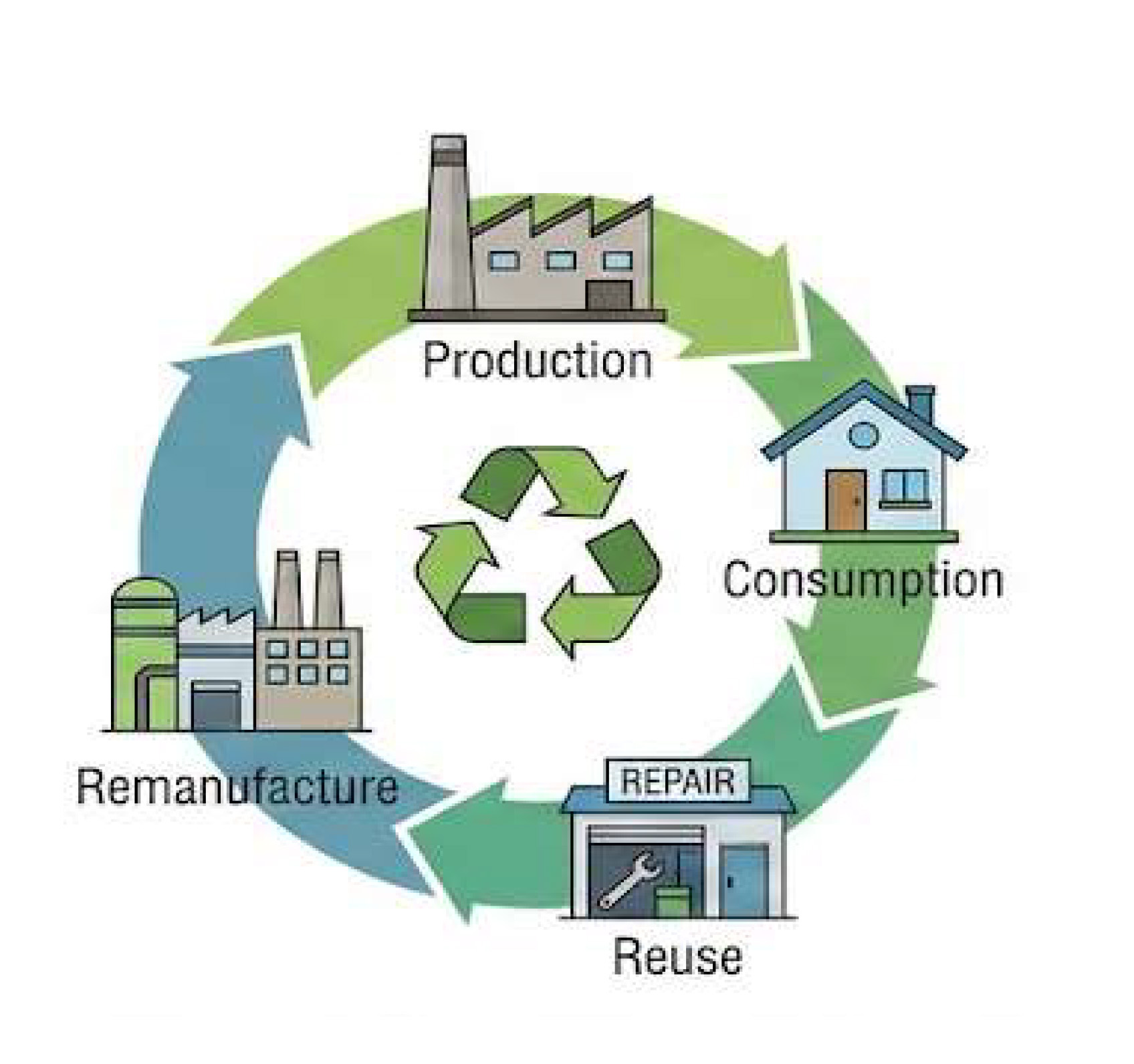
The paper analyzes the current state and prospects for the development of entrepreneurship, which operates on the principles of closed production cycles, extending the life cycle of products and reusing raw materials and materials. An integrated model of entrepreneurship based on the principles of a circular and sharing economy is proposed. The theoretical and practical essence of these economic models is considered, the principles of their construction are further developed, and significant differences from the traditional provisions of a linear economy are formed. It is substantiated that the gradual transition from a linear economic model of management to circular and sharing models of the economy is dictated by the presence of environmental challenges, as well as the limitation of natural resources. Trends in the field of sharing business, which are based on the joint use of resources by the asset owner and other consumers, are studied. The global experience of implementing these approaches has been analyzed and summarized, and the prospects for their development have been considered. It has been determined that over the past 10 years, the use of the circular economy concept in the world has increased 15 times (from 0.8% to 12% of enterprises), and the concept of the sharing economy has increased 10 times (from 0.2% to 2%). The research results confirm the integration of theoretical and practical provisions of the circular and sharing economy into global business models. This contributes to increasing the efficiency of resource use, increases the level of competitiveness of enterprises, and creates stable social and environmental benefits. Practical recommendations for Ukrainian entrepreneurs are proposed, the use of which will help adapt modern business to global trends in resource conservation within the framework of European integration and post-war economic recovery.
References
- Aboalhool, T., Alzubi, A., Iyiola, K. (2024). Humane Entrepreneurship in the Circular Economy: The Role of Green Market Orientation and Green Technology Turbulence for Sustainable Corporate Performance. Sustainability, 16 (6), 2517. https://doi.org/10.3390/su16062517
- Yatsenko, O. (2022). Circular economy as an irreversible global megatrend and driver of sustainable developent of Ukraine. Scientific Bulletin of Odessa National Economic University, 11–12 (300–301), 131–143. https://doi.org/10.32680/2409-9260-2022-11-12-300-301-131-143
- Dovgal, O., Lagodiienko, V., Basiurkina, N., Lagodiyenko, O. (2023). Strategic aspects of business development under the conditions of circular economy. Ukrainian Journal of Applied Economics and Technology, 8 (1), 10–15. https://doi.org/10.36887/2415-8453-2023-1-1
- Horbal, N. I., Lomaha, R. (2022). Tsyrkuliarna ekonomika – osnova staloho rozvytku pidpryiemstv. Visnyk Natsionalnoho universytetu "Lvivska politekhnika". Seriia: Problemy ekonomiky ta upravlinnia, 6 (1), 9–24. Available at: http://nbuv.gov.ua/UJRN/VNULPP_2022_6_
- Shvets, A. I. (2022). Circular economy as a new model of Ukrainian economy development in the european integration process. Economic Bulletin of Dnipro University of Technology, 77, 43–49. https://doi.org/10.33271/ebdut/77.043
- Kraus, K., Kraus, N., Holubka, S. (2021). Sharing economy: digital transformation of entrepreneurship on the way to industry 4.0. Efektyvna Ekonomika, 8. https://doi.org/10.32702/2307-2105-2021.8.73
- Sotnyk I. M., Dolhosheieva O. I. (2021). Sherynhova ekonomika yak skladova staloho rozvytku. Ukraina u svitovykh hlobalizatsiinykh protsesakh: kultura, ekonomika, suspilstvo. Kyiv: Vydavnychyi tsentr KNUKiM, 133–136. Available at: https://essuir.sumdu.edu.ua/items/545233a3-bba0-4d30-a855-57170ddf9e3b
- Pylypenko, N. M., Kasian, Y. O. (2024). A Microeconomic Analysis of the Possibility of Introducing Sharing Economy Models in Ukraine. Business Inform, 12 (563), 62–75. https://doi.org/10.32983/2222-4459-2024-12-62-75
- Pererva, P., Chernyshenko, O., Ponomarov, V., Kobielieva, T., Veresne, S. M., Nagy, S., et al. (2025). Formation of production cost by the methods of “Target costing” and “Kaizen costing” and their impact on the enterprise efficiency. Technology Audit and Production Reserves, 1 (4 (81)), 20–27. https://doi.org/10.15587/2706-5448.2025.323949
- Pererva, P., Kobielieva, T., Keršys, R., Nagy, S., Kosenko, O., Tkachova, N., et al. (2025). Development of methods for forming the cost of production and assessment of its impact on the efficiency of an industrial enterprise. Technology Audit and Production Reserves, 3 (4 (83)), 26–33. https://doi.org/10.15587/2706-5448.2025.331215
- Maslak, M., Yakovenko, Y., Maslak, O., Pererva, P., Grishko, N. (2022). Problems of Intellectual Property in the Information Economy Through the Prism of Artificial Intelligence as a Dual-Purpose Technology. 2022 IEEE 4th International Conference on Modern Electrical and Energy System (MEES). Kremenchuk: IEEE, 1–5. https://doi.org/10.1109/mees58014.2022.10005671
- Geissdoerfer, M., Savaget, P., Bocken, N. M. P., Hultink, E. J. (2017). The Circular Economy – A new sustainability paradigm? Journal of Cleaner Production, 143, 757–768. https://doi.org/10.1016/j.jclepro.2016.12.048
- Kirchherr, J., Reike, D., Hekkert, M. (2017). Conceptualizing the circular economy: An analysis of 114 definitions. Resources, Conservation and Recycling, 127, 221–232. https://doi.org/10.1016/j.resconrec.2017.09.005
- Belk, R. (2014). You are what you can access: Sharing and collaborative consumption online. Journal of Business Research, 67 (8), 1595–1600. https://doi.org/10.1016/j.jbusres.2013.10.001
- Botsman, R., Rogers R. (2010) What’s Mine Is Yours: The Rise of Collaborative Consumption. New York: Harper Business, 304. Available at: https://www.scirp.org/reference/referencespapers?referenceid=2646511
- Hamari, J., Sjöklint, M., Ukkonen, A. (2016). The sharing economy: Why people participate in collaborative consumption. Journal of the Association for Information Science and Technology, 67 (9), 2047–2059. https://doi.org/10.1002/asi.23552
- Bocken, N. M. P., Schuit, C. S. C., Kraaijenhagen, C. (2018). Experimenting with a circular business model: Lessons from eight cases. Environmental Innovation and Societal Transitions, 28, 79–95. https://doi.org/10.1016/j.eist.2018.02.001
- Lewandowski, M. (2016). Designing the Business Models for Circular Economy – Towards the Conceptual Framework. Sustainability, 8 (1), 43. https://doi.org/10.3390/su8010043
- Korhonen, J., Honkasalo, A., Seppälä, J. (2018). Circular Economy: The Concept and its Limitations. Ecological Economics, 143, 37–46. https://doi.org/10.1016/j.ecolecon.2017.06.041
- Stahel, W. R. (2010). The Performance Economy. London: Palgrave Macmillan, 349. https://doi.org/10.1057/9780230274907
- Maslak, M., Pererva, P. (2023). Formation of economic and legal measures for the development of the market of intellectual property objects. Eastern-European Journal of Enterprise Technologies, 1 (13 (121)), 113–124. https://doi.org/10.15587/1729-4061.2023.273850
- Pererva, P., Kobieliev, V., Maslak, M., Maslak, O., Kobielieva, A. (2022). Intellectual and Innovative Directions of Improving the Market Characteristics of Asynchronous Electric Motors. 2022 IEEE 4th International Conference on Modern Electrical and Energy System (MEES). Kremenchuk: IEEE 1–6. https://doi.org/10.1109/mees58014.2022.10005691
- Pererva, P., Ievsieiev, A., Maslak, M., Tkachov, M., Tkachova, N. (2024). Formation of intellectual property commercialization strategies. Eastern-European Journal of Enterprise Technologies, 1 (13 (127)), 80–91. https://doi.org/10.15587/1729-4061.2024.296836
- De Angelis, R., Vesci, M. (2024). Circular Economy Business Models, Value Creation and Humane Entrepreneurship: A Micro-Sized and Social Enterprise Perspective. Circular Economy and Sustainability, 5 (1), 147–160. https://doi.org/10.1007/s43615-024-00419-w
- Morelli, G., Pozzi, C., Gurrieri, A. R., Mele, M., Costantiello, A., Magazzino, C. (2024). The role of circular economy in EU entrepreneurship: A deep learning experiment. The Journal of Economic Asymmetries, 30, e00372. https://doi.org/10.1016/j.jeca.2024.e00372
- Pererva, P., Kobielieva, T., Glisnuza, M., Ievsieieva, O., Doronina, M., Kosenko, A. (2024). Economic and Legal Problems of the Development of the Ukrainian Small Aviation Market and Ways to Solve Them. 28th International Scientific Conference. Transport Means 2024. Kaunas: KTU, 787–792. https://doi.org/10.5755/e01.2351-7034.2024.p787-792
- Trigkas, M., Karagouni, G., Tsitsoni, M. (2025). Sharing Economy as Part of the Circular Economy. How Ready are Greek Consumers? Circular Economy and Sustainability, 5 (7), 6435–6458. https://doi.org/10.1007/s43615-025-00600-9
- Pererva, P., Kosenko, O., Kobieliev, V., Havrys, O., Matrosova, V., Pohorielova, T. (2024). Current State and Prospects of Economic Development of the Transport Industry in Ukraine. 28th International Scientific Conference. Transport Means 2024. Kaunas: KTU, 324–329. https://doi.org/10.5755/e01.2351-7034.2024.p324-329
- Afolabi, J. A. (2025). Advancing the circular economy in Europe: The role of eco-innovation, economic complexity, and digitalization. Technology in Society, 83, 103027. https://doi.org/10.1016/j.techsoc.2025.103027
- Pererva, P., Maslak, M., Nagy, S., Kosenko, O., Kobielieva, T.; Semenov, A., Yepifanova, I., Kajanová, J. (Eds.) (2024). Economic Assessment of Outsourcing of Intellectual and Information Technologies. Data-Centric Business and Applications. Cham: Springer, 147–186. https://doi.org/10.1007/978-3-031-54012-7_7
- Radhakrishnan, G. V., Jawade, A. A., Thakur, S. S., Mukherjee, R., Thomas, W. S. (2025). Circular Economy and Social Entrepreneurship: Creating Value from Waste. Advances in Consumer Research, 2 (3), 715–724. Available at: https://acr-journal.com/article/circular-economy-and-social-entrepreneurship-creating-value-from-waste-1086/
- Pererva, P., Marchuk, L., Novik, I., Dolyna, I., Suslikov, S., Maistro, R. (2024). Study of the Theoretical and Methodological Essence of Transport Technologies. 28th International Scientific Conference. Transport Means 2024. Kaunas: KTU, 137–142. https://doi.org/10.5755/e01.2351-7034.2024.p137-142
- Business Models for the Circular Economy (2019). OECD Publishing. https://doi.org/10.1787/g2g9dd62-en
- The National Circular Economy Strategy (2024). Federal Ministry for the Environment, Nature Conservation, Nuclear Safety and Consumer Protection (BMUV). Available at: https://www.bundesumweltministerium.de/en/topics/circular-economy/circular-economy-strategy
- Kniaz, S., Kosovska, V., Shayda, O., Novosad, Z., Yaremko, L., Fedyuk, V. (2021). Method of Selection of Indicators in the Context of Information and Analytical Support of Evaluation of Development of Foreign Economic Activity of Enterprises. 2021 11th International Conference on Advanced Computer Information Technologies (ACIT). Deggendorf: IEEE, 389–392. https://doi.org/10.1109/acit52158.2021.9548613
- Circular economy market overview (2026). Business Research Insights. Available at: https://www.businessresearchinsights.com/market-reports/circular-economy-market-122283?utm_source=copilot.com
- Kniaz, S., Brych, V., Marhasova, V., Tyrkalo, Y., Skrynkovskyy, R., Sumets, A. (2022). Modeling of the Information System of Environmental Risk Management of an Enterprise. 2022 12th International Conference on Advanced Computer Information Technologies (ACIT). Ruzomberok: IEEE, 215–218. https://doi.org/10.1109/acit54803.2022.9912743
- Circular economy – monitoring framework (2023). European Commission. Available at: https://ec.europa.eu/eurostat/web/circular-economy/monitoring-framework
- Circularity Gap Report 2024 (2024). Circle Economy. Available at: https://www.circularity-gap.world/2024
- Statista industry forecast dossiers – Statistics & Facts (2025). Statista. Available at: https://www.statista.com/topics/2323/statista-industry-forecast-dossiers/?srsltid=AfmBOoqYRoU-dPJkp6nOwhugrNbk0XWPJ5hrMFCBXQ3Ito5Y2jNiQzme#topicOvervie
- Circular economy – material flows. European Commission. Available at: https://ec.europa.eu/eurostat/statistics-explained/SEPDF/cache/76074.pdf
Downloads
Published
How to Cite
Issue
Section
License
Copyright (c) 2026 Petro Pererva, Tetiana Kobielieva, Robertas Keršys, Karyna Moroz, Viktor Kniaz, Oleksandra Kosenko, Nadiia Tkachova, Szabolcs Nagy, Andriy Kosenko, Maksym Tkachov

This work is licensed under a Creative Commons Attribution 4.0 International License.
The consolidation and conditions for the transfer of copyright (identification of authorship) is carried out in the License Agreement. In particular, the authors reserve the right to the authorship of their manuscript and transfer the first publication of this work to the journal under the terms of the Creative Commons CC BY license. At the same time, they have the right to conclude on their own additional agreements concerning the non-exclusive distribution of the work in the form in which it was published by this journal, but provided that the link to the first publication of the article in this journal is preserved.