
Hydrological dynamics of the “Mertve ozero” station and its impact on the ecosystems of the “Drevlyanskyi” nature reserve
DOI:
https://doi.org/10.33730/2310-4678.4.2025.346181Keywords:
water balance, climate change, waterbody monitoring, hydrophilous vegetation, wetland ecosystemsAbstract
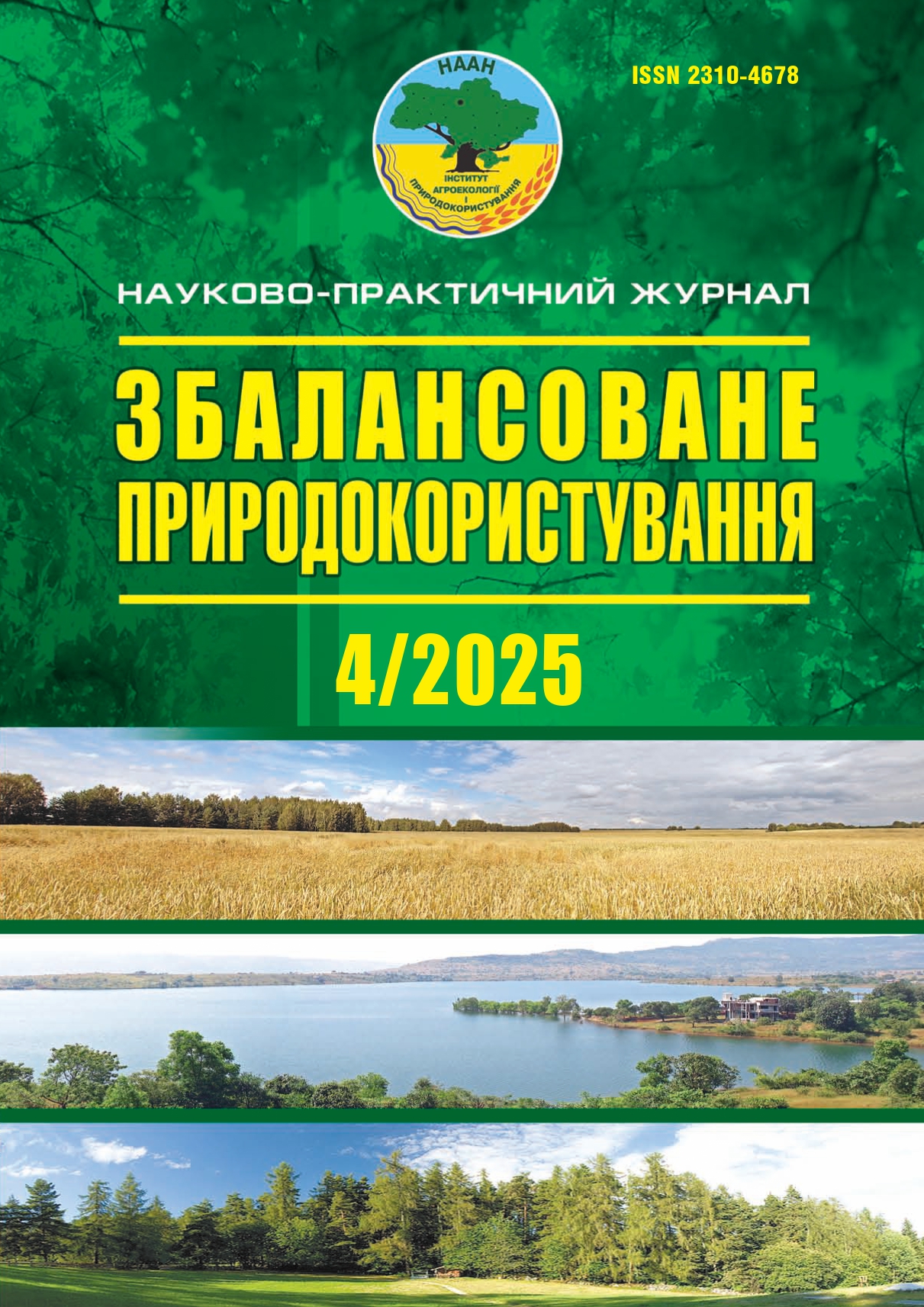
The Mertve Ozero monitoring site, located within the Drevlianskyi Nature Reserve, is a unique natural object that combines the maintenance of the hydrological balance and the biological diversity of the protected area. In recent years, significant climatic changes have been observed, characterized by a marked increase in mean daily air temperature and a decrease in moisture availability, which in turn have led to a reduction in the area of the water surface. The basis for monitoring includes cartographic materials (Earth remote sensing data), meteorological records, and field investigations. According to the study, the area of the water surface at the Mertve Ozero test plot during 2017–2025 experienced substantial seasonal and interannual fluctuations driven by the amount of atmospheric precipitation and the thermal regime. Maximum water-surface areas began to be recorded in March–April 2023, while complete inundation occurred in spring 2024 (2.46–3.09 ha), associated with intensive spring flooding. During the summer period, a gradual decrease in the lake area was observed due to rising air temperatures and enhanced evaporation. Transformations of the vegetation cover were also identified, including the disappearance of certain hydrophilous species and the predominance of mesophytic vegetation under conditions of temporary lake desiccation. It was established that the hydrological dynamics of the lake affect the spatiotemporal organization of ecosystems within its surrounding area. The study lays the groundwork for the implementation of systematic monitoring of the water surface of the site and its phytodiversity, with the aim of developing a management plan for restoring the hydrological regime of the protected area in the context of climate change and optimizing the management of nature conservation areas. Based on the conducted research, it can be concluded that the hydrological regime of the Mertve Ozero site is closely linked to the overall ecological situation across the entire Drevlianskyi Nature Reserve and serves as a rationale for the active study and protection of small water bodies in the Polissia region.
References
- Khilchevskyi, V. K. (2021). Characteristics of water resources of Ukraine based on the database of the global information system FAO Aquastat. Hydrology, Hydrochemistry and Hydroecology, 1(59), 6–16. doi: 10.17721/2306-5680.2021.1.1
- Bolbot, H. V., & Grebin, V. V. (2019). Analytical review of investigations of the climate change impact on river water flow. Hydrology, Hydrochemistry and Hydroecology, 4(55), 64–73. doi: 10.17721/2306-5680.2019.4.5
- Osadchyi, V. I., & Osadchyi, V. I. (2021). Climate change and water resources of the Desna basin by the middle of the 21st century. Reports of the National Academy of Sciences of Ukraine, 2, 71–82. DOI: 10.15407/dopovidi2021.02.071
- Rybalova, O. V., & Korobkina K. M. (2018). The impact of forest fires on the state of aquatic ecosystems. Environmental protection. Energy Efficiency. Balanced Nature Management: Collection of materials of the 5th international congress (Lviv, September 26–29, 2018) (р. 199). Lviv: Lviv Polytechnic Publishing House.
- Osadchyi, V. І., Skrynyk, О. А., Palamarchuk, L. V., Sidenko, V. P., Оshurok, D. О., & Skrynyk, О. Y. (2025). Trend analysis of air temperature and atmospheric precipitation in Ukraine based on observational data and CMIP6 climate projections. Meteorology. Hydrology. Environmental Monitoring, 2(8), 124–135. doi: 10.15407/Meteorology2025.08.124
- Kuzyarin, O. T., & Zhyzhyn M. P. (2013). Rare phytocenoses of the Shatsk National Nature Park. State and Biodiversity of Ecosystems of the Shatsk National Nature Park: Materials of the scientific conference (September 12–15, 2013, Shatsk) (pp. 39–41). Lviv: SPOLOM, 2013.
- Karpyuk, Z. K., Fesyuk, V. O., Antipyuk, O. V., & Kacharovsky, R. E. (2021). Protection of swamp ecosystems in the network of the nature reserve fund of the Volyn region. In V. O. Fesyuk (Ed.), Shatsk Lake District in the Context of Climate Change: Materials of the VI International scientific and practical conference, dedicated to the 70th anniversary of the birth of Prof. Petlin V. M. (Svityaz, October 1–3, 2021) (pp. 15–21). Lutsk: Volyn National University named after Lesya Ukrainka.
- Yashchenko, P., Korus, M., Mateychyk, V., & Turich, V. (2020). Sylvatization of swamps of the Shatsk national nature park and ways to preserve them. State and Biodiversity of Ecosystems of the Shatsk National Nature Park and Other Protected Areas: Materials of the International scientific conference dedicated to the memory of the corresponding member of the NAS of Ukraine, Doctor of Biological Sciences, Director of the Institute of Ecology of the Carpathians of the NAS of Ukraine Kozlovsky M. P. (Lviv, September 10–13, 2020) (pp. 115–120). Lviv: SPOLOM.
- Martyniuk, V. O. (2019). Hydrographic peculiarities of surface waters of Verhnoprypiatskyi physical and geographical area (Volyn Polissia). Scientific Bulletin of Kherson State University. Ser.: Geographical Sciences, 11, 114–123. doi: 10.32999/ksu2413-7391/2019-11-15
- Gorbacheva, L. O. (2015). Modern intra-annual distribution of water runoff in Ukraine’s rivers. Ukrainian Geographical Journal, 3, 16–23. doi: 10.15407/ugz2015.03.016
- Smilii, P. M., Gopchak, I. V., & Basiuk, T. O. (2021). Environmental assessment of surface water quality Zhytomyr Polesie. Hydrology, Hydrochemistry and Hydroecology, 2(60), 41–48. doi: 10.17721/2306-5680.2021.2.5
- Konishchuk, V., Shumyhai, I., & Martynenko, V. (2023). Ecological and hydrochemical analysis of the rivers Drevlianskyi Nature Reserve (Ukraine). Visnyk of V. N. Karazin Kharkiv National University. Ser.: Geology. Geography. Ecology, 58, 336–349. doi: 10.26565/2410-7360-2023-58-25
- Shumyhai, I. V. (2024). Background hydrochemical monitoring of water bodies of the nature reserve fund of Polissia in conditions of transformational changes [Final report of the research work]. Kyiv: Institute of Agroecology and Environmental Management of the NAAS.
- Kominar, M. (Ed.). (2022). Chronicle of nature of the Drevlianskyi Nature Reserve (Vol. 9, Part 1). Narodychi.
- Ivanov, E. A., Blazhko, N. B., & Pylypovych, O. V. (2022). Swamps of Male Polissia and their geoecological significance. Hydrology, Hydrochemistry and Hydroecology, 3(65), 15–23. doi: 10.17721/2306-5680.2022.3.2
- Lishchenko, L. P., Shevchuk, R. M., & Filipovych, V. E. (2022). The technique for satellite monitoring of peatlands in order to determinate their fire hazard and combustion risks. Ukrainian Journal of Remote Sensing, 9(1), 16–25. doi: 10.36023/ujrs.2022.9.1.210
- Fesiun, V., Chyzhevska, L., Polyanskyi, S., Moroz, I., & Poznanska, Yu. (2024). Lake Krymne: Natural features, current hydroecological state, measures for rational use and protection. Geographical Journal of the Lesya Ukrainka Volyn National University, 4(4), 44–52. doi: 10.32782/geochasvnu.2024.4.04
- Gaponova, L. (2024). Features of species diversity of cyclopoid copepods in nature reserves of Ukrainian Polesie. Biota. Human. Technology, 2, 49–55. doi: 10.58407/bht.2.24.4
- Liashenko, A. V., Shcherbak, V. I., Semenyuk, N. Ye., & Zorina-Sakharova, K. Ye. (2024). Continuity and discreteness of aquatic communities in lotic-lentic ecosystem of the Danube Delta: Bottom invertebrates. Hydrobiological Journal, 60(1), 3–26.
- Shevchenko, T. F., Klochenko, P. D., & Sereda, T. M. (2024). Phytoplankton annual dynamics and ecological characteristics in the Irpin River (Ukraine) prior to hostilities. Hydrobiological Journal, 60(1), 27–46.
- Yuskovets, M., Rabyk, I., Kuzyarin, O., & Danylyk, I. (2023). Peatland habitats of the Syra Pogonia massif of the Rivnenskyi Nature Reserve and their sozological assessment. Visnyk of Lviv University. Biological Series, 90(4), 30–38. doi: 10.30970/vlubs.2023.90.03
- Martynenko, V. V. (2022). The process of flooding riparian areas as a mechanism for preserving biological diversity and counteracting ecological catastrophe (on the example of the Drevlyanskyi Nature Reserve). In Balanced Environmental Management: Traditions, Prospects and Innovations: Materials of the International scientific and practical conference (pp. 134–135). Kyiv: DIA.
- Orlov, O. O. (2017). Passport for botanical test plot No. 8 “Dead Lake”. Narodychi.
- Azimov, O. T., Tomchenko, O. V., Shevchenko, O. L., & Kireev, S. I. (2024). Water resource monitoring for the drainage systems contaminated by radiation based on the complex of satellite imaging and ground observations (in the context of regional climate changes). Space Science and Technology, 2(147), 69–92. doi: 10.15407/knit2024.02.069
- Braun-Blanquet, J. (Ed.). (1964). Grundzüge der Vegetationskunde. In Pflanzensoziologie. Berlin: Verlag von Julius Springer.
- Order No. 465/430 “On approval of the Chronicle of Nature Program”. (2002, November). Retrieved from https://zakon.rada.gov.ua/rada/show/v465_737-02#Text
- Xue, J., & Su, B. (2017). Significant remote sensing vegetation indices: A review of developments and applications. Journal of Sensors, article number 1353691, 17. doi: 10.1155/2017/1353691
- Didukh, Ya. P. (2011). The ecological scales for the species of Ukrainian flora and their use in synphytoindication. Kyiv: Phytosociocentre.
- Mykhailyk, O. (2022). River ecosystems of Polissya: Nature, causes of degradation, methods of urban planning and land regeneration. Grail of Science, 12–13, 711–718. doi: 10.36074/grail-of-science.29.04.2022.129
- Kovalenko, P., Rokochinskiy, A., Jeznach, J., Koptyuk, R., Volk, P., Prykhodko, N., & Tyhenko, R. (2019). Evaluation of climate change in Ukrainian part of Polissia region and ways of adaptation to it. Journal of Water and Land Development, 41(IV–VI), 77–82. doi: 10.2478/jwld-2019-0030
- IPCC. (2021). Climate Change 2021: The physical science basis. Cambridge: Cambridge University Press. Retrieved from https://www.ipcc.ch/report/ar6/wg1/
Downloads
Published
Issue
Section
License
- The authors reserve the right to authorship their work and pass the journal the right to publish this work under a Creative Commons Attribution License license, which allows other persons to freely distribute the published work with the obligatory The authors of the original work and the first publication of this magazine.
- The authors have the right to make independent additional agreements on the nonexclusive dissemination of the work in the form in which it was published by this magazine (for example, to post work in the company's electronic storage or to publish as a monograph) , subject to the first publication of the link to this journal.
- Journal policy allows and encourages the placement of authors on the Internet (for example, in the repositories of institutions or on personal websites) manuscript work as to the presentation of this manuscript to the editorial board and during its editorial processing, as it contributes to The productive scientific discussion and positively affects the efficiency and dynamics of citation published work (see The Effect of Open Access).