Systemic approach to the ecological and economic development of the financial and economic mechanism of recreational forest use
DOI:
https://doi.org/10.33730/2310-4678.1.2026.359897Keywords:
ecological and economic mechanism, forest sector, recreation, balanced development, forest ecosystems, monitoring, toolsAbstract
The article explores the theoretical and methodological principles of the formation of a financial and economic mechanism for recreational forest use in the context of forest sector transformation and decentralization of management. Key contradictions between the intensity of recreational load and the ability of forest ecosystems to self-recovery are identified, which necessitates the establishment of environmentally sound limits on resource use. The feasibility of using a systemic approach to considering recreational forest use as a multi-level socio-ecological and economic system that combines natural, economic, institutional, and social subsectors is substantiated. Approaches to building a financial and economic mechanism are improved through the integration of economic incentive instruments, environmental monitoring, and public-private partnership mechanisms. A conceptual model of systemic management of recreational forest use is proposed, which involves the interaction of resources, instruments, and results, taking into account the principles of sustainable development. Directions for increasing the efficiency of forest resource use, ensuring financial self-sufficiency of territories, and preserving the ecosystem functions of forests in the long term are identified.
References
- Мединська, Н. В., Близнюк, В. В., Гюлтекін, О. О., Подлєгаєв, В. П., & Казюк, Т. Ю. (2024). Екологоекономічні аспекти рекреаційного лісокористування: оцінка ефективності та фінансова стійкість. Ефективна економіка, 6. doi: 10.32702/2307-2105.2024.6.14
- Дубовіч, І. А., Фомічева, Т. Є., & Василишин, Х. Р. (2021). Сучасні проблеми та перспективи розвитку екологічного туризму на території лісового фонду Українських Карпат. Науковий вісник Херсонського державного університету, 44, 75–80. doi: 10.32999/ksu2307-8030/2021-44-11
- Марків, П. Д. (2009). Оцінка рекреаційної стійкості лісових насаджень. Лісівництво і агролісомеліорація, 116, 211–213. Взято з https://forestry-forestmelioration.org.ua/index.php/journal/issue/view/17/116-pdf
- Пантелеймоненко, А. О., & Гончаренко, В. В. (2019). Кооперативи у сфері рекреаційних послуг: досвід США. Центральноукраїнський науковий вісник. Економічні науки, 3(36), 36–44. doi: 10.32515/2663-1636.2019.3(36).36-44
- Прокопович, О. Р. (2012). Європейський досвід впровадження еколого-економічних проєктів у діяльність лісових кластерів. Науковий вісник НЛТУ України, 22(15), 96–100. Взято з https://nv.nltu.edu.ua/Archive/2012/22_15/96_Pro.pdf
- Дейнека, А., & Копач, М. (2001). Проблеми і перспективи рекреаційного використання лісів Львівської області. Регіональна економіка, 2, 171–175.
- Дребот, О. І., & Клим, Н. М. (2025). Пріоритетні напрями удосконалення фінансово-економічного механізму збалансованого розвитку рекреаційного лісокористування. Агросвіт, 22, 60–68. doi: 10.32702/2306-6792.2025.22.60
- Дребот, О. І., & Клим, Н. М. (2025). Основи рекреаційного лісокористування із врахування економічних механізмів. Ефективна економіка, 8. doi: 10.32702/2307-2105.2025.8.12
- Шершун, М. Х., Микитин, І. С., & Клим, Н. М. (2024). Управління національними природними парками: досвід Франції для України. Збалансоване природокористування, 4, 45–52. doi: 10.33730/2310-4678.4.2024.319398
- Калуцький, І. Ф., Запоточний, М. М., & Осташук, Р. В. (2011). Проблеми збереження гірських лісів в умовах інтенсивного розвитку рекреації на Прикарпатті. Науковий вісник Національного лісотехнічного університету України, 21(13), 8–17.
- Гюлтекін, О. (2022). Еколого-економічне забезпечення рекреаційного лісокористування в умовах поглиблення децентралізаційних процесів. Економіка та суспільство, 44. doi: 10.32782/2524-0072/2022-44-66
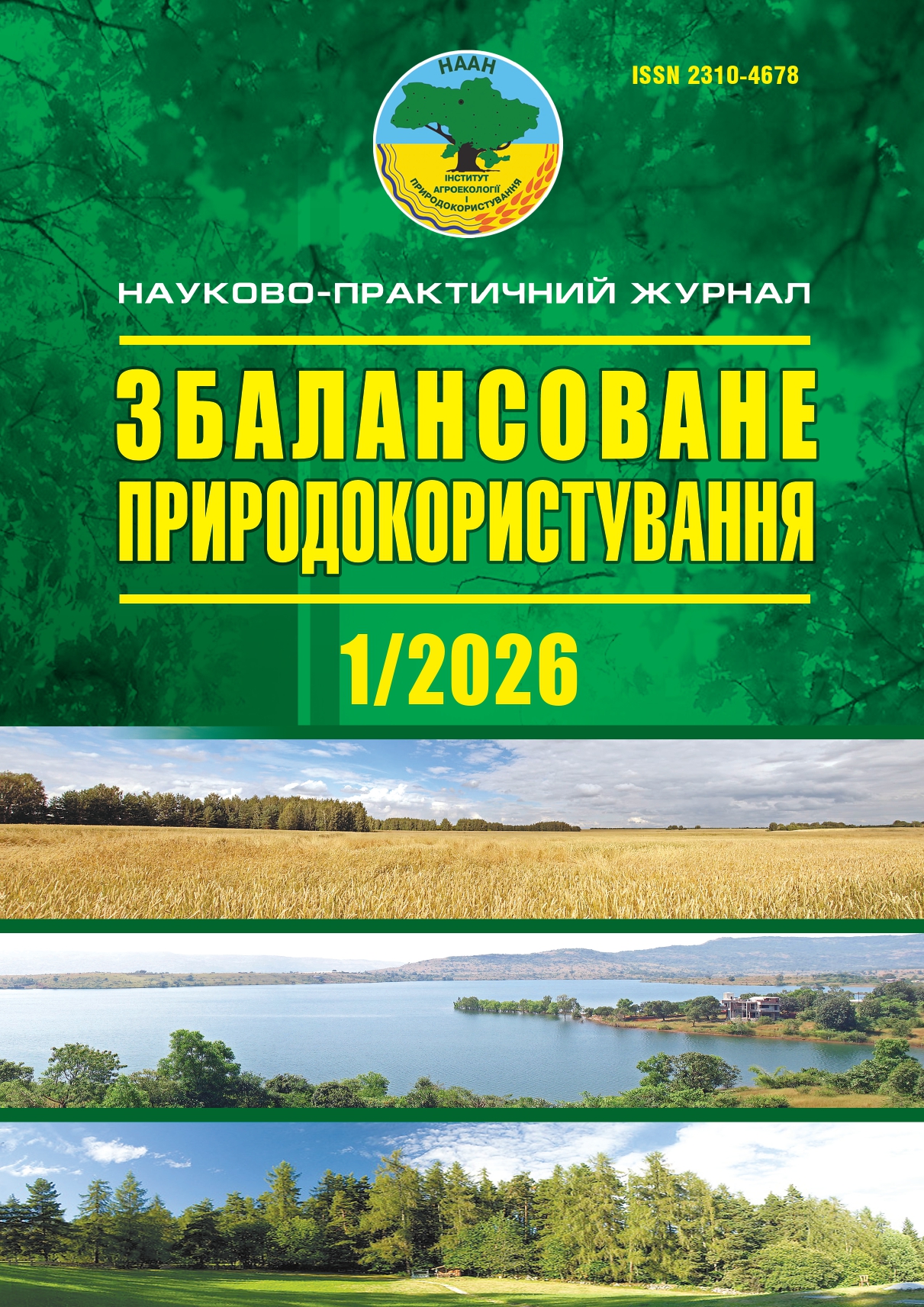
Downloads
Published
Issue
Section
License
- The authors reserve the right to authorship their work and pass the journal the right to publish this work under a Creative Commons Attribution License license, which allows other persons to freely distribute the published work with the obligatory The authors of the original work and the first publication of this magazine.
- The authors have the right to make independent additional agreements on the nonexclusive dissemination of the work in the form in which it was published by this magazine (for example, to post work in the company's electronic storage or to publish as a monograph) , subject to the first publication of the link to this journal.
- Journal policy allows and encourages the placement of authors on the Internet (for example, in the repositories of institutions or on personal websites) manuscript work as to the presentation of this manuscript to the editorial board and during its editorial processing, as it contributes to The productive scientific discussion and positively affects the efficiency and dynamics of citation published work (see The Effect of Open Access).