Improvement technology for preparing balsam-type drinks based on plant raw materials
DOI:
https://doi.org/10.15587/2706-5448.2025.337535Keywords:
plant extract, balsam, recipe, organoleptic assessment, essential oil base, aromatic and spicy plantsAbstract
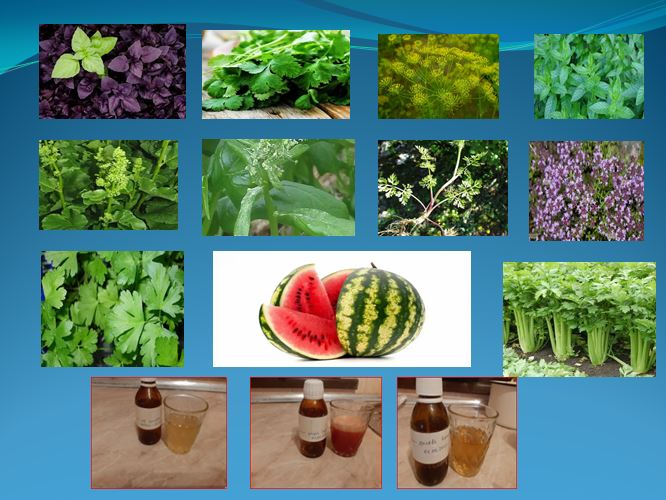
The object of the study is the preparation of balsam-type drinks. The problem of creating balsam-type drinks capable of satisfying the population's need for biologically active substances and increasing the overall tone of the body, while maintaining the availability and technological effectiveness of production, was solved. The work developed a technology for the preparation of general tonic non-alcoholic and alcoholic balsam-type drinks enriched with vitamins, essential oils and phenolic compounds, intended for mass consumption. For this purpose, the most popular aromatic and spicy plants of Azerbaijan were used. A recipe composition for 11 plant names was selected in order to obtain bitter sugar-containing non-alcoholic and alcoholic tinctures. During the study, watermelon juice and coriander (wild cilantro) were used as a preservative for this purpose. In 3 versions, a recipe composition of plants for the basis of extracts of a new range of alcohol-containing and non-alcoholic balsams was developed and proposed. Using heat treatment in a gentle mode, a blend of plants was obtained for the extraction of biologically active valuable components. Organoleptic and physicochemical indicators of the balsams were determined after their storage in normal and refrigerated conditions. The results of the studies showed that the content of dry substances in them fluctuates within 41.3–57.2%. Active acidity (pH), total amount of macro- and microelements (%) and specific gravity (g/cm3), respectively, amounted to 5.53÷7.74, 1.136÷1.253 and 1.647÷1.2609. The nitrite content was also determined (16–18 mg/kg), since the recipe includes watermelon juice. Studies have shown that the samples stored at room and refrigerated conditions differed slightly in the main indicators and retained the corresponding color without change. However, the balsam prepared using watermelon juice, unlike the others, had a light orange color. The analyses were carried out using chromatograph mass spectrometry. The results showed that the essential oil base of the prepared drinks in all three variants of balsams is 5-hydroxymethylfurfural (13.73÷34.65%); n-hexadecanoic acid (11.12÷34.96%); heptadecanoic acid (12.67÷18.16%). Together with other chemical indicators, they characterize the bouquet and taste of the developed balsam “Ganja”.
References
- Tağıyev, M. M., Həsənova, H. T., Cəfərova, A. V. (2020). Efir yağli bitkilərdən balzam içkisi istehsali perspektivlərinin araşdirilmasi. Respublikamizda qida və yüngül sənayenin inkişaf perspektivləri və qarşida duran vəzifələr. Bakı, 156–158. Available at: https://www.scribd.com/document/537450726/IV-konfrans-materiallr-r#page=150
- Qurbanov, N. H., Əmiraslanova, L. T., Məhərrəmova, M. H. (2012). Yemişan meyvələrindən funksional təyinatlı qida məhsullarının istehsalı. Bakı: ”Təbib” nəşriyyatı, 132. Available at: https://www.researchgate.net/publication/351257159_Yemisan_meyvlrindn_funksional_tyinatli_qida_mhsullarinin_istehsaliMonoqrafiya
- Əhmədov, Ə. İ. (2014). Yeyilən bitkilərin müalicəvi xassələri. Bakı: “İqtisad Universiteti” nəşriyyatı, 468. Available at: https://unec.edu.az/application/uploads/2015/12/yeyilaen_cabir.pdf
- Tagiev, I. I., Ibragimova, I. M., Babaev, A. M. (2001). Resursy mineralnykh i termalnykh vod Azerbaidzhana. Baku: Chashyoglu, 168.
- Budaeva, V. V., Egorova, E. Iu., Shkolnikova, M. N. (2006). Tekhnologiia proizvodstva bezalkogolnykh balzamov. Pivo i napitki, 1, 40–42.
- Chueshov, V. I., Gladukh, E. V., Saiko, I. V. et al. (2001). Tekhnologiia lekarstv promyshlennogo proizvodstva. Vinnitca: Novaia kniga, 696.
- Andrest, B. V., Volkind, I. L. et al. (1987). Spravochnik tovaroveda prodovolstvennykh tovarov. Vol. 2. Ekonomika, 320.
- Popkov, P. N. (2015). Poluchenie fitoadaptogennykh balzamov na osnove rastitelnogo syria. Sovremennye problemy nauki i obrazovaniia, 1.
- Altymyshev, A. A. (1992). Prirodnye tcelebnye sredstva. Profizdat, 272.
- Altymyshev, Alt. A., Takyrbasheva, R. A., Povalotckaia, A. S., Dzhunkeev, T. D., Altymyshev, Alm. A. (1993). Pat. No. 1788964 A3 GOSPATENT. Gorkaia nastoika balzam “Arstan”. MPK S 12 G 3/06. No. 4909020/13; declareted: 07.02.91.03.01; published: 15.01.93, Bul. No. 2.
- Shkolnikova, M. N. (2010). Pat. No. 2405034. Kompozitciia ingredientov dlia proizvodstva balzama. MPK S12G3/06. No. 2009110089/10; declareted: 19.03.2009; published: 27.11.2010, Bul. No. 33.
- Bitueva, E. B., Antcupova, T. P., Alekseeva, I. A., Pavlova, E. P. (2023). Pat. 2 798 970. Balzam. MPK C12G 3/06; No. 2022128575, declareted: 03.11.2022; published: 29.06.2023, Bul. No. 19.
- Sari, M., Chan, A., Faisal, H., Tarigan, R. E., Nadeak, E. R. (2024). Formulation Aroma Therapy Balm Preparations Combination Red Ginger Essential Oils (Zingiber officinale Roscoe) and Essential Oil Of Leaves Lemongrass (Cymbophogon nardus (L) Rendle). International Journal of Health Engineering and Technology, 2 (5). https://doi.org/10.55227/ijhet.v2i5.170
- Akramjanovna, D. S., Aripova, K. O. (2024). Producing the processes of obtaining functional drinks based on medicinal plants extract. E3S Web of Conferences, 486, 02018. https://doi.org/10.1051/e3sconf/202448602018
- Zheplinska, M., Mushtruk, M., Vasyliv, V., Gorenkov, K. (2023). Drinks using extracts of medicinal plant raw materials. Human and Nation’s Health, 1 (1), 37–48. https://doi.org/10.31548/humanhealth.1.2023.37
- Tkachenko, N., Nekrasov, P., Vikul, S., Honcharuk, Ya. (2017). Modelling formulae of strawberry whey drinks of prophylactic application. Food Science and Technology, 11 (1). https://doi.org/10.15673/fst.v11i1.303
- Mehrotra, N., Khan, S. A., Jadhav, K. (2023). Selected Indian Medicinal and Aromatic Plants for Prophylactic Therapy. Medicinal and Aromatic Plants of India Vol. 2, 253–277. https://doi.org/10.1007/978-3-031-44914-7_13
- Hümbətov, H. S., Bəşirov, V. V., Mohumayev, V. R. (2016). Yağlı və efir yağlı bitkilər. Bakı: “Elm və təhsil” nəşriyyat poliqrafiya MMC, 248. Available at: https://anl.az/el/Kitab/2016/Azf-290906.pdf
- İbadullayeva, S. C., Cəfərli, İ. Ə. (2007). Efir yağları və aromaterapiya. Bakı: “Elm” nəşiriyyatı, 116. Available at: https://www.researchgate.net/publication/372627790_Efir_yaglari_v_aromaterapiya
- İsmayılov, A. (2018). Ədviyyat, bitki çaylari və dərman bitkiləri. Dərs vəsaiti. Bakı, 220. Available at: https://e-derslik.edu.az/player/index3.php?book_id=629#books/629/units/unit-1/page1.xhtml
- Clarus SQ 8 GC/MS.Gas Chromatograph/Mass Spectrometer. Perkin Elmer Inc.
Downloads
Published
How to Cite
Issue
Section
License
Copyright (c) 2025 Nusrat Gurbanov, Mardan Tagiyev, Aygun Jafarova, Elza Omarova, Afet Gasimova, Gultakin Gasimova, Aymira Huseynova

This work is licensed under a Creative Commons Attribution 4.0 International License.
The consolidation and conditions for the transfer of copyright (identification of authorship) is carried out in the License Agreement. In particular, the authors reserve the right to the authorship of their manuscript and transfer the first publication of this work to the journal under the terms of the Creative Commons CC BY license. At the same time, they have the right to conclude on their own additional agreements concerning the non-exclusive distribution of the work in the form in which it was published by this journal, but provided that the link to the first publication of the article in this journal is preserved.