Assessment of the technical condition of a treatment facility at a chemical enterprise
DOI:
https://doi.org/10.15587/2706-5448.2026.353109Keywords:
chemical composition of wastewater, concrete corrosion, elemental composition, concrete structureAbstract
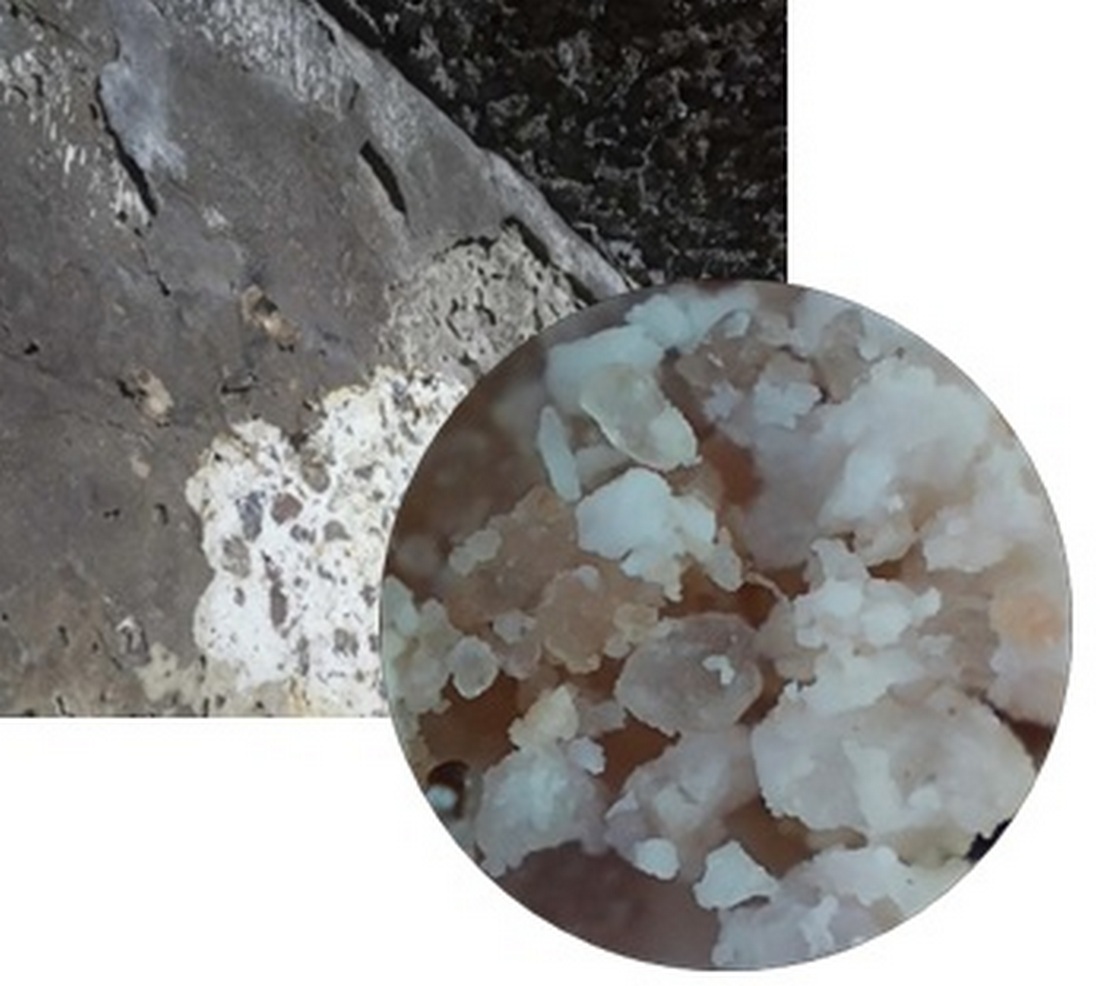
The object of research is a sewage well of a chemical enterprise. The chemical composition of the enterprise's wastewater, which is concentrated in the averaging unit, and the structural and elemental composition of concrete samples were determined. Upon completion of the experiment, proposals were made regarding the further operation of the chemical enterprise's treatment plant. It was found that the suspended solids content was higher in the first sample by 4.85%, and in the fifth – by 15.29%. The dry residue content was higher in the second sample by 20.18%, in the fourth – by 9.27%, and in the fifth – by 27.45%. The concentration of ammonium nitrogen is higher in the fourth experiment by 52.31%. The level of ammonium ions was higher in the fourth by 43.77%, nitrite ions in the second and third samples were higher by 16.67%, in the fourth by 383.33%, in the fifth by 983.33%. The increase in nitrate ions in the second sample was by 58.0%, in the third by 146.0%, in the fourth by 276.0%, in the fifth by 520.0%. APAR increased in the second water sample by 306.0%, in the third by 422.0%, in the fourth by 250.0%, in the fifth by 190.0%. The level of total iron is higher in the second group by 2288.89%, in the third – by 970.37%, in the fourth – by 1075.92%, in the fifth – by 1459.26%. The study by the X-ray fluorescence method showed that the CaO content was lower in the first sample by 3.27%, the second – by 2.27%, the third – by 3.01%; Fe2O3 is higher by 20.09%, by 22.77%, by 24.11%, SiO2 by 10.83%, by 2.27%, 3.01%, SO2 was by 4.50%, in the second and third – by 4.05%, TiO2 by 0.68%, by 12.50%, by 14.19%. X-ray diffraction analysis showed the presence of a large amount of gypsum and quartz in the concrete.
The conducted research is distinguished by the fact that chemical corrosion of the concrete treatment plant under the influence of wastewater was established. The practical significance of the results obtained is that the destruction of the surface layer of concrete as a result of corrosion was established. Preventive measures are proposed to prevent corrosion of the treatment plant.
Supporting Agency
- This work was funded by the project “Research into the spread of infectious disease pathogens and antibiotic-resistant microorganisms in frontline areas” (No. 0126U000393).
References
- Chen, X., Xu, Z., Yao, L., Ma, N. (2018). Processing Technology Selection for Municipal Sewage Treatment Based on a Multi-Objective Decision Model under Uncertainty. International Journal of Environmental Research and Public Health, 15 (3), 448. https://doi.org/10.3390/ijerph15030448
- Brooks, B. W., Callahan, T., Stanley, J. K., Holodak, J., Stroski, K. M., Cox, A. H. et al. (2025). Identifying Priority Research Questions for Decentralized Wastewater. Environmental Science & Technology, 60 (1), 49–63. https://doi.org/10.1021/acs.est.5c02138
- Xu, M., Zhang, K., Wang, Y., Zhang, B., Mao, K., Zhang, H. (2022). Health Risk Assessments and Microbial Community Analyses of Groundwater from a Heavy Metal-Contaminated Site in Hezhou City, Southwest China. International Journal of Environmental Research and Public Health, 20 (1), 604. https://doi.org/10.3390/ijerph20010604
- Wang, J., Liu, A., Zheng, M., Li, Y., Shi, L., Cao, S. et al. (2025). Prevalence of Polyhalogenated Carbazole in an Anthropogenically Impacted Soil Groundwater System. Environment & Health, 3 (6), 636–647. https://doi.org/10.1021/envhealth.4c00263
- Drane, K., Sheehan, M., Whelan, A., Ariel, E., Kinobe, R. (2024). The Role of Wastewater Treatment Plants in Dissemination of Antibiotic Resistance: Source, Measurement, Removal and Risk Assessment. Antibiotics, 13 (7), 668. https://doi.org/10.3390/antibiotics13070668
- Wang, S., Yang, S., Quispe, E., Yang, H., Sanfiorenzo, C., Rogers, S. W. et al. (2021). Removal of Antibiotic Resistant Bacteria and Genes by UV-Assisted Electrochemical Oxidation on Degenerative TiO2 Nanotube Arrays. ACS ES&T Engineering, 1 (3), 612–622. https://doi.org/10.1021/acsestengg.1c00011
- Tsyhanenko, L., Volkov, D., Shkromada, O., Tsyhanenko, H., Lutskovskyi, V., Shpota, V. et al. (2025). Influence of vegetable fats on concrete of agricultural structures. Technology Audit and Production Reserves, 2 (3 (82)), 6–11. https://doi.org/10.15587/2706-5448.2025.325094
- Shkromada, O., Tsyhanenko, L., Ivchenko, V., Tsyhanenko, H., Fotina, T., Berezovskyi, A. et al. (2025). The structure and properties features of concrete during exploitation under conditions of organic oil influence. Journal of Chemistry and Technologies, 33 (2), 449–457. https://doi.org/10.15421/jchemtech.v33i2.322601
- Jiang, G., Zhou, M., Chiu, T. H., Sun, X., Keller, J., Bond, P. L. (2016). Wastewater-Enhanced Microbial Corrosion of Concrete Sewers. Environmental Science & Technology, 50 (15), 8084–8092. https://doi.org/10.1021/acs.est.6b02093
- Gerengi, H., Kaya, E., Solomon, M. M., Snape, M., Koerdt, A. (2024). Advances in the Mitigation of Microbiologically Influenced Concrete Corrosion: A Snapshot. Materials, 17 (23), 5846. https://doi.org/10.3390/ma17235846
- Aboulela, A., Peyre Lavigne, M., Buvignier, A., Fourré, M., Schiettekatte, M., Pons, T. et al. (2021). Laboratory Test to Evaluate the Resistance of Cementitious Materials to Biodeterioration in Sewer Network Conditions. Materials, 14 (3), 686. https://doi.org/10.3390/ma14030686
- Fan, W., Zhuge, Y., Ma, X., Chow, C. W. K., Gorjian, N., Oh, J.-A. et al. (2020). Durability of Fibre-Reinforced Calcium Aluminate Cement (CAC)–Ground Granulated Blast Furnace Slag (GGBFS) Blended Mortar after Sulfuric Acid Attack. Materials, 13 (17), 3822. https://doi.org/10.3390/ma13173822
- DSTU EN ISO 5667-1:2022 Yakist vody. Vidbyrannia prob. Chastyna 1. Nastanovy shchodo rozroblennia prohram i metodiv vidbyrannia prob (EN ISO 5667-1:2022, IDT; ISO 5667-1:2020, IDT) (20220). DP “UkrNDNTs”. Available at: https://online.budstandart.com/ua/catalog/doc-page.html?id_doc=109217
- Calvin, J. J., Kaufman, T. M., Sedlak, A. B., Crook, M. F., Alivisatos, A. P. (2021). Observation of ordered organic capping ligands on semiconducting quantum dots via powder X-ray diffraction. Nature Communications, 12 (1). https://doi.org/10.1038/s41467-021-22947-x
- Steinegger, A., Wolfbeis, O. S., Borisov, S. M. (2020). Optical Sensing and Imaging of pH Values: Spectroscopies, Materials, and Applications. Chemical Reviews, 120 (22), 12357–12489. https://doi.org/10.1021/acs.chemrev.0c00451
- Fisher, R. A. (1948). Questions and answers #14. The American Statistician, 2 (5), 30–31. https://doi.org/10.1080/00031305.1948.10483405
- Kato, S., Kansha, Y. (2024). Comprehensive review of industrial wastewater treatment techniques. Environmental Science and Pollution Research, 31 (39), 51064–51097. https://doi.org/10.1007/s11356-024-34584-0
- Belinawati, R. A. P., Soesilo, T. E. B., Asteria, D., Harmain, R. (2018). Sustainability: Citarum River, government role on the face of SDGs (water and sanitation). E3S Web of Conferences, 52, 00038. https://doi.org/10.1051/e3sconf/20185200038
- Pratiwi, D., Sumiarsa, D., Oktavia, D., Sunardi, S. (2023). Water Quality Influences Self-Purification in the Cihawuk and Majalaya Segments Upstream of the Citarum River, West Java, Indonesia. Water, 15 (16), 2998. https://doi.org/10.3390/w15162998
- Słomka-Słupik, B., Podwórny, J., Grynkiewicz-Bylina, B., Salamak, M., Bartoszek, B., Drzyzga, W. et al. (2021). Concrete Examination of 100-Year-Old Bridge Structure above the Kłodnica River Flowing through the Agglomeration of Upper Silesia in Gliwice: A Case Study. Materials, 14 (4), 981. https://doi.org/10.3390/ma14040981
- Luo, Z., Yu, H., Ma, H., Tan, Y., Wu, C., Sun, J. et al. (2025). Corrosion Products and Microstructural Evolution of Ordinary Portland Cement and High-Performance Concrete After Eight Years of Field Exposure in Qarhan Salt Lake. Materials, 18 (8), 1769. https://doi.org/10.3390/ma18081769
- Zhang, C., Li, J., Yu, M., Lu, Y., Liu, S. (2024). Mechanism and Performance Control Methods of Sulfate Attack on Concrete: A Review. Materials, 17 (19), 4836. https://doi.org/10.3390/ma17194836
- Sun, D., Huang, C., Cao, Z., Wu, K., Zhang, L. (2021). Reliability assessment of concrete under external sulfate attack. Case Studies in Construction Materials, 15, e00690. https://doi.org/10.1016/j.cscm.2021.e00690
- Sopov, V., Danchenko, J., Latorez, E. (2019). Assess the Effectiveness of protective Concrete coatings of microbiological sulfuric acid Aggression. E3S Web of Conferences, 97, 02022. https://doi.org/10.1051/e3sconf/20199702022
- Merachtsaki, D., Tsardaka, E.-C., Tsampali, E., Simeonidis, K., Anastasiou, E., Yiannoulakis, H. et al. (2020). Study of Corrosion Protection of Concrete in Sewage Systems with Magnesium Hydroxide Coatings. 4th EWaS International Conference: Valuing the Water, Carbon, Ecological Footprints of Human Activities, 27. https://doi.org/10.3390/environsciproc2020002027
- Jiang, G., Li, X., Song, Y.; Jiang, G. (Ed.) (2023). Concrete Sewer Systems and Wastewater Processes Related to Concrete Corrosion. Microbiologically Influenced Corrosion of Concrete Sewers. Cham: Springer, 3–20. https://doi.org/10.1007/978-3-031-29941-4_1
- Gutarowska, B., Kotynia, R., Bieliński, D., Anyszka, R., Wręczycki, J., Piotrowska, M. et al. (2019). New Sulfur Organic Polymer-Concrete Composites Containing Waste Materials: Mechanical Characteristics and Resistance to Biocorrosion. Materials, 12 (16), 2602. https://doi.org/10.3390/ma12162602
Downloads
Published
How to Cite
Issue
Section
License
Copyright (c) 2026 Liudmyla Tsyhanenko, Oksana Shkromada, Dmytro Volkov, Oleksandr Chekan, Valerii Lutskovskyi

This work is licensed under a Creative Commons Attribution 4.0 International License.
The consolidation and conditions for the transfer of copyright (identification of authorship) is carried out in the License Agreement. In particular, the authors reserve the right to the authorship of their manuscript and transfer the first publication of this work to the journal under the terms of the Creative Commons CC BY license. At the same time, they have the right to conclude on their own additional agreements concerning the non-exclusive distribution of the work in the form in which it was published by this journal, but provided that the link to the first publication of the article in this journal is preserved.