Визначення впливу інструментів інноваційного розвитку на повоєнне відновлення економіки України
DOI:
https://doi.org/10.15587/2706-5448.2025.326701Ключові слова:
інноваційна діяльність, інвестиційний клімат, економічне зростання, післявоєнна відбудова, інноваційна політика, російська агресіяАнотація
Війни за своєю природою призводять до спаду економічної активності, значного зниження рівня життя. Одним із найпотужніших інструментів для економічного відновлення є інноваційний підхід до розвитку економіки. Об’єктом дослідження є процес впровадження інструментів інноваційного розвитку економіки та її розвитку для відновлення економіки України воєнного періоду. Розкрито проблеми забезпечення використання інноваційних засобів у воєнний період. Передбачається, що інструменти інноваційного розвитку відіграватимуть вирішальну роль у новій економіці, яка стала значною під час суттєвих потрясінь у воєнний період.
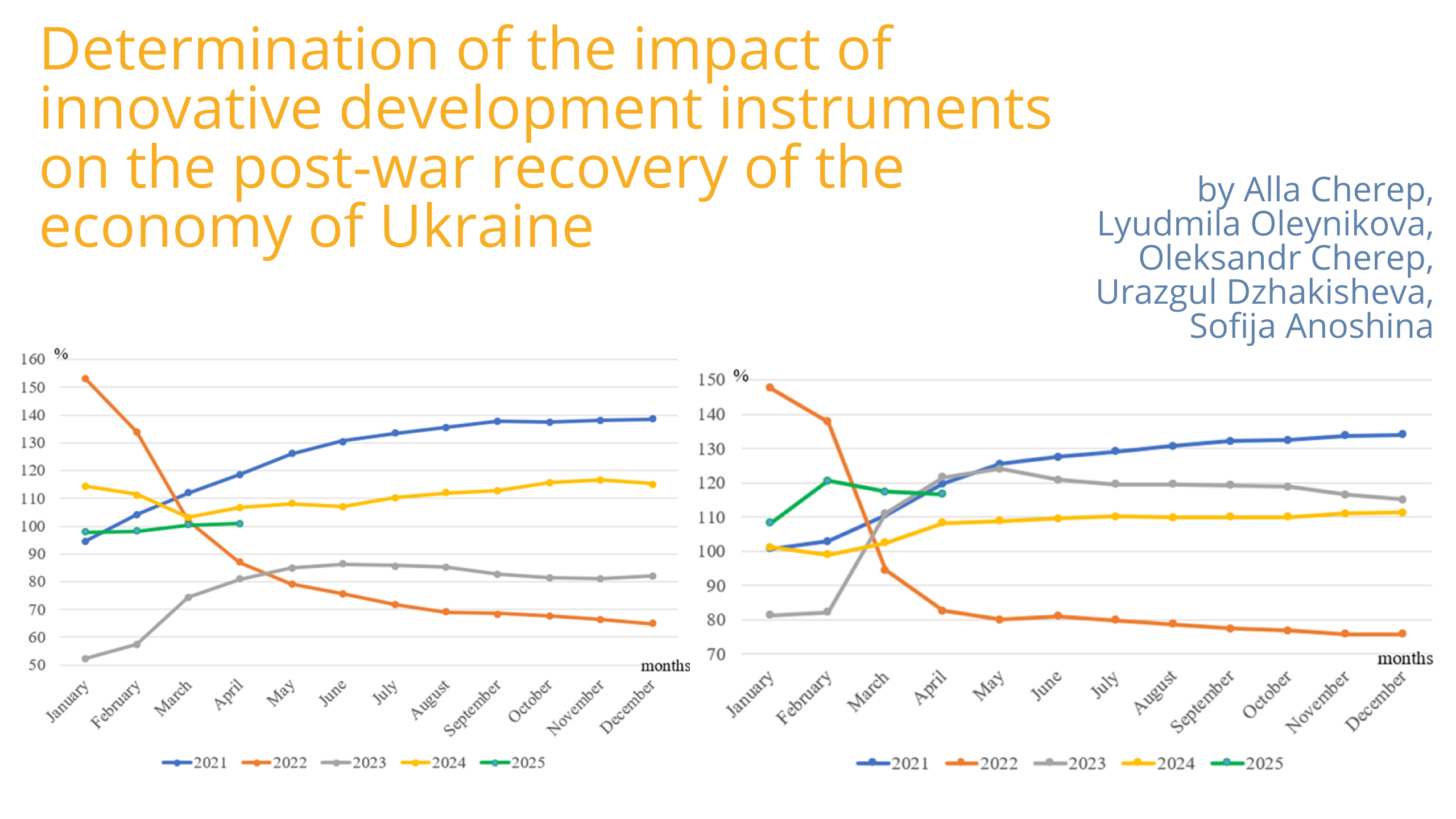
При написанні роботи для систематизації інноваційного інструментарію використано метод теоретичного узагальнення, наукової абстракції; фінансово-економічний, статистичний, порівняльний аналіз – для вивчення прямих втрат від руйнування інфраструктури внаслідок російсько-української війни, темпів зміни експорту, імпорту товарів, рівня інфляції та міграційних процесів; систематизація, структурний аналіз, узагальнення – для формування комплексного підходу до післявоєнного економічного відновлення.
Пропонується використовувати інструменти державної політики у процесі післявоєнного відновлення для стимулювання інноваційних проєктів через податкові пільги та створення сприятливого бізнес-середовища для малого та середнього бізнесу. Доведено, що інновації є інструментом важливого міжнародного співробітництва, яке сприятиме швидкому обміну технологіями та знаннями, що особливо важливо для країн, які оговтуються від війни. Внесено пропозиції щодо комплексного підходу до економічного, соціального та екологічного відновлення України на засадах інноваційного розвитку. Запропоновано заходи, спрямовані на створення інституційних умов для інноваційного розвитку економіки України.
Посилання
- Bila, I., Posna, V., Shevchenko, O. (2023). Innovative development as a factor of the post-war economy of Ukraine. Scientific Papers NaUKMA. Economics, 8 (1), 10–16. https://doi.org/10.18523/2519-4739.2023.8.1.10-16
- Cherep, O., Cherep, A., Ohrenych, Y., Helman, V., Gorbunova, A. (2024). Improvement of the management mechanism of the strategy of innovative activities of enterprises. Financial and Credit Activity Problems of Theory and Practice, 1 (54), 471–484. https://doi.org/10.55643/fcaptp.1.54.2024.4295
- Fedulova, L. (2012). The conceptual model of Ukraine’s innovation strategy. Economy and Forecasting, 1, 87–100.
- Susidenko, V., Susidenko, J. (2020). Realities of innovative development of enterprises of Ukraine. European Scientific Journal of Economic and Financial Innovation, 2 (6), 183–193. https://doi.org/10.32750/2020-0217
- Smiesova, V., Ischenko, I. (2020). Innovation as the basis of increasing product quality and ensuring competitiveness of the enterprise. International Humanitarian University Herald. Economics and Management, 43, 76–82. https://doi.org/10.32841/2413-2675/2020-43-12
- Yurchuk, N., Liudvik, I. (2021). Factors of innovative development of agricultural enterprises. Efektyvna Ekonomika, 5. https://doi.org/10.32702/2307-2105-2021.5.98
- Liudvik, I. (2022). Innovative development of ukraine in the context of globalization of the economic space. State and Regions. Series: Economics and Business, 2 (125). https://doi.org/10.32840/1814-1161/2022-2-6
- Kovalchuk, V. (2023). Analysis of trends in innovative development of the national economy. Economy and Society, 58. https://doi.org/10.32782/2524-0072/2023-58-33
- Gonchar, O., Cherep, A., Cherep, A. (2019). Substantiation of the model of innovative development of the enterprise. Proceedings of the 6th International Conference on Strategies, Models and Technologies of Economic Systems Management (SMTESM 2019). https://doi.org/10.2991/smtesm-19.2019.69
- Kovalchuk, V. (2023). Analysis of trends in innovative development of the national economy. Economy and Society, 58. https://doi.org/10.32782/2524-0072/2023-58-33
- Omelianenko, V. A. (Ed.) (2022). Innovatsiini osnovy vidnovlennia ta rozvytku krain pislia zbroinykh konfliktiv: innovatsiinyi vymir. Sumy: Instytut stratehii innovatsiinoho rozvytku i transferu znan, 280. Available at: https://iidskt.org.ua/wp-content/uploads/Monografiya_Vidnovlennya_2022.pdf
- Perminova, S., Sytnik, H., Chuprina, M. (2024). Innovation activity in ukraine during the period of military aggression: trends and prospects. Economy and Society, 59. https://doi.org/10.32782/2524-0072/2024-59-62
- Xu, Q., Li, X., Dong, Y., Guo, F. (2023). Digitization and green innovation: how does digitization affect enterprises’ green technology innovation? Journal of Environmental Planning and Management, 68 (6), 1282–1311. https://doi.org/10.1080/09640568.2023.2285729
- Esmanov, O., Sntyka, Y., Lynnyk, M. (2024). Strategies for innovative development of territories and smart specialization: essence, features. Digital Есопоmу and Economic Security, 3 (12), 13–18. https://doi.org/10.32782/dees.12-3
- Rahmouni, M. (2013). Innovativeness of exporting firms in a developing country: The case of Tunisia. Economics Bulletin, 33 (2), 914–930. Available at: https://ideas.repec.org/a/ebl/ecbull/eb-12-00359.html
- Pastukh, K. (2021). Strategic development planning of territorial communities. Scientific Herald: Public Administration, 1 (1 (7)), 195–215. https://doi.org/10.32689/2618-0065-2021-1(7)-195-215
- Sntyka, Y., Lynnyk, M., Esmanov, O. (2024). Systematization of methodological tools for strategic planning of territorial development. Digital Есопоmу and Economic Security, 1 (10), 52–55. https://doi.org/10.32782/dees.10-9
- Samara, E., Andronikidis, A., Komninos, N., Bakouros, Y., Katsoras, E. (2022). The Role of Digital Technologies for Regional Development: a System Dynamics Analysis. Journal of the Knowledge Economy, 14 (3), 2215–2237. https://doi.org/10.1007/s13132-022-00951-w
- Ludmila, O., Alla, C., Anna, H., Svitlana, D., Sofiya, A. (2024). Socio-Economic Significance of the Formation of an Effective Financial System in the Context of Hostilities. Navigating the Technological Tide: The Evolution and Challenges of Business Model Innovation. Cham: Springer, 309–319. https://doi.org/10.1007/978-3-031-67434-1_29
- Oleynikova, L., Cherep, O., Androsova, E., Bexhter, L., Korotaieva, O. (2023). Modern architecture of the infrastructure of Ukraine and its development strategy in the post-war period. Financial and Credit Activity Problems of Theory and Practice, 5 (52), 299–313. https://doi.org/10.55643/fcaptp.5.52.2023.4180
- Russia will pay. Kyiv School of Economics. Available at: https://kse.ua/ua/russia-will-pay/
- Zovnishnia torhivlia Ukrainy tovaramy u 2022 rotsi (2023). Derzhavna sluzhba statystyky Ukrainy. Available at: https://stat.gov.ua/uk/publications/zovnishnya-torhivlya-ukrayiny-tovaramy-u-2022-rotsi
- Zovnishnia torhivlia Ukrainy tovaramy za 2024 rik (ekspres-vypusk). Available at: https://stat.gov.ua/uk/publications/zovnishnya-torhivlya-ukrayiny-tovaramy-za-2024-rik-ekspres-vypusk
- Indeks infliatsii (2000–2024). Stavky, yndeksy, taryfy. Available at: https://index.minfin.com.ua/ua/economy/index/inflation/
- R&D Tax Credits Explained. ForrestBrown. Available at: https://forrestbrown.co.uk/rd-tax-credits-explained/
- Vplyv viiny na ukrainske silske hospodarstvo. Kyiv School of Economics. Available at: https://kse.ua/ua/war-impacts-on-ukrainian-agriculture/
- Vidnovlennia ekonomiky Ukrainy. Kyiv School of Economics. Available at: https://kse.ua/ua/vidnovlennya-ekonomiki-ukrayini/
- Vorona, A. (2020). Global factors influencing the innovative development of the national economy. Economics. Finances. Law, 3 (1), 32–36. https://doi.org/10.37634/efp.2020.3(1).6
##submission.downloads##
Опубліковано
Як цитувати
Номер
Розділ
Ліцензія
Авторське право (c) 2025 Alla Cherep, Lyudmila Oleynikova, Oleksandr Cherep, Urazgul Dzhakisheva, Sofija Anoshina

Ця робота ліцензується відповідно до Creative Commons Attribution 4.0 International License.
Закріплення та умови передачі авторських прав (ідентифікація авторства) здійснюється у Ліцензійному договорі. Зокрема, автори залишають за собою право на авторство свого рукопису та передають журналу право першої публікації цієї роботи на умовах ліцензії Creative Commons CC BY. При цьому вони мають право укладати самостійно додаткові угоди, що стосуються неексклюзивного поширення роботи у тому вигляді, в якому вона була опублікована цим журналом, але за умови збереження посилання на першу публікацію статті в цьому журналі.