The identification of critical occupational risks and the determination of priority preventive measures in the rotary kiln area of cement
DOI:
https://doi.org/10.15587/2706-5448.2026.344218Keywords:
risk mapping, management, cement plant, safety, decision support tools and preventionAbstract
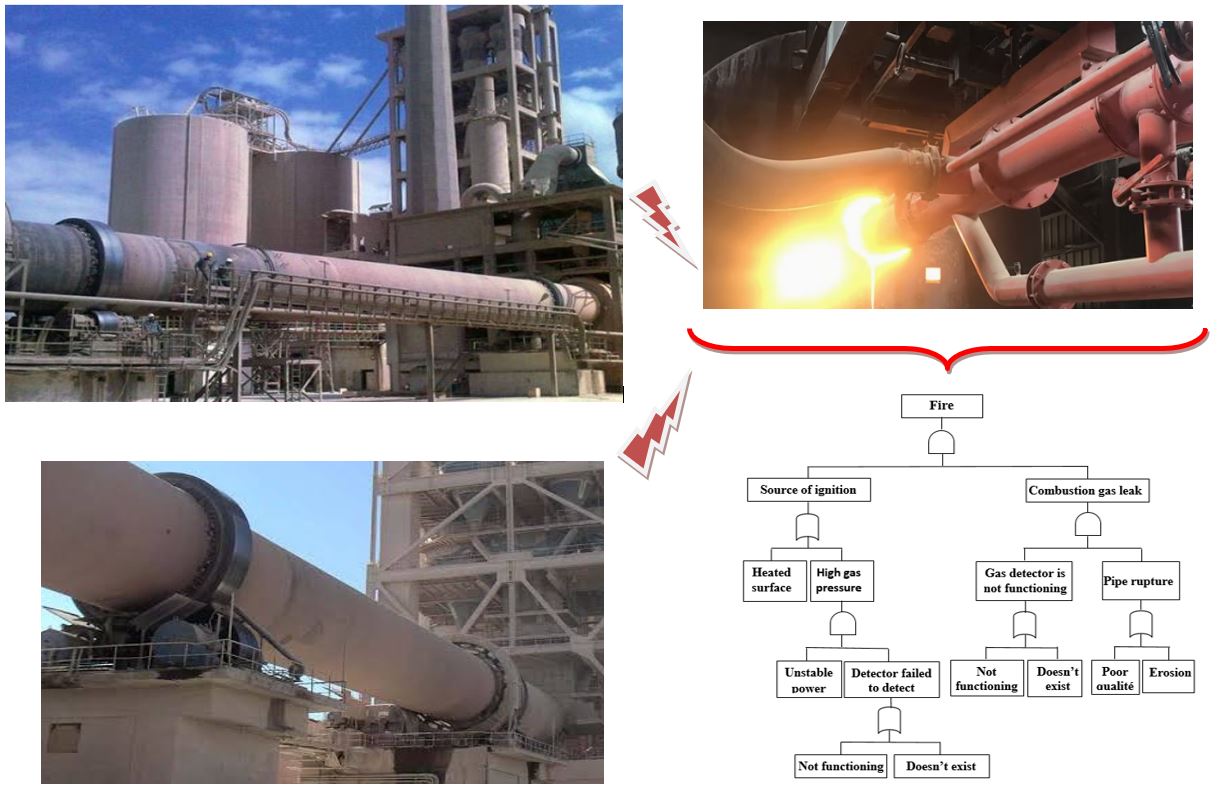
The objects of this research are occupational risks and priority preventive measures in the zone of the rotary kiln used in cement production. The identification of these objects is essential for housing development and infrastructure, but cement production is involving serious professional risks. Consequently, an evaluation of these is necessary; it is a critical stage in prevention process, aiming to prioritize actions in order to implement preventive measures. Therefore, an evaluation was triggered following a noticeable increase of five (05) accidents compared with 2021, with 16 accidents in 2022, to which workers in the rotary kiln zone were exposed. The adopted methodology, namely risk mapping, constitutes a strategic management tool that enables the identification, assessment, prioritization, and visualization of potential threats affecting the study area. Widely applied in industrial contexts, it offers a comprehensive representation and a systematic inventory of existing and potential hazards in both temporal and spatial dimensions. This facilitates risk management in a more informed and effective way. Furthermore, this offers decision-makers a clear overview to develop proactive action plans and allows them to monitor the effectiveness of implemented strategies. To obtain good results, qualitative and quantitative methods were applied, including the Ishikawa diagram, FMEA, and root cause analysis. These tools enabled the identification of the root causes of accidents in the studied zone. The survey results prove that gas leaks constitute the most critical hazards because of their potential to initiate fires. The findings offer a clear and comprehensive overview of occupational hazard distribution in the study zone, supporting the development of a planned prevention strategy to safeguard workers’ health, enhance operational safety, and foster a sustainable safety culture.
References
- Bouzerara, R., Chaib, R., Verzea, I. (2023). For better governance of harmfulness in companies: a case study. Procedia Structural Integrity, 48, 4–11. https://doi.org/10.1016/j.prostr.2023.07.103
- Burtan, Z., Nowak-Senderowska, D., Szczepański, P. (2025). Methodology for Identification of Occupational Hazards Using Their Characteristic Features in Hard Coal Mining. Applied Sciences, 15 (13), 7079. https://doi.org/10.3390/app15137079
- Kharzi, R., Chaib, R., Verzea, I., Akni, A. (2020). Safe and Sustainable Development in a hygiene and healthy company using decision matrix risk assessment technique: a case study. Journal of Mining and Environment, 11 (2), 363–373. https://doi.org/10.22044/jme.2020.9156.1807
- Aouragh, L., Ouazraoui, N., Boubaker, L., Bourmada, N., Sekhri, A. (2025). Integrating Human Performance Factors to Improve Occupational Risk Assessment. International Journal of Safety and Security Engineering, 15 (3), 609–619. https://doi.org/10.18280/ijsse.150319
- Mounia, T., Chaib, R., Samira, B., Djamel, N. (2024). The use of risk mapping for sustainable management of harmful effects in business: Case study. XX International May Conference on Strategic Management – IMCSM24 Proceedings – Zbornik Radova, 191–199. https://doi.org/10.5937/imcsm24070m
- Kabiesz, P., Tutak, M. (2024). Developing a Culture of Safety for Sustainable Development and Public Health in Manufacturing Companies – A Case Study. Sustainability, 16 (17), 7557. https://doi.org/10.3390/su16177557
- Abdelatif, A., Rachid, C., Smain, A., Ion, V. (2015). Promoting a sustainable organizational culture in a company: The National Railway Transport Company. Journal of Rail Transport Planning & Management, 5 (1), 23–30. https://doi.org/10.1016/j.jrtpm.2015.01.001
- Revilla, A. J., Pérez-Luño, A., Nieto, M. J. (2016). Does Family Involvement in Management Reduce the Risk of Business Failure? The Moderating Role of Entrepreneurial Orientation. Family Business Review, 29 (4), 365–379. https://doi.org/10.1177/0894486516671075
- Bakhuys Roozeboom, M. C., Wiezer, N. M., Boot, C. R. L., Bongers, P. M., Schelvis, R. M. C. (2021). Use of Intervention Mapping for Occupational Risk Prevention and Health Promotion: A Systematic Review of Literature. International Journal of Environmental Research and Public Health, 18 (4), 1775. https://doi.org/10.3390/ijerph18041775
- Tremblay, A., Badri, A. (2018). Assessment of occupational health and safety performance evaluation tools: State of the art and challenges for small and medium-sized enterprises. Safety Science, 101, 260–267. https://doi.org/10.1016/j.ssci.2017.09.016
- Figueroa-Maldonado, J., Herrera-Franco, G., Moreno-Alcívar, L., Bravo-Montero, L. (2024). Comparative Analysis of Methodologies for Occupational Safety Risk Assessment in an Artisanal Woodworking Industry. International Journal of Safety and Security Engineering, 14 (6), 1825–1835. https://doi.org/10.18280/ijsse.140617
- Gamboa-Sánchez, M. C., Cotrina-Teatino, M. A., Vega-Gonzalez, J. A., Noriega-Vidal, E. M., Arango-Retamozo, S. M., Marquina-Araujo, J. J. (2024). Effective Critical Risk Management in Welding Operations for Mining: A Case Study on Incident Reduction. International Journal of Safety and Security Engineering, 14 (4), 1039–1047. https://doi.org/10.18280/ijsse.140403
- Bautista-Bernal, I., Quintana-García, C., Marchante-Lara, M. (2024). Safety culture, safety performance and financial performance. A longitudinal study. Safety Science, 172, 106409. https://doi.org/10.1016/j.ssci.2023.106409
- Cooper, M. D.; Gilbert, C. et al. (Eds.) (2018). The safety culture construct: theory and practice. Safety cultures, safety models: Taking stock and moving forward. Cham: Springer International Publishing. Safety Cultures, Safety Models, SpringerBriefs in Safety Management, 47–61. https://doi.org/10.1007/978-3-319-95129-4_5
- Moradi, M., Malmasi, S., Babaei Pouya, A. (2020). Identification Of Health, Safety, and Environment Aspects in Cement Factory Using AHP And FMEA Techniques. Iranian Journal of Health Sciences, 8 (1), 1–10. https://doi.org/10.18502/jhs.v8i1.4020
- Pandeya, P., Mishra, D. K., Khanal, S. P., Joshi, Y. P., Marahatta, S. B., Neupane, A. et al. (2021). Occupational Health Risk among Selected Cement Factory Workers in Dang District of Nepal. International Journal of Health Sciences and Research, 11 (5), 8–22. https://doi.org/10.52403/ijhsr.20210502
- Mohammadfam, I., Kamalinia, M., Momeni, M., Golmohammadi, R., Hamidi, Y., Soltanian, A. (2017). Evaluation of the Quality of Occupational Health and Safety Management Systems Based on Key Performance Indicators in Certified Organizations. Safety and Health at Work, 8 (2), 156–161. https://doi.org/10.1016/j.shaw.2016.09.001
- Koskela, M. (2014). Occupational health and safety in corporate social responsibility reports. Safety Science, 68, 294–308. https://doi.org/10.1016/j.ssci.2014.04.011
- Kim, Y., Jeong, S. S., Yiu, D. W., Moon, J. (2020). Frequent CEO Turnover and Firm Performance: The Resilience Effect of Workforce Diversity. Journal of Business Ethics, 173 (1), 185–203. https://doi.org/10.1007/s10551-020-04534-0
- Ssemuddu, J. B., Olupot, P. W., Kirabira, J. B., Okure, M., Kayenga, T. J. (2025). Strengthening occupational safety, health, and environment risk assessments in cement manufacturing under stochastic production pressure using hybrid predictive models. Discover Applied Sciences, 7 (9). https://doi.org/10.1007/s42452-025-07594-x
- Fresenbet, D. S., Olana, A. T., Tulu, A. S., Danusa, K. T. (2022). Occupational injury and associated factors among cement factories workers in central Ethiopia. Journal of Occupational Medicine and Toxicology, 17 (1). https://doi.org/10.1186/s12995-022-00348-0
- Maqsoom, A., Khan, K., Musarat, M. A., Mubasit, H., Umer, M. (2020). Influence of Internal Workforce Diversity Factors on Labor Productivity in Construction Projects: Empirical Evidence from Pakistan. 2020 Second International Sustainability and Resilience Conference: Technology and Innovation in Building Designs. IEEE, 1–7. https://doi.org/10.1109/ieeeconf51154.2020.9319935
- Glendon, A. I., Clarke, S., McKenna, E. (2016). Human Safety and Risk Management. Boca Raton: CRC Press. https://doi.org/10.1201/9781420004687
- Rachid, C., Ion, V., Irina, C., Mohamed, B. (2015). Preserving and improving the safety and health at work: Case of Hamma Bouziane cement plant (Algeria). Safety Science, 76, 145–150. https://doi.org/10.1016/j.ssci.2015.01.014
- Kanti Bose, T. (2012). Application of Fishbone Analysis for Evaluating Supply Chain and Business Process- A Case Study on the ST James Hospital. International Journal of Managing Value and Supply Chains, 3 (2), 17–24. https://doi.org/10.5121/ijmvsc.2012.3202
- Taleb, M, Belhour, S, Chaib, R, Kahoul, H. (2025). Applied approach for sustainable management and operation of the Constantine tramway. Journal of Dalian University of Technology, 32 (9), 24–34. Available at: https://drive.google.com/file/d/15_du9HTBvMhV9fESq6izihpWMMTuPv4l/view
- Custom Cement Production Line Cement Rotary Kiln Burner 300tpd Cement Plant Cement Clinker Biochar Rotary Kiln Gas Burner. Available at: https://bntet-burner.en.made-in-china.com/product/SJNpdzfVYRYL/China-Custom-Cement-Production-Line-Cement-Rotary-Kiln-Burner-300tpd-Cement-Plant-Cement-Clinker-Biochar-Rotary-Kiln-Gas-Burner.html
- Chaib, R., Verzea, I., Benidir, M., Taleb, M. (2012). Promoting a culture of health and safety at work: safety–a permanent priority. Risk Analysis VIII, 44 (9), 405–413. https://doi.org/10.2495/risk120341
Downloads
Published
How to Cite
Issue
Section
License
Copyright (c) 2026 Razika Aouad, Samira Belhour, Rachid Chaib, Djamel Nettour

This work is licensed under a Creative Commons Attribution 4.0 International License.
The consolidation and conditions for the transfer of copyright (identification of authorship) is carried out in the License Agreement. In particular, the authors reserve the right to the authorship of their manuscript and transfer the first publication of this work to the journal under the terms of the Creative Commons CC BY license. At the same time, they have the right to conclude on their own additional agreements concerning the non-exclusive distribution of the work in the form in which it was published by this journal, but provided that the link to the first publication of the article in this journal is preserved.