Циркулярно орієнтоване економічне оцінювання інновацій на прикладі технології цифрового двійника гідравлічної системи літака
DOI:
https://doi.org/10.15587/2706-5448.2025.347822Ключові слова:
циркулярна економіка, інвестиційна привабливість, капіталомісткі інновації, фінансова стійкість інновацій, стратегічне інвестуванняАнотація
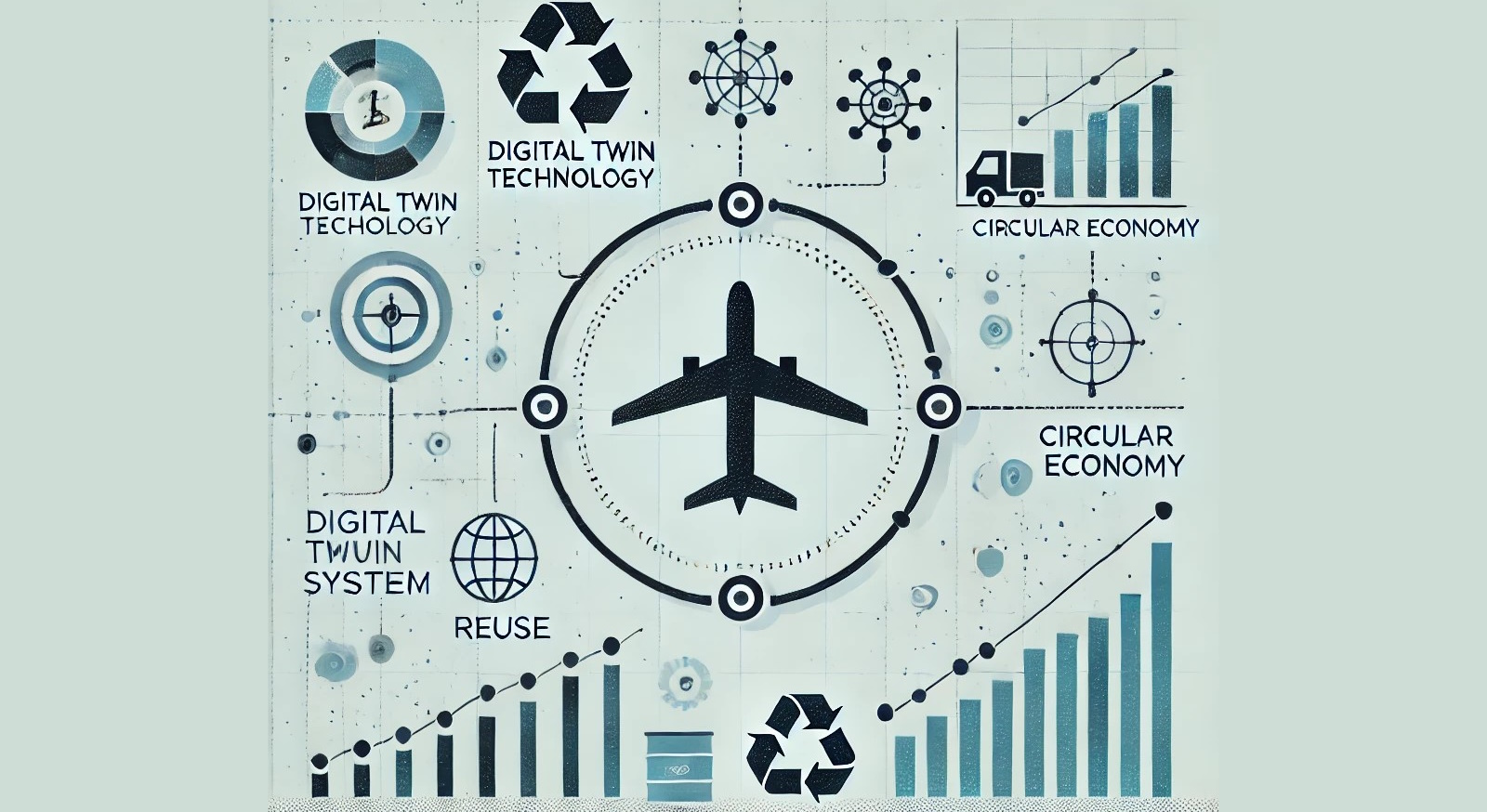
Об’єктом дослідження є процеси економічного оцінювання інноваційних технологій в умовах циркулярної економіки, предметом – методи та моделі вимірювання їхньої економічної ефективності (на прикладі технології цифрового двійника гідравлічної системи літака). Обґрунтовано систему техніко-економічних показників для оцінювання інноваційної технології, сформовано вихідні дані для моделювання її розвитку за різного рівня впровадження циркулярних практик. Проведено сценарне моделювання (песимістичне, базове та оптимістичне) з подальшим аналізом грошових потоків і дисконтованих показників ефективності (NCF, строк окупності, NPV, IRR, PI), і порівняльною оцінкою техніко-екологічних параметрів. Проаналізовано чутливість результатів зі застосуванням методу похідних для визначення впливу ключових факторів.
Моделювання оцінювальних показників з урахуванням імплементації циркулярних практик засвідчило, що навіть за песимістичного сценарію проєкт технології є інвестиційно привабливим. Зокрема, при CAPEX = 1,59 млн дол. проєкт генерує NCF = 808,7 тис. дол. Показники ефективності (NPV = 2,34 млн дол., IRR = 42%, PI = 2,47) підтвердили доцільність його реалізації. Базовий та оптимістичний сценарії показали, що NPV може сягати 2,75–2,95 млн дол., IRR = 43–48%, а PI = 2,59–3,10. За таких умов строк окупності зменшується майже до 1,57 року. Застосування факторів циркулярності забезпечує додатність дисконтованого кумулятивного потоку з 2–3-го року. Без циркулярності – наприкінці 3-го року.
На підставі аналізу чутливості верифіковано ступінь впливу циркулярності на показники проєкту. Це зокрема показало, що зниження NCF на 20% веде до зниження рівня NPV до 1,35 млн дол., IRR до 25%, а збільшення NCF на 20% – до зростання NPV до 4,15 млн дол., IRR до 56%.
Проведено аналіз похідних NPV. Отримані дані показали, що граничний ефект ранніх грошових потоків майже вдвічі перевищує вплив пізніх, за стабільно негативного градієнта CAPEX (–1). Означене дало змогу стверджувати, що ключова роль прискореного формування доходів проявляється на початкових етапах провадження проєкту.
Посилання
- Airlines Maintenance Cost Executive Commentary. FY2021 Data (2022). International Air Transport Association. Available at: https://www.scribd.com/document/773131044/Iata-Fy2021-Mctg-Report-public
- Karunaratne, T., Ajiero, I. R., Joseph, R., Farr, E., Piroozfar, P. (2025). Evaluating the Economic Impact of Digital Twinning in the AEC Industry: A Systematic Review. Buildings, 15 (14), 2583. https://doi.org/10.3390/buildings15142583
- Malik, A. A. (2024). The Economic Impact of Digital Twin Technology on Manufacturing Systems. 2024 Winter Simulation Conference (WSC). IEEE, 1623–1633. https://doi.org/10.1109/wsc63780.2024.10838771
- Thomas, D. (2024). Economics of digital twins: Costs, benefits, and economic decision making (NIST Advanced Manufacturing Series No. AMS 100-61). National Institute of Standards and Technology. https://doi.org/10.6028/nist.ams.100-61
- Mügge, J., Seegrün, A., Hoyer, T.-K., Riedelsheimer, T., Lindow, K. (2024). Digital Twins within the Circular Economy: Literature Review and Concept Presentation. Sustainability, 16 (7), 2748. https://doi.org/10.3390/su16072748
- Cao, M., Song, W., Xu, Y. (2024). Research on the impact of enterprise digital transformation based on digital twin technology on renewable energy investment decisions. Energy Informatics, 7 (1). https://doi.org/10.1186/s42162-024-00447-8
- Kou, G., Dinçer, H., Yüksel, S., Deveci, M. (2024). Synergistic integration of digital twins and sustainable industrial internet of things for new generation energy investments. Journal of Advanced Research, 66, 39–46. https://doi.org/10.1016/j.jare.2023.11.023
- Palea, V., Santhià, C., Miazza, A. (2023). Are circular economy strategies economically successful? Evidence from a longitudinal panel. Journal of Environmental Management, 337, 117726. https://doi.org/10.1016/j.jenvman.2023.117726
- Georgescu, I., Kinnunen, J., Androniceanu, A.-M. (2022). Empirical evidence on circular economy and economic development in Europe: a panel approach. Journal of Business Economics and Management, 23 (1), 199–217. https://doi.org/10.3846/jbem.2022.16050
- Georgescu, L. P., Fortea, C., Antohi, V. M., Balsalobre-Lorente, D., Zlati, M. L., Barbuta-Misu, N. (2025). Economic, technological and environmental drivers of the circular economy in the European Union: a panel data analysis. Environmental Sciences Europe, 37 (1). https://doi.org/10.1186/s12302-025-01119-4
- Prokhorova, V. V., Yemelyanov, O. Y., Koleshchuk, O. Y., Petrushka, K. I. (2023). Tools for assessing obstacles in implementation of energy saving measures by enterprises. Naukovyi Visnyk Natsionalnoho Hirnychoho Universytetu, 1, 160–168. https://doi.org/10.33271/nvngu/2023-1/160
- Prokhorova, V., Mrykhina, O., Koleshchuk, O., Babichev, A., Dudnieva, I., Slastianykova, K. (2025). Economic assessment of intellectual and innovative technologies in the context of sustainable development. Technology Audit and Production Reserves, 1 (4 (81)), 37–50. https://doi.org/10.15587/2706-5448.2025.323977
- Prokhorova, V., Yemelyanov, O., Koleshchuk, O., Shepelenko, S., Slastianykova, K. (2025). Assessment of the impact of technological changes on the dynamics of enterprises’ economic development. Technology Audit and Production Reserves, 4 (4 (84)), 13–23. https://doi.org/10.15587/2706-5448.2025.334782
- Marchioni, A., Magni, C. A. (2018). Investment decisions and sensitivity analysis: NPV-consistency of rates of return. European Journal of Operational Research, 268 (1), 361–372. https://doi.org/10.1016/j.ejor.2018.01.007
- Mokhtari, H., Kiani, S., Tahmasebpoor, S. S. (2018). Economic Evaluation of Investment Projects Under Uncertainty: A Probability Theory Perspective. Scientia Iranica, 25 (6), 3391–3404. https://doi.org/10.24200/sci.2018.50256.1599
- Chai, S. Y. W., Phang, F. J. F., Yeo, L. S., Ngu, L. H., How, B. S. (2022). Future era of techno-economic analysis: Insights from review. Frontiers in Sustainability, 3. https://doi.org/10.3389/frsus.2022.924047
- Zimmermann, A. W., Langhorst, T., Moni, S., Schaidle, J. A., Bensebaa, F., Bardow, A. (2022). Life-Cycle and Techno-Economic Assessment of Early-Stage Carbon Capture and Utilization Technologies – A Discussion of Current Challenges and Best Practices. Frontiers in Climate, 4. https://doi.org/10.3389/fclim.2022.841907
- Sulin, S. N., Mokhtar, M. N., Baharuddin, A. S., Mohammed, M. A. P. (2025). Simulation and techno-economic evaluation of integrated palm oil mill processes for advancing a circular economy. Cleaner Environmental Systems, 19, 100323. https://doi.org/10.1016/j.cesys.2025.100323
- Dennison, M. S., Kumar, M. B., Jebabalan, S. K. (2024). Realization of circular economy principles in manufacturing: obstacles, advancements, and routes to achieve a sustainable industry transformation. Discover Sustainability, 5 (1). https://doi.org/10.1007/s43621-024-00689-2
- Pérez-Almada, D., Galán-Martín, Á., Contreras, M. del M., Castro, E. (2023). Integrated techno-economic and environmental assessment of biorefineries: review and future research directions. Sustainable Energy & Fuels, 7 (17), 4031–4050. https://doi.org/10.1039/d3se00405h
- Chukhray, N., Mrykhina, O., Bespaliuk, K., Chukhrai, A. (2025). A price-determining model for industrial “technology-push” innovations. Innovative Marketing, 21 (4), 27–44. https://doi.org/10.21511/im.21(4).2025.03
- Kowszyk, Y., Maher, R. (2018). Case studies on circular economy models and integration of Sustainable Development Goals in business strategies in the EU and LAC. EU-LAC Foundation & InnovacionAL SpA.EU-LAC Foundation. Available at: https://eulacfoundation.org/en/system/files/case_studies_circular_economy_eu_lac.pdf
- Jones, P., Comfort, D. (2021). The Circular Economy: An Exploratory Case Study from the Paper and Retail Industries. Athens Journal of Business & Economics, 7 (4), 379–394. https://doi.org/10.30958/ajbe.7-4-5
- Chiscop, F., Vlase, A. I., Cazacu, C.-C., Popa, C. L., Cotet, C. E. (2025). Manufacturing Productivity Improvement by Integrating Digital Tools Illustrated in the Optimization of a Hub Assembly Line. Machines, 13 (9), 849. https://doi.org/10.3390/machines13090849
- Mrykhina, O., Didukh, N., Korytska, O., Stepura, T. (2024). Implementation of Digital Tools in Teaching of Interdisciplinary Courses in Higher Educational Institutions. 2024 IEEE 19th International Conference on Computer Science and Information Technologies (CSIT). IEEE, 1–5. https://doi.org/10.1109/csit65290.2024.10982611
- Bauwens, T. (2021). Are the circular economy and economic growth compatible? A case for post-growth circularity. Resources, Conservation and Recycling, 175, 105852. https://doi.org/10.1016/j.resconrec.2021.105852
- Corona, B., Shen, L., Reike, D., Rosales Carreón, J., Worrell, E. (2019). Towards sustainable development through the circular economy – A review and critical assessment on current circularity metrics. Resources, Conservation and Recycling, 151, 104498. https://doi.org/10.1016/j.resconrec.2019.104498
- da Cunha Moraes, T. E., Ferasso, M., Alves Teixeira, A. (2025). Economic complexity and the Circular Economy: Impacts, challenges and paths to circularity. Journal Managment & Business Studies, 7 (1). https://doi.org/10.32457/jmabs.v7i1.3041
- Martínez Moreno, M. M., Buitrago Esquinas, E. M., Yñiguez, R., Puig-Cabrera, M. (2023). A global and comparative assessment of the level of economic circularity in the EU. Journal of Cleaner Production, 425, 138759. https://doi.org/10.1016/j.jclepro.2023.138759
- Negrei, C., Istudor, N. (2018). Circular Economy: Between Theory and Practice. Amfiteatru Economic Journal, 20 (48), 498. https://doi.org/10.24818/ea/2018/48/498
- Shpak, N., Muzychenko-Kozlovska, O., Gvozd, M., Sorochak, O. (2025). Assessment of the Investment and Innovation Environmental Attractiveness of the Country: On the Example of Ukraine. Systems, Decision and Control in Energy VII. Cham: Springer, 795–816. https://doi.org/10.1007/978-3-031-90466-0_37
##submission.downloads##
Опубліковано
Як цитувати
Номер
Розділ
Ліцензія
Авторське право (c) 2025 Viktoriia Prokhorova, Oleksandra Mrykhina, Orest Koleshchuk, Krystyna Slastianykova, Roman Paraniuk, Darii Koleshchuk

Ця робота ліцензується відповідно до Creative Commons Attribution 4.0 International License.
Закріплення та умови передачі авторських прав (ідентифікація авторства) здійснюється у Ліцензійному договорі. Зокрема, автори залишають за собою право на авторство свого рукопису та передають журналу право першої публікації цієї роботи на умовах ліцензії Creative Commons CC BY. При цьому вони мають право укладати самостійно додаткові угоди, що стосуються неексклюзивного поширення роботи у тому вигляді, в якому вона була опублікована цим журналом, але за умови збереження посилання на першу публікацію статті в цьому журналі.