Establishing the patterns of influence of environmental conditions on the biochemical indicators of grape must and the wine produced from it
DOI:
https://doi.org/10.15587/2706-5448.2026.353015Keywords:
white and red grape varieties, must, wine, biochemical indicators, phenolic compoundsAbstract
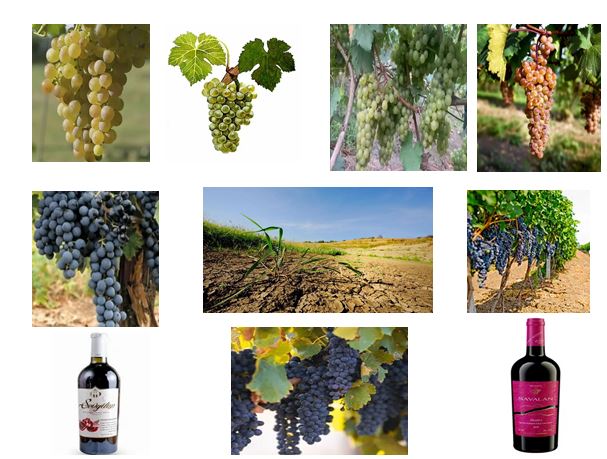
The object of research is grape must and wines made from white and red grape varieties grown in the conditions of the Absheron and Gabala regions. The article provides a comparative analysis of the biochemical indicators of must and wine samples made from grape varieties grown in the ecological and geographical conditions of the Absheron and Gabala regions of Azerbaijan. Grapes of some white (Muscat white, Viognier, Chardonnay, Semillon, Riesling, Bayan Shirey, Rkatsiteli) and red (Aleatico, Shiraz, Merlot, Madrasa) varieties were used as the research material. In order to determine the direction of use and technological suitability of the harvest of the studied grape varieties, the biochemical indicators of must were studied, various wine samples were prepared and their physicochemical analysis was carried out. It was found that the biochemical composition of the must and the physicochemical indicators of wine samples vary depending on the soil and climatic conditions of the place where the grape variety is grown. It turned out that the juice density of grape varieties grown in the Gabala district is 1.09122–1.11207 g/L, and the juice density of grape varieties grown in the Absheron district is higher and is 0.90010–1.90024 g/L. Grape varieties grown in the Gabala district are characterized by a higher content of tartaric acid. The highest content of tartaric acid was noted in the Semillon variety. In grape varieties grown in the Gabala district, the malic acid content varies in the range of 0.3–3.2 g/L, and in varieties grown in the Absheron district, within 0.2–1.2 g/L. The amount of polyphenols in grapes grown in the Gabala district was higher than the similar indicator for the Absheron district. The obtained results can be used in the winemaking industry, which will allow producers to more accurately select raw materials for the production of a specific type of wine, and can also be useful for winemakers in other regions with similar soil and climatic conditions and the assortment of regionalized varieties.
References
- Schultz, H. R., Jones, G. V. (2010). Climate Induced Historic and Future Changes in Viticulture. Journal of Wine Research, 21 (2-3), 137–145. https://doi.org/10.1080/09571264.2010.530098
- Saliba, A., Ovington, Moran, C. (2013). Consumer demand for low-alcohol wine in an Australian sample. International Journal of Wine Research, 5, 1–8. https://doi.org/10.2147/ijwr.s41448
- Bagirzade, A., Omarov, Y., Aliyeva, J., Gurbanova, S., Omarova, E., Gasimova, A., Nabiyev, A. (2024). Establishing a pattern of change in the quality indicators of Tokaj-type wine materials prepared by different variants. Eastern-European Journal of Enterprise Technologies, 5 (11 (131)), 92–108. https://doi.org/10.15587/1729-4061.2024.312056
- Kunter, B., Canturk, S., Keskin, N. (2013). Üzüm Tanesinin Histokimyasal Yapısı. Iğdır University Journal of the Institute of Science and Technology, 3 (2), 17–24. Available at: https://dergipark.org.tr/en/download/article-file/410479
- Tüfekci, H. B., Fenercioğlu, H. (2010). Türkiye’de üretilen bazı ticari meyve sularının kimyasal özellikler açısından gıda mevzuatına uygunluğu. Akademik Gıda, 8 (2), 11–17. Available at: https://dergipark.org.tr/en/download/article-file/1189416
- Asadullayev, R. A., Salimov, V. S., Huseynov, M. A. (2024). Grapes with fungal infection during long-term storage. SABRAO Journal of Breeding and Genetics, 56 (5), 2026–2032. https://doi.org/10.54910/sabrao2024.56.5.25
- Salimov, V. S., Huseynov, M. A. (2025). Polymorphism features in grape (Vitis vinifera L.) variety Bayanshira populations. SABRAO Journal of Breeding and Genetics, 57 (2), 516–528. https://doi.org/10.54910/sabrao2025.57.2.11
- Salimov, V. S., Huseynov, M. A., Huseynova, A. S. (2025). Phenotypic variability in the vegetative generation of grape (V. vinifera L.) protoclones and selection with stable signs. SABRAO Journal of Breeding and Genetics, 57 (3), 999–1008. https://doi.org/10.54910/sabrao2025.57.3.12
- Levchenko, S., Volynkin, V., Likhovskoi, V., Vasylyk, I., Ostroukhova, E., Vasylyk, А. et al. (2021). The profile of the phenolic components of grape cultivars of a complex genetic structure. Acta Horticulturae, 1307, 391–398. https://doi.org/10.17660/actahortic.2021.1307.59
- Fətəliyev, H. K. (2011). Şərabın texnologiyası. Bakı: Elm, 596. Available at: http://anl.az/el/264414.pdf
- Səlimov, V. S. (2019). Üzümün ampeloqrafik skrininqi. Bakı: Müəllim, 319. Available at: https://www.researchgate.net/publication/377701284_Uzumun_ampeloqrafiq_skrininqi
- Bagirzadeh, A., Omarov, Y., Haciyeva, A., Gurbanova, S., Gasimova, A., Ismayilov, M., Nabiyev, A. (2023). Improvement of the production technology of tokay wines based on the revealed effect of enzyme activity on the quality of grape variety. Eastern-European Journal of Enterprise Technologies, 2 (11 (122)), 49–62. https://doi.org/10.15587/1729-4061.2023.276251
- Şəfizadə, C. Ə. (2017). Qırmızı üzüm sortlarının mexaniki-kimyəvi tərkibinin öyrənilməsi. Azərbaycan Aqrar Elmi, 3, 214–215.
- Cabaroğlu, T. (2023). Üzümün işlenmesi ve qida sanayinde değerlendirilmesi. Tekirdağ: Bağcılık vizyon, 44–61. Available at: https://arastirma.tarimorman.gov.tr/bagcilik/Belgeler/VIZYON_2023_CALISTAY.pdf
- Zhao, B., Hall, C. A. (2008). Composition and antioxidant activity of raisin extracts obtained from various solvents. Food Chemistry, 108 (2), 511–518. https://doi.org/10.1016/j.foodchem.2007.11.003
- Ribéreau-Gayon, P., Glories, Y., Maujean, A., Dubourdieu, D. (2006). Handbook of enology: The chemistry of wine and stabilization and treatments. John Wiley and Sons, Ltd. https://doi.org/10.1002/0470010398
- Boulton, R. B., Singleton, V. L., Bisson, L. F., Kunkee, R. E. (1996). Principles and practices of winemaking. New York: Chapman and Hall. https://doi.org/10.1007/978-1-4615-1781-8
- Vanjare, M., Sahane, V., Gulve, Y., Chaudhari Y. (2022). Comparative analysis of different grapes verities for red wine production. International Journal of Biological Macromolecules, 4 (1), 45–53. Available at: https://kjscollege.com/_0_KJSCollege_Data_Center/_01_Image_Files/_01_NAAC_Files/KJSCollege_3933038b-42f9-4636-bfa5-a6c8ecbccb4c_55V38TXF.pdf
- González-Neves, G., Franco, J., Barreiro, L., Gil, G., Moutounet, M., Carbonneau, A. (2006). Varietal differentiation of Tannat, Cabernet-Sauvignon and Merlot grapes and wines according to their anthocyanic composition. European Food Research and Technology, 225 (1), 111–117. https://doi.org/10.1007/s00217-006-0388-8
- Compendium of international methods of wine and must analysis. OIV. Available at: https://www.oiv.int/standards/compendium-of-international-methods-of-wine-and-must-analysis
- Mateus, N., Machado, J. M., de Freitas, V. (2002). Development changes of anthocyanins in Vitis vinifera grapes grown in the Douro Valley and concentration in respective wines. Journal of the Science of Food and Agriculture, 82 (14), 1689–1695. https://doi.org/10.1002/jsfa.1237
- Huseynov, M. A., Shukurov, A. S., Salimov, V. S., Adilov, A. A., Mirzoev, G. S., Sadigov, R. A. (2025). Quality characteristics of technical grape (Vitis vinifera L.) cultivars grown under environmental conditions of the mountains and sea. SABRAO Journal of Breeding and Genetics, 57 (6), 2564–2573. https://doi.org/10.54910/sabrao2025.57.6.29
- Səlimov, V. S., Hüseynov, M. Ə., Şükürov, A. S. (2022). Üzüm: aqrotexnikası, aqrokimyası və inteqrir mübarizə tədbirləri. Bakı: “Sapfir-15”, 784. Available at: https://anl.az/el/kitab2022/08/cd/Azf-325327.pdf
- Yıldırım, D., Özonur, A., Darıcı, M., Cabaroğlu, T. (2023) Yörenin (şarköy/tekirdağ-urla/izmir) cabernet sauvignon üzüm ve şaraplarının genel bileşimi ve fenolik bileşikleri üzerine etkisi. Özel Sayı, 1, 276–285. Available at: https://dergipark.org.tr/en/pub/bahce/article/1257818
- Şan, F. H., Cabaroğlu, T. (2016). Ülkemizde üretilen önemli yerli ve yabancı şaraplık üzüm çeşitlerinin şeker ve organik asit içeriklerinin belirlenmesi. Ç.Ü Fen ve Mühendislik Bilimleri Dergisi Yıl 2018 Cilt, 35-6, 65–72. Available at: https://fbe.cu.edu.tr/storage/fbeyedek/makaleler/2017/%C3%9CLKEM%C4%B0ZDE%20%C3%9CRET%C4%B0LEN.pdf
- Şimşek, S. (2008). Şarap üretimi ve kalite kontrolü. Çanakkale Onsekiz Mart Üniversitesi Mühendislik-Mimarlık, Yayın No:003.
- Candar, S., Alço, T., Uysal, T., Uysal Seçkin, G., Güngör, T. A., Eryılmaz, İ. et al. (2023). Oenological properties and terroir characteristics of an autochthonous grape cultivar: Ada Karası (Vitis vinifera L.). European Food Research and Technology, 249 (10), 2595–2610. https://doi.org/10.1007/s00217-023-04317-7
- Proestos, C., Bakogiannis, A., Psarianos, C., Koutinas, A. A., Kanellaki, M., Komaitis, M. (2005). High performance liquid chromatography analysis of phenolic substances in Greek wines. Food Control, 16, 319–323. https://doi.org/10.1016/s0956-7135(04)00076-3
- Ali, K., Maltese, F., Choi, Y. H., Verpoorte, R. (2009). Metabolic constituents of grapevine and grape-derived products. Phytochemistry Reviews, 9 (3), 357–378. https://doi.org/10.1007/s11101-009-9158-0
- Pereira, G. E., Gaudillere, J.-P., Leeuwen, C. van, Hilbert, G., Maucourt, M., Deborde, C. et al. (2006). 1H NMR metabolite fingerprints of grape berry: Comparison of vintage and soil effects in Bordeaux grapevine growing areas. Analytica Chimica Acta, 563 (1-2), 346–352. https://doi.org/10.1016/j.aca.2005.11.007
- Li, Z., Pan, Q., Jin, Z., Mu, L., Duan, C. (2011). Comparison on phenolic compounds in Vitis vinifera cv. Cabernet Sauvignon wines from five wine-growing regions in China. Food Chemistry, 125 (1), 77–83. https://doi.org/10.1016/j.foodchem.2010.08.039
- Rastija, V., Srečnik, G., Medić-Šarić, M. (2009). Polyphenolic composition of Croatian wines with different geographical origins. Food Chemistry, 115 (1), 54–60. https://doi.org/10.1016/j.foodchem.2008.11.071
- Tangolar, S., Özdemir, G., Bilir, H., Sabır, A. (2005). Bazı şaraplık çeşitlerinin Pozantı/Adana ekolojik koşullarında fenolojileri ile salkım ve tane özelliklerinin saptanması. Türkiye 6. Bağcılık Semp. Tekirdağ. Available at: https://www.researchgate.net/publication/291697798_Bazi_Saraplik_Uzum_Cesitlerinin_PozantiAdana_Ekolojik_Kosullarinda_Fenolojileri_ile_Salkim_ve_Tane_Ozelliklerinin_Saptanmasi
- Cheng, G., Fa, J.-Q., Xi, Z.-M., Zhang, Z.-W. (2015). Research on the quality of the wine grapes in corridor area of China. Food Science and Technology (Campinas), 35 (1), 38–44. https://doi.org/10.1590/1678-457x.6455
- Bora, F. D., Pop, T. I., Bunea, C. I., Urcan, D. E., Babeş, A., Mihaly-Cozmuta, L. et al. (2014). Influence of Ecoclimatic and Ecopedological Conditions on Quality of White Wine Grape Varieties from North-West of Romania. Bulletin of University of Agricultural Sciences and Veterinary Medicine Cluj-Napoca. Horticulture, 71 (2), 218–225. https://doi.org/10.15835/buasvmcn-hort:10545
- Kaya, Z. (2017). Şarap üretimi ve kalite. Ambiyans Şarap Evi, Aydın Gastronomy, 1 (2), 17–30. Available at: https://dergipark.org.tr/en/download/article-file/498270
- Altuğ, T., Elmacı, Y. (2005). Gıdalarda duyusal değerlendirme. Ege Üniversitesi. İzmir, 92. Available at: https://akademik.adu.edu.tr/myo/cine/webfolders/File/ders%20notlari/gidalarda%20duyusal%20analizler.pdf
- Türk gıda kodeksi şarap tebliği (2009). Resmi Gazete 4.2.2009, Sayı:27131, Tebliğ No:2008/67. Available at: https://www.tarimorman.gov.tr/TADAB/Belgeler/Alkoll%C3%BC%20%C4%B0%C3%A7kiler/%C4%B0lgili%20Mevzuat%20D%C3%BCzenlemeleri/sarap_teblig.pdf
- Waterhouse, A. L., Sacks, G. L., Jeffery, D. W. (2016). Understanding wine chemistry. Chichester: John Wiley & Sons Inc., 480. https://doi.org/10.1002/9781118730720
- Fataliyev, H., Malikov, A., Lazgiyev, Y., Haydarov, E., Agayeva, S., Baloghlanova, K. et al. (2023). Effect of maceration regime on phenolic compound quantity and color quality of madrasa wine samples. Food Science and Technology, 17 (4). https://doi.org/10.15673/fst.v17i4.2784
- Bahar, E., Öner, H. (2016). Cabernet-Sauvignon üzüm çeşidinde farklı kültürel işlemlerin verim ve kalite özellikleri üzerine etkileri. Bahçe, 45 (2), 591–598. Available at: https://dergipark.org.tr/tr/pub/bahce/article/1805641
- Korkutal, İ., Bahar, E., Güvemli Dündar, D. (2019). Ben düşme dönemi ve sonrasında uygulanan antitranspirantların ‘Cabernet Sauvignon’ üzüm çeşidinde şıra özellikleri ve verime etkileri. Akademik Ziraat Dergisi, 8 (2), 173–184. https://doi.org/10.29278/azd.584170
Downloads
Published
How to Cite
Issue
Section
License
Copyright (c) 2026 Vusala Shukurova, Movlud Huseynov, Vugar Salimov, Afet Gasimova

This work is licensed under a Creative Commons Attribution 4.0 International License.
The consolidation and conditions for the transfer of copyright (identification of authorship) is carried out in the License Agreement. In particular, the authors reserve the right to the authorship of their manuscript and transfer the first publication of this work to the journal under the terms of the Creative Commons CC BY license. At the same time, they have the right to conclude on their own additional agreements concerning the non-exclusive distribution of the work in the form in which it was published by this journal, but provided that the link to the first publication of the article in this journal is preserved.