Development of a neural network for forecasting passenger flows in smart city public electric transport
DOI:
https://doi.org/10.15587/2706-5448.2025.339550Keywords:
passenger flow, neural network, LSTM, public transport, smart city, residuals modellingAbstract
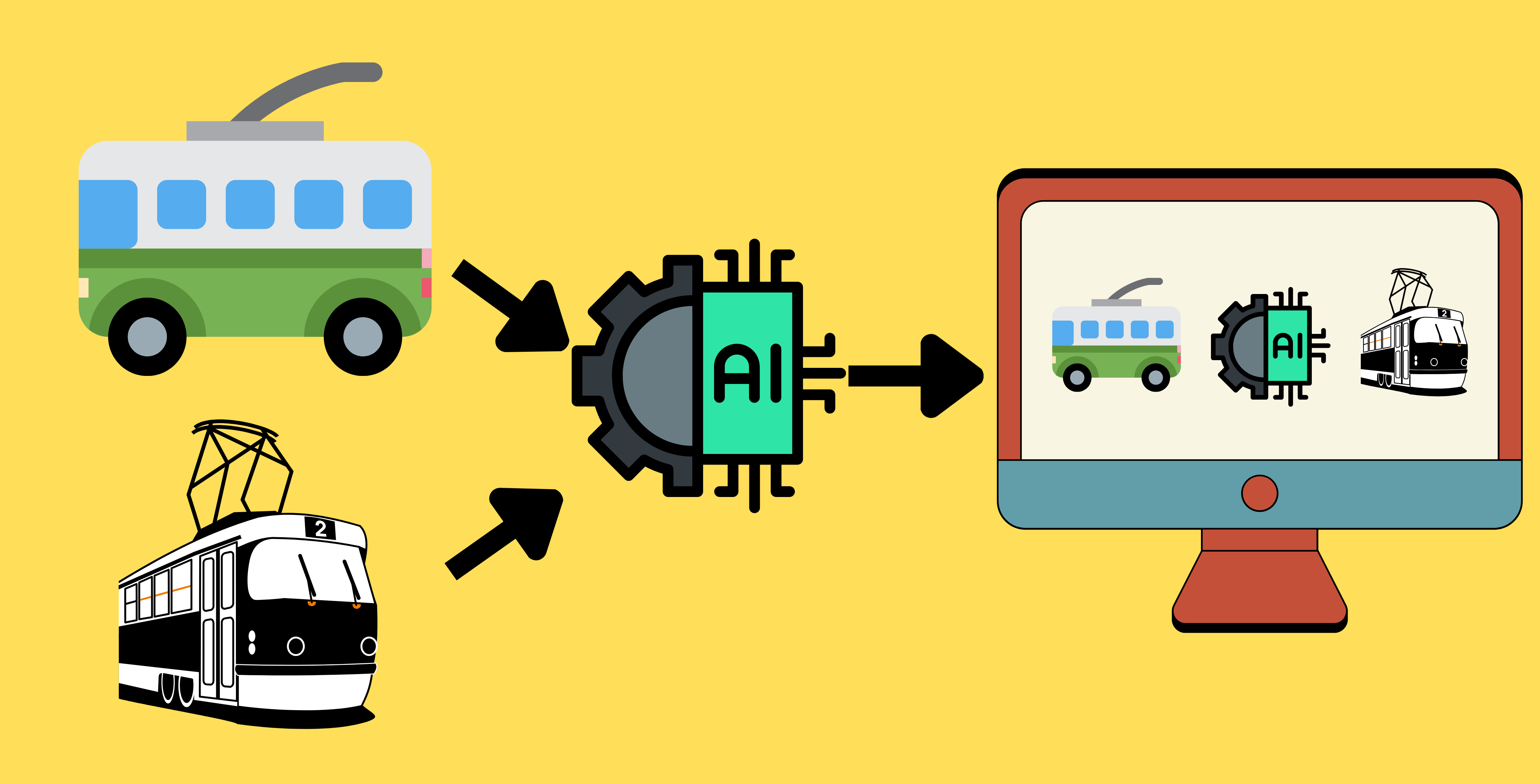
The research object is a hybrid deep learning model for passenger flow forecasting. These passenger flows constitute complex time series, influenced by a combination of temporal, spatial, and operational factors. The study addresses the fundamental mismatch between stochastic passenger demand and the static supply of transport services. This disparity results in operational inefficiency and a reduced quality of service for passengers. A lack of accurate forecasting tools hinders the optimal daily allocation of rolling stock, thereby limiting the efficiency of transport operators.
A hybrid deep learning model was developed and validated to predict daily passenger flows with high accuracy (R² = 0.91). The findings significantly outperform the baseline models and approaches described in scientific sources. This performance is attributed to a sophisticated strategy combining advanced feature engineering. This included the use of cyclic, lagged, and moving average features. This approach was paired with residual modelling, enabling the neural network to capture complex non-linear deviations. Furthermore, robust data preparation methods enhanced the model’s high generalization capabilities.
The findings demonstrate that the proposed hybrid approach is an effective tool for operational planning. The results of the neural network work facilitate the optimization of the distribution of rolling stock allocation and improve resource utilization. Consequently, it enhances passenger comfort, contributing to the sustainable development of urban mobility. For practical applications, the model requires reliable historical passenger flow data. It enables operators to mitigate economic losses from underutilized vehicles and prevent overcrowding on high-demand days.
References
- Himanen, V., Nijkamp, P., Padjen, J. (1992). Environmental quality and transport policy in Europe. Transportation Research Part A: Policy and Practice, 26 (2), 147–157. https://doi.org/10.1016/0965-8564(92)90009-v
- Matseliukh, Y., Bublyk, M., Bosak, A., Naychuk-Khrushch, M. (2024). The role of public transport network optimization in reducing carbon emissions. CEUR Workshop Proceedings, 3723, 340–364. Available at: https://ceur-ws.org/Vol-3723/paper19.pdf
- Liyanage, S., Abduljabbar, R., Dia, H., Tsai, P.-W. (2022). AI-based neural network models for bus passenger demand forecasting using smart card data. Journal of Urban Management, 11 (3), 365–380. https://doi.org/10.1016/j.jum.2022.05.002
- Matseliukh, Y., Lytvyn, V., Bublyk, M. (2025). K-means clustering method in organizing passenger transportation in a smart city. CEUR Workshop Proceedings, 3983, 219–240. https://doi.org/10.31110/colins/2025-2/017
- Fornalchyk, Y., Koda, E., Kernytskyy, I., Hrytsun, O., Royko, Y., Bura, R. et al. (2023). Wpływ natężenia ruchu pojazdów na zachowanie przechodniów na przejściach bez sygnalizacji. Roads and Bridges – Drogi i Mosty, 22 (2), 201–219. https://doi.org/10.7409/rabdim.023.010
- Ouyang, Q., Lv, Y., Ma, J., Li, J. (2020). An LSTM-Based Method Considering History and Real-Time Data for Passenger Flow Prediction. Applied Sciences, 10 (11), 3788. https://doi.org/10.3390/app10113788
- Katrenko, A., Krislata, I., Veres, O., Oborska, O., Basyuk, T., Vasyliuk, A. et al. (2020). Development of traffic flows and smart parking system for smart city. CEUR Workshop Proceedings, 2604, 730–745. Available at: http://ceur-ws.org/Vol-2604/paper50.pdf
- Postranskyy, T., Afonin, M., Boikiv, M., Bura, R. (2024). Identifying patterns of change in traffic flows’ parameters depending on the organization of public transport movement. Eastern-European Journal of Enterprise Technologies, 5 (3 (131)), 72–81. https://doi.org/10.15587/1729-4061.2024.313636
- Fornalchyk, Y., Kernytskyy, I., Hrytsun, O., Royko, Y. (2021). Choice of the rational regimes of traffic light control for traffic and pedestrian flows. Scientific Review Engineering and Environmental Studies (SREES), 30 (1), 38–50. https://doi.org/10.22630/pniks.2021.30.1.4
- Fu, R., Zhang, Z., Li, L. (2016). Using LSTM and GRU neural network methods for traffic flow prediction. 2016 31st Youth Academic Annual Conference of Chinese Association of Automation (YAC), 324–328. https://doi.org/10.1109/yac.2016.7804912
- Makridakis, S., Spiliotis, E., Assimakopoulos, V. (2020). The M4 Competition: 100,000 time series and 61 forecasting methods. International Journal of Forecasting, 36 (1), 54–74. https://doi.org/10.1016/j.ijforecast.2019.04.014
- Matseliukh, Y., Bublyk, M., Vysotska, V. (2021). Development of intelligent system for visual passenger flows simulation of public transport in smart city based on neural network. CEUR Workshop Proceedings, 2870, 1087–1138. Available at: http://ceur-ws.org/Vol-2870/paper82.pdf
- Podlesna, L., Bublyk, M., Grybyk, I., Matseliukh, Y., Burov, Y., Kravets, P. et al. (2020). Optimization model of the buses number on the route based on queuing theory in a Smart City. CEUR Workshop Proceedings, 2631, 502–515. Available at: http://ceur-ws.org/Vol-2631/paper37.pdf
- Xiong, Z., Zheng, J., Song, D., Zhong, S., Huang, Q. (2019). Passenger Flow Prediction of Urban Rail Transit Based on Deep Learning Methods. Smart Cities, 2 (3), 371–387. https://doi.org/10.3390/smartcities2030023
- Goodfellow, I., Bengio, Y., Courville, A. (Eds.) (2016). Deep Learning. MIT Press, 800. Available at: https://mitpress.ublish.com/ebook/deep-learning-preview/107/26
- Pei, Y., Ran, S., Wang, W., Dong, C. (2023). Bus-Passenger-Flow Prediction Model Based on WPD, Attention Mechanism, and Bi-LSTM. Sustainability, 15 (20), 14889. https://doi.org/10.3390/su152014889
- Fornalchyk, Y., Vikovych, I., Royko, Y., Hrytsun, O. (2021). Improvement of methods for assessing the effectiveness of dedicated lanes for public transport. Eastern-European Journal of Enterprise Technologies, 1 (3 (109)), 29–37. https://doi.org/10.15587/1729-4061.2021.225397
- Zhang, J., Chen, F., Cui, Z., Guo, Y., Zhu, Y. (2021). Deep Learning Architecture for Short-Term Passenger Flow Forecasting in Urban Rail Transit. IEEE Transactions on Intelligent Transportation Systems, 22 (11), 7004–7014. https://doi.org/10.1109/tits.2020.3000761
- Cui, H., Si, B., Wang, J., Zhao, B., Pan, W. (2024). Short-term origin–destination flow prediction for urban rail network: a deep learning method based on multi-source big data. Complex & Intelligent Systems, 10 (4), 4675–4696. https://doi.org/10.1007/s40747-024-01391-6
- Boikiv, M., Postranskyy, T., Afonin, M. (2022). Establishing patterns of change in the efficiency of regulated intersection operation considering the permitted movement directions. Eastern-European Journal of Enterprise Technologies, 4 (3 (118)), 17–26. https://doi.org/10.15587/1729-4061.2022.262250
- An, J., Zhao, J., Liu, Q., Qian, X., Chen, J. (2023). Self-Constructed Deep Fuzzy Neural Network for Traffic Flow Prediction. Electronics, 12 (8), 1885. https://doi.org/10.3390/electronics12081885
- Liu, S., Du, L., Cao, T., Zhang, T. (2024). Research on a Passenger Flow Prediction Model Based on BWO-TCLS-Self-Attention. Electronics, 13 (23), 4849. https://doi.org/10.3390/electronics13234849
- Wu, Z., Pan, S., Chen, F., Long, G., Zhang, C., Yu, P. S. (2021). A Comprehensive Survey on Graph Neural Networks. IEEE Transactions on Neural Networks and Learning Systems, 32 (1), 4–24. https://doi.org/10.1109/tnnls.2020.2978386
- Baghbani, A., Rahmani, S., Bouguila, N., Patterson, Z. (2023). Predicting Passenger Flow Using Graph Neural Networks with Scheduled Sampling on Bus Networks. 2023 IEEE 26th International Conference on Intelligent Transportation Systems (ITSC), 3073–3078. https://doi.org/10.1109/itsc57777.2023.10422701
- Chang, Y., Zong, M., Dang, Y., Wang, K. (2024). Multi-Step Passenger Flow Prediction for Urban Metro System Based on Spatial-Temporal Graph Neural Network. Applied Sciences, 14 (18), 8121. https://doi.org/10.3390/app14188121
- Shi, B., Wang, Z., Yan, J., Yang, Q., Yang, N. (2024). A Novel Spatial–Temporal Deep Learning Method for Metro Flow Prediction Considering External Factors and Periodicity. Applied Sciences, 14 (5), 1949. https://doi.org/10.3390/app14051949
- Chukhray, N., Shakhovska, N., Mrykhina, O., Bublyk, M., Lisovska, L. (2019). Consumer aspects in assessing the suitability of technologies for the transfer. 2019 IEEE 14th International Conference on Computer Sciences and Information Technologies (CSIT), 142–147. https://doi.org/10.1109/stc-csit.2019.8929879
- Bublyk, M., Matseliukh, Y. (2021). Small-batteries utilization analysis based on mathematical statistics methods in challenges of circular economy. CEUR Workshop Proceedings, 2870, 1594–1603. Available at: https://ceur-ws.org/Vol-2870/paper118.pdf
- Bublyk, M., Lytvyn, V., Vysotska, V., Chyrun, L., Matseliukh, Y., Sokulska, N. (2020). The decision tree usage for the results analysis of the psychophysiological testing. CEUR Workshop Proceedings, 2753, 458–472. Available at: https://ceur-ws.org/Vol-2753/paper31.pdf
- Matseliukh, Y., Vysotska, V., Bublyk, M., Kopach, T., Korolenko, O. (2021). Network modelling of resource consumption intensities in human capital management in digital business enterprises by the critical path method. CEUR Workshop Proceedings, 2851, 366–380. Available at: https://ceur-ws.org/Vol-2851/paper34.pdf
- Vysotska, V., Bublyk, M., Vysotsky, A., Berko, A., Chyrun, L., Doroshkevych, K. (2020). Methods and Tools for Web Resources Processing in E-Commercial Content Systems. 2020 IEEE 15th International Conference on Computer Sciences and Information Technologies (CSIT), 114–118. https://doi.org/10.1109/csit49958.2020.9321950
Downloads
Published
How to Cite
Issue
Section
License
Copyright (c) 2025 Yurii Matseliukh, Vasyl Lytvyn, Myroslava Bublyk

This work is licensed under a Creative Commons Attribution 4.0 International License.
The consolidation and conditions for the transfer of copyright (identification of authorship) is carried out in the License Agreement. In particular, the authors reserve the right to the authorship of their manuscript and transfer the first publication of this work to the journal under the terms of the Creative Commons CC BY license. At the same time, they have the right to conclude on their own additional agreements concerning the non-exclusive distribution of the work in the form in which it was published by this journal, but provided that the link to the first publication of the article in this journal is preserved.





