Підвищення ефективності вимірювань морських приймачів глобальних навігаційних супутникових систем
DOI:
https://doi.org/10.15587/2706-5448.2025.337041Ключові слова:
безпека мореплавства, АІС, точність позиціонування, диференціальний режим, NMEAАнотація
Глобальні навігаційні супутникові системи (ГНСС) відіграють визначальну роль у морському судноплавстві. Диференціальний режим роботи суднових приймачів ГНСС з використанням поправок координат дозволяє значно підвищити точність позиціонування морського судна у порівнянні з автономним режимом. Об'єктом дослідження були приймачі ГНСС морського призначення, що здатні працювати в диференціальному режимі.
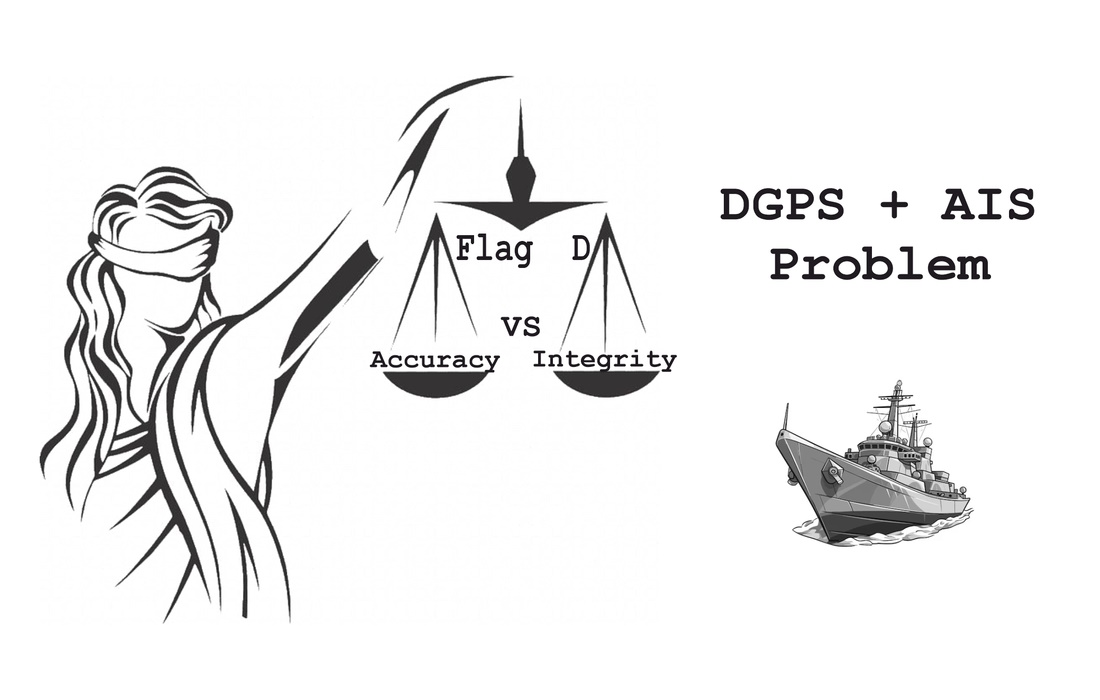
Досліджені проблеми достовірного визначення фактичного режиму роботи суднового GNSS-приймача (автономний чи диференціальний). Окреслено ризики, пов’язані з неоднозначністю та ненадійністю стандартних індикаторів диференціального режиму (прапорці posMode = D, Fix Quality = 2). Це призводить до хибної інтерпретації статусу точності з пов'язаними навігаційними системами, зокрема, Автоматичною ідентифікаційною системою (АІС), і створює загрозу безпеці мореплавства.
Експериментально доведено, що застарілі моделі приймачів можуть помилково індикувати роботу в диференціальному режимі, спираючись лише на налаштування користувача, а не на фактичне отримання й застосування поправок. Встановлено, що сучасні приймачі вирішують цю проблему, але створюють новий рівень складності, розділяючи поняття «точність» і «цілісність» навігаційного рішення. Вони можуть видавати високоточну позицію, одночасно позначаючи її як ненадійну (прапорець NavStatus = V), у разі виявлення несправного супутника. Виявлено системний конфлікт між вимогами стандартів International Telecommunication Union (ITU) та International Electrotechnical Commission (IEC) щодо критеріїв високої точності для АІС.
Встановлено, що недостовірна індикація режимів у обладнанні застарілих зразків пов’язана з особливостями роботи його програмної логіки, яка прив’язує прапорець режиму до налаштування, а не до наявності даних. Поведінка сучасних приймачів пояснюється імплементацією у них передових алгоритмів контролю цілісності (RAIM) та логіки нових стандартів (зокрема, IEC 61108-7), які вимагають повідомляти про втрату довіри до даних.
Результати досліджень можуть бути використані розробниками суднового обладнання (АІС, ЕКНІС) для створення комплексних алгоритмів аналізу даних GNSS, що враховують сукупність індикаторів. Міжнародні організації (IMO, ITU) можуть використати їх для гармонізації стандартів. Судноводії та технічні фахівці можуть використати ці результати для формування правильного розуміння обмежень стандартних індикаторів і необхідності комплексної оцінки статусу GNSS-приймача.
Посилання
- Resolution MSC.112(73): Adoption of the Revised Performance Standards for Shipborne Global Positioning System (GPS) Receiver Equipment (2000). Available at: https://wwwcdn.imo.org/localresources/en/KnowledgeCentre/IndexofIMOResolutions/MSCResolutions/MSC.112(73).pdf
- Resolution A.915(22): Revised Maritime Policy and Requirements for a Future Global Navigation Satellite System (GNSS) (2001). Available at: https://wwwcdn.imo.org/localresources/en/KnowledgeCentre/IndexofIMOResolutions/AssemblyDocuments/A.915(22).pdf
- Resolution A.1046(27): World-wide radionavigation system (2011). Available at: https://wwwcdn.imo.org/localresources/en/KnowledgeCentre/IndexofIMOResolutions/AssemblyDocuments/A.1046(27).pdf
- IHO Standards for Hydrographic Surveys (Publication S-44) (2020). Available at: https://iho.int/uploads/user/pubs/standards/s-44/S-44_Edition_6.1.0.pdf
- Tabti, L. (2025). Evaluation and Comparison of the Accuracy and Integrity of GPS Single-Point Positioning Using EGNOS Corrections. Journal of the Indian Society of Remote Sensing, 53 (8), 2577–2590. https://doi.org/10.1007/s12524-025-02168-1
- Pogurelskiy, O., Ostroumov, I., Znakovska, Y., Holubnychyi, O., Zaliskyi, M., Voliansky, R. et al. (2024). Estimation Positioning Accuracy for GPS/EGNOS Mode in Ukraine Region. 2024 IEEE 17th International Conference on Advanced Trends in Radioelectronics, Telecommunications and Computer Engineering (TCSET), 1–4. https://doi.org/10.1109/tcset64720.2024.10755700
- Specht, C., Pawelski, J., Smolarek, L., Specht, M., Dabrowski, P. (2018). Assessment of the Positioning Accuracy of DGPS and EGNOS Systems in the Bay of Gdansk using Maritime Dynamic Measurements. Journal of Navigation, 72 (3), 575–587. https://doi.org/10.1017/s0373463318000838
- RTCM 10402.3, RTCM Recommended Standards for Differential GNSS Service, Version 2.3 (2001). Available at: https://rtcm.myshopify.com/products/rtcm-10402-3-rtcm-recommended-standards-for-differential-gnss-global-navigation-satellite-systems-service-version-2-3-with-amendment-1-may-21-2010?_pos=2&_sid=64d21e781&_ss=r
- What is SBAS? (2024). European Union Agency for the Space Programme. Available at: https://www.euspa.europa.eu/eu-space-programme/egnos/what-sbas
- EGNOS Open Service (OS) Quarterly Performance Report: Quarter 4 (2023). European Union Agency for the Space Programme. Available at: https://www.gsc-europa.eu/sites/default/files/sites/all/files/Galileo-OS-Quarterly-Performance_Report-Q4-2023.pdf
- GPS Accuracy (2022). U.S. Government. Available at: https://www.gps.gov/systems/gps/performance/accuracy/
- Januszewski, J. (2014). Nominal and Real Accuracy of the GPS Position Indicated by Different Maritime Receivers in Different Modes. TransNav, the International Journal on Marine Navigation and Safety of Sea Transportation, 8 (1), 11–19. https://doi.org/10.12716/1001.08.01.01
- Specht, C. (2022). Maritime DGPS System Positioning Accuracy as a Function of the HDOP in the Context of Hydrographic Survey Performance. Remote Sensing, 15 (1), 10. https://doi.org/10.3390/rs15010010
- Alissa, S., HÁkansson, M., Henkel, P., Mittmann, U., Huffmeier, J., Rylander, R. (2021). Low Bandwidth Network-RTK Correction Dissemination for High Accuracy Maritime Navigation. TransNav, the International Journal on Marine Navigation and Safety of Sea Transportation, 15 (1), 171–179. https://doi.org/10.12716/1001.15.01.17
- IEC 61108-1: 2003 Maritime navigation and radiocommunication equipment and systems – Global navigation satellite systems (GNSS) – Part 1: Global positioning system (GPS) – Receiver equipment – Performance standards, methods of testing and required test results (2003). IEC. Available at: https://webstore.iec.ch/en/publication/4515
- User Manual SPR/DSPR-1400. Samyung ENC. Available at: https://www.samyungenc.com/eng/view.do?no=148&bunryuSeq=25&prdSeq=109&pageIndex=1&pgMode=show
- IEC 61162-1:2024 Maritime navigation and radiocommunication equipment and systems – Digital interfaces – Part 1: Single talker and multiple listeners (2024). IEC. Available at: https://webstore.iec.ch/en/publication/72729
- IEC 61108-7:2024 Maritime navigation and radiocommunication equipment and systems – Global navigation satellite systems (GNSS) – Part 7: Shipborne SBAS receiver L1 – Performance requirements, methods of testing and required test results (2024). IEC. Available at: https://webstore.iec.ch/en/publication/68696
- Tegedor, J., Fortuny, J., Fernandez, G., Lacarra, E., Canestri, E., Porfili, S., Gioia, C. (2025). IEC-61108-7 SBAS Standard for Shipborne Receivers: Preliminary Testing Validation Activities. European Navigation Conference 2024, 48. https://doi.org/10.3390/engproc2025088048
- NEO-F10N Data sheet. Available at: https://content.u-blox.com/sites/default/files/documents/NEO-F10N_DataSheet_UBX-23002117.pdf
- u-blox F10/M10 SPG 5.10 (2023). Interface Description. Available at: https://content.u-blox.com/sites/default/files/u-blox-M10-SPG-5.10_InterfaceDescription_UBX-21035062.pdf
- GnssToolKit3-binaries. GitHub. Available at: https://github.com/zxcwhale/GnssToolKit3-binaries
- ZED-F9P-04B (2024). Data sheet. Available at: https://content.u-blox.com/sites/default/files/ZED-F9P-04B_DataSheet_UBX-21044850.pdf
- Recommendation M.1371-5 (02/2014): Technical characteristics for an automatic identification system using time-division multiple access in the VHF maritime mobile frequency band (2014). Available at: https://www.itu.int/dms_pubrec/itu-r/rec/m/R-REC-M.1371-5-201402-I!!PDF-E.pdf
- IEC 61993-2:2018: Maritime navigation and radiocommunication equipment and systems – Automatic identification systems (AIS) – Part 2: Class A shipborne equipment of the automatic identification system (AIS) – Operational and performance requirements, methods of test and required test results (2018). IEC. Available at: https://webstore.iec.ch/en/publication/34277
##submission.downloads##
Опубліковано
Як цитувати
Номер
Розділ
Ліцензія
Авторське право (c) 2025 Vasyl Hlynianiuk, Viktor Konovets, Vitalii Kuzmenko, Eduard Pleshko, Roman Rudenskyi, Oleksandr Shyshkin

Ця робота ліцензується відповідно до Creative Commons Attribution 4.0 International License.
Закріплення та умови передачі авторських прав (ідентифікація авторства) здійснюється у Ліцензійному договорі. Зокрема, автори залишають за собою право на авторство свого рукопису та передають журналу право першої публікації цієї роботи на умовах ліцензії Creative Commons CC BY. При цьому вони мають право укладати самостійно додаткові угоди, що стосуються неексклюзивного поширення роботи у тому вигляді, в якому вона була опублікована цим журналом, але за умови збереження посилання на першу публікацію статті в цьому журналі.