Study of the potential anti-inflammatory properties of a new remedy based on a dicarboxylic acid derivative in the conditions of toxic hepatitis
DOI:
https://doi.org/10.15587/2519-8025.2025.340567Keywords:
new remedy, pleiotropic action, anti-inflammatory activity, induced hepatitis, C-reactive proteinAbstract
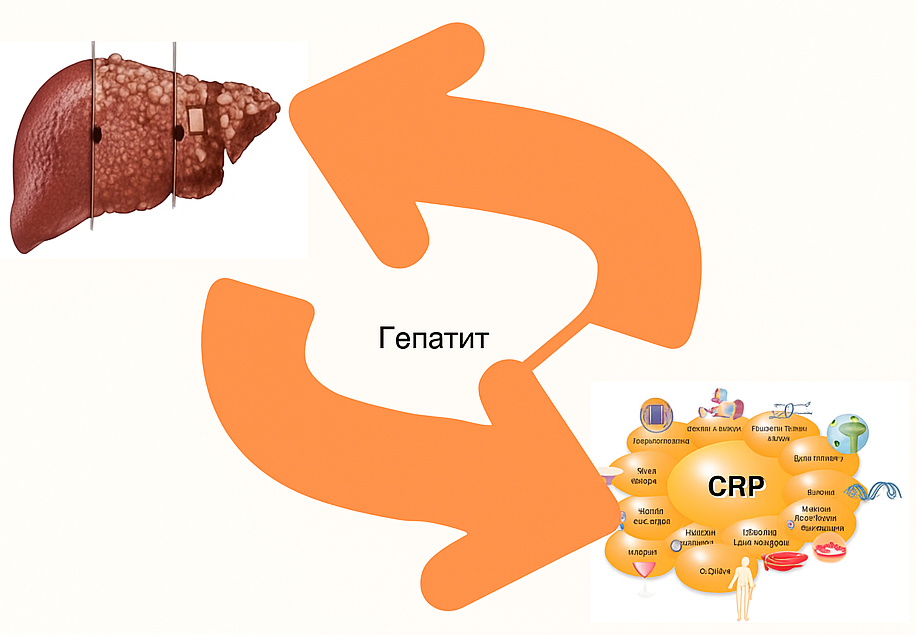
The aim of the study is to investigate changes in the level of C-reactive protein in the blood serum of rats under the conditions of carbon tetrachloride-induced hepatitis and its correction with a new agent based on a dicarboxylic acid derivative and a selenium-containing compound.
Materials and methods. The study was conducted on outbred white rats weighing 200-250 g in compliance with all principles of ethical treatment of animals. The model of toxic hepatitis was reproduced by subcutaneous administration of carbon tetrachloride (CCl4) at a dose of 4.5 ml/kg b.w. (50% solution in oil) three times a week for a month. The animals were divided into groups: I – control, which was injected with a solvent (2% starch solution); II – rats with paracetamol-induced hepatitis; III – rats with hepatitis, which received a new agent based on a dicarboxylic acid derivative and a selenium-containing compound at a dose of 32 mg/kg b.w. to correct liver pathology. The content of C-reactive protein in the blood of animals was studied by enzyme-linked immunosorbent assay using the appropriate set of reagents according to the manufacturer's instructions.
Results. Significant changes in the level of C-reactive protein were recorded in animals from the induced hepatitis group compared to intact control animals, as well as structural changes in the liver tissue of animals with induced hepatitis compared to intact control animals. The use of the new agent for correction led to the normalization of indicators.
Conclusions. In the conditions of prolonged tetrachloromethane-induced hepatitis, a significant increase in the content of C-reactive protein in the serum of rats from the group "Hepatitis" compared to animals of intact control was recorded. The use of the new remedy based on the derivative of dicarboxylic acid and a selenium-containing compound for the correction of the pathology leads to a significant decrease in the level of C-reproductive protein in animals’ blood serum. It has been shown that the new derivative of dararboxylic acid and selenium-containing compound in conditions of toxic hepatitis has a playhotropic effect in the form of hepatoprotective, spermatomoodulatory and anti-inflammatory activity
References
- Rostoka, L. M., Sitkar, A. D., Reiti, H. E., Bernada, V. V. (2022). Biokhimiia pechinky. Uzhhorod: DVNZ «UzhNU», 59. Available at: https://dspace.uzhnu.edu.ua/server/api/core/bitstreams/268ee9f2-7050-4915-a284-087dd20b01b1/content
- Butov, D. O., Shevchenko, O. S., Stepanenko, H. L. (2016). Association of polymorphisms of genes acutephases parameters in patients with newly diagnosed pulmonary tuberculosis. Infectious Diseases, 4, 51–53. https://doi.org/10.11603/1681-2727.2015.4.5518
- Klymenko, M. O., Shelest, M. O. (2013). Ñ-reactive protein as a marker of chronic inflammatory disease course. Medytsyna sohodni i zavtra, 1, 76–80. Available at: https://msz.knmu.edu.ua/article/download/179/166
- Levinson, T., Wasserman, A. (2022). C-Reactive Protein Velocity (CRPv) as a New Biomarker for the Early Detection of Acute Infection/Inflammation. International Journal of Molecular Sciences, 23 (15), 8100. https://doi.org/10.3390/ijms23158100
- Puthucheary, Z., Tadié, J.-M., Patel, J. J. (2021). C-reactive protein in immunometabolism: spared from ‘paying the piper.’ Intensive Care Medicine, 48 (1), 103–105. https://doi.org/10.1007/s00134-021-06586-w
- Ullah, N., Wu, Y. (2022). Regulation of Conformational Changes in C-reactive Protein Alters its Bioactivity. Cell Biochemistry and Biophysics, 80 (4), 595–608. https://doi.org/10.1007/s12013-022-01089-x
- McFadyen, J. D., Kiefer, J., Braig, D., Loseff-Silver, J., Potempa, L. A., Eisenhardt, S. U., Peter, K. (2018). Dissociation of C-Reactive Protein Localizes and Amplifies Inflammation: Evidence for a Direct Biological Role of C-Reactive Protein and Its Conformational Changes. Frontiers in Immunology, 9. https://doi.org/10.3389/fimmu.2018.01351
- Oh, J., Teoh, H., Leiter, L. A. (2011). Should C-Reactive Protein Be a Target of Therapy? Diabetes Care, 34 (2), S155–S160. https://doi.org/10.2337/dc11-s211
- Herwald, H., Egesten, A. (2021). C-Reactive Protein: More than a Biomarker. Journal of Innate Immunity, 13 (5), 257–258. https://doi.org/10.1159/000519091
- Weber, L. W. D., Boll, M., Stampfl, A. (2003). Hepatotoxicity and Mechanism of Action of Haloalkanes: Carbon Tetrachloride as a Toxicological Model. Critical Reviews in Toxicology, 33 (2), 105–136. https://doi.org/10.1080/713611034
- Stefanov, A. V. (2002). Doklinicheskie issledovaniia lekarstvennykh sredstv. Kуiv: Avitcenna, 568. Available at: https://dspace.vnmu.edu.ua/bitstream/handle/123456789/1363/Доклинические%20исследования%20лекарственных%20средств.pdf?sequence=1&isAllowed=y
- Atramentova, L. A., Utevskaia, O. M. (2008). Statisticheskie metody v biologii. Gorlovka: Vid-vo Lіkhtar, 248.
Downloads
Published
How to Cite
Issue
Section
License
Copyright (c) 2025 Anastasia Morozyuk

This work is licensed under a Creative Commons Attribution 4.0 International License.
Our journal abides by the Creative Commons Attribution 4.0 International License copyright rights and permissions for open access journals.
Authors, who are published in this journal, agree to the following conditions:
1. The authors reserve the right to authorship of the work and pass the first publication right of this work to the journal under the terms of a Creative Commons Attribution 4.0 International License, which allows others to freely distribute the published research with the obligatory reference to the authors of the original work and the first publication of the work in this journal.
2. The authors have the right to conclude separate supplement agreements that relate to non-exclusive work distribution in the form in which it has been published by the journal (for example, to upload the work to the online storage of the journal or publish it as part of a monograph), provided that the reference to the first publication of the work in this journal is included.
3. Authors have the right to store the final accepted version of the article in an institutional, thematic, or any other repository to ensure visibility and accessibility.


