Drug-related problems in comorbid patients with anxiety-depressive disorders
DOI:
https://doi.org/10.15587/2519-4852.2025.338127Keywords:
drug-related problems, comorbid patients, antidepressants, sedative drugs, polypharmacyAbstract
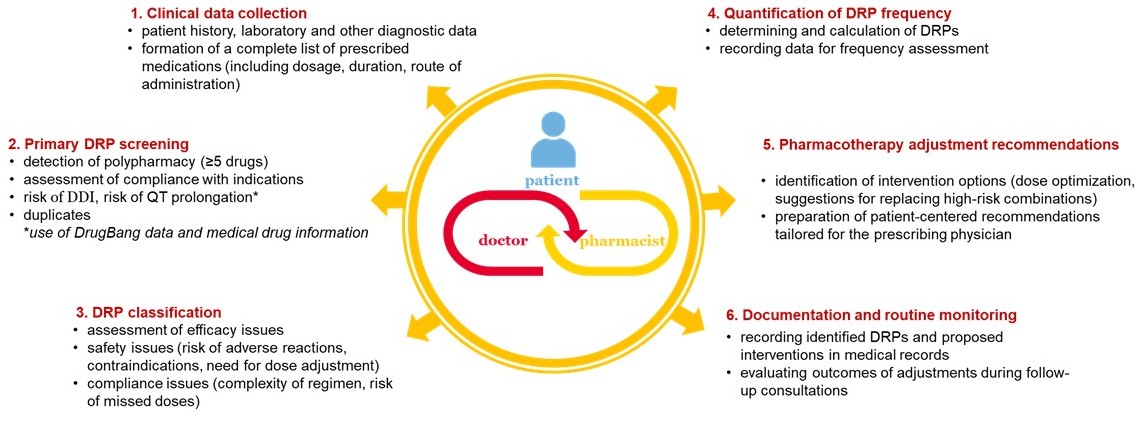
Drug-related problems (DRPs) pose a significant threat to patient safety, especially in conditions of comorbidity and polypharmacy. DRPs can manifest as adverse reactions, drug interactions, etc., potentially negatively affecting the effectiveness and safety of treatment. Since most DRPs are potentially predictable if timely detection and correction of pharmacotherapy are provided, the role of the clinical pharmacist is increasing, who can be included in the interdisciplinary team of specialists and, within the framework of pharmaceutical counselling, contribute to their minimization.
The aim: The aim of our study was to assess the frequency and nature of DRPs in comorbid patients with anxiety and depressive disorders to develop a model of pharmaceutical counselling.
Materials and methods: A retrospective analysis of 55 medical histories of comorbid patients who were inpatients in the therapeutic department of a multidisciplinary hospital in Kyiv and were treated for the main disease and anxiety-depressive disorders was conducted. Most patients (67%) had 3–4 concomitant diseases, including anxiety-depressive disorder, in addition to the main one.
The analysis of potential drug-drug interactions was carried out using the DrugBank database and official instructions for medical use of medicines.
Statistical analysis included correlation analysis to assess the relationships between variables and comparison of qualitative indicators using the Pearson χ² test. The level of statistical significance was taken as p < 0.05. Data processing was carried out using the Microsoft Excel package.
Results: The total frequency of DRPs per patient was 3.73 ± 2.58, polypharmacy was detected in 84% of patients.
A significant correlation (p < 0.05) was found between the patient's age and the number of comorbid conditions (r = 0.48), as well as between the patient's age and the number of medications he received (r = 0.45).
Patients were significantly more likely to receive benzodiazepines than antidepressants (89.1% vs. 38.2%; Pearson's χ² = 30.80, p < 0.001).
Conclusions: Among comorbid patients with anxiety and depressive disorders who were treated in a somatic hospital, a significant prevalence of drug-related problems was found. The number of drugs per course of treatment correlated with the age of the patients. Almost all patients received benzodiazepines, including the majority of elderly patients, which is dangerous due to the risk of increasing cognitive impairment. In addition, clinically significant drug-drug interactions were found in 42% of patients, and in 29% – the prescription of drugs in the presence of restrictions or contraindications. The results of the study emphasize the importance of individualizing pharmacotherapy considering age, comorbidity and potential interactions and justify the need to involve a clinical pharmacist in a multidisciplinary team to minimize the risk of drug-related problems
References
- Lekpittaya, N., Kocharoen, S., Angkanavisul, J., Siriudompas, T., Montakantikul, P., Paiboonvong, T. (2023). Drug-related problems identified by clinical pharmacists in an academic medical centre in Thailand. Journal of Pharmaceutical Policy and Practice, 17 (1). https://doi.org/10.1080/20523211.2023.2288603
- Kohn, L. T., Corrigan, J. M., Donaldson, M. S. (Eds.) (1999). To Err is Human: Building a Safer Health System. Washington: National Academy Press. https://doi.org/10.17226/9728
- Haag, J. D., Bellamkonda, V. R., Perinpam, L., Peters, B. J., Sunga, K. L., Gross, C. L. et al. (2022). Prevalence and Categorization of Drug-Related Problems in the Emergency Department. The Journal of Emergency Medicine, 63 (2), 192–199. https://doi.org/10.1016/j.jemermed.2022.04.016
- Garin, N., Sole, N., Lucas, B., Matas, L., Moras, D., Rodrigo-Troyano, A. et al. (2021). Drug related problems in clinical practice: a cross-sectional study on their prevalence, risk factors and associated pharmaceutical interventions. Scientific Reports, 11 (1). https://doi.org/10.1038/s41598-020-80560-2
- Pinho, L. G. de, Lopes, M. J., Correia, T., Sampaio, F., Arco, H. R. do, Mendes, A. et al. (2021). Patient-Centered Care for Patients with Depression or Anxiety Disorder: An Integrative Review. Journal of Personalized Medicine, 11(8), 776. https://doi.org/10.3390/jpm11080776
- Buist, E., McLelland, R., Rushworth, G. F., Stewart, D., Gibson-Smith, K., MacLure, A. et al. (2019). An evaluation of mental health clinical pharmacist independent prescribers within general practice in remote and rural Scotland. International Journal of Clinical Pharmacy, 41 (5), 1138–1142. https://doi.org/10.1007/s11096-019-00897-1
- Stuhec, M., Tement, V. (2021). Positive evidence for clinical pharmacist interventions during interdisciplinary rounding at a psychiatric hospital. Scientific Reports, 11 (1). https://doi.org/10.1038/s41598-021-92909-2
- Vitija, A., Amirthalingam, A., Soltani, A. (2022). The impact of digital interventions on medication adherence in paediatric populations with attention deficit hyperactivity disorder, depression, and/or anxiety: A rapid systematic review and meta-analysis. Research in Social and Administrative Pharmacy, 18 (12), 4017–4027. https://doi.org/10.1016/j.sapharm.2022.07.042
- Al Shakhori, M., Arain, S., Abdulsalim, S., Salim Karattuthodi, M., Al Dhamen, M., Almutairi, S. et al. (2025). Effectiveness of a pharmacist-led tele-psychiatric clinic in managing drug-related problems. Journal of Pharmaceutical Policy and Practice, 18 (1). https://doi.org/10.1080/20523211.2025.2460038
- Chudzicka-Czupała, A., Hapon, N., Chiang, S.-K., Żywiołek-Szeja, M., Karamushka, L., Lee, C. T. et al. (2023). Depression, anxiety and post-traumatic stress during the 2022 Russo-Ukrainian war, a comparison between populations in Poland, Ukraine, and Taiwan. Scientific Reports, 13 (1). https://doi.org/10.1038/s41598-023-28729-3
- Nehoda, T. S., Polova, Zh. M. (2024). methodological approaches to the formation of an optimal range of antidepressants for the inpatient treatment of martial law mental disorders. Health & Education, 1, 113–120. https://doi.org/10.32782/health-2024.1.15
- Antidepressants Global Market Report 2025 (2025). The Business Research Company. Available at: https://www.thebusinessresearchcompany.com/report/antidepressant-global-market-report
- PharmXplorer: Analytical system for pharmaceutical market monitoring in Ukraine. (2025). Available at: https://pharmxplorer.com.ua
- Kishi, T., Ikuta, T., Sakuma, K., Okuya, M., Hatano, M., Matsuda, Y., Iwata, N. (2022). Antidepressants for the treatment of adults with major depressive disorder in the maintenance phase: a systematic review and network meta-analysis. Molecular Psychiatry, 28 (1), 402–409. https://doi.org/10.1038/s41380-022-01824-z
- Solmi, M., Fornaro, M., Ostinelli, E. G., Zangani, C., Croatto, G., Monaco, F. et al. (2020). Safety of 80 antidepressants, antipsychotics, anti‐attention‐deficit/hyperactivity medications and mood stabilizers in children and adolescents with psychiatric disorders: a large scale systematic meta‐review of 78 adverse effects. World Psychiatry, 19 (2), 214–232. https://doi.org/10.1002/wps.20765
- Woroń, J., Chrobak, A. A., Ślęzak, D., Siwek, M. (2022). Unprescribed and unnoticed: Retrospective chart review of adverse events of interactions between antidepressants and over-the-counter drugs. Frontiers in Pharmacology, 13. https://doi.org/10.3389/fphar.2022.965432
- Dobrea, C. M., Morgovan, C., Frum, A., Butuca, A., Chis, A. A., Arseniu, A. M. et al. (2025). The Assessment of the Safety Profile of Selective Serotonin Reuptake Inhibitors Versus Other Antidepressants: Drug–Drug Interaction Insights from EudraVigilance. Journal of Clinical Medicine, 14 (4), 1208. https://doi.org/10.3390/jcm14041208
- Demler, T. J. (2012). Psychiatric drug-drug interactions. US Pharmacist, 37 (11), 16–19. Available at: https://www.uspharmacist.com/article/psychiatric-drug-drug-interactions-a-refresher
- Hoffelt, C., Gross, T. (2016). A review of significant pharmacokinetic drug interactions with antidepressants and their management. Mental Health Clinician, 6 (1), 35–41. https://doi.org/10.9740/mhc.2016.01.035
- Milosavljevic, F., Bukvic, N., Pavlovic, Z., Miljevic, C., Pešic, V., Molden, E. et al. (2021). Association of CYP2C19 and CYP2D6 Poor and Intermediate Metabolizer Status With Antidepressant and Antipsychotic Exposure. JAMA Psychiatry, 78 (3), 270–280. https://doi.org/10.1001/jamapsychiatry.2020.3643
- Kee, P. S., Maggo, S. D. S., Kennedy, M. A., Chin, P. K. L. (2023). The pharmacogenetics of CYP2D6 and CYP2C19 in a case series of antidepressant responses. Frontiers in Pharmacology, 14. https://doi.org/10.3389/fphar.2023.1080117
- Classification for drug-related problems V8.01. (2018). Benelux: Europe PCN. Pharmaceutical Care Network Europe. Available at: https://www.pcne.org/upload/files/215_PCNE_classification_V8-01.pdf
- Viktil, K. K., Blix, H. S., Moger, T. A., Reikvam, A. (2006). Polypharmacy as commonly defined is an indicator of limited value in the assessment of drug‐related problems. British Journal of Clinical Pharmacology, 63 (2), 187–195. https://doi.org/10.1111/j.1365-2125.2006.02744.x
- Hochhold, D., Nørgaard, L. S., Stewart, D., Weidmann, A. E. (2025). Identification, classification, and documentation of drug related problems in community pharmacy practice in Europe: a scoping review. International Journal of Clinical Pharmacy, 47(2), 247–269. https://doi.org/10.1007/s11096-024-01834-7
- Huiskes, V. J. B., van den Ende, C. H. M., Kruijtbosch, M., Ensing, H. T., Meijs, M., Meijs, V. M. M. et al. (2019). Effectiveness of medication review on the number of drug‐related problems in patients visiting the outpatient cardiology clinic: A randomized controlled trial. British Journal of Clinical Pharmacology, 86 (1), 50–61. Portico. https://doi.org/10.1111/bcp.14125
- Chance, E. A., Florence, D., Sardi Abdoul, I. (2024). The effectiveness of checklists and error reporting systems in enhancing patient safety and reducing medical errors in hospital settings: A narrative review. International Journal of Nursing Sciences, 11 (3), 387–398. https://doi.org/10.1016/j.ijnss.2024.06.003
- DiMatteo, M. R., Lepper, H. S., Croghan, T. W. (2000). Depression Is a Risk Factor for Noncompliance With Medical Treatment. Archives of Internal Medicine, 160 (14), 2101–2107. https://doi.org/10.1001/archinte.160.14.2101
- Wiersema, C., Oude Voshaar, R. C., van den Brink, R. H. S., Wouters, H., Verhaak, P., Comijs, H. C., Jeuring, H. W. (2022). Determinants and consequences of polypharmacy in patients with a depressive disorder in later life. Acta Psychiatrica Scandinavica, 146 (1), 85–97. https://doi.org/10.1111/acps.13435
- Alwhaibi, M. (2023). Inappropriate Medications Use and Polypharmacy among Older Adults with Anxiety Disorder. Journal of Clinical Medicine, 12 (13), 4195. https://doi.org/10.3390/jcm12134195
- Govaerts, J., Boeyckens, J., Lammens, A., Gilis, A., Bouckaert, F., De Hert, M. et al. (2021). Defining polypharmacy: in search of a more comprehensive determination method applied in a tertiary psychiatric hospital. Therapeutic Advances in Psychopharmacology, 11. https://doi.org/10.1177/20451253211000610
- DrugBank. Available at: https://go.drugbank.com
- Conn, D. K., Hogan, D. B., Amdam, L., Cassidy, K.-L., Cordell, P., Frank, C., Gardner, D. et al. (2020). Canadian Guidelines on Benzodiazepine Receptor Agonist Use Disorder Among Older Adults. Canadian Geriatrics Journal, 23 (1), 116–122. https://doi.org/10.5770/cgj.23.419
- Bonanno, E. G., Figueiredo, T., Mimoso, I. F., Morgado, M. I., Carrilho, J., Midão, L., Costa, E. (2025). Polypharmacy Prevalence Among Older Adults Based on the Survey of Health, Ageing and Retirement in Europe: An Update. Journal of Clinical Medicine, 14 (4), 1330. https://doi.org/10.3390/jcm14041330
- Kim, S., Lee, H., Park, J., Kang, J., Rahmati, M., Rhee, S. Y., Yon, D. K. (2024). Global and regional prevalence of polypharmacy and related factors, 1997–2022: An umbrella review. Archives of Gerontology and Geriatrics, 124, 105465. https://doi.org/10.1016/j.archger.2024.105465
- Simões, P. A., Santiago, L. M., Simões, J. A. (2020). Prevalence of polypharmacy in the older adult population within primary care in Portugal: a nationwide cross-sectional study. Archives of Medical Science, 20 (4), 1118–1127. https://doi.org/10.5114/aoms.2020.93537
- Bennie, M., Santa‐Ana‐Tellez, Y., Galistiani, G. F., Trehony, J., Despres, J., Jouaville, L. S. (2024). The prevalence of polypharmacy in older Europeans: A multi‐national database study of general practitioner prescribing. British Journal of Clinical Pharmacology, 90 (9), 2124–2136. https://doi.org/10.1111/bcp.16113
- Troncoso-Mariño, A., Roso-Llorach, A., López-Jiménez, T., Villen, N., Amado-Guirado, E., Fernández-Bertolin, S. et al. (2021). Medication-Related Problems in Older People with Multimorbidity in Catalonia: A Real-World Data Study with 5 Years’ Follow-Up. Journal of Clinical Medicine, 10 (4), 709. https://doi.org/10.3390/jcm10040709
- Lea, M., Mowe, M., Mathiesen, L., Kvernrød, K., Skovlund, E., Molden, E. (2019). Prevalence and risk factors of drug-related hospitalizations in multimorbid patients admitted to an internal medicine ward. PLOS ONE, 14 (7), e0220071. https://doi.org/10.1371/journal.pone.0220071
- Zhao, M., Chen, Z., Xu, T., Fan, P., Tian, F. (2023). Global prevalence of polypharmacy and potentially inappropriate medication in older patients with dementia: a systematic review and meta-analysis. Frontiers in Pharmacology, 14. https://doi.org/10.3389/fphar.2023.1221069
- Moßhammer, D., Haumann, H., Mörike, K., Joos, S. (2016). Polypharmacy – an Upward Trend with Unpredictable Effects. Deutsches Ärzteblatt International, 113, 627–233. https://doi.org/10.3238/arztebl.2016.0627
- Tor-Anyiin, A., Gwa, A., Okonkwo, R., Tor-Anyiin, I., Abuh, A. (2020). Prevalence and Perception of Pharmacists on Dispensing Prescription Only Medication without Prescription in Makurdi, Benue State, Nigeria. European Journal of Medical and Health Sciences, 2 (3). https://doi.org/10.24018/ejmed.2020.2.3.323
- Tan, H., Yan, X., Chen, Y., Huang, G., Luo, L., Li, W. et al. (2024). A real-world pharmacovigilance study of drug-induced QT interval prolongation: analysis of spontaneous reports submitted to FAERS. Frontiers in Cardiovascular Medicine, 11. https://doi.org/10.3389/fcvm.2024.1363382
- Gutlapalli, S. D., Prakash, K., Swarnakari, K. M., Bai, M., Manoharan, M. P., Raja, R. et al. (2022). The Risk of Fatal Arrhythmias Associated With Sertraline in Patients With Post-myocardial Infarction Depression. Cureus, 14 (9). https://doi.org/10.7759/cureus.28946
- Wang, C.-L., Wu, V., Huang, Y.-T., Chang, S. (2024). Abstract 4139536: Incidence of Severe QT Prolongation and the Assoicated Risk of Ventricular Arrhythmias and Sudden Cardiac Death in Patients Taking Antipsychotics or Antidepressants. Circulation, 150. https://doi.org/10.1161/circ.150.suppl_1.4139536
- van Westrhenen, R., Aitchison, K. J., Ingelman-Sundberg, M., Jukić, M. M. (2020). Pharmacogenomics of Antidepressant and Antipsychotic Treatment: How Far Have We Got and Where Are We Going? Frontiers in Psychiatry, 11. https://doi.org/10.3389/fpsyt.2020.00094
Downloads
Published
How to Cite
Issue
Section
License
Copyright (c) 2025 Kateryna Hoshtynar, Mykola Khaitovych, Oleksandr Kryvanych, Viktoriia Potaskalova

This work is licensed under a Creative Commons Attribution 4.0 International License.
Our journal abides by the Creative Commons Attribution 4.0 International License copyright rights and permissions for open access journals.
Authors, who are published in this journal, agree to the following conditions:
1. The authors reserve the right to authorship of the work and pass the first publication right of this work to the journal under the terms of a Creative Commons Attribution 4.0 International License, which allows others to freely distribute the published research with the obligatory reference to the authors of the original work and the first publication of the work in this journal.
2. The authors have the right to conclude separate supplement agreements that relate to non-exclusive work distribution in the form in which it has been published by the journal (for example, to upload the work to the online storage of the journal or publish it as part of a monograph), provided that the reference to the first publication of the work in this journal is included.
3. Authors have the right to store the final accepted version of the article in an institutional, thematic, or any other repository to ensure visibility and accessibility.