Identifying the effects of technology acceptance model constructs on small-scale renewable energy adoption in rural contexts
DOI:
https://doi.org/10.15587/1729-4061.2026.352950Keywords:
decentralized energy systems, adoption intention, farmers, energy transition, food securityAbstract
The object of the study is the adoption of small-scale renewable energy technologies on farms and in rural households. The research problem arises from fragmented and heterogeneous empirical findings obtained in studies based on the technology acceptance model (TAM), which prevent the formation of quantitatively substantiated conclusions regarding the role of key behavioral determinants of renewable energy adoption.
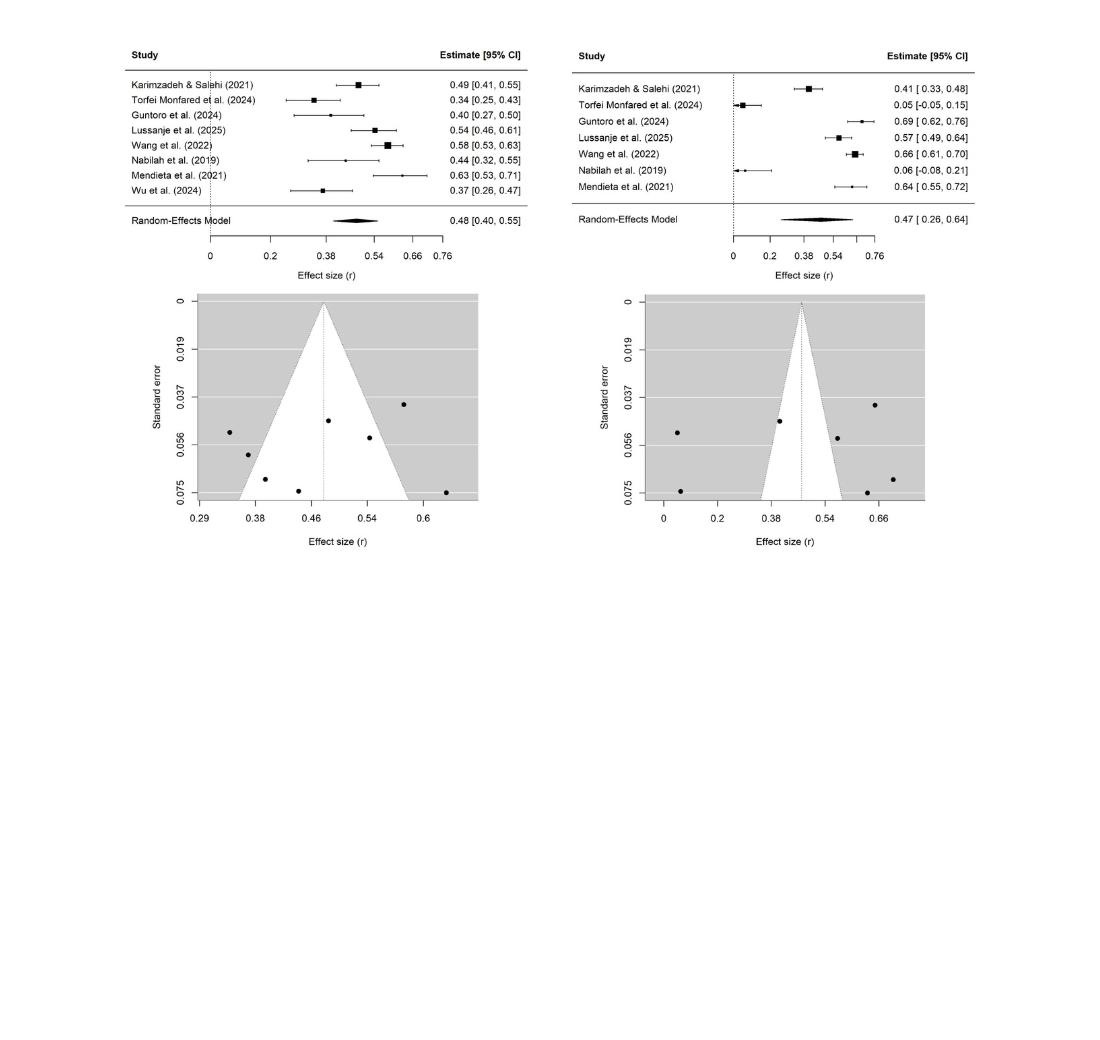
This study identifies and quantitatively synthesizes the effects of perceived usefulness and perceived ease of use on intention and actual adoption behavior within a theoretically focused and statistically rigorous framework. Eight independent studies with a total sample of 2,675 respondents were included. Effect sizes were aggregated using random-effects models and estimated through Fisher’s Z transformation.
The results reveal robust and statistically significant positive effects of both perceived usefulness and perceived ease of use on adoption behavior. However, perceived usefulness demonstrates a more stable and structurally consistent influence across rural contexts. The findings indicate that adoption decisions are primarily driven by expected economic and functional benefits, highlighting the importance of emphasizing the practical value of renewable energy technologies in rural implementation strategies.
The distinctive feature of the study lies in its exclusive focus on core TAM constructs and systematic aggregation of effect sizes within rural small-scale renewable energy contexts. The results can be applied in the design of public policies and support programs aimed at enhancing perceived usefulness of renewable energy technologies under conditions of rural economic and infrastructural constraints
References
- Erdoğdu, A., Dayi, F., Yanik, A., Yildiz, F., Ganji, F. (2025). Innovative Solutions for Combating Climate Change: Advancing Sustainable Energy and Consumption Practices for a Greener Future. Sustainability, 17 (6), 2697. https://doi.org/10.3390/su17062697
- Kurmanov, N., Kabdullina, G., Baidakov, A., Kabdolla, A. (2025). Renewable Energy, Green Economic Growth and Food Security in Central Asian Countries: An Empirical Analysis. International Journal of Energy Economics and Policy, 15 (2), 1–8. https://doi.org/10.32479/ijeep.17922
- Smith, A. (2025). Assessing the Socioeconomic Viability of Small-Scale Renewable Energy Technologies in Rural Agricultural Communities: Policy Pathways and Barriers. Studies in Knowledge Discovery, Intelligent Systems, and Distributed Analytics, 15 (2), 1–12. Available at: https://edgescholar.com/index.php/SKDISDA/article/view/e-2025-02-04
- Rumbayan, M., Kindangen, J., Sambul, A., Sompie, S., Cross, J. (2025). Solar energy implementation in rural communities and its contributions to SDGs: A systematic literature review. Unconventional Resources, 6, 100180. https://doi.org/10.1016/j.uncres.2025.100180
- Azimov, U., Avezova, N. (2022). Sustainable small-scale hydropower solutions in Central Asian countries for local and cross-border energy/water supply. Renewable and Sustainable Energy Reviews, 167, 112726. https://doi.org/10.1016/j.rser.2022.112726
- Denial, A. (2023). The Role of Innovative Renewable Energy Technologies in Advancing Energy Access in Developing Countries. Journal of Energy and Environmental Policy Options, 6 (2), 23–28. Available at: https://resdojournals.com/index.php/JEEPO/article/view/326
- Moore, C. (2024). Renewable Energy Adoption and Its Effect on Rural Development in United States. Journal of Developing Country Studies, 8 (2), 15–31. https://doi.org/10.47604/jdcs.2674
- Davis, F. D. (1987). User acceptance of information systems: the technology acceptance model (TAM). Business, Stephen M. Ross School of - Working Papers Series. Available at: https://hdl.handle.net/2027.42/35547
- Davis, F. D. (1989). Perceived Usefulness, Perceived Ease of Use, and User Acceptance of Information Technology. MIS Quarterly, 13 (3), 319–340. https://doi.org/10.2307/249008
- Scherer, R., Siddiq, F., Tondeur, J. (2019). The technology acceptance model (TAM): A meta-analytic structural equation modeling approach to explaining teachers’ adoption of digital technology in education. Computers & Education, 128, 13–35. https://doi.org/10.1016/j.compedu.2018.09.009
- Marikyan, D., Papagiannidis, S., Stewart, G. (2023). Technology acceptance research: Meta-analysis. Journal of Information Science. https://doi.org/10.1177/01655515231191177
- Ali, I., Warraich, N. F. (2024). Meta-analysis of technology acceptance for mobile and digital libraries in academic settings using technology acceptance model (TAM). Global Knowledge, Memory and Communication, 74 (9-10), 3114–3131. https://doi.org/10.1108/gkmc-09-2023-0360
- AlQudah, A. A., Al-Emran, M., Shaalan, K. (2021). Technology Acceptance in Healthcare: A Systematic Review. Applied Sciences, 11 (22), 10537. https://doi.org/10.3390/app112210537
- Ma, J., Wang, P., Li, B., Wang, T., Pang, X. S., Wang, D. (2024). Exploring User Adoption of ChatGPT: A Technology Acceptance Model Perspective. International Journal of Human–Computer Interaction, 41 (2), 1431–1445. https://doi.org/10.1080/10447318.2024.2314358
- Porkodi, S., Tabash, B. K. H. (2024). A Comprehensive Meta-Analysis of Blended Learning Adoption and Technological Acceptance in Higher Education. International Journal of Modern Education and Computer Science, 16 (1), 47–71. https://doi.org/10.5815/ijmecs.2024.01.05
- Al-Nuaimi, M. N., Al-Emran, M. (2021). Learning management systems and technology acceptance models: A systematic review. Education and Information Technologies, 26 (5), 5499–5533. https://doi.org/10.1007/s10639-021-10513-3
- Liu, C., Wang, Y., Evans, M., Correia, A.-P. (2024). Critical antecedents of mobile learning acceptance and moderation effects: A meta-analysis on technology acceptance model. Education and Information Technologies, 29 (15), 20351–20382. https://doi.org/10.1007/s10639-024-12645-8
- Rahmani, A., Daim, T. U., Zamani, M., Güngör, D. Ö. (2026). Renewable energy adoption: A meta-analysis of an extended technology acceptance model. Technology in Society, 84, 103126. https://doi.org/10.1016/j.techsoc.2025.103126
- Nabilah S, L., Loveldy, Z. A. C., Prayoga, S. S., Suhartanto, D. (2019). Solar House System Adoption among Rural Community. IOP Conference Series: Materials Science and Engineering, 662 (4), 042024. https://doi.org/10.1088/1757-899x/662/4/042024
- Karimzadeh, S., Kašparová, E. (2021). Socio-Individual Prerequisites of Energy Transition in Iran: Investigating Public Acceptance of Solar Panel Technology in Rural Areas. Journal of Asian Energy Studies, 5 (1). https://doi.org/10.24112/jaes050004
- Karimzadeh, S., Salehi, S. (2021). A study of households’ intention towards solar panel installation case study: villagers of the northern regions of Iran. Environmental Sociology, 7 (4), 434–446. https://doi.org/10.1080/23251042.2021.1927293
- da Conceição Lussanje, A., Wang, W., Njie, Y. (2025). Factors influencing farmers on the adoption of solar PV water pumps: A case of Angola’s rural area. Environment, Development and Sustainability. https://doi.org/10.1007/s10668-025-06212-5
- Zhou, D., Abdullah. (2017). The acceptance of solar water pump technology among rural farmers of northern Pakistan: A structural equation model. Cogent Food & Agriculture, 3 (1), 1280882. https://doi.org/10.1080/23311932.2017.1280882
- Wang, W., Guan, X., Jin, S., Wang, X., Qin, X., Lu, N. et al. (2022). Social network and villagers’ willingness to adopt residential rooftop PV products: A multiple mediating model based on TAM/PR theory. Frontiers in Environmental Science, 10. https://doi.org/10.3389/fenvs.2022.999006
- Mendieta, O., Castro, L., Vera, E., Rodríguez, J., Escalante, H. (2021). Toward the Adoption of Anaerobic Digestion Technology through Low-Cost Biodigesters: A Case Study of Non-Centrifugal Cane Sugar Producers in Colombia. Water, 13 (18), 2566. https://doi.org/10.3390/w13182566
- Guntoro, B., Qui, N. H., Putra, A. R. S., Thu, N. T. A., Vui, N. V. (2024). Factors Affecting the Willingness to Adopt Biogas System at Small Pig Farms in Mekong Delta, Vietnam. Pakistan Journal of Agricultural Research, 37 (4). https://doi.org/10.17582/journal.pjar/2024/37.4.320.330
- Wu, S., Xiao, Y., Pacala, A., Badulescu, A., Khan, S. (2024). Understanding Chinese Farmers’ Behavioral Intentions to Use Alternative Fuel Machinery: Insights from the Technology Acceptance Model and Theory of Planned Behavior. Sustainability, 16 (24), 11059. https://doi.org/10.3390/su162411059
- Page, M. J., McKenzie, J. E., Bossuyt, P. M., Boutron, I., Hoffmann, T. C., Mulrow, C. D. et al. (2021). The PRISMA 2020 statement: An updated guideline for reporting systematic reviews. International Journal of Surgery, 88, 105906. https://doi.org/10.1016/j.ijsu.2021.105906
- Torfei Monfared, K., Vahedi, M., Eshraghi Samani, R., Moradnezhadi, H. (2024). Designing a model for enhancing intention to accept renewable energy technologies in rural communities of Ilam province, Iran. International Journal of Energy Sector Management, 19 (2), 269–288. https://doi.org/10.1108/ijesm-03-2024-0029
Downloads
Published
How to Cite
Issue
Section
License
Copyright (c) 2026 Nurlan Kurmanov, Gulmira Kabdullina, Zhaxat Kenzhin, Gulfiya Zhambylova, Asylkhan Kabdolla, Merey Adilbekuly

This work is licensed under a Creative Commons Attribution 4.0 International License.
The consolidation and conditions for the transfer of copyright (identification of authorship) is carried out in the License Agreement. In particular, the authors reserve the right to the authorship of their manuscript and transfer the first publication of this work to the journal under the terms of the Creative Commons CC BY license. At the same time, they have the right to conclude on their own additional agreements concerning the non-exclusive distribution of the work in the form in which it was published by this journal, but provided that the link to the first publication of the article in this journal is preserved.
A license agreement is a document in which the author warrants that he/she owns all copyright for the work (manuscript, article, etc.).
The authors, signing the License Agreement with TECHNOLOGY CENTER PC, have all rights to the further use of their work, provided that they link to our edition in which the work was published.
According to the terms of the License Agreement, the Publisher TECHNOLOGY CENTER PC does not take away your copyrights and receives permission from the authors to use and dissemination of the publication through the world's scientific resources (own electronic resources, scientometric databases, repositories, libraries, etc.).
In the absence of a signed License Agreement or in the absence of this agreement of identifiers allowing to identify the identity of the author, the editors have no right to work with the manuscript.
It is important to remember that there is another type of agreement between authors and publishers – when copyright is transferred from the authors to the publisher. In this case, the authors lose ownership of their work and may not use it in any way.








