Визначення впливу конструкцій моделей прийняття технологій на впровадження дрібномасштабних відновлюваних джерел енергії в сільській місцевості
DOI:
https://doi.org/10.15587/1729-4061.2026.352950Ключові слова:
децентралізовані енергетичні системи, намір впровадження, фермери, енергетичний перехід, продовольча безпекаАнотація
Об'єктом дослідження є впровадження технологій відновлюваної енергетики малого масштабу на фермах та в сільських домогосподарствах. Проблема дослідження виникає з фрагментованих та неоднорідних емпіричних результатів, отриманих у дослідженнях, заснованих на моделі прийняття технологій (МПТ), які перешкоджають формуванню кількісно обґрунтованих висновків щодо ролі ключових поведінкових детермінант впровадження відновлюваної енергетики.
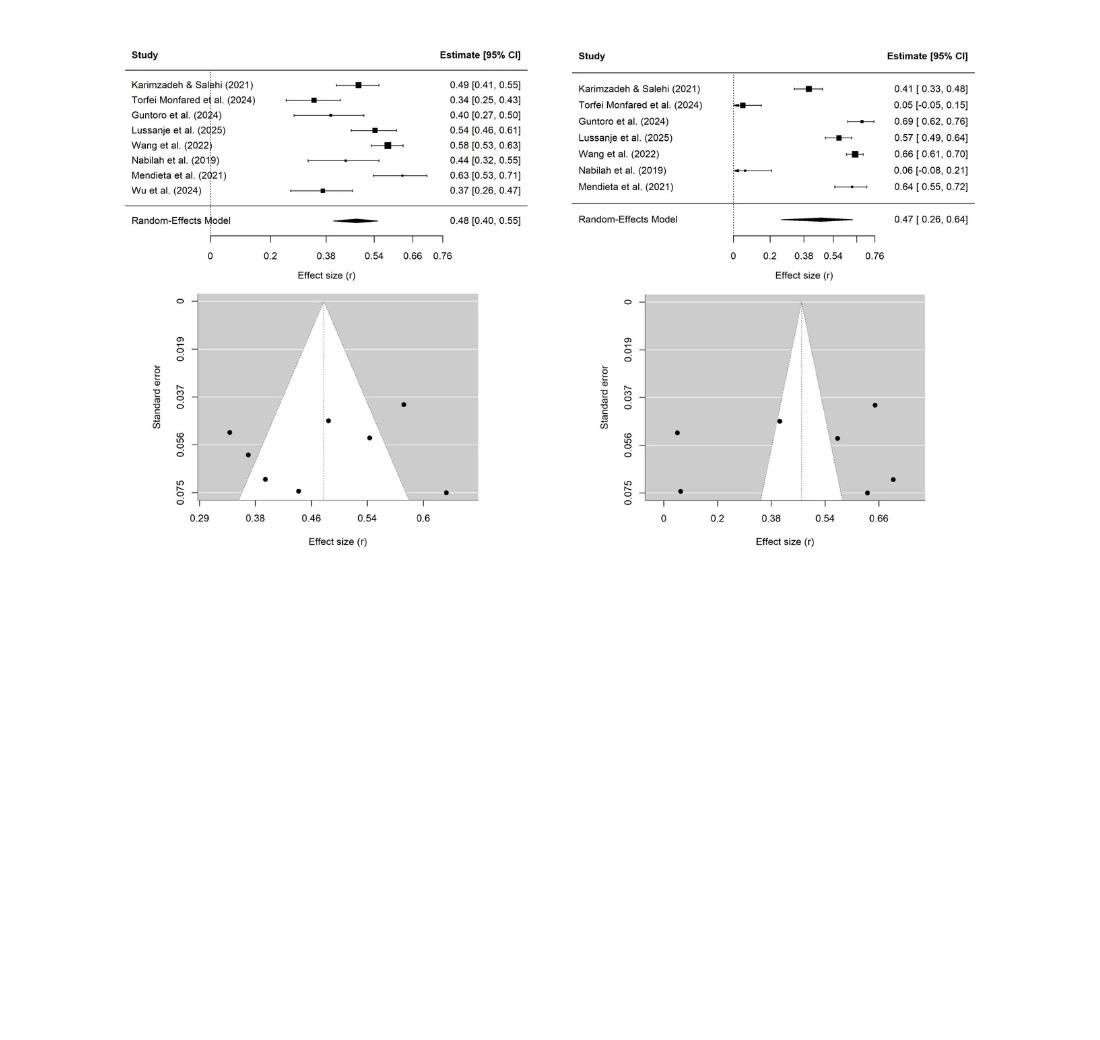
Це дослідження визначає та кількісно синтезує вплив сприйнятої корисності та сприйнятої простоти використання на наміри та фактичну поведінку щодо впровадження в рамках теоретично сфокусованої та статистично строгої структури. Було включено вісім незалежних досліджень із загальною вибіркою 2675 респондентів. Розміри ефектів були агреговані за допомогою моделей випадкових ефектів та оцінені за допомогою Z-перетворення Фішера.
Результати показують стійкий та статистично значущий позитивний вплив як сприйнятої корисності, так і сприйнятої простоти використання на поведінку щодо впровадження. Однак сприйнята корисність демонструє більш стабільний та структурно послідовний вплив у сільських умовах. Результати дослідження показують, що рішення про впровадження в першу чергу зумовлені очікуваними економічними та функціональними вигодами, що підкреслює важливість акцентування практичної цінності технологій відновлюваної енергетики в стратегіях впровадження в сільській місцевості.
Відмінною особливістю дослідження є його виключна зосередженість на основних конструкціях МПТ та систематична агрегація розмірів ефектів у контексті маломасштабної відновлюваної енергетики в сільській місцевості. Результати можуть бути застосовані при розробці державної політики та програм підтримки, спрямованих на підвищення сприйнятої корисності технологій відновлюваної енергетики в умовах економічних та інфраструктурних обмежень у сільській місцевості
Посилання
- Erdoğdu, A., Dayi, F., Yanik, A., Yildiz, F., Ganji, F. (2025). Innovative Solutions for Combating Climate Change: Advancing Sustainable Energy and Consumption Practices for a Greener Future. Sustainability, 17 (6), 2697. https://doi.org/10.3390/su17062697
- Kurmanov, N., Kabdullina, G., Baidakov, A., Kabdolla, A. (2025). Renewable Energy, Green Economic Growth and Food Security in Central Asian Countries: An Empirical Analysis. International Journal of Energy Economics and Policy, 15 (2), 1–8. https://doi.org/10.32479/ijeep.17922
- Smith, A. (2025). Assessing the Socioeconomic Viability of Small-Scale Renewable Energy Technologies in Rural Agricultural Communities: Policy Pathways and Barriers. Studies in Knowledge Discovery, Intelligent Systems, and Distributed Analytics, 15 (2), 1–12. Available at: https://edgescholar.com/index.php/SKDISDA/article/view/e-2025-02-04
- Rumbayan, M., Kindangen, J., Sambul, A., Sompie, S., Cross, J. (2025). Solar energy implementation in rural communities and its contributions to SDGs: A systematic literature review. Unconventional Resources, 6, 100180. https://doi.org/10.1016/j.uncres.2025.100180
- Azimov, U., Avezova, N. (2022). Sustainable small-scale hydropower solutions in Central Asian countries for local and cross-border energy/water supply. Renewable and Sustainable Energy Reviews, 167, 112726. https://doi.org/10.1016/j.rser.2022.112726
- Denial, A. (2023). The Role of Innovative Renewable Energy Technologies in Advancing Energy Access in Developing Countries. Journal of Energy and Environmental Policy Options, 6 (2), 23–28. Available at: https://resdojournals.com/index.php/JEEPO/article/view/326
- Moore, C. (2024). Renewable Energy Adoption and Its Effect on Rural Development in United States. Journal of Developing Country Studies, 8 (2), 15–31. https://doi.org/10.47604/jdcs.2674
- Davis, F. D. (1987). User acceptance of information systems: the technology acceptance model (TAM). Business, Stephen M. Ross School of - Working Papers Series. Available at: https://hdl.handle.net/2027.42/35547
- Davis, F. D. (1989). Perceived Usefulness, Perceived Ease of Use, and User Acceptance of Information Technology. MIS Quarterly, 13 (3), 319–340. https://doi.org/10.2307/249008
- Scherer, R., Siddiq, F., Tondeur, J. (2019). The technology acceptance model (TAM): A meta-analytic structural equation modeling approach to explaining teachers’ adoption of digital technology in education. Computers & Education, 128, 13–35. https://doi.org/10.1016/j.compedu.2018.09.009
- Marikyan, D., Papagiannidis, S., Stewart, G. (2023). Technology acceptance research: Meta-analysis. Journal of Information Science. https://doi.org/10.1177/01655515231191177
- Ali, I., Warraich, N. F. (2024). Meta-analysis of technology acceptance for mobile and digital libraries in academic settings using technology acceptance model (TAM). Global Knowledge, Memory and Communication, 74 (9-10), 3114–3131. https://doi.org/10.1108/gkmc-09-2023-0360
- AlQudah, A. A., Al-Emran, M., Shaalan, K. (2021). Technology Acceptance in Healthcare: A Systematic Review. Applied Sciences, 11 (22), 10537. https://doi.org/10.3390/app112210537
- Ma, J., Wang, P., Li, B., Wang, T., Pang, X. S., Wang, D. (2024). Exploring User Adoption of ChatGPT: A Technology Acceptance Model Perspective. International Journal of Human–Computer Interaction, 41 (2), 1431–1445. https://doi.org/10.1080/10447318.2024.2314358
- Porkodi, S., Tabash, B. K. H. (2024). A Comprehensive Meta-Analysis of Blended Learning Adoption and Technological Acceptance in Higher Education. International Journal of Modern Education and Computer Science, 16 (1), 47–71. https://doi.org/10.5815/ijmecs.2024.01.05
- Al-Nuaimi, M. N., Al-Emran, M. (2021). Learning management systems and technology acceptance models: A systematic review. Education and Information Technologies, 26 (5), 5499–5533. https://doi.org/10.1007/s10639-021-10513-3
- Liu, C., Wang, Y., Evans, M., Correia, A.-P. (2024). Critical antecedents of mobile learning acceptance and moderation effects: A meta-analysis on technology acceptance model. Education and Information Technologies, 29 (15), 20351–20382. https://doi.org/10.1007/s10639-024-12645-8
- Rahmani, A., Daim, T. U., Zamani, M., Güngör, D. Ö. (2026). Renewable energy adoption: A meta-analysis of an extended technology acceptance model. Technology in Society, 84, 103126. https://doi.org/10.1016/j.techsoc.2025.103126
- Nabilah S, L., Loveldy, Z. A. C., Prayoga, S. S., Suhartanto, D. (2019). Solar House System Adoption among Rural Community. IOP Conference Series: Materials Science and Engineering, 662 (4), 042024. https://doi.org/10.1088/1757-899x/662/4/042024
- Karimzadeh, S., Kašparová, E. (2021). Socio-Individual Prerequisites of Energy Transition in Iran: Investigating Public Acceptance of Solar Panel Technology in Rural Areas. Journal of Asian Energy Studies, 5 (1). https://doi.org/10.24112/jaes050004
- Karimzadeh, S., Salehi, S. (2021). A study of households’ intention towards solar panel installation case study: villagers of the northern regions of Iran. Environmental Sociology, 7 (4), 434–446. https://doi.org/10.1080/23251042.2021.1927293
- da Conceição Lussanje, A., Wang, W., Njie, Y. (2025). Factors influencing farmers on the adoption of solar PV water pumps: A case of Angola’s rural area. Environment, Development and Sustainability. https://doi.org/10.1007/s10668-025-06212-5
- Zhou, D., Abdullah. (2017). The acceptance of solar water pump technology among rural farmers of northern Pakistan: A structural equation model. Cogent Food & Agriculture, 3 (1), 1280882. https://doi.org/10.1080/23311932.2017.1280882
- Wang, W., Guan, X., Jin, S., Wang, X., Qin, X., Lu, N. et al. (2022). Social network and villagers’ willingness to adopt residential rooftop PV products: A multiple mediating model based on TAM/PR theory. Frontiers in Environmental Science, 10. https://doi.org/10.3389/fenvs.2022.999006
- Mendieta, O., Castro, L., Vera, E., Rodríguez, J., Escalante, H. (2021). Toward the Adoption of Anaerobic Digestion Technology through Low-Cost Biodigesters: A Case Study of Non-Centrifugal Cane Sugar Producers in Colombia. Water, 13 (18), 2566. https://doi.org/10.3390/w13182566
- Guntoro, B., Qui, N. H., Putra, A. R. S., Thu, N. T. A., Vui, N. V. (2024). Factors Affecting the Willingness to Adopt Biogas System at Small Pig Farms in Mekong Delta, Vietnam. Pakistan Journal of Agricultural Research, 37 (4). https://doi.org/10.17582/journal.pjar/2024/37.4.320.330
- Wu, S., Xiao, Y., Pacala, A., Badulescu, A., Khan, S. (2024). Understanding Chinese Farmers’ Behavioral Intentions to Use Alternative Fuel Machinery: Insights from the Technology Acceptance Model and Theory of Planned Behavior. Sustainability, 16 (24), 11059. https://doi.org/10.3390/su162411059
- Page, M. J., McKenzie, J. E., Bossuyt, P. M., Boutron, I., Hoffmann, T. C., Mulrow, C. D. et al. (2021). The PRISMA 2020 statement: An updated guideline for reporting systematic reviews. International Journal of Surgery, 88, 105906. https://doi.org/10.1016/j.ijsu.2021.105906
- Torfei Monfared, K., Vahedi, M., Eshraghi Samani, R., Moradnezhadi, H. (2024). Designing a model for enhancing intention to accept renewable energy technologies in rural communities of Ilam province, Iran. International Journal of Energy Sector Management, 19 (2), 269–288. https://doi.org/10.1108/ijesm-03-2024-0029
##submission.downloads##
Опубліковано
Як цитувати
Номер
Розділ
Ліцензія
Авторське право (c) 2026 Nurlan Kurmanov, Gulmira Kabdullina, Zhaxat Kenzhin, Gulfiya Zhambylova, Asylkhan Kabdolla, Merey Adilbekuly

Ця робота ліцензується відповідно до Creative Commons Attribution 4.0 International License.
Закріплення та умови передачі авторських прав (ідентифікація авторства) здійснюється у Ліцензійному договорі. Зокрема, автори залишають за собою право на авторство свого рукопису та передають журналу право першої публікації цієї роботи на умовах ліцензії Creative Commons CC BY. При цьому вони мають право укладати самостійно додаткові угоди, що стосуються неексклюзивного поширення роботи у тому вигляді, в якому вона була опублікована цим журналом, але за умови збереження посилання на першу публікацію статті в цьому журналі.
Ліцензійний договір – це документ, в якому автор гарантує, що володіє усіма авторськими правами на твір (рукопис, статтю, тощо).
Автори, підписуючи Ліцензійний договір з ПП «ТЕХНОЛОГІЧНИЙ ЦЕНТР», мають усі права на подальше використання свого твору за умови посилання на наше видання, в якому твір опублікований. Відповідно до умов Ліцензійного договору, Видавець ПП «ТЕХНОЛОГІЧНИЙ ЦЕНТР» не забирає ваші авторські права та отримує від авторів дозвіл на використання та розповсюдження публікації через світові наукові ресурси (власні електронні ресурси, наукометричні бази даних, репозитарії, бібліотеки тощо).
За відсутності підписаного Ліцензійного договору або за відсутністю вказаних в цьому договорі ідентифікаторів, що дають змогу ідентифікувати особу автора, редакція не має права працювати з рукописом.
Важливо пам’ятати, що існує і інший тип угоди між авторами та видавцями – коли авторські права передаються від авторів до видавця. В такому разі автори втрачають права власності на свій твір та не можуть його використовувати в будь-який спосіб.