Determining a priori estimate of error in the thermal protection of gas generator in a hydrogen storage and supply system
DOI:
https://doi.org/10.15587/1729-4061.2026.352738Keywords:
hydrogen storage and supply system, thermal protection, thermal protection errorAbstract
This study investigates a gas generator for a hydrogen storage and supply system with a heat-shielding coating. The subject is the properties of the heat-shielding coating of the gas generator for a hydrogen storage and supply system under fire conditions. The properties of such a heat-shielding coating are taken into account by the thermal protection error of the thermodynamic system, which includes the heat-shielding coating and the gas generator wall.
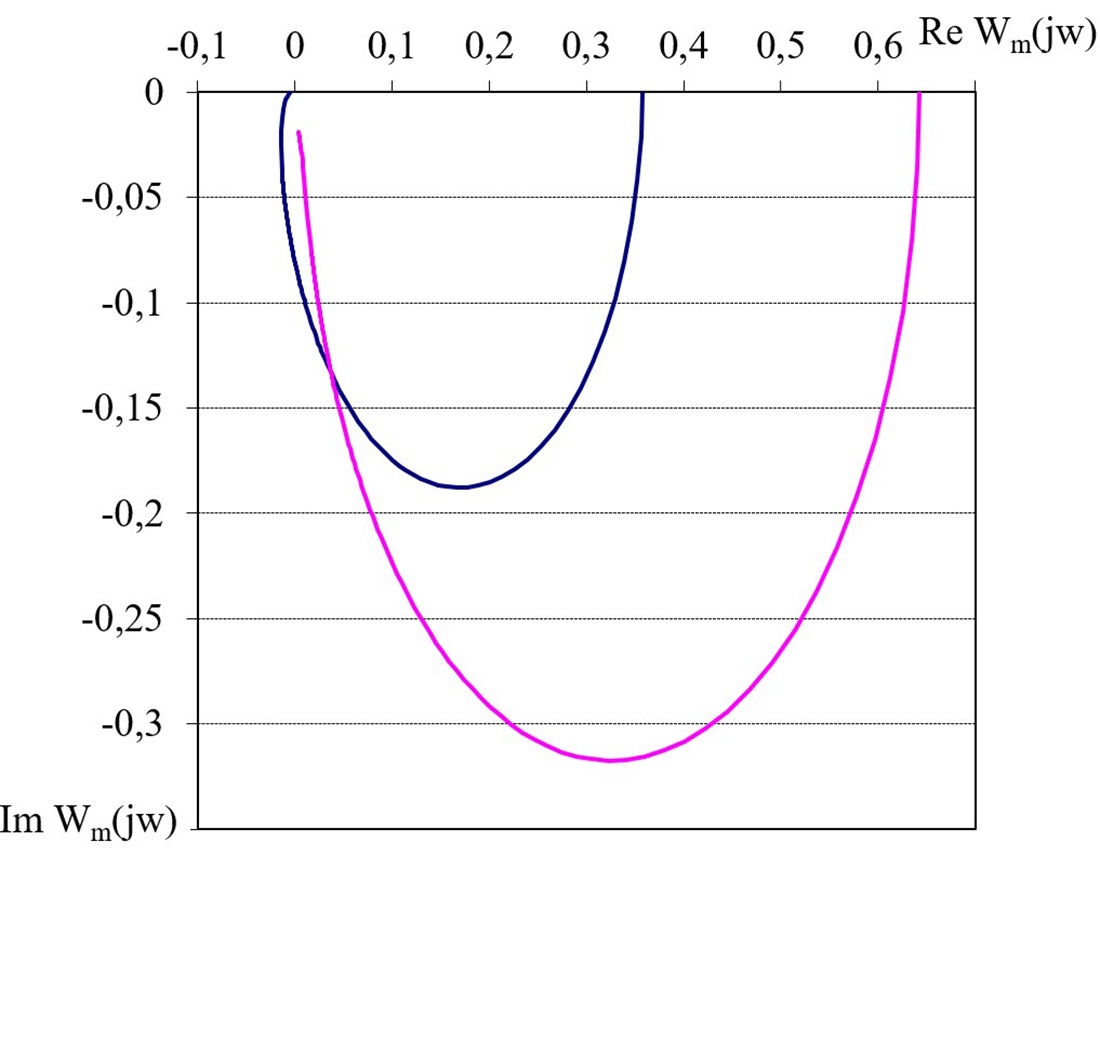
To describe the dynamic properties of the thermodynamic system in the frequency domain, amplitude-phase frequency characteristics and their components – amplitude-phase and phase-frequency characteristics – are used. The frequency characteristics of the thermodynamic system have been mathematically described in general form. It is shown that for the characteristic values of parameters for the thermodynamic system, its properties are fully reflected using frequency characteristics in the frequency range (0÷1.0) s-1 at a bandwidth of 0.02 s-1. The thermal effect of fire on the thermal state of the cavity of the gas generator of the hydrogen storage and supply system is taken into account using exponential-type correlation functions.
Thermal interference is "white noise". Under these conditions and using the amplitude-frequency characteristics of the thermodynamic system, mathematical models of the components of the error of the thermal protection of the gas generator were built in general form. As an indicator characterizing the error of the thermal protection of the gas generator, its root mean square value was used. It is shown that for real fire conditions and operation of hydrogen storage and supply systems, the root mean square error of the thermal protection of the gas generator is 5.14°C. In practice, the existence of such an error estimate opens up the possibility for improving the reliability in determining the thermal protection for a gas generator.
References
- Shi, C., Zhu, S., Wan, C., Bao, S., Zhi, X., Qiu, L., Wang, K. (2023). Performance analysis of vapor-cooled shield insulation integrated with para-ortho hydrogen conversion for liquid hydrogen tanks. International Journal of Hydrogen Energy, 48 (8), 3078–3090. https://doi.org/10.1016/j.ijhydene.2022.10.154
- Kukkapalli, V. K., Kim, S., Thomas, S. A. (2023). Thermal Management Techniques in Metal Hydrides for Hydrogen Storage Applications: A Review. Energies, 16 (8), 3444. https://doi.org/10.3390/en16083444
- Li, H., Cao, X., Liu, Y., Shao, Y., Nan, Z., Teng, L. et al. (2022). Safety of hydrogen storage and transportation: An overview on mechanisms, techniques, and challenges. Energy Reports, 8, 6258–6269. https://doi.org/10.1016/j.egyr.2022.04.067
- Kang, S., Lee, K. M., Kwon, M., Lim, O. K., Choi, J. Y. (2022). A Quantitative Analysis of the Fire Hazard Generated from Hydrogen Fuel Cell Electric Vehicles. International Journal of Fire Science and Engineering, 36 (2), 26–39. https://doi.org/10.7731/kifse.f4b33457
- Kang, D., Yun, S., Kim, B. (2022). Review of the Liquid Hydrogen Storage Tank and Insulation System for the High-Power Locomotive. Energies, 15 (12), 4357. https://doi.org/10.3390/en15124357
- Abohamzeh, E., Salehi, F., Sheikholeslami, M., Abbassi, R., Khan, F. (2021). Review of hydrogen safety during storage, transmission, and applications processes. Journal of Loss Prevention in the Process Industries, 72, 104569. https://doi.org/10.1016/j.jlp.2021.104569
- Yang, F., Wang, T., Deng, X., Dang, J., Huang, Z., Hu, S. et al. (2021). Review on hydrogen safety issues: Incident statistics, hydrogen diffusion, and detonation process. International Journal of Hydrogen Energy, 46 (61), 31467–31488. https://doi.org/10.1016/j.ijhydene.2021.07.005
- Jeon, J., Kim, S. J. (2020). Recent Progress in Hydrogen Flammability Prediction for the Safe Energy Systems. Energies, 13 (23), 6263. https://doi.org/10.3390/en13236263
- Liu, Y., Liu, Z., Wei, J., Lan, Y., Yang, S., Jin, T. (2021). Evaluation and prediction of the safe distance in liquid hydrogen spill accident. Process Safety and Environmental Protection, 146, 1–8. https://doi.org/10.1016/j.psep.2020.08.037
- Cui, S., Zhu, G., He, L., Wang, X., Zhang, X. (2023). Analysis of the fire hazard and leakage explosion simulation of hydrogen fuel cell vehicles. Thermal Science and Engineering Progress, 41, 101754. https://doi.org/10.1016/j.tsep.2023.101754
- Yu, X., Kong, D., He, X., Ping, P. (2023). Risk Analysis of Fire and Explosion of Hydrogen-Gasoline Hybrid Refueling Station Based on Accident Risk Assessment Method for Industrial System. Fire, 6 (5), 181. https://doi.org/10.3390/fire6050181
- Suzuki, T., Shiota, K., Izato, Y., Komori, M., Sato, K., Takai, Y. et al. (2021). Quantitative risk assessment using a Japanese hydrogen refueling station model. International Journal of Hydrogen Energy, 46 (11), 8329–8343. https://doi.org/10.1016/j.ijhydene.2020.12.035
- Li, B., Han, B., Li, Q., Gao, W., Guo, C., Lv, H. et al. (2022). Study on hazards from high-pressure on-board type III hydrogen tank in fire scenario: Consequences and response behaviours. International Journal of Hydrogen Energy, 47 (4), 2759–2770. https://doi.org/10.1016/j.ijhydene.2021.10.205
- Kashkarov, S., Dadashzadeh, M., Sivaraman, S., Molkov, V. (2022). Quantitative Risk Assessment Methodology for Hydrogen Tank Rupture in a Tunnel Fire. Hydrogen, 3 (4), 512–530. https://doi.org/10.3390/hydrogen3040033
- Shen, Y., Lv, H., Hu, Y., Li, J., Lan, H., Zhang, C. (2023). Preliminary hazard identification for qualitative risk assessment on onboard hydrogen storage and supply systems of hydrogen fuel cell vehicles. Renewable Energy, 212, 834–854. https://doi.org/10.1016/j.renene.2023.05.037
- Abramov, Y., Basmanov, O., Krivtsova, V., Mikhayluk, A., Khmyrov, I. (2023). Determining the possibility of the appearance of a combustible medium in the hydrogen storage and supply system. Eastern-European Journal of Enterprise Technologies, 2 (10 (122)), 47–54. https://doi.org/10.15587/1729-4061.2023.276099
- Correa-Jullian, C., Groth, K. M. (2022). Data requirements for improving the Quantitative Risk Assessment of liquid hydrogen storage systems. International Journal of Hydrogen Energy, 47 (6), 4222–4235. https://doi.org/10.1016/j.ijhydene.2021.10.266
- Abramov, Y., Kryvtsova, V., Mikhailyuk, A. (2021). Algorithm for determination of reliability indicator of gas generator of hydrogen storage and supply system. Municipal Economy of Cities, 4 (164), 153–157. https://doi.org/10.33042/2522-1809-2021-4-164-153-157
- Abramov, Y., Kryvtsova, V., Mikhailyuk, A. (2023). Determination of the reliability of the gas generator of the storage system and hydrogen supply. Municipal Economy of Cities, 3 (177), 142–146. https://doi.org/10.33042/2522-1809-2023-3-177-142-146
- Abramov, Y., Kryvtsova, V., Mikhailyuk, A. (2022). Method of designation of the fire safety of the gas generator water saving systems. Municipal Economy of Cities, 4 (171), 107–111. https://doi.org/10.33042/2522-1809-2022-4-171-107-111
- Abramov, Y., Basmanov, O., Krivtsova, V., Mikhayluk, A., Makarov, Y. (2024). Determining the functioning efficiency of a fire safety subsystem when operating the hydrogen storage and supply system. Eastern-European Journal of Enterprise Technologies, 2 (2 (128)), 75–84. https://doi.org/10.15587/1729-4061.2024.300647
- Seraji, M. M., Arefazar, A. (2021). Thermal ablation‐insulation performance, microstructural, and mechanical properties of carbon aerogel based lightweight heat shielding composites. Polymer Engineering & Science, 61 (5), 1338–1352. https://doi.org/10.1002/pen.25648
- Le, V. T., Ha, N. S., Goo, N. S. (2021). Advanced sandwich structures for thermal protection systems in hypersonic vehicles: A review. Composites Part B: Engineering, 226, 109301. https://doi.org/10.1016/j.compositesb.2021.109301
- Kwan, T. H., Zhang, Z., Huang, J., Yao, Q. (2024). Fire safety parametric analysis of vehicle mounted hydrogen tanks based on a coupled heat transfer and thermomechanics model. International Journal of Hydrogen Energy, 50, 792–803. https://doi.org/10.1016/j.ijhydene.2023.07.063
- Abramov, Y., Basmanov, O., Krivtsova, V., Mikhayluk, A., Makarov, Y., Abrakitov, V. (2025). Determining the fireproof limit for the heat protective coating of the gas generator in a hydrogen storage and supply system. Eastern-European Journal of Enterprise Technologies, 3 (10 (135)), 26–34. https://doi.org/10.15587/1729-4061.2025.332546
- Sadkovyi, V., Andronov, V., Semkiv, O., Kovalov, A., Rybka, E., Otrosh, Y. et al. (2021). Fire resistance of reinforced concrete and steel structures. Kharkiv: TECHNOLOGY CENTER PC. https://doi.org/10.15587/978-617-7319-43-5
Downloads
Published
How to Cite
Issue
Section
License
Copyright (c) 2026 Yuriy Abramov, Oleksii Basmanov, Valentina Krivtsova, Andriy Mikhayluk, Oleg Bogatov, Vitalii Sobyna, Ihor Neklonskyі, Roman Chernysh

This work is licensed under a Creative Commons Attribution 4.0 International License.
The consolidation and conditions for the transfer of copyright (identification of authorship) is carried out in the License Agreement. In particular, the authors reserve the right to the authorship of their manuscript and transfer the first publication of this work to the journal under the terms of the Creative Commons CC BY license. At the same time, they have the right to conclude on their own additional agreements concerning the non-exclusive distribution of the work in the form in which it was published by this journal, but provided that the link to the first publication of the article in this journal is preserved.
A license agreement is a document in which the author warrants that he/she owns all copyright for the work (manuscript, article, etc.).
The authors, signing the License Agreement with TECHNOLOGY CENTER PC, have all rights to the further use of their work, provided that they link to our edition in which the work was published.
According to the terms of the License Agreement, the Publisher TECHNOLOGY CENTER PC does not take away your copyrights and receives permission from the authors to use and dissemination of the publication through the world's scientific resources (own electronic resources, scientometric databases, repositories, libraries, etc.).
In the absence of a signed License Agreement or in the absence of this agreement of identifiers allowing to identify the identity of the author, the editors have no right to work with the manuscript.
It is important to remember that there is another type of agreement between authors and publishers – when copyright is transferred from the authors to the publisher. In this case, the authors lose ownership of their work and may not use it in any way.







