Revealing the influence of zeolite and fiber on the processes of structure formation in plasticized cement compositions
DOI:
https://doi.org/10.15587/1729-4061.2026.356687Keywords:
cement paste, fiber concrete, pozzolanic activity, experimental-statistical model, decorative concreteAbstract
This study investigates cement-plasticized slurry for the production of decorative concrete based on it. Given the difficult operating conditions of concrete in architectural elements, it is important to enable the preservation of its functional properties. Due to the fact that the microstructure of the material of articles is a rather disordered system, consisting of substructures and discontinuities of different composition, it is necessary to optimize the process of cluster aggregate formation and its interparticle interaction.
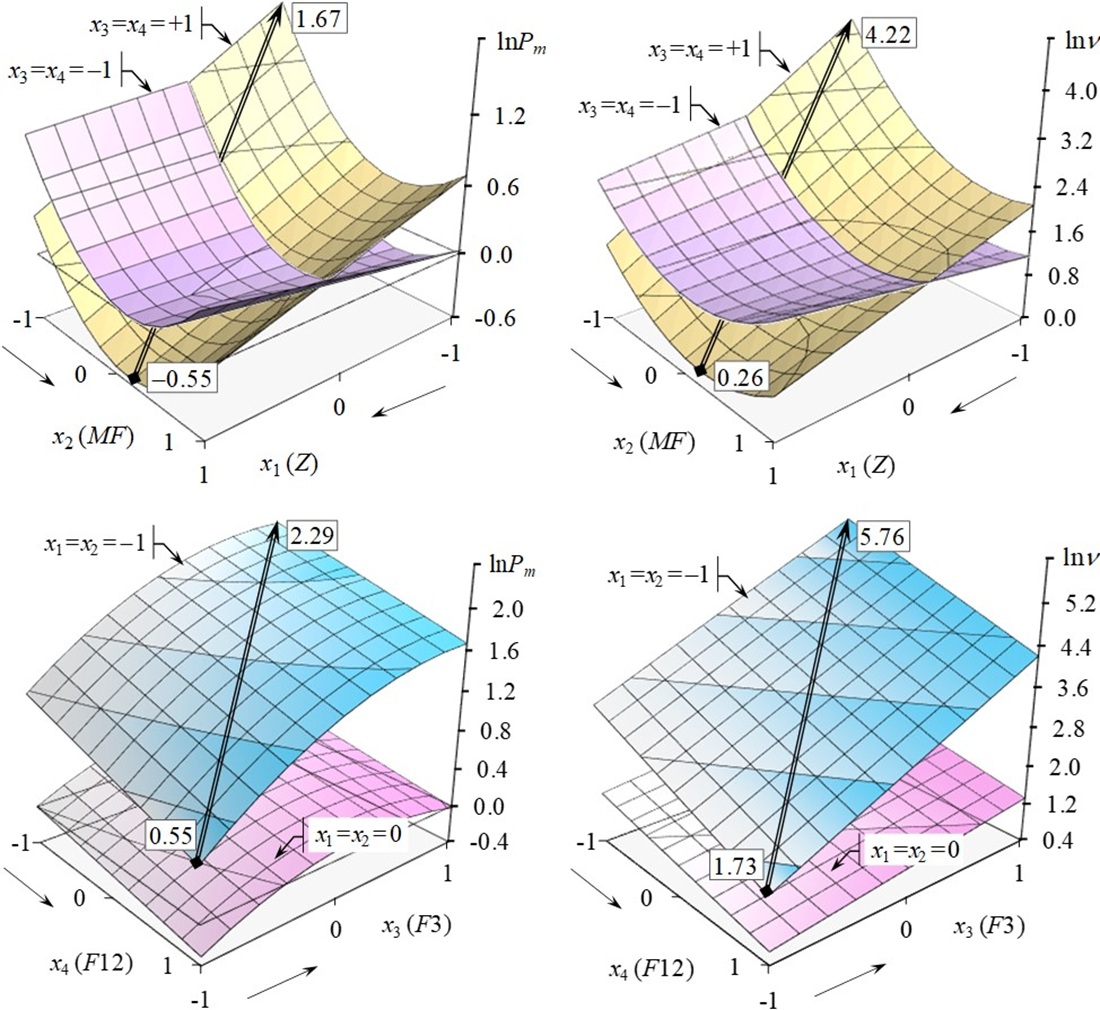
This paper considers issues related to the study of the influence of modifiers and fibers on the processes of structure formation of 25 pastes. Analysis of changes in rheological parameters revealed that, depending on the composition of discrete particles and their modification, it is possible to significantly improve the adhesion strength and energy of the interaction of aggregates. It was found that when replacing part of the cement with zeolite in highly plasticized unreinforced systems, the plastic strength increases by 11.5 times, and the rate of its growth at the point of 2 kPa increases by 1.7 times.
It was established that among discrete fibers, short fibers have a significant impact on the initial process of structure formation of pastes, especially in compositions with a low level of modification of binder systems. An increase in the content of short fibers while simultaneously reducing long fibers provides an increase in plastic strength and speed by 4.2 and 3.3 times, respectively.
The use of kinetic equations of structure formation processes together with experimental and statistical models for analyzing the influence of formulation factors on rheological indicators is appropriate in the design of rational compositions of binder slurry for decorative concretes. The devised compositions of cement slurry, subject to comprehensive analysis and optimization of the parameters of the structure of the binder stone, will be implemented in the practice of manufacturing concrete for architectural elements
References
- Zhu, W., Feng, Q., Luo, Q., Yan, J., Lu, C. (2022). Investigating the effect of polycarboxylate-ether based superplasticizer on the microstructure of cement paste during the setting process. Case Studies in Construction Materials, 16, e00999. https://doi.org/10.1016/j.cscm.2022.e00999
- Valentini, L., Dalconi, M. C., Artioli, G. (2018). Role of Polycarboxylate-ether superplasticizers on cement hydration kinetics and microstructural development. MATEC Web of Conferences, 149, 01004. https://doi.org/10.1051/matecconf/201814901004
- Yang, Y., Tan, Y., Li, Z., Zhou, G., Yu, X., Xu, D. et al. (2024). Interaction mechanisms between polycarboxylate superplasticizers and cement, and the influence of functional groups on superplasticizer performance: a review. Polymer Bulletin, 81 (12), 10415–10438. https://doi.org/10.1007/s00289-024-05233-w
- Kriptavicius, D. (2021). Influence of natural zeolite on portland cement hydration processes and properties of hardened cement paste. Ceramics - Silikaty, 65 (3), 247–254. https://doi.org/10.13168/cs.2021.0025
- Islam, M. S., Mohr, B. J. (2023). Performance of clinoptilolite zeolite after milling as a pretreatment on hydration kinetics, shrinkage, and alkali-silica reaction of cementitious materials. CEMENT, 12, 100069. https://doi.org/10.1016/j.cement.2023.100069
- Petkova, V., Stoyanov, V., Mihaylova, K., Kostova, B. (2025). Impact of pozzolanic and inert powders on the microstructure and thermal chemistry of cement mortars. Ceramics International, 51 (5), 5514–5527. https://doi.org/10.1016/j.ceramint.2024.06.018
- Kriptavičius, D., Girskas, G., Ivanauskas, E., Korjakins, A. (2023). Complex Effect of Portland Cement Modified with Natural Zeolite and Ground Glass Mixture on Durability Properties of Concrete. Buildings, 13 (10), 2576. https://doi.org/10.3390/buildings13102576
- Vaicekauskiene, V. (2024). The effect of cellulose fiber on the properties and structure of hardened cement paste. Ceramics - Silikaty, 68 (2), 225–233. https://doi.org/10.13168/cs.2024.0022
- He, R., Zhou, J.-L., Huang, P.-M., Guan, B.-W., Sheng, Y.-P. (2015). Effects of mineral admixtures on microstructure-linked strength properties of macro-synthetic fiber reinforced concrete. International Journal of Pavement Research and Technology, 8 (2), 94–102. https://doi.org/10.6135/ijprt.org.tw/2015.8(2).94
- Yu, X., Zhang, Z., Han, B., Dai, S., Wang, H. (2025). The effect of glass fiber on mechanical behavior and microstructure of cement-based solidified soil for protecting foundations of offshore wind turbines. Construction and Building Materials, 494, 143464. https://doi.org/10.1016/j.conbuildmat.2025.143464
- Cao, M., Xu, L., Zhang, C. (2018). Rheological and mechanical properties of hybrid fiber reinforced cement mortar. Construction and Building Materials, 171, 736–742. https://doi.org/10.1016/j.conbuildmat.2017.09.054
- Lyashenko, T. V., Voznesensky, V. A. (2017). Composition-process fields methodology in computational building materials science. Odesa, 168. Available at: https://drive.google.com/file/d/1FCCYDYRe5jC10N3l6Wzwf1T4IgladhQF/view
- Dovgan, O., Vyrovoy, V., Lyashenko, T., Dovgan, P. (2025). Features of microstructure organization decorative composites. Modern Technologies and Methods of Calculations in Construction, 22, 43–56. https://doi.org/10.36910/6775-2410-6208-2024-12(22)-05
- DSTU B EN 196-9:2015. Metody vyprobuvannia tsementu. Chastyna 9. Teplota hidratatsiyi. Napivadiabatychnyi metod (EN 196-9:2010, IDT). Available at: https://online.budstandart.com/ua/catalog/document.html?id_doc=63733
- DSTU EN 196-1:2019. Metody vyprobuvannia tsementu. Chastyna 1. Vyznachennia mitsnosti (EN 196-1:2016, IDT). Available at: https://online.budstandart.com/ua/catalog/doc-page.html?id_doc=106588
- Dovhan, O. D., Dovhan, O. D., Dovhan, O. D. (2022). Pat. No. 129391 UA. Method for determining concrete damage. No. a202202726; declareted: 29.07.2022; published: 10.04.2025. Available at: https://sis.nipo.gov.ua/uk/search/detail/1850713/
- Lyashenko, T. V., Dovgan, A. D., Dovgan, P. M. (2018). Decorative concrete with hybrid glass fibre: design and first results of the experiment. Bulletin of Odessa state academy of civil engineering and architecture, 70, 99–105. Available at: https://www.researchgate.net/publication/324455222_Decorative_concrete_with_hybrid_glass_fibre_design_and_first_results_of_the_experiment/citations
- Dovgan, O. D., Vyrovoy, V. М., Dovgan, P. M., Makarova, S. V. (2024). Role of discrete reinforcement in the organization of the microstructure of decorative composites. Modern Construction and Architecture, 10, 69–81. https://doi.org/10.31650/2786-6696-2024-10-69-81
- Dovgan, О. D., Vyrovoy, V. М. (2025). Role of fiber in the organization of the structure of material on the level of products. Resource-saving materials, structures, buildings and structures, 47, 89–99. https://doi.org/10.31713/budres.v0i47.10
- Dovgan, A. (2025). Modeling the influence of structural elements on the properties of the microstructure of decorative concrete. Bulletin of Kharkov National Automobile and Highway University, 110, 113. https://doi.org/10.30977/bul.2219-5548.2025.110.0.113
Downloads
Published
How to Cite
Issue
Section
License
Copyright (c) 2026 Alexandra Dovgan

This work is licensed under a Creative Commons Attribution 4.0 International License.
The consolidation and conditions for the transfer of copyright (identification of authorship) is carried out in the License Agreement. In particular, the authors reserve the right to the authorship of their manuscript and transfer the first publication of this work to the journal under the terms of the Creative Commons CC BY license. At the same time, they have the right to conclude on their own additional agreements concerning the non-exclusive distribution of the work in the form in which it was published by this journal, but provided that the link to the first publication of the article in this journal is preserved.
A license agreement is a document in which the author warrants that he/she owns all copyright for the work (manuscript, article, etc.).
The authors, signing the License Agreement with TECHNOLOGY CENTER PC, have all rights to the further use of their work, provided that they link to our edition in which the work was published.
According to the terms of the License Agreement, the Publisher TECHNOLOGY CENTER PC does not take away your copyrights and receives permission from the authors to use and dissemination of the publication through the world's scientific resources (own electronic resources, scientometric databases, repositories, libraries, etc.).
In the absence of a signed License Agreement or in the absence of this agreement of identifiers allowing to identify the identity of the author, the editors have no right to work with the manuscript.
It is important to remember that there is another type of agreement between authors and publishers – when copyright is transferred from the authors to the publisher. In this case, the authors lose ownership of their work and may not use it in any way.








