Інвалідація кешу на основі декларативного підходу для відокремлення бізнес-логіки мікросервісів від правил оновлення кешу
DOI:
https://doi.org/10.15587/1729-4061.2025.325932Ключові слова:
інвалідація кешу, Redis, Memcached, декларативний підхід, кеш сховище, оптимізація продуктивностіАнотація
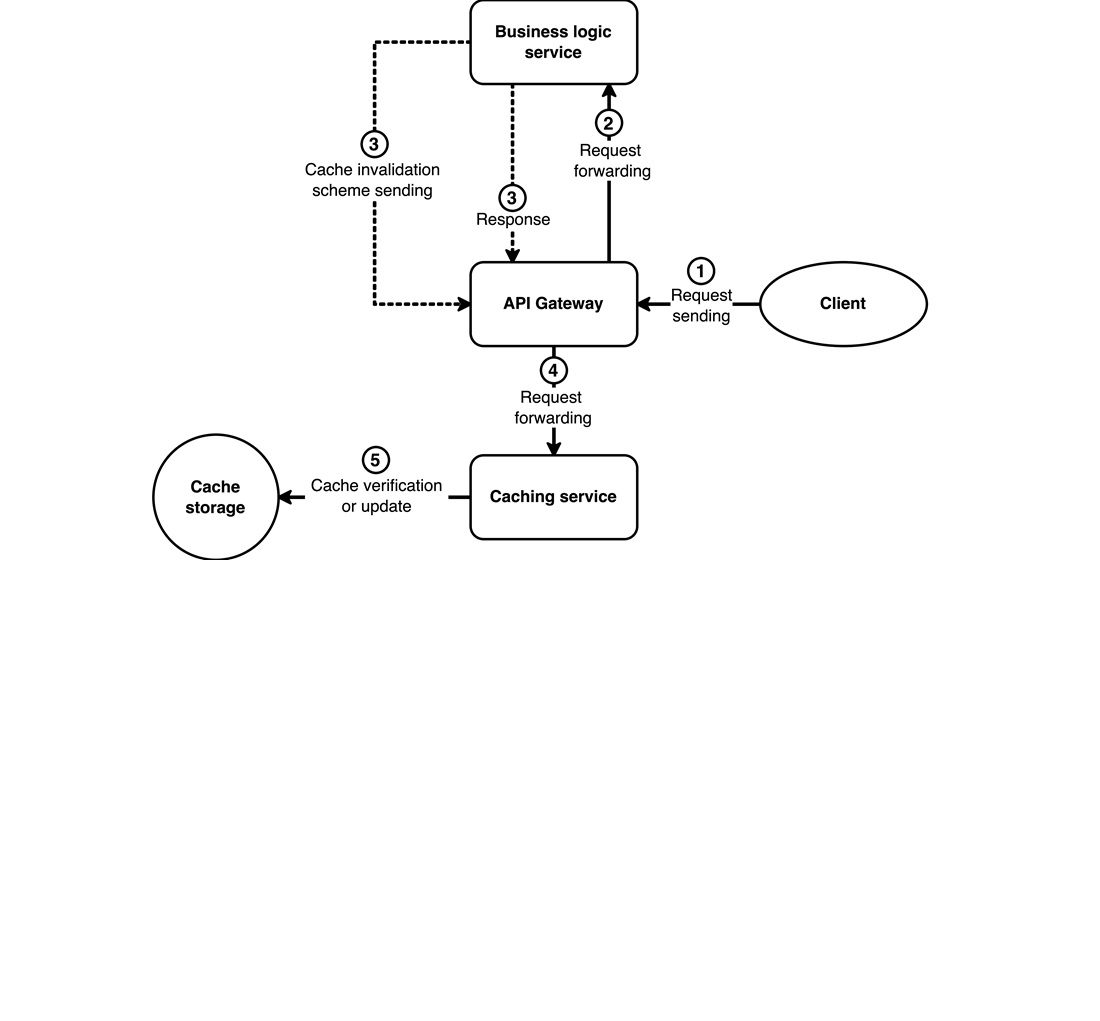
Об’єктом дослідження є механізми інвалідації кешу в мікросервісній архітектурі. Проблема, що вирішувалася, полягає у зменшенні міжсервісних залежностей, підвищенні продуктивності та забезпеченні узгодженості даних у розподілених високонавантажених системах шляхом оптимізації механізмів кешування. Отримані результати включають розробку концептуальної моделі декларативного підходу до інвалідації кешу, яка визначає структуру та механізми відокремлення бізнес-логіки мікросервісів від процесів оновлення кешу. Запропоноване рішення ґрунтується на використанні централізованого управління інструкціями кешування за допомогою YAML-конфігурацій та асинхронного обміну повідомленнями між сервісами.
Оптимізація механізмів додавання, оновлення та видалення елементів кешу забезпечує ефективне управління кешованими даними, що гарантує уникнення залишкових записів після видалення, оновлення всіх списків, у яких фігурував елемент, а також підтримку узгодженості кешу при оновленні або видаленні даних. Запропонований підхід сприяє підвищенню автономності мікросервісів, зниженню міжсервісних залежностей і більш раціональному використанню кешу. Особливості та відмінні риси отриманих результатів полягають у тому, що запропонований підхід використовує декларативну модель управління кешем, що відрізняється від традиційних імперативних рішень. Це забезпечує гнучкість у конфігурації механізмів оновлення кешу без потреби внесення змін у бізнес-логіку мікросервісів.
Сфера та умови практичного використання отриманих результатів охоплюють високонавантажені розподілені системи, де критично важливими є швидкий доступ до даних, масштабованість і стійкість до навантажень. Запропонований підхід може бути застосований для розробки ефективних стратегій кешування у мікросервісних архітектурах
Посилання
- Falkevych, V., Lisniak, A. (2024) Client state management using backend for frontend pattern architecture in B2B segment. Artificial Intelligence, 29 (2), 49–60. https://doi.org/10.15407/jai2024.02.049
- Falkevych, V. G., Lisniak, A. O. (2023). Methodology of cache invalidation in microservices architecture of the web applications. Scientific Notes of Taurida National V.I. Vernadsky University. Series: Technical Sciences, 1, 131–135. https://doi.org/10.32782/2663-5941/2023.1/20
- Faridi, M. T., Singh, K., Soni, K., Negi, S. (2023). Memcached vs Redis Caching Optimization Comparison using Machine Learning. 2023 2nd International Conference on Automation, Computing and Renewable Systems (ICACRS), 1153–1159. https://doi.org/10.1109/icacrs58579.2023.10404339
- Carra, D., Michiardi, P. (2014). Memory partitioning in Memcached: An experimental performance analysis. 2014 IEEE International Conference on Communications (ICC), 1154–1159. https://doi.org/10.1109/icc.2014.6883477
- Zhang, H., Kallas, K., Pavlatos, S., Alur, R., Angel, S., Liu, V. (2024). MuCache: A General Framework for Caching in Microservice Graphs. Proceedings of the 21st USENIX Symposium on Networked Systems Design and Implementation (NSDI 24), 221–238. Available at: https://www.usenix.org/system/files/nsdi24-zhang-haoran.pdf
- Chen, S., Tang, X., Wang, H., Zhao, H., Guo, M. (2016). Towards Scalable and Reliable In-Memory Storage System: A Case Study with Redis. 2016 IEEE Trustcom/BigDataSE/ISPA. https://doi.org/10.1109/trustcom.2016.0255
- Liu, Q. (2019). A High Performance Memory Key-Value Database Based on Redis. Journal of Computers, 14 (3), 170–183. https://doi.org/10.17706/jcp.14.3.170-183
- Fukuda, E. S., Inoue, H., Takenaka, T., Dahoo Kim, Sadahisa, T., Asai, T., Motomura, M. (2014). Caching memcached at reconfigurable network interface. 2014 24th International Conference on Field Programmable Logic and Applications (FPL), 1–6. https://doi.org/10.1109/fpl.2014.6927487
- Ji, Z., Ganchev, I., O’Droma, M., Ding, T. (2014). A Distributed Redis Framework for Use in the UCWW. 2014 International Conference on Cyber-Enabled Distributed Computing and Knowledge Discovery, 241–244. https://doi.org/10.1109/cyberc.2014.50
- Yang, J., Yue, Y., Vinayak, R. (2021). Segcache: a memory-efficient and scalable in-memory key-value cache for small objects. 18th USENIX Symposium on Networked Systems Design and Implementation (NSDI 21), 503–518. Available at: https://www.usenix.org/conference/nsdi21/presentation/yang-juncheng
- Rahul, Singh, K., Vrinda, Dipanshu (2024). Review Paper on Machine Learning Based Memcached Cluster Auto Scaling. Emerging Trends in IoT and Computing Technologies, 330–337. https://doi.org/10.1201/9781003535423-55
- Almeida, D., Lopes, M., Saraiva, L., Abbasi, M., Martins, P., Silva, J., Váz, P. (2023). Performance Comparison of Redis, Memcached, MySQL, and PostgreSQL: A Study on Key-Value and Relational Databases. 2023 Second International Conference On Smart Technologies For Smart Nation (SmartTechCon), 902–907. https://doi.org/10.1109/smarttechcon57526.2023.10391649
- Chopade, R., Pachghare, V. (2021). A data recovery technique for Redis using internal dictionary structure. Forensic Science International: Digital Investigation, 38, 301218. https://doi.org/10.1016/j.fsidi.2021.301218
##submission.downloads##
Опубліковано
Як цитувати
Номер
Розділ
Ліцензія
Авторське право (c) 2025 Vitalii Falkevych, Andrii Lisniak

Ця робота ліцензується відповідно до Creative Commons Attribution 4.0 International License.
Закріплення та умови передачі авторських прав (ідентифікація авторства) здійснюється у Ліцензійному договорі. Зокрема, автори залишають за собою право на авторство свого рукопису та передають журналу право першої публікації цієї роботи на умовах ліцензії Creative Commons CC BY. При цьому вони мають право укладати самостійно додаткові угоди, що стосуються неексклюзивного поширення роботи у тому вигляді, в якому вона була опублікована цим журналом, але за умови збереження посилання на першу публікацію статті в цьому журналі.
Ліцензійний договір – це документ, в якому автор гарантує, що володіє усіма авторськими правами на твір (рукопис, статтю, тощо).
Автори, підписуючи Ліцензійний договір з ПП «ТЕХНОЛОГІЧНИЙ ЦЕНТР», мають усі права на подальше використання свого твору за умови посилання на наше видання, в якому твір опублікований. Відповідно до умов Ліцензійного договору, Видавець ПП «ТЕХНОЛОГІЧНИЙ ЦЕНТР» не забирає ваші авторські права та отримує від авторів дозвіл на використання та розповсюдження публікації через світові наукові ресурси (власні електронні ресурси, наукометричні бази даних, репозитарії, бібліотеки тощо).
За відсутності підписаного Ліцензійного договору або за відсутністю вказаних в цьому договорі ідентифікаторів, що дають змогу ідентифікувати особу автора, редакція не має права працювати з рукописом.
Важливо пам’ятати, що існує і інший тип угоди між авторами та видавцями – коли авторські права передаються від авторів до видавця. В такому разі автори втрачають права власності на свій твір та не можуть його використовувати в будь-який спосіб.