Визначення регулювальної характеристики конденсаторного збуджувача зі змінною топологією для автономного асинхронного генератора
DOI:
https://doi.org/10.15587/1729-4061.2025.326178Ключові слова:
асинхронний генератор, конденсаторний збуджувач, автономна електромережа, якість напруги, реактивна потужність, мікрогрідАнотація
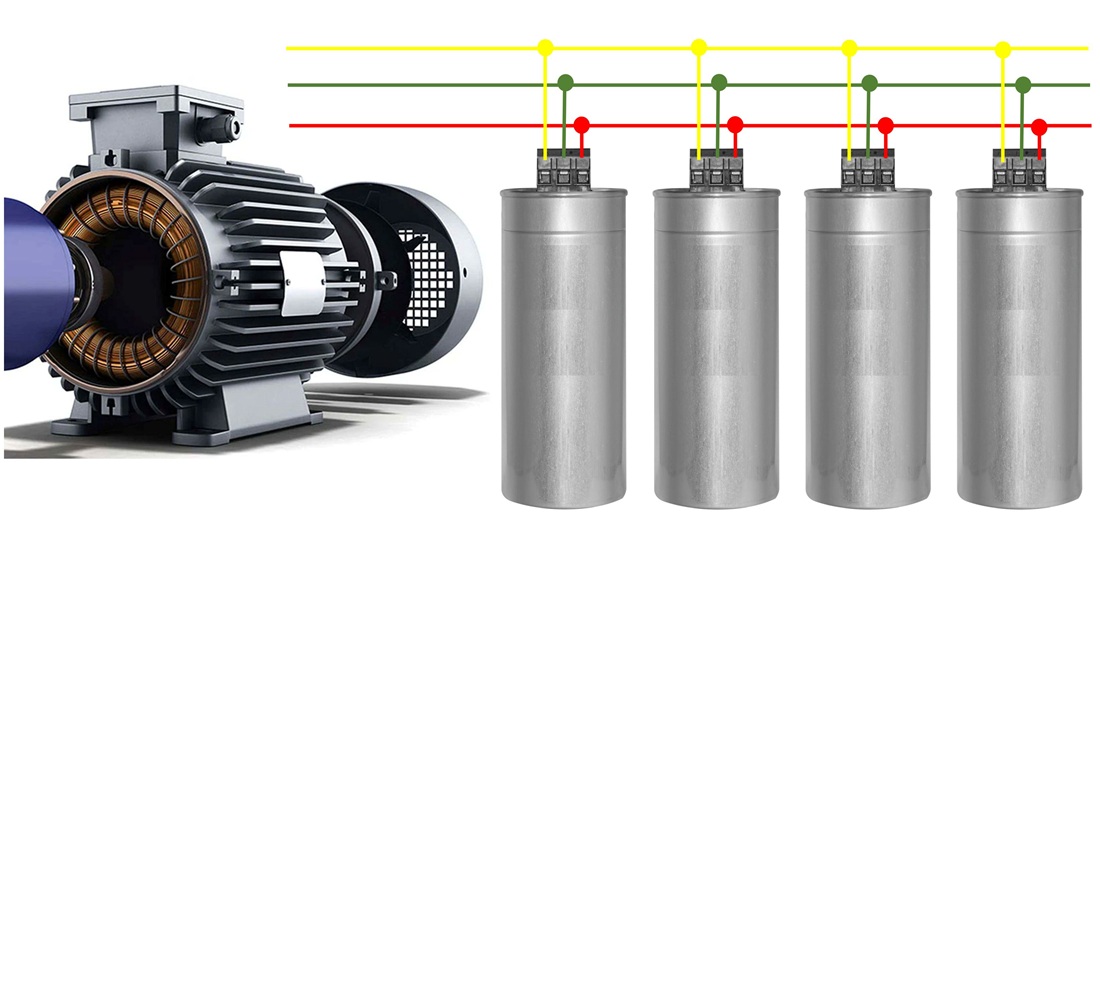
Об'єктом дослідження є конденсаторний збуджувач зі змінною топологією, призначений для роботі у складі автономного асинхронного генератора. Встановлено недостатню ефективність керування рівнем збудження автономного асинхронного генератора при зміні частоти обертання приводної турбіни та імпедансу навантаження. Це знижує якість вихідної напруги генератора. Проаналізовано можливість застосувати схему збуджувача на основі змішаного з’єднання конденсаторів. Підтверджено значимість впливу кількості груп та числа конденсаторів у кожній групі на ширину діапазону та крок регулювання. Зокрема, збільшення величин вказаних факторів з 2 до 4 розширює діапазон регулювання в 16 разів, а кількість кроків – у 827 разів. При обраних інтервалах варіювання факторів та рівні значущості 0,05 вплив кроку зміни ємності конденсаторів схеми, порівняно з базовим, на відносну величину кроку зміни ємності збуджувача визнаний незначущим. Сумарна ємність збуджувача суттєво нелінійно залежить від номера топологічного стану. Збільшення загальної ємності супроводжується підвищенням інтенсивності її зростання. Це дає змогу мінімізувати крок зміни загальної ємності (з імовірністю 0,88 – до 0,003 % від ширини діапазону регулювання). Одержана регресійна математична модель може бути використана при оптимізації структури збуджувача для автономного асинхронного генератора конкретного типу. Збільшення кількість ступенів регулювання дозволить підвищити точність формування ємнісного струму збудження генератора та компенсації індуктивної складової струму навантаження. Застосування збуджувача зі змінною топологією підвищить ефективність керування напругою автономного асинхронного генератора при зміні частоти обертання приводної турбіни та імпедансу навантаження
Посилання
- Communication From The Commission To The European Parliament, The European Council, The Council, The European Economic And Social Committee And The Committee Of The Regions (2019). European Commission. Available at: https://eur-lex.europa.eu/resource.html?uri=cellar:b828d165-1c22-11ea-8c1f-01aa75ed71a1.0002.02/DOC_1&format=PDF
- Allen, M. R., Friedlingstein, P., Girardin, C. A. J., Jenkins, S., Malhi, Y., Mitchell-Larson, E. et al. (2022). Net Zero: Science, Origins, and Implications. Annual Review of Environment and Resources, 47 (1), 849–887. https://doi.org/10.1146/annurev-environ-112320-105050
- Communication From The Commission To The European Parliament, The European Council, The Council, The European Economic And Social Committee And The Committee Of The Regions (2022). European Commission. Available at: https://eur-lex.europa.eu/resource.html?uri=cellar:fc930f14-d7ae-11ec-a95f-01aa75ed71a1.0001.02/DOC_1&format=PDF
- Communication From The Commission To The European Parliament, The Council, The European Economic And Social Committee And The Committee Of The Regions (2022). European Commission. Available at: https://eur-lex.europa.eu/legal-content/EN/TXT/PDF/?uri=CELEX:52022DC0552
- Renewables 2024. Analysis and forecasts to 2030. International Energy Agency. Available at: https://www.iea.org/reports/renewables-2024
- Global wind report 2024. Global Wind Energy Council. Available at: https://img.saurenergy.com/2024/05/gwr-2024_digital-version_final-1-compressed.pdf
- Andrienko, D., Horiunov, D., Hrudova, V., Markuts, Yu., Marsholok, T., Neiter, T. et al. (2025). Zvit pro priami zbytky infrastruktury vid ruinuvan vnaslidok viyskovoi ahresiyi Rosiyi proty Ukrainy stanom na lystopad 2024 roku. Available at: https://kse.ua/wp-content/uploads/2025/02/KSE_Damages_Report-November-2024-UA.pdf
- Pro skhvalennia Enerhetychnoi stratehiyi Ukrainy na period do 2050 roku. Rozporiadzhennia Kabinetu Ministriv Ukrainy No. 373-r. Available at: https://zakon.rada.gov.ua/laws/show/373-2023-%D1%80#Text
- Alhusein, N. I. (2022). Asynchronous Wind Turbine Generator: Output Power Evaluation. Brilliance: Research of Artificial Intelligence, 1 (2), 75–80. https://doi.org/10.47709/brilliance.v1i2.1565
- Induction Generators Market (2025). Verified Market Reports. Available at: https://www.verifiedmarketreports.com/select-license/?rid=484938
- Li, H., Peng, W., Huang, C.-G., Guedes Soares, C. (2022). Failure Rate Assessment for Onshore and Floating Offshore Wind Turbines. Journal of Marine Science and Engineering, 10 (12), 1965. https://doi.org/10.3390/jmse10121965
- Alizadeh, A., Kamwa, I., Moeini, A., Mohseni-Bonab, S. M. (2023). Energy management in microgrids using transactive energy control concept under high penetration of Renewables; A survey and case study. Renewable and Sustainable Energy Reviews, 176, 113161. https://doi.org/10.1016/j.rser.2023.113161
- Mahato, S. N., Singh, S. P., Sharma, M. P. (2008). Excitation capacitance required for self excited single phase induction generator using three phase machine. Energy Conversion and Management, 49 (5), 1126–1133. https://doi.org/10.1016/j.enconman.2007.09.007
- Goyal, S. K., Palwalia, D. K. (2016). Analysis of performance parameters and estimation of optimum capacitance for asynchronous generator. Engineering Science and Technology, an International Journal, 19 (4), 1753–1762. https://doi.org/10.1016/j.jestch.2016.05.015
- Khan, M. F., Khan, M. R., Iqbal, A. (2022). Effects of induction machine parameters on its performance as a standalone self excited induction generator. Energy Reports, 8, 2302–2313. https://doi.org/10.1016/j.egyr.2022.01.023
- Negi, G. S., Gupta, M. K., Saxena, N. K., Mohan, H. (2024). Squirrel cage induction generator based micro grid voltage assessment with STATCOM using different metaheuristic approaches. E-Prime - Advances in Electrical Engineering, Electronics and Energy, 9, 100736. https://doi.org/10.1016/j.prime.2024.100736
- Guettab, A., Boudjema, Z., Bounadja, E., Taleb, R. (2022). Improved control scheme of a dual star induction generator integrated in a wind turbine system in normal and open-phase fault mode. Energy Reports, 8, 6866–6875. https://doi.org/10.1016/j.egyr.2022.05.048
- Belalia, K., Mostefa, A., Merabet Boulouiha, H., Draou, A., Denai, M. (2024). Direct torque control of a dual star induction generator based on a modified space vector PWM under fault conditions. ISA Transactions, 155, 237–260. https://doi.org/10.1016/j.isatra.2024.10.012
- Milles, A., Merabet, E., Benbouhenni, H., Debdouche, N., Colak, I. (2024). Robust control technique for wind turbine system with interval type-2 fuzzy strategy on a dual star induction generator. Energy Reports, 11, 2715–2736. https://doi.org/10.1016/j.egyr.2024.01.060
- Benbouhenni, H., Bizon, N., Colak, I., Mosaad, M. I., Yessef, M. (2023). Direct active and reactive powers control of double-powered asynchronous generators in multi-rotor wind power systems using modified synergetic control. Energy Reports, 10, 4286–4301. https://doi.org/10.1016/j.egyr.2023.10.085
- Gu, T., Wang, P., Liu, D., Sun, A., Yang, D., Yan, G. (2023). Modeling and small-signal stability analysis of doubly-fed induction generator integrated system. Global Energy Interconnection, 6 (4), 438–449. https://doi.org/10.1016/j.gloei.2023.08.005
- Zhao, T., Liu, H., Luo, Z., Su, Y., Huang, L., Li, H., Sun, Z. (2023). A frequency control scheme of a doubly-fed induction generator considering random wind speeds. Energy Reports, 9, 235–244. https://doi.org/10.1016/j.egyr.2023.04.101
- Mostafavi, S., Shemshadi, A., Nazari, R., Yousefkhani, H. (2025). Utilization of H∞ robust and damping controllers with notch filters to reduce SSR in doubly-fed induction generator wind farms. Computers and Electrical Engineering, 123, 110024. https://doi.org/10.1016/j.compeleceng.2024.110024
- Cheng, C.-L., Shalabh, Garg, G. (2014). Coefficient of determination for multiple measurement error models. Journal of Multivariate Analysis, 126, 137–152. https://doi.org/10.1016/j.jmva.2014.01.006
- Reddy, S. R. K. (2021). Review of Literature on Self-Excited Induction Generators and Controllers. International Journal for Research in Applied Science and Engineering Technology, 9 (12), 1576–1587. https://doi.org/10.22214/ijraset.2021.39584
- Mykhailiuk, O. B. (2016). Problems that need a solution while using asynchronous generator of renewable energy in power plants. Visnyk of Vinnytsia Polytechnical Institute. Visnyk Vinnytskoho politekhnichnoho instytutu, 1, 96–100. Available at: https://visnyk.vntu.edu.ua/index.php/visnyk/article/view/1883
- Pushkar, M., Buryan, S., Mykhailenko, V. (2014). The voltage regulation of self-excited induction generator with triac-switched capacitor bank. Pratsi Instytutu elektrodynamiky Natsionalnoi akademiyi nauk Ukrainy, 39, 52–56. Available at: http://nbuv.gov.ua/UJRN/PIED_2014_39_11
##submission.downloads##
Опубліковано
Як цитувати
Номер
Розділ
Ліцензія
Авторське право (c) 2025 Sviatoslav Vasylets, Kateryna Vasylets, Volodymyr Ilchuk

Ця робота ліцензується відповідно до Creative Commons Attribution 4.0 International License.
Закріплення та умови передачі авторських прав (ідентифікація авторства) здійснюється у Ліцензійному договорі. Зокрема, автори залишають за собою право на авторство свого рукопису та передають журналу право першої публікації цієї роботи на умовах ліцензії Creative Commons CC BY. При цьому вони мають право укладати самостійно додаткові угоди, що стосуються неексклюзивного поширення роботи у тому вигляді, в якому вона була опублікована цим журналом, але за умови збереження посилання на першу публікацію статті в цьому журналі.
Ліцензійний договір – це документ, в якому автор гарантує, що володіє усіма авторськими правами на твір (рукопис, статтю, тощо).
Автори, підписуючи Ліцензійний договір з ПП «ТЕХНОЛОГІЧНИЙ ЦЕНТР», мають усі права на подальше використання свого твору за умови посилання на наше видання, в якому твір опублікований. Відповідно до умов Ліцензійного договору, Видавець ПП «ТЕХНОЛОГІЧНИЙ ЦЕНТР» не забирає ваші авторські права та отримує від авторів дозвіл на використання та розповсюдження публікації через світові наукові ресурси (власні електронні ресурси, наукометричні бази даних, репозитарії, бібліотеки тощо).
За відсутності підписаного Ліцензійного договору або за відсутністю вказаних в цьому договорі ідентифікаторів, що дають змогу ідентифікувати особу автора, редакція не має права працювати з рукописом.
Важливо пам’ятати, що існує і інший тип угоди між авторами та видавцями – коли авторські права передаються від авторів до видавця. В такому разі автори втрачають права власності на свій твір та не можуть його використовувати в будь-який спосіб.