Встановлення впливу низьковідсоткових доз піноутворювачів на збільшення витрати рідини при її транспортуванні пожежними рукавами
DOI:
https://doi.org/10.15587/1729-4061.2025.327906Ключові слова:
пожежний рукав, рукавна лінія, транспортування води, витрата рідини, поверхнево-активні речовиниАнотація
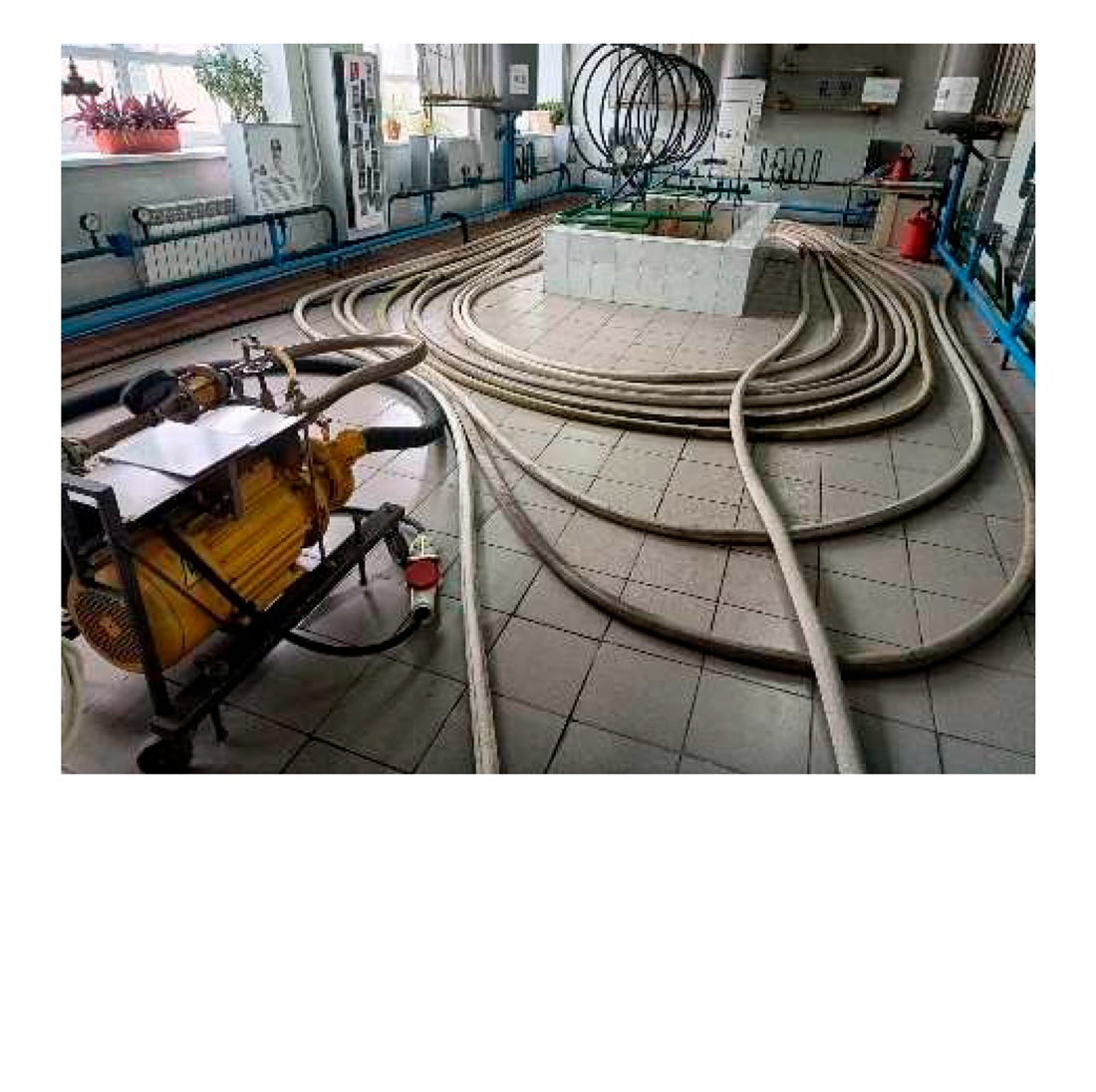
У випадках, коли є потреба швидко перемістити великі об’єми води на відстані у сотні метрів, застосовується протипожежна техніка. У таких випадках зазвичай використовуються рукавні лінії, що формуються із пожежних рукавів. Зроблена спроба визначення впливу мікродоз піноутворювачів на рівень витрат рідини, що транспортується пожежними рукавами. Експериментально встановлено, що витрата рідини при її транспортуванні пожежним рукавами зростала, коли до неї додавалися піноутворювачі. Для проведення експериментів було обрано піноутворювачі Пірена-1, Софір, Альпен та Барс, що застосовуються при пожежогасінні в Україні. Кожен із піноутворювачів використовувався у двох варіантах – той, що відповідає, і той, що не відповідає гарантованому терміну зберігання. Максимальне зростання витрат (11,5 %) було зафіксоване при додаванні 0,021 % піноутворювача Барс до води. Результати експериментів залежали від марки застосованих піноутворювачів й майже не залежали від «віку» піноутворювачів. Важливо, що результати дослідження показали, що для підвищення ефективності застосування протипожежної техніки можна використовувати «протерміновані» піноутворювачі. Для проведення експериментів були вибрані випадковим чином (із числа наявних у пожежній частині) напірні пожежні рукава латексовані діаметрами 51 мм. Довжина рукавної лінії складала 200 м (500 м для рукавів діаметром 77 мм), температура навколишнього середовища становила близько 20 °С, тиск на насосі складав 4…6 бар. Встановлені у дослідженні факти зростання витрат рідини на практиці можуть бути використані для збільшення кількості транспортування (перекачування) рідини без зміни інших параметрів роботи протипожежної техніки, наприклад при ліквідації наслідків повеней чи повіддя
Посилання
- Gaskill, J. R. (1966). Hydraulic studies of fire hose. Fire Technology, 2 (1), 37–51. https://doi.org/10.1007/bf02588964
- Green, D. W. (Ed.) (1963). Perry’s Chemical Engineer's Handbook. McGraw-Hill.
- Gaskill, J. R., Henderson, R. L., Purington, R. G. (1967). Further hydraulic studies of fire hose. Fire Technology, 3 (2), 105–114. https://doi.org/10.1007/bf02588833
- Benfer, M. E., Forssell, E., Scheffey, J. (2016). Determination of Fire Hose Friction Loss Characteristics. Fire Technology, 53 (3), 1059–1075. https://doi.org/10.1007/s10694-016-0617-z
- Shcherbak, O., Loboichenko, V., Skorobahatko, T., Shevchenko, R., Levterov, A., Pruskyi, A. et al. (2024). Study of Organic Carbon-Containing Additives to Water Used in Fire Fighting, in Terms of Their Environmental Friendliness. Fire Technology, 60 (5), 3739–3765. https://doi.org/10.1007/s10694-024-01599-5
- Li, T., Cao, J., Zhu, G. (2023). Application of Computer Simulation Technology in Hydraulic Resistance Test of Fire Hose. Advanced Intelligent Technologies for Information and Communication, 311–318. https://doi.org/10.1007/978-981-99-5203-8_28
- Brown, C. U., Vogl, G. W., Tam, W. C. (2024). Data-Driven Wireless Fire Hose Flow Rate Apparatus. Intelligent Building Fire Safety and Smart Firefighting, 415–438. https://doi.org/10.1007/978-3-031-48161-1_17
- Ando, H., Ambe, Y., Ishii, A., Konyo, M., Tadakuma, K., Maruyama, S., Tadokoro, S. (2018). Aerial Hose Type Robot by Water Jet for Fire Fighting. IEEE Robotics and Automation Letters, 3 (2), 1128–1135. https://doi.org/10.1109/lra.2018.2792701
- Yamauchi, Y., Maezawa, Y., Ambe, Y., Konyo, M., Tadakuma, K., Tadokoro, S. (2023). Development of a remotely controllable 4 m long aerial-hose-type firefighting robot. Frontiers in Robotics and AI, 10. https://doi.org/10.3389/frobt.2023.1273676
- Stas, S. V. (2008). Pro stvorennia ustanovky doslidzhennia vodianykh strumeniv. Pozhezhna bezpeka, 12, 7–13.
- Stas, S., Bychenko, A., Kolesnikov, D., Myhalenko, O., Pustovit, M., Myhalenko, K., Horenko, L. (2023). Determining the elongation of T-type pressure fire hoses based on full-scale experiments. Eastern-European Journal of Enterprise Technologies, 3 (1 (123)), 13–20. https://doi.org/10.15587/1729-4061.2023.279616
- Stas, S., Bychenko, A., Kolesnikov, D., Myhalenko, K., Koval, O. (2021). Rheological Properties Of Foam Formers Like Pirena-1, Sofir, Alpen, Moussol, Sthamex, Pianol. Nadzvychaini sytuatsiyi: poperedzhennia ta likvidatsiya, 5 (2), 89–94. Available at: https://fire-journal.ck.ua/index.php/fire/article/view/110/
- Asidin, M. A., Suali, E., Jusnukin, T., Lahin, F. A. (2019). Review on the applications and developments of drag reducing polymer in turbulent pipe flow. Chinese Journal of Chemical Engineering, 27 (8), 1921–1932. https://doi.org/10.1016/j.cjche.2019.03.003
- Stas, S., Bychenko, A., Kolesnikov, D., Myhalenko, O., Pustovit, M. (2021). Experimental Study Of Changes In The Geometric Parameters Of Fire Hoses During The Supply Of Extinguishing Agents. Bulletin of the National Technical University "KhPI". Series: Hydraulic machines and hydraulic units, 2, 39–42. Available at: http://nbuv.gov.ua/UJRN/vcpigmg_2021_2_8
##submission.downloads##
Опубліковано
Як цитувати
Номер
Розділ
Ліцензія
Авторське право (c) 2025 Serhiy Stas, Denis Kolesnikov, Artem Bychenko, Olena Borsuk

Ця робота ліцензується відповідно до Creative Commons Attribution 4.0 International License.
Закріплення та умови передачі авторських прав (ідентифікація авторства) здійснюється у Ліцензійному договорі. Зокрема, автори залишають за собою право на авторство свого рукопису та передають журналу право першої публікації цієї роботи на умовах ліцензії Creative Commons CC BY. При цьому вони мають право укладати самостійно додаткові угоди, що стосуються неексклюзивного поширення роботи у тому вигляді, в якому вона була опублікована цим журналом, але за умови збереження посилання на першу публікацію статті в цьому журналі.
Ліцензійний договір – це документ, в якому автор гарантує, що володіє усіма авторськими правами на твір (рукопис, статтю, тощо).
Автори, підписуючи Ліцензійний договір з ПП «ТЕХНОЛОГІЧНИЙ ЦЕНТР», мають усі права на подальше використання свого твору за умови посилання на наше видання, в якому твір опублікований. Відповідно до умов Ліцензійного договору, Видавець ПП «ТЕХНОЛОГІЧНИЙ ЦЕНТР» не забирає ваші авторські права та отримує від авторів дозвіл на використання та розповсюдження публікації через світові наукові ресурси (власні електронні ресурси, наукометричні бази даних, репозитарії, бібліотеки тощо).
За відсутності підписаного Ліцензійного договору або за відсутністю вказаних в цьому договорі ідентифікаторів, що дають змогу ідентифікувати особу автора, редакція не має права працювати з рукописом.
Важливо пам’ятати, що існує і інший тип угоди між авторами та видавцями – коли авторські права передаються від авторів до видавця. В такому разі автори втрачають права власності на свій твір та не можуть його використовувати в будь-який спосіб.