Розробка методу узгодження даних при реплікації у мультихмарних системах
DOI:
https://doi.org/10.15587/1729-4061.2025.332189Ключові слова:
мультихмарні системи, метод інтервальної узгодженості, реплікація георозподілених даних, модель затримкиАнотація
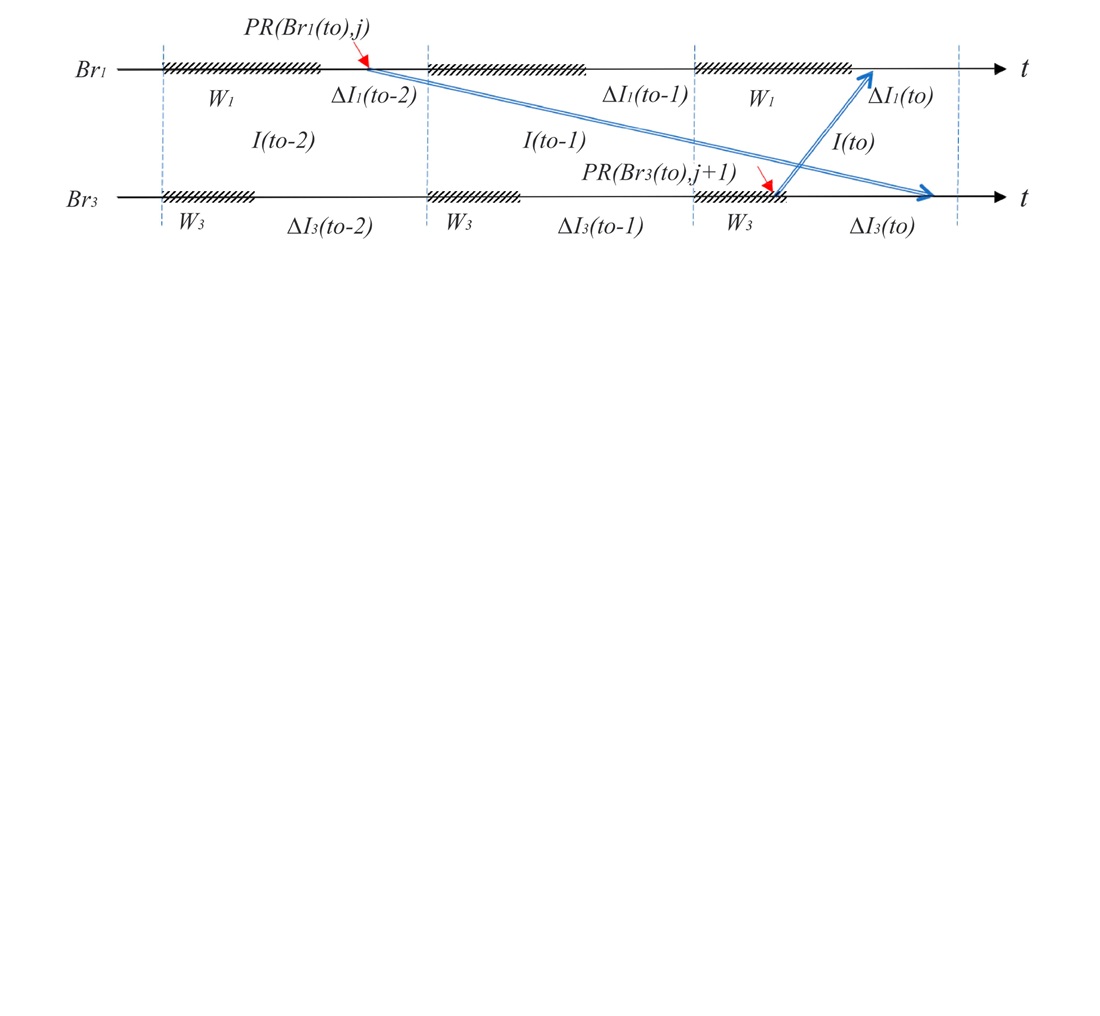
Об’єктом дослідження є узгодження даних реплікації у георозподілених мультихмарних системах. Вирішувалась проблема розробки методу інтервального впорядкування вхідних запитів шляхом формування послідовності номерів загального порядку, за якими виконується порядок запису даних у георозподілені репліки. Особливістю запропонованого методу є апріорне визначення рівно тривалих непересічних інтервалів коригування номерів вхідних пакетів, протягом яких номери вхідних пакетів впорядковуються. Групування користувачів в умовні кластери за географічним розміщенням навкруги брокерів дозволяє визначити пріоритети сортування вхідних пакетів. Брокери мають розташовуватися поблизу ведучої репліки кожного провайдера хмарних послуг та приймати запити на запис від користувачів найближчого умовного кластеру. Додатково впорядкування вхідних пакетів відбувається за черговістю їх надходження до кожного брокеру протягом визначених інтервалів коригування. Ці механізми дозволяють виконати синхронізацію операцій запису даних за один крок глобального зв’язку між георозподіленими репліками різних провайдерів хмарних послуг. Для оцінки затримок при формуванні загальної послідовності номерів вхідних пакетів розроблено імітаційну модель, особливістю якої є можливість відтворення різної кількості та географічного розміщення реплік. Експериментально показана стійкість затримки узгодження вхідних запитів на запис у мультихмарних системах при підвищенні інтенсивності вхідного потоку у навіть 70 разів. Отримані результати дозволяють не тільки знизити затримку запису даних у репліки вже існуючих мультихмарних систем, але й обрати найкраще географічне розташування ресурсів постачальників хмарних послуг під час проектування нових
Посилання
- Mamchych, O., Volk, M. (2022). Smartphone Based Computing Cloud and Energy Efficiency. 2022 12th International Conference on Dependable Systems, Services and Technologies (DESSERT). https://doi.org/10.1109/dessert58054.2022.10018740
- Mamchych, O., Volk, M. (2024). A unified model and method for forecasting energy consumption in distributed computing systems based on stationary and mobile devices. Radioelectronic and Computer Systems, 2024 (2), 120–135. https://doi.org/10.32620/reks.2024.2.10
- Tricomi, G., Merlino, G., Panarello, A., Puliafito, A. (2020). Optimal Selection Techniques for Cloud Service Providers. IEEE Access, 8, 203591–203618. https://doi.org/10.1109/access.2020.3035816
- Aldin, H. N. S., Deldari, H., Moattar, M. H., Ghods, M. R. (2019). Consistency models in distributed systems: A survey on definitions, disciplines, challenges and applications. arXiv. https://arxiv.org/abs/1902.03305
- Mhaisen, N., Malluhi, Q. M. (2020). Data Consistency in Multi-Cloud Storage Systems With Passive Servers and Non-Communicating Clients. IEEE Access, 8, 164977–164986. https://doi.org/10.1109/access.2020.3022463
- Charapko, A., Ailijiang, A., Demirbas, M. (2021). PigPaxos: Devouring the Communication Bottlenecks in Distributed Consensus. Proceedings of the 2021 International Conference on Management of Data, 235–247. https://doi.org/10.1145/3448016.3452834
- Shiozaki, K., Nakamura, J. (2024). Selection Guidelines for Geographical SMR Protocols: A Communication Pattern-Based Latency Modeling Approach. Stabilization, Safety, and Security of Distributed Systems, 344–359. https://doi.org/10.1007/978-3-031-74498-3_25
- Coelho, P., Pedone, F. (2021). GeoPaxos+: Practical Geographical State Machine Replication. 2021 40th International Symposium on Reliable Distributed Systems (SRDS), 233–243. https://doi.org/10.1109/srds53918.2021.00031
- Eischer, M., Straßner, B., Distler, T. (2020). Low-latency geo-replicated state machines with guaranteed writes. Proceedings of the 7th Workshop on Principles and Practice of Consistency for Distributed Data, 1–9. https://doi.org/10.1145/3380787.3393686
- Petrescu, M. (2023). Replication in Raft vs Apache Zookeeper. Soft Computing Applications, 426–435. https://doi.org/10.1007/978-3-031-23636-5_32
- Kozina, O. A., Panchenko, V. I., Kolomiitsev, O. V., Usik, V. V., Stratiienko, N. K., Safoshkina, L. V., Kucherenko, Y. F. (2024). Data consistency protocol for multicloud systems. International Journal of Cloud Computing, 13 (1), 42–61. https://doi.org/10.1504/ijcc.2024.136284
- Kozina, O., Kozin, M. (2022). Simulation Model of Data Consistency Protocol for Multicloud Systems. 2022 IEEE 3rd KhPI Week on Advanced Technology (KhPIWeek), 1–4. https://doi.org/10.1109/khpiweek57572.2022.9916343
- Xiang, Z., Vaidya, N. H. (2020). Global Stabilization for Causally Consistent Partial Replication. Proceedings of the 21st International Conference on Distributed Computing and Networking, 1–10. https://doi.org/10.1145/3369740.3369795
- Kakwani, D., Nasre, R. (2020). Orion. Proceedings of the 7th Workshop on Principles and Practice of Consistency for Distributed Data, 1–6. https://doi.org/10.1145/3380787.3393676
- Song, H., Wang, Y., Chen, X., Feng, H., Feng, Y., Fang, X. et al. (2025). K2: On Optimizing Distributed Transactions in a Multi-region Data Store with TrueTime Clocks (Extended Version). arXiv. https://doi.org/10.48550/arXiv.2504.01460
- Lu, H., Mu, S., Sen, S., Lloyd, W. (2023). NCC: Natural Concurrency Control for Strictly Serializable Datastores by Avoiding the Timestamp-Inversion Pitfall. arXiv. https://doi.org/10.48550/arXiv.2305.14270
- Kleppmann, M. (2017). Designing Data-Intensive Applications. O'Reilly Media, 614.
- Gracia-Tinedo, R., Junqueira, F., Zhou, B., Xiong, Y., Liu, L. (2023). Practical Storage-Compute Elasticity for Stream Data Processing. Proceedings of the 24th International Middleware Conference: Industrial Track, 1–7. https://doi.org/10.1145/3626562.3626828
##submission.downloads##
Опубліковано
Як цитувати
Номер
Розділ
Ліцензія
Авторське право (c) 2025 Maksym Volk, Olha Kozina, Andrii Buhrii, Serhii Osiievskyi, Mykyta Kozin, Darya Volk, Dmytro Diachenko, Yurii Turinskyi

Ця робота ліцензується відповідно до Creative Commons Attribution 4.0 International License.
Закріплення та умови передачі авторських прав (ідентифікація авторства) здійснюється у Ліцензійному договорі. Зокрема, автори залишають за собою право на авторство свого рукопису та передають журналу право першої публікації цієї роботи на умовах ліцензії Creative Commons CC BY. При цьому вони мають право укладати самостійно додаткові угоди, що стосуються неексклюзивного поширення роботи у тому вигляді, в якому вона була опублікована цим журналом, але за умови збереження посилання на першу публікацію статті в цьому журналі.
Ліцензійний договір – це документ, в якому автор гарантує, що володіє усіма авторськими правами на твір (рукопис, статтю, тощо).
Автори, підписуючи Ліцензійний договір з ПП «ТЕХНОЛОГІЧНИЙ ЦЕНТР», мають усі права на подальше використання свого твору за умови посилання на наше видання, в якому твір опублікований. Відповідно до умов Ліцензійного договору, Видавець ПП «ТЕХНОЛОГІЧНИЙ ЦЕНТР» не забирає ваші авторські права та отримує від авторів дозвіл на використання та розповсюдження публікації через світові наукові ресурси (власні електронні ресурси, наукометричні бази даних, репозитарії, бібліотеки тощо).
За відсутності підписаного Ліцензійного договору або за відсутністю вказаних в цьому договорі ідентифікаторів, що дають змогу ідентифікувати особу автора, редакція не має права працювати з рукописом.
Важливо пам’ятати, що існує і інший тип угоди між авторами та видавцями – коли авторські права передаються від авторів до видавця. В такому разі автори втрачають права власності на свій твір та не можуть його використовувати в будь-який спосіб.