Determining the fireproof limit for the heat protective coating of the gas generator in a hydrogen storage and supply system
DOI:
https://doi.org/10.15587/1729-4061.2025.332546Keywords:
hydrogen systems, gas generator, fire, heat-protective coating, fire resistance limit, Laplace transformAbstract
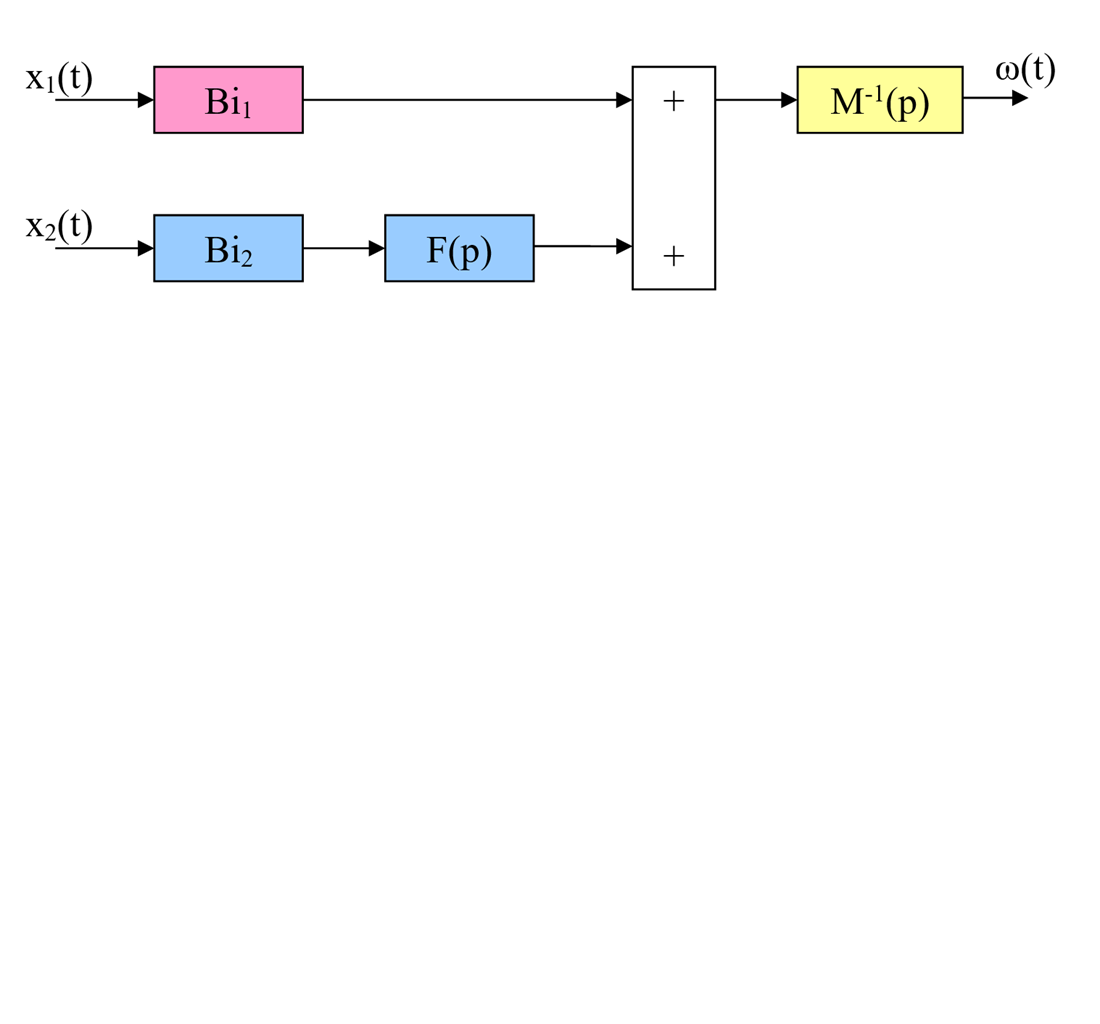
This work considers the task to prevent fires in hydrogen storage and operation systems. The subject of the study is the properties of the heat-protective coating of the gas generator in the hydrogen storage and supply system. The fire resistance limit is used as such a property. The set of heat-protective coating and the wall of the gas generator is considered as a thermodynamic system with two inputs. The signal at one input reflects the influence of thermal factors of the fire, and the signal at the second input corresponds to the thermal state of the gas generator cavity.
A mathematical description of such a thermodynamic system has been constructed, which is represented in operator form using the integral Laplace transform. A feature of such a mathematical notation is that it includes hyperbolic functions of an irrational argument. An approximation of mathematical models of the thermodynamic system was carried out and it is shown that these models, which are transfer functions, belong to fractional-rational functions with third-order Hurwitz polynomials. The approximation accuracy is 3.8%.
An expression for the reaction of a thermodynamic system has been derived, provided that the influence of thermal factors of a fire is described by an arbitrary function of time, and the thermal state of the gas generator cavity is described by the Heaviside function. To construct this expression, the Borel theorem and auxiliary functions are used, the parameters of which are the parameters of the roots of the algebraic Hurwitz equation.
Examples of determining the fire resistance limit for the heat-protective coating of the gas generator in the hydrogen storage and supply system for the characteristic conditions of its operation are given. It is shown that the fire resistance limit of such a coating is 462.8 s at a critical temperature of 320°C under the condition that the influence of thermal factors of a fire is linear (the generalized temperature change rate is 2.0°C s-1). In this case, the thermal state of the gas generator cavity is stationary and is characterized by a temperature of 60°C
References
- Shi, C., Zhu, S., Wan, C., Bao, S., Zhi, X., Qiu, L., Wang, K. (2023). Performance analysis of vapor-cooled shield insulation integrated with para-ortho hydrogen conversion for liquid hydrogen tanks. International Journal of Hydrogen Energy, 48 (8), 3078–3090. https://doi.org/10.1016/j.ijhydene.2022.10.154
- Kukkapalli, V. K., Kim, S., Thomas, S. A. (2023). Thermal Management Techniques in Metal Hydrides for Hydrogen Storage Applications: A Review. Energies, 16 (8), 3444. https://doi.org/10.3390/en16083444
- Li, H., Cao, X., Liu, Y., Shao, Y., Nan, Z., Teng, L. et al. (2022). Safety of hydrogen storage and transportation: An overview on mechanisms, techniques, and challenges. Energy Reports, 8, 6258–6269. https://doi.org/10.1016/j.egyr.2022.04.067
- Kang, S., Lee, K. M., Kwon, M., Lim, O. K., Choi, J. Y. (2022). A Quantitative Analysis of the Fire Hazard Generated from Hydrogen Fuel Cell Electric Vehicles. International Journal of Fire Science and Engineering, 36 (2), 26–39. https://doi.org/10.7731/kifse.f4b33457
- Kang, D., Yun, S., Kim, B. (2022). Review of the Liquid Hydrogen Storage Tank and Insulation System for the High-Power Locomotive. Energies, 15 (12), 4357. https://doi.org/10.3390/en15124357
- Abohamzeh, E., Salehi, F., Sheikholeslami, M., Abbassi, R., Khan, F. (2021). Review of hydrogen safety during storage, transmission, and applications processes. Journal of Loss Prevention in the Process Industries, 72, 104569. https://doi.org/10.1016/j.jlp.2021.104569
- Yang, F., Wang, T., Deng, X., Dang, J., Huang, Z., Hu, S. et al. (2021). Review on hydrogen safety issues: Incident statistics, hydrogen diffusion, and detonation process. International Journal of Hydrogen Energy, 46 (61), 31467–31488. https://doi.org/10.1016/j.ijhydene.2021.07.005
- Jeon, J., Kim, S. J. (2020). Recent Progress in Hydrogen Flammability Prediction for the Safe Energy Systems. Energies, 13 (23), 6263. https://doi.org/10.3390/en13236263
- Liu, Y., Liu, Z., Wei, J., Lan, Y., Yang, S., Jin, T. (2021). Evaluation and prediction of the safe distance in liquid hydrogen spill accident. Process Safety and Environmental Protection, 146, 1–8. https://doi.org/10.1016/j.psep.2020.08.037
- Yu, X., Kong, D., He, X., Ping, P. (2023). Risk Analysis of Fire and Explosion of Hydrogen-Gasoline Hybrid Refueling Station Based on Accident Risk Assessment Method for Industrial System. Fire, 6 (5), 181. https://doi.org/10.3390/fire6050181
- Cui, S., Zhu, G., He, L., Wang, X., Zhang, X. (2023). Analysis of the fire hazard and leakage explosion simulation of hydrogen fuel cell vehicles. Thermal Science and Engineering Progress, 41, 101754. https://doi.org/10.1016/j.tsep.2023.101754
- Suzuki, T., Shiota, K., Izato, Y., Komori, M., Sato, K., Takai, Y. et al. (2021). Quantitative risk assessment using a Japanese hydrogen refueling station model. International Journal of Hydrogen Energy, 46 (11), 8329–8343. https://doi.org/10.1016/j.ijhydene.2020.12.035
- Shen, Y., Lv, H., Hu, Y., Li, J., Lan, H., Zhang, C. (2023). Preliminary hazard identification for qualitative risk assessment on onboard hydrogen storage and supply systems of hydrogen fuel cell vehicles. Renewable Energy, 212, 834–854. https://doi.org/10.1016/j.renene.2023.05.037
- Li, B., Han, B., Li, Q., Gao, W., Guo, C., Lv, H. et al. (2022). Study on hazards from high-pressure on-board type III hydrogen tank in fire scenario: Consequences and response behaviours. International Journal of Hydrogen Energy, 47 (4), 2759–2770. https://doi.org/10.1016/j.ijhydene.2021.10.205
- Kashkarov, S., Dadashzadeh, M., Sivaraman, S., Molkov, V. (2022). Quantitative Risk Assessment Methodology for Hydrogen Tank Rupture in a Tunnel Fire. Hydrogen, 3 (4), 512–530. https://doi.org/10.3390/hydrogen3040033
- Tamura, Y., Takabayashi, M., Takeuchi, M. (2014). The spread of fire from adjoining vehicles to a hydrogen fuel cell vehicle. International Journal of Hydrogen Energy, 39 (11), 6169–6175. https://doi.org/10.1016/j.ijhydene.2014.01.140
- Abramov, Y., Basmanov, O., Krivtsova, V., Mikhayluk, A., Khmyrov, I. (2023). Determining the possibility of the appearance of a combustible medium in the hydrogen storage and supply system. Eastern-European Journal of Enterprise Technologies, 2 (10 (122)), 47–54. https://doi.org/10.15587/1729-4061.2023.276099
- Correa-Jullian, C., Groth, K. M. (2022). Data requirements for improving the Quantitative Risk Assessment of liquid hydrogen storage systems. International Journal of Hydrogen Energy, 47 (6), 4222–4235. https://doi.org/10.1016/j.ijhydene.2021.10.266
- Abramov, Y., Kryvtsova, V., Mikhailyuk, A. (2023). Determination of the reliability of the gas generator of the storage system and hydrogen supply. Municipal Economy of Cities, 3 (177), 142–146. https://doi.org/10.33042/2522-1809-2023-3-177-142-146
- Abramov, Y., Kryvtsova, V., Mikhailyuk, A. (2021). Algorithm for determination of reliability indicator of gas generator of hydrogen storage and supply system. Municipal Economy of Cities, 4 (164), 153–157. https://doi.org/10.33042/2522-1809-2021-4-164-153-157
- Abramov, Y., Kryvtsova, V., Mikhailyuk, A. (2022). Method of designation of the fire safety of the gas generator water saving systems. Municipal Economy of Cities, 4 (171), 107–111. https://doi.org/10.33042/2522-1809-2022-4-171-107-111
- Abramov, Y., Basmanov, O., Krivtsova, V., Mikhayluk, A., Makarov, Y. (2024). Determining the functioning efficiency of a fire safety subsystem when operating the hydrogen storage and supply system. Eastern-European Journal of Enterprise Technologies, 2 (2 (128)), 75–84. https://doi.org/10.15587/1729-4061.2024.300647
- Abramov, Yu. O., Kryvtsova, V. I., Mykhailiuk, A. O. (2020). Hazoheneratory system zberihannia ta podachi vodniu na osnovi hidroreahuiuchykh skladiv: modeli, kharakterystyky, metody kontroliu. Kharkiv, 87.
- Seraji, M. M., Arefazar, A. (2021). Thermal ablation‐insulation performance, microstructural, and mechanical properties of carbon aerogel based lightweight heat shielding composites. Polymer Engineering & Science, 61 (5), 1338–1352. https://doi.org/10.1002/pen.25648
- Le, V. T., Ha, N. S., Goo, N. S. (2021). Advanced sandwich structures for thermal protection systems in hypersonic vehicles: A review. Composites Part B: Engineering, 226, 109301. https://doi.org/10.1016/j.compositesb.2021.109301
- Kwan, T. H., Zhang, Z., Huang, J., Yao, Q. (2024). Fire safety parametric analysis of vehicle mounted hydrogen tanks based on a coupled heat transfer and thermomechanics model. International Journal of Hydrogen Energy, 50, 792–803. https://doi.org/10.1016/j.ijhydene.2023.07.063
- Sharshanov, A. Ya., Abramov, Yu. O. (2023). Zakhyst rechovyn i materialiv vid teplovoho vplyvu pozhezhi za dopomohoiu ekraniv i pokryttiv. Kharkiv, 280.
Downloads
Published
How to Cite
Issue
Section
License
Copyright (c) 2025 Yuriy Abramov, Oleksii Basmanov, Valentina Krivtsova, Andriy Mikhayluk, Yevhen Makarov, Volodymyr Abrakitov

This work is licensed under a Creative Commons Attribution 4.0 International License.
The consolidation and conditions for the transfer of copyright (identification of authorship) is carried out in the License Agreement. In particular, the authors reserve the right to the authorship of their manuscript and transfer the first publication of this work to the journal under the terms of the Creative Commons CC BY license. At the same time, they have the right to conclude on their own additional agreements concerning the non-exclusive distribution of the work in the form in which it was published by this journal, but provided that the link to the first publication of the article in this journal is preserved.
A license agreement is a document in which the author warrants that he/she owns all copyright for the work (manuscript, article, etc.).
The authors, signing the License Agreement with TECHNOLOGY CENTER PC, have all rights to the further use of their work, provided that they link to our edition in which the work was published.
According to the terms of the License Agreement, the Publisher TECHNOLOGY CENTER PC does not take away your copyrights and receives permission from the authors to use and dissemination of the publication through the world's scientific resources (own electronic resources, scientometric databases, repositories, libraries, etc.).
In the absence of a signed License Agreement or in the absence of this agreement of identifiers allowing to identify the identity of the author, the editors have no right to work with the manuscript.
It is important to remember that there is another type of agreement between authors and publishers – when copyright is transferred from the authors to the publisher. In this case, the authors lose ownership of their work and may not use it in any way.







