Мінімізація цифрових ризиків і загроз економічній безпеці держави із використанням генеративного штучного інтелекту
DOI:
https://doi.org/10.15587/1729-4061.2025.336640Ключові слова:
економічна безпека, генеративний штучний інтелект, інформаційна безпека, безпекоорієнтоване інформаційне середовищеАнотація
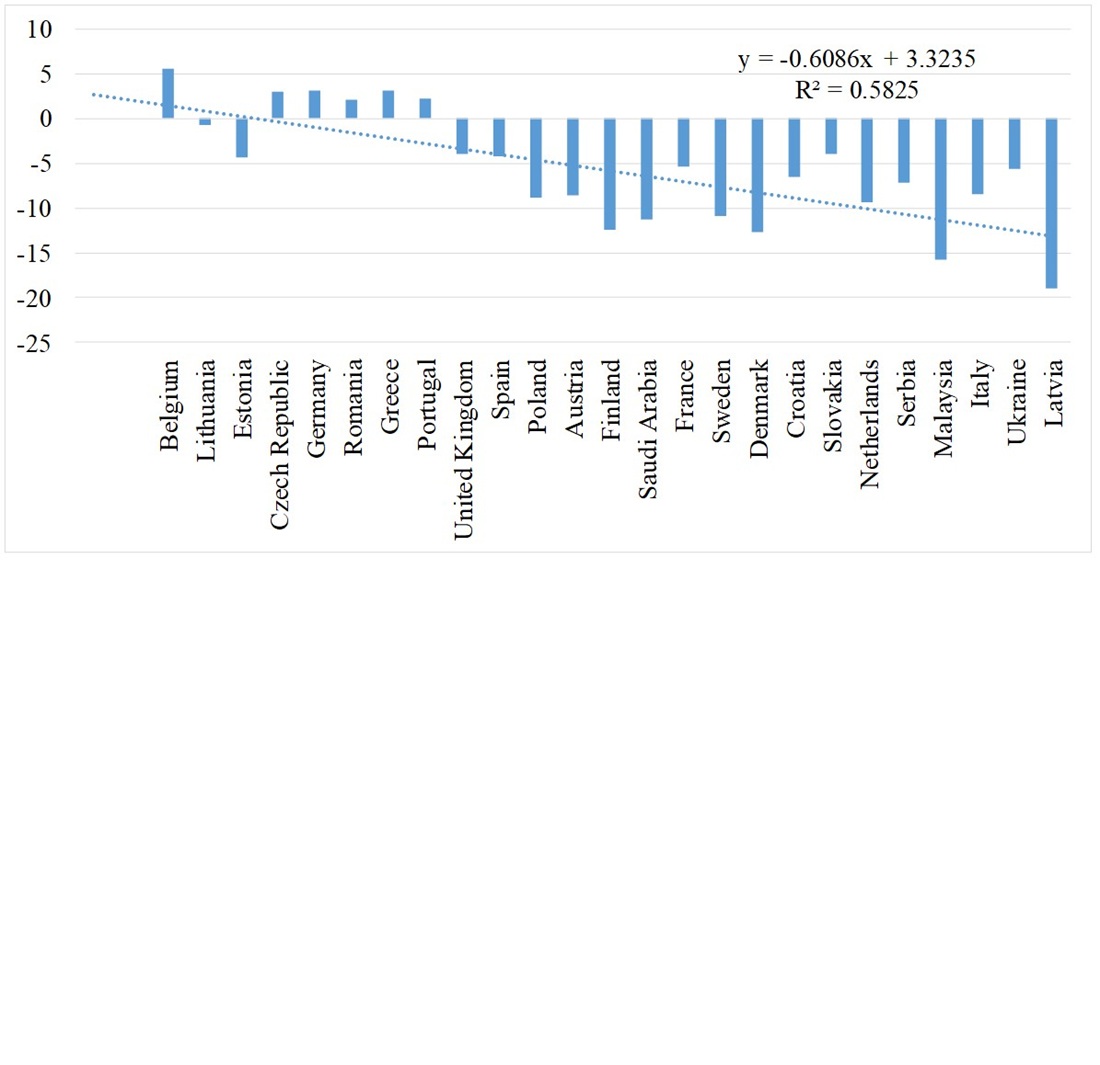
Об’єктом дослідження є процес забезпечення економічної безпеки держави в умовах цифрової трансформації, що супроводжується зростанням кіберзагроз і цифрових ризиків. Актуальність обумовлена необхідністю переосмислення підходів до кіберзахисту в умовах війни, цифрової нерівності, фрагментованості нормативного середовища та зростанням залежності економіки від інформаційних технологій. Проблема полягає у недостатній інтеграції безпекових інструментів у стратегії цифрового розвитку, що знижує здатність держави протидіяти гібридним викликам та забезпечувати стабільність функціонування ключових інфраструктур. Результати дослідження доводять наявність статистично значущого зворотного зв’язку між рівнем розвитку інформаційно-комунікаційних технологій та рівнем кібербезпеки (коефіцієнт кореляції r=-0,763, p<0,05), що вказує на ризик технологічного дисбалансу. Запропонована концепція мінімізації цифрових ризиків базується на інтеграції генеративного штучного інтелекту (ГШІ) в аналітичні, інфраструктурні, нормативні та освітні компоненти системи цифрової безпеки. Особливістю підходу є використання методів регресійного аналізу, порівняння цифрових індексів, візуалізації та експертного узагальнення, що забезпечує міждисциплінарне охоплення досліджуваної проблематики. Визначено, що ефективність впровадження інтелектуальних рішень значною мірою залежить від рівня інституційної зрілості, прозорості регуляторного середовища, доступу до даних, цифрової інклюзії та готовності до міжсекторальної кооперації. Отримані результати можуть бути використані для оновлення цифрової політики держави, підвищення кіберстійкості критичної інфраструктури та формування національної стратегії розвитку ГШІ у сфері економічної безпеки, з урахуванням викликів воєнного часу
Посилання
- Hang, H., Chen, Z. (2022). How to realize the full potentials of artificial intelligence (AI) in digital economy? A literature review. Journal of Digital Economy, 1 (3), 180–191. https://doi.org/10.1016/j.jdec.2022.11.003
- Maslii, O., Buriak, A., Chaikina, A., Cherviak, A. (2025). Improving conceptual approaches to ensuring state economic security under conditions of digitalization. Eastern-European Journal of Enterprise Technologies, 1 (13 (133)), 35–45. https://doi.org/10.15587/1729-4061.2025.319256
- Griffioen, P., Krogh, B. H., Sinopoli, B. (2024). Ensuring Resilience Against Stealthy Attacks on Cyber-Physical Systems. IEEE Transactions on Automatic Control, 69 (12), 8234–8246. https://doi.org/10.1109/tac.2024.3401013
- Birthriya, S. K., Ahlawat, P., Jain, A. K. (2024). A Comprehensive Survey of Social Engineering Attacks: Taxonomy of Attacks, Prevention, and Mitigation Strategies. Journal of Applied Security Research, 20 (2), 244–292. https://doi.org/10.1080/19361610.2024.2372986
- Yanko, A., Hlushko, A., Onyshchenko, S., Maslii, O. (2023). Economic cybersecurity of business in Ukraine: strategic directions and implementation mechanism. Economic And Cyber Security, 30–58. https://doi.org/10.15587/978-617-7319-98-5.ch2
- Parkin, S., Kuhn, K., Shaikh, S. A. (2023). Executive decision-makers: a scenario-based approach to assessing organizational cyber-risk perception. Journal of Cybersecurity, 9 (1). https://doi.org/10.1093/cybsec/tyad018
- Ho, H., Ko, R., Mazerolle, L., Gilmour, J., Miao, C. (2024). Using Situational Crime Prevention (SCP)-C3 cycle and common inventory of cybersecurity controls from ISO/IEC 27002:2022 to prevent cybercrimes. Journal of Cybersecurity, 10 (1). https://doi.org/10.1093/cybsec/tyae020
- Khan, K., Khurshid, A., Cifuentes-Faura, J. (2024). Is artificial intelligence a new battleground for cybersecurity? Internet of Things, 28, 101428. https://doi.org/10.1016/j.iot.2024.101428
- Onyshchenko, S. V., Masliy, O. A., Buriak, A. A. (2023). Threats and Risks of Ecological and Economic Security of Ukraine in the Conditions of War. 17th International Conference Monitoring of Geological Processes and Ecological Condition of the Environment, 1–5. https://doi.org/10.3997/2214-4609.2023520072
- Network Readiness Index 2024. Portulans Institute. Available at: https://networkreadinessindex.org/
- Report on direct damages to infrastructure due to Russia’s military aggression against Ukraine as of early 2024 (2024). Kyiv School of Economics. Available at: https://kse.ua/wp-content/uploads/2024/04/01.01.24_Damages_Report.pdf
- Digital Restoration Ecosystem for Accountable Management (DREAM) (2024). Ministry for Communities, Territories and Infrastructure Development of Ukraine. Available at: https://dream.gov.ua
- Indeks tsyfrovoi transformatsiyi rehioniv Ukrainy. Pidsumky 2024 roku. Ministerstvo tsyfrovoi transformatsiyi Ukrainy. Available at: https://thedigital.gov.ua/storage/uploads/files/page/community/reports/%D0%86%D0%9D%D0%94%D0%95%D0%9A%D0%A1%202024%202%201.pdf
- Onyshchenko, V., Onyshchenko, S., Verhal, K., Buriak, A. (2023). The Energy Efficiency of the Digital Economy. Proceedings of the 4th International Conference on Building Innovations, 761–767. https://doi.org/10.1007/978-3-031-17385-1_64
- Ponochovniy, Y., Bulba, E., Yanko, A., Hozbenko, E. (2018). Influence of diagnostics errors on safety: Indicators and requirements. 2018 IEEE 9th International Conference on Dependable Systems, Services and Technologies (DESSERT), 53–57. https://doi.org/10.1109/dessert.2018.8409098
- Maslii, O., Maksymenko, A. (2025). Digital transformation and economic deindustrialisation: impact on state financial security. Financial and Credit Activity Problems of Theory and Practice, 1 (60), 401–414. https://doi.org/10.55643/fcaptp.1.60.2025.4599
- Chychkalo-Kondratska, I., Buriak, A. (2014). Factors of foreign direct investment attracting into economy of Ukraine’s regions. Economic Annals-XXI, 11-12, 88–92. Available at: https://ea21journal.world/index.php/ea-v146-22/
- E-Government Development Index 2024. United Nations. Available at: https://publicadministration.un.org/egovkb/en-us/Data/Country-Information/id/185-Ukraine
- Onyshchenko, V., Onyshchenko, S., Maslii, O., Maksymenko, A. (2023). Systematization of Threats to Financial Security of Individual, Society, Business and the State in Terms of the Pandemic. Proceedings of the 4th International Conference on Building Innovations, 749–760. https://doi.org/10.1007/978-3-031-17385-1_63
- Krasnobayev, V., Yanko, A., Kovalchuk, D. (2023). Control, Diagnostics and Error Correction in the Modular Number System. Computer Modeling and Intelligent Systems, 3392, 199–213. https://doi.org/10.32782/cmis/3392-17
- Svistun, L., Glushko, А., Shtepenko, K. (2018). Organizational Aspects of Development Projects Implementation at the Real Estate Market in Ukraine. International Journal of Engineering & Technology, 7 (3.2), 447. https://doi.org/10.14419/ijet.v7i3.2.14569
- Onyshchenko, S., Hlushko, A., Kivshyk, O., Sokolov, A. (2021). The shadow economy as a threat to the economic security of the state. Economics of Development, 20 (4). https://doi.org/10.57111/econ.20(4).2021.24-30
- National Cyber Security Index. E-Governance Academy. Available at: https://ncsi.ega.ee
- Measuring digital development – ICT Development Index 2024. International Telecommunication Union. Available at: https://www.itu.int/hub/publication/D-IND-ICT_MDD-2024-3/
- Onyshchenko, S., Yanko, A., Hlushko, A., Maslii, O., Cherviak, A. (2023). Cybersecurity and Improvement of the Information Security System. Journal of the Balkan Tribological Association, 29 (5), 818–835. Available at: https://scibulcom.net/en/article/L8nV7It2dVTBPX09mzWB
- Kadam, S., Agrawal, A., Bajaj, A., Agarwal, R., Kalra, R., Shah, J. (2023). Predicting Crude Oil Future Price Using Traditional and Artificial Intelligence-Based Model: Comparative Analysis. Journal of International Commerce, Economics and Policy, 14 (03). https://doi.org/10.1142/s179399332350014x
- Asvial, M., Zagloel, T. Y. M., Fitri, I. R., Kusrini, E., Whulanza, Y. (2023). Resolving Engineering, Industrial and Healthcare Challenges through AI-Driven Applications. International Journal of Technology, 14 (6), 1177. https://doi.org/10.14716/ijtech.v14i6.6767
- E-Government Development Index (EGDI). United Nations. Available at: https://publicadministration.un.org/egovkb/en-us/About/Overview/-E-Government-Development-Index
- Creemers, R. (2022). China’s emerging data protection framework. Journal of Cybersecurity, 8 (1). https://doi.org/10.1093/cybsec/tyac011
- Kravets, I. V., Mуkhalchenko, H. H., Buriak, А. А., Davidyuk, L. P., Dubych, C. V. (2020). Long-term consequences of capital outflows for transition countries. International Journal of Management, 11 (5), 1017–1026. Available at: https://ssrn.com/abstract=3631765
##submission.downloads##
Опубліковано
Як цитувати
Номер
Розділ
Ліцензія
Авторське право (c) 2025 Alona Buriak, Oleksandra Maslii

Ця робота ліцензується відповідно до Creative Commons Attribution 4.0 International License.
Закріплення та умови передачі авторських прав (ідентифікація авторства) здійснюється у Ліцензійному договорі. Зокрема, автори залишають за собою право на авторство свого рукопису та передають журналу право першої публікації цієї роботи на умовах ліцензії Creative Commons CC BY. При цьому вони мають право укладати самостійно додаткові угоди, що стосуються неексклюзивного поширення роботи у тому вигляді, в якому вона була опублікована цим журналом, але за умови збереження посилання на першу публікацію статті в цьому журналі.
Ліцензійний договір – це документ, в якому автор гарантує, що володіє усіма авторськими правами на твір (рукопис, статтю, тощо).
Автори, підписуючи Ліцензійний договір з ПП «ТЕХНОЛОГІЧНИЙ ЦЕНТР», мають усі права на подальше використання свого твору за умови посилання на наше видання, в якому твір опублікований. Відповідно до умов Ліцензійного договору, Видавець ПП «ТЕХНОЛОГІЧНИЙ ЦЕНТР» не забирає ваші авторські права та отримує від авторів дозвіл на використання та розповсюдження публікації через світові наукові ресурси (власні електронні ресурси, наукометричні бази даних, репозитарії, бібліотеки тощо).
За відсутності підписаного Ліцензійного договору або за відсутністю вказаних в цьому договорі ідентифікаторів, що дають змогу ідентифікувати особу автора, редакція не має права працювати з рукописом.
Важливо пам’ятати, що існує і інший тип угоди між авторами та видавцями – коли авторські права передаються від авторів до видавця. В такому разі автори втрачають права власності на свій твір та не можуть його використовувати в будь-який спосіб.