Визначення властивостей компонентів газотурбінного двигуна, виготовлених за адитивною електронно-променевою технологією з порошків титанового сплаву ВТ6 (Ti-6Al-4V)
DOI:
https://doi.org/10.15587/1729-4061.2025.341529Ключові слова:
адитивна електронно-променева технологія, сплав ВТ6, Ti-6Al-4V, газотурбінний двигун, властивостіАнотація
Об’єктом дослідження є вироби, виготовлені за адитивною електронно-променевою технологією (EBM) з порошку титанових сплавів ВТ6 (Ti-6Al-4V). Цей матеріал є одним із найпоширеніших у виробництві авіаційних двигунів завдяки поєднанню високої зварюваності, міцності та стійкості до втомних навантажень. Невирішеною є проблема комплексного забезпечення високої щільності, однорідності структури та стабільності експлуатаційних властивостей компонентів газотурбінних двигунів (ГТД) із сплаву ВТ6, виготовлених методом EBM.
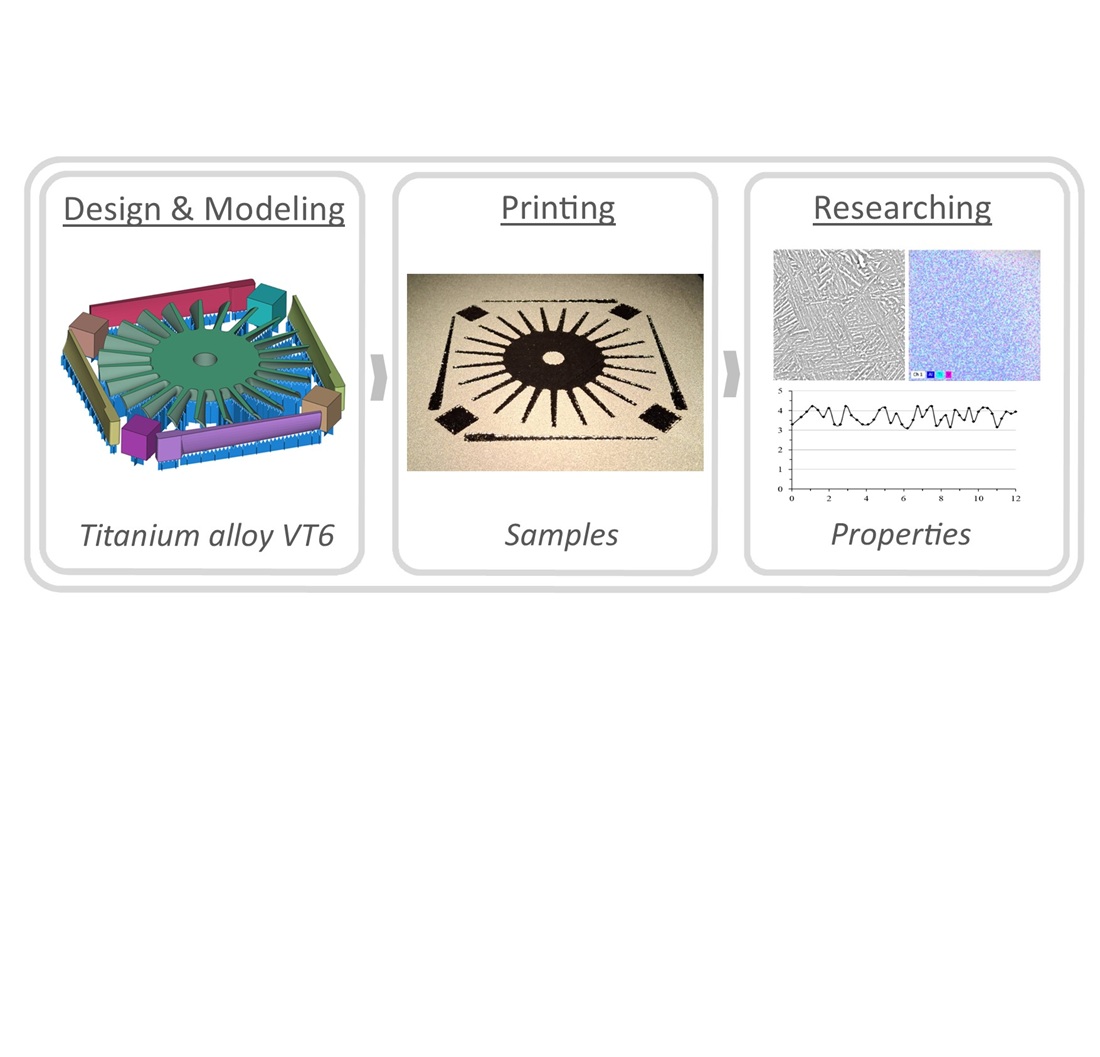
Для виготовлення зразків створено комп’ютерну модель у Materialise Magics, а пошаровий аналіз і оптимізацію параметрів процесу виконано у Simufact Additive. За технологією EBM надруковано дослідні зразки: чотири лопатки ГТД, колесо турбіни та контрольні зразки. Хімічний склад підтвердив відповідність виробів сплаву ВТ6 (Ti-6Al-4V). Мікроструктура характеризується пластинчастою α′-фазою з незначною кількістю β-фази; α-фаза має голчасту морфологію товщиною 0,5–1,5 мкм. Встановлено рівномірний розподіл легуючих елементів, відсутність сегрегації й пористості. Середнє значення мікротвердості HV100 становить 3,71 ГПа.
Отримані результати підтвердили, що виготовлені деталі відповідають вимогам до компонентів ГТД: висока щільність, міцність та експлуатаційна надійність. Інтеграція цифрового моделювання з подальшим друком за технологією EBM, оптимізація параметрів та використання порошку ВТ6 забезпечили отримання виробів з нульовою пористістю, стабільною мікроструктурою, керованою текстурою та високою геометричною точністю. Це підтверджує ефективність підходу та відкриває перспективи його масштабування у серійному виробництві відповідальних деталей з прогнозованими характеристиками
Посилання
- Matviichuk, V. A., Nesterenkov, V. M., Berdnikova, O. M. (2022). Additive electron beam technology for manufacture of metal products from powder materials. The Paton Welding Journal, 2022 (2), 16–25. https://doi.org/10.37434/tpwj2022.02.03
- Campbell, F. C. (2006) Manufacturing Technology for Aerospace Structural Materials. Elsevier Science. https://doi.org/10.1016/b978-1-85617-495-4.x5000-8
- Thomas, D., Gleadall, A. (2022). Advanced metal transfer additive manufacturing of high temperature turbine blades. The International Journal of Advanced Manufacturing Technology, 120 (9-10), 6325–6335. https://doi.org/10.1007/s00170-022-09176-2
- Whittaker, M. (2011). Titanium in the Gas Turbine Engine. Advances in Gas Turbine Technology. https://doi.org/10.5772/21524
- Yan, Z., Zhu, L., Yang, Z., Xue, P. (2021). Study on the geometrical dimensions and mechanical properties of Ti-6Al-4V alloy blade by laser metal deposition. The International Journal of Advanced Manufacturing Technology, 114 (3-4), 695–707. https://doi.org/10.1007/s00170-021-06669-4
- Chen, Z. B., Cui, X. L., Yu, M. R., Jiang, G. R., Liu, F. Q., Yang, X. Y., Chen, J. J. (2025). Microstructure evolution and strengthening mechanisms of laser directed energy deposited TA15 titanium alloy with synchronous ultrasonic impact. Journal of Alloys and Compounds, 1037, 182407. https://doi.org/10.1016/j.jallcom.2025.182407
- Akhonin, S., Nesterenkov, V., Pashynskyi, V., Matviichuk, V., Motrunich, S., Berezos, V., Klochkov, I. (2024). Determining technological parameters for obtaining ta15 titanium alloy blanks with improved mechanical characteristics using the electron-beam 3D printing method. Eastern-European Journal of Enterprise Technologies, 3 (12 (129)), 36–45. https://doi.org/10.15587/1729-4061.2024.306613
- Nesterenkov, V., Akhonin, S., Klochkov, I., Matviichuk, V., Berezos, V., Motrunich, S. (2025). High cyclic fatigue behavior of 3D-printed titanium alloy TA15. Welding in the World, 69 (3), 717–725. https://doi.org/10.1007/s40194-025-01945-3
- Matviichuk, V. A., Nesterenkov, V. M. (2025). Application of additive electron-beam technologies for aviation and medical needs. Welding and Related Technologies, 7–13. https://doi.org/10.1201/9781003518518-2
- Manufacture of Spherical Powder. Available at: https://powdermet.com.ua/en/
- Powder Materials Manufactured by MULTIFLEX LLC. Available at: https://powdermet.com.ua/en/
- Matviichuk, V. A., Nesterenkov, V. M. (2020). Additive electron beam equipment for layer-by-layer manufacture of metal products from powder materials. The Paton Welding Journal, 2020 (2), 41–46. https://doi.org/10.37434/tpwj2020.02.08
- Matviichuk, V., Nesterenkov, V., Berdnikova, O. (2022). Determining the influence of technological parameters of the electron-beam surfacing process on quality indicators. Eastern-European Journal of Enterprise Technologies, 1 (12 (115)), 21–30. https://doi.org/10.15587/1729-4061.2022.253473
- Matviichuk, V., Nesterenkov, V., Berdnikova, O. (2024). Determining the influence of technological parameters of electron beam surfacing process on the microstructure and microhardness of Ti-6Al-4V alloy. Eastern-European Journal of Enterprise Technologies, 1 (12 (127)), 6–12. https://doi.org/10.15587/1729-4061.2024.297773
- Kafle, B. P. (2020). Chemical Analysis and Material Characterization by Spectrophotometry. Elsevier. https://doi.org/10.1016/c2017-0-02426-6
- Sola, A., Nouri, A. (2019). Microstructural porosity in additive manufacturing: The formation and detection of pores in metal parts fabricated by powder bed fusion. Journal of Advanced Manufacturing and Processing, 1 (3). https://doi.org/10.1002/amp2.10021
- Materialise Magics. Available at: https://www.materialise.com/en/industrial/software/magics-data-build-preparation
- Simufact Additive Product Documentation. Available at: https://simcompanion.hexagon.com/customers/s/article/simufact-additive-documents-doc12479
- Matviichuk, V. A. (2025). Compensation of spatial deformation in products at additive electron beam surfacing. The Paton Welding Journal, 2025 (1), 10–14. https://doi.org/10.37434/tpwj2025.01.02
- Wang, P., Sin, W., Nai, M., Wei, J. (2017). Effects of Processing Parameters on Surface Roughness of Additive Manufactured Ti-6Al-4V via Electron Beam Melting. Materials, 10 (10), 1121. https://doi.org/10.3390/ma10101121
- ВТ6 - Grade 5 truba meditsinskiy titan. Available at: https://evek.org/vt6-vt6s-vt6ch-splav-truba.html
- Galarraga, H., Warren, R. J., Lados, D. A., Dehoff, R. R., Kirka, M. M., Nandwana, P. (2017). Effects of heat treatments on microstructure and properties of Ti-6Al-4V ELI alloy fabricated by electron beam melting (EBM). Materials Science and Engineering: A, 685, 417–428. https://doi.org/10.1016/j.msea.2017.01.019
- Estupinán-López, F., Orquiz-Muela, C., Gaona-Tiburcio, C., Cabral-Miramontes, J., Bautista-Margulis, R. G., Nieves-Mendoza, D. et al. (2023). Oxidation Kinetics of Ti-6Al-4V Alloys by Conventional and Electron Beam Additive Manufacturing. Materials, 16 (3), 1187. https://doi.org/10.3390/ma16031187
- Weiss, I., Froes, F. H., Eylon, D., Welsch, G. E. (1986). Modification of alpha morphology in Ti-6Al-4V by thermomechanical processing. Metallurgical Transactions A, 17 (11), 1935–1947. https://doi.org/10.1007/bf02644991
- Hrabe, N., Quinn, T. (2013). Effects of processing on microstructure and mechanical properties of a titanium alloy (Ti–6Al–4V) fabricated using electron beam melting (EBM), Part 2: Energy input, orientation, and location. Materials Science and Engineering: A, 573, 271–277. https://doi.org/10.1016/j.msea.2013.02.065
##submission.downloads##
Опубліковано
Як цитувати
Номер
Розділ
Ліцензія
Авторське право (c) 2025 Vladyslav Matviichuk, Vladimir Nesterenkov

Ця робота ліцензується відповідно до Creative Commons Attribution 4.0 International License.
Закріплення та умови передачі авторських прав (ідентифікація авторства) здійснюється у Ліцензійному договорі. Зокрема, автори залишають за собою право на авторство свого рукопису та передають журналу право першої публікації цієї роботи на умовах ліцензії Creative Commons CC BY. При цьому вони мають право укладати самостійно додаткові угоди, що стосуються неексклюзивного поширення роботи у тому вигляді, в якому вона була опублікована цим журналом, але за умови збереження посилання на першу публікацію статті в цьому журналі.
Ліцензійний договір – це документ, в якому автор гарантує, що володіє усіма авторськими правами на твір (рукопис, статтю, тощо).
Автори, підписуючи Ліцензійний договір з ПП «ТЕХНОЛОГІЧНИЙ ЦЕНТР», мають усі права на подальше використання свого твору за умови посилання на наше видання, в якому твір опублікований. Відповідно до умов Ліцензійного договору, Видавець ПП «ТЕХНОЛОГІЧНИЙ ЦЕНТР» не забирає ваші авторські права та отримує від авторів дозвіл на використання та розповсюдження публікації через світові наукові ресурси (власні електронні ресурси, наукометричні бази даних, репозитарії, бібліотеки тощо).
За відсутності підписаного Ліцензійного договору або за відсутністю вказаних в цьому договорі ідентифікаторів, що дають змогу ідентифікувати особу автора, редакція не має права працювати з рукописом.
Важливо пам’ятати, що існує і інший тип угоди між авторами та видавцями – коли авторські права передаються від авторів до видавця. В такому разі автори втрачають права власності на свій твір та не можуть його використовувати в будь-який спосіб.