Determination of capacitive change patterns of capacitor exciter with variable topology for induction generator
DOI:
https://doi.org/10.15587/1729-4061.2026.355850Keywords:
induction generator, voltage stabilization, fuzzy range, variable topology, capacitive exciterAbstract
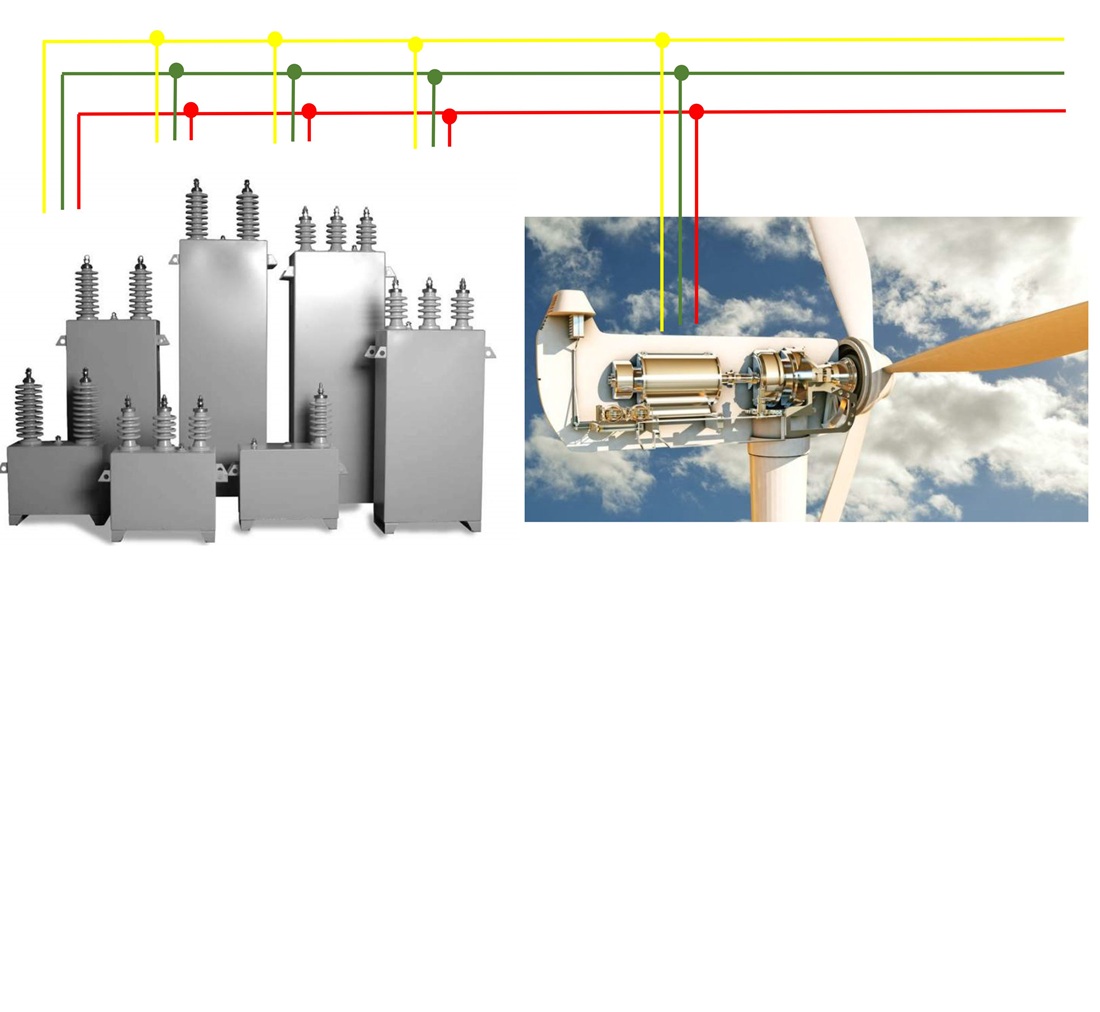
The object of the study is an autonomous induction generator equipped with a capacitor exciter with a variable topology. Neglecting the influence of the generator rotor rotational frequency and load level on the required exciter capacitance, as well as the difficulties with its regulation over a wide range, leads to fluctuations in the output voltage. This is the reason for the decrease in the quality of power supply to consumers. This problem is solved by identifying the relationship between the required exciter capacitance, on the one hand, and the rotation frequency and load power, on the other. Also, by using a capacitor circuit, the topology of which can be changed, implementing different ways of connecting capacitors. The direct dependence of the required exciter capacitance value on the load power and the inverse dependence on the rotational frequency have been confirmed. The insignificant influence of the linear interaction of such factors on the required capacity has been established. The width of the fuzzy interval of coefficient at the relative power value is 0.01, for the coefficient at the rotational frequency – 0.36. This causes a significant increase in the uncertainty of estimating the required capacity as the rotational frequency increases. The possibility of maintaining the generator output voltage within the limits permitted by EN 50160 using a capacitor exciter with a variable topology has been confirmed. The exciter circuit allows to adjust the capacitance within the adjustment range according to a monotonic rising characteristic. The proposed method of controlling the capacitive excitation current allows generating an order of magnitude more current levels compared to analogues due to the use of parallel, series, and mixed connections of capacitors. The obtained results can be applied in the construction of control system for capacitor exciter with a variable topology for an autonomous induction generator.
References
- Microgrid Market (2026 - 2033). Grand View Research. Available at: https://www.grandviewresearch.com/industry-analysis/microgrid-market
- Wind Turbine Generator Market Size & Share Analysis - Growth Trends and Forecast (2025 - 2030). Mordor Intelligence. Available at: https://www.mordorintelligence.com/industry-reports/wind-turbine-generator-market
- Ullah, M., Guan, Y., Yu, Y., Chaudhary, S. K., Vasquez, J. C., Guerrero, J. M. (2025). Dynamic Performance and Power Quality of Large-Scale Wind Power Plants: A Review on Challenges, Evolving Grid Code, and Proposed Solutions. IEEE Open Journal of Power Electronics, 6, 1148–1173. https://doi.org/10.1109/ojpel.2025.3582012
- Chen, H., Zuo, Y., Chau, K. T., Zhao, W., Lee, C. H. T. (2021). Modern electric machines and drives for wind power generation: A review of opportunities and challenges. IET Renewable Power Generation, 15 (9), 1864–1887. https://doi.org/10.1049/rpg2.12114
- Induction Generators Market by Type (Grid Connected, Self Excited), Power Rating (High, Low, Medium), Cooling Type, Speed, Application, End Use - Global Forecast 2026-2032. 360iResearch. Available at: https://www.360iresearch.com/library/intelligence/induction-generators
- Vasylets, S., Vasylets, K., Ilchuk, V. (2025). Determination of regulation characteristics of capacitor exciter with variable topology for self-excited induction generator. Eastern-European Journal of Enterprise Technologies, 2 (8 (134)), 17–25. https://doi.org/10.15587/1729-4061.2025.326178
- Sakkoury, K. S., Emara, S., Ahmed, M. K. (2017). Analysis of wind driven self-excited induction generator supplying isolated DC loads. Journal of Electrical Systems and Information Technology, 4 (1), 257–268. https://doi.org/10.1016/j.jesit.2016.08.003
- Samanta, J., Chakraborty, S., Sangno, R., Pudur, R. (2025). Study of power quality issues in a renewable-driven self-excited induction generator due to different loads at edge-off grid system. E-Prime - Advances in Electrical Engineering, Electronics and Energy, 11, 100885. https://doi.org/10.1016/j.prime.2024.100885
- Khan, M. F., Khan, M. R., Iqbal, A. (2022). Effects of induction machine parameters on its performance as a standalone self excited induction generator. Energy Reports, 8, 2302–2313. https://doi.org/10.1016/j.egyr.2022.01.023
- Chaturvedi, Y., Kumar, S., Gupta, V. (2020). Capacitance Requirement for Rated Current and Rated Voltage Operation of SEIG Using Whale Optimization Algorithm. Procedia Computer Science, 167, 2581–2589. https://doi.org/10.1016/j.procs.2020.03.315
- Wang, Y.-J., Liu, S.-Y. (2017). Simulation of a Self-excited Three-phase Induction Generator Using the EMTP/ATP. Energy Procedia, 138, 1029–1034. https://doi.org/10.1016/j.egypro.2017.10.087
- Krishna, V. B. M., Duvvuri, S. S., Sobhan, P. V. S., Yadlapati, K., Sandeep, V., Narendra, B. K. (2024). Experimental study on excitation phenomena of renewable energy source driven induction generator for isolated rural community loads. Results in Engineering, 21, 101761. https://doi.org/10.1016/j.rineng.2024.101761
- Hasanova, L. (2018). Compensation of Reactive Power of Squirrel-Cage Asynchronous Generators, Used in Wind Power Plants and Small Hydroelectric Power Stations. IFAC-PapersOnLine, 51 (30), 462–467. https://doi.org/10.1016/j.ifacol.2018.11.317
- Ayodele, T. R., Ogunjuyigbe, A. S. O., Adetokun, B. B. (2017). Optimal capacitance selection for a wind-driven self-excited reluctance generator under varying wind speed and load conditions. Applied Energy, 190, 339–353. https://doi.org/10.1016/j.apenergy.2016.12.137
- Chakraborty, S., Samanta, J., Pudur, R. (2024). Experimental analysis of a modified scheme for supplying single-phase remote loads from micro-hydro based three-phase self-excited induction generator. Measurement: Sensors, 33, 101166. https://doi.org/10.1016/j.measen.2024.101166
- Chanu, L. K., Chakraborty, S., Pudur, R. (2024). Real-time analysis of voltage and frequency regulation of self-excited induction generator based micro hydro plant using generalized impedance controller. Measurement: Sensors, 33, 101235. https://doi.org/10.1016/j.measen.2024.101235
- BS EN 50160:2022+A1:2025. Voltage characteristics of electricity supplied by public electricity networks. https://doi.org/10.3403/30431800
- Wu, B., Lang, Y., Zargari, N., Kouro, S. (2011). Power Conversion and Control of Wind Energy Systems. John Wiley & Sons. https://doi.org/10.1002/9781118029008
- Arifoglu, H. (2026). VariableCapacitor. MATLAB Central File Exchange. Available at: https://www.mathworks.com/matlabcentral/fileexchange/62850-variablecapacitor
Downloads
Published
How to Cite
Issue
Section
License
Copyright (c) 2026 Sviatoslav Vasylets, Kateryna Vasylets, Antonii Zaluzhnyi, Volodymyr Ilchuk, Vladyslav Hlushchuk

This work is licensed under a Creative Commons Attribution 4.0 International License.
The consolidation and conditions for the transfer of copyright (identification of authorship) is carried out in the License Agreement. In particular, the authors reserve the right to the authorship of their manuscript and transfer the first publication of this work to the journal under the terms of the Creative Commons CC BY license. At the same time, they have the right to conclude on their own additional agreements concerning the non-exclusive distribution of the work in the form in which it was published by this journal, but provided that the link to the first publication of the article in this journal is preserved.
A license agreement is a document in which the author warrants that he/she owns all copyright for the work (manuscript, article, etc.).
The authors, signing the License Agreement with TECHNOLOGY CENTER PC, have all rights to the further use of their work, provided that they link to our edition in which the work was published.
According to the terms of the License Agreement, the Publisher TECHNOLOGY CENTER PC does not take away your copyrights and receives permission from the authors to use and dissemination of the publication through the world's scientific resources (own electronic resources, scientometric databases, repositories, libraries, etc.).
In the absence of a signed License Agreement or in the absence of this agreement of identifiers allowing to identify the identity of the author, the editors have no right to work with the manuscript.
It is important to remember that there is another type of agreement between authors and publishers – when copyright is transferred from the authors to the publisher. In this case, the authors lose ownership of their work and may not use it in any way.








