Development of system-type-centric method for architectural design of computer-software automation systems
DOI:
https://doi.org/10.15587/1729-4061.2026.359147Keywords:
software architecture, automation systems, architectural documentation model, architectural design processAbstract
The object of the study is the architectural design process and architectural documentation model of computer-software systems in the automation domain.
Existing architectural design methodologies are predominantly agnostic about the nature of computer-software systems, lacking the specific guidance required to address the fundamentally divergent architectural natures of heterogeneous computer-software systems in modern automation.
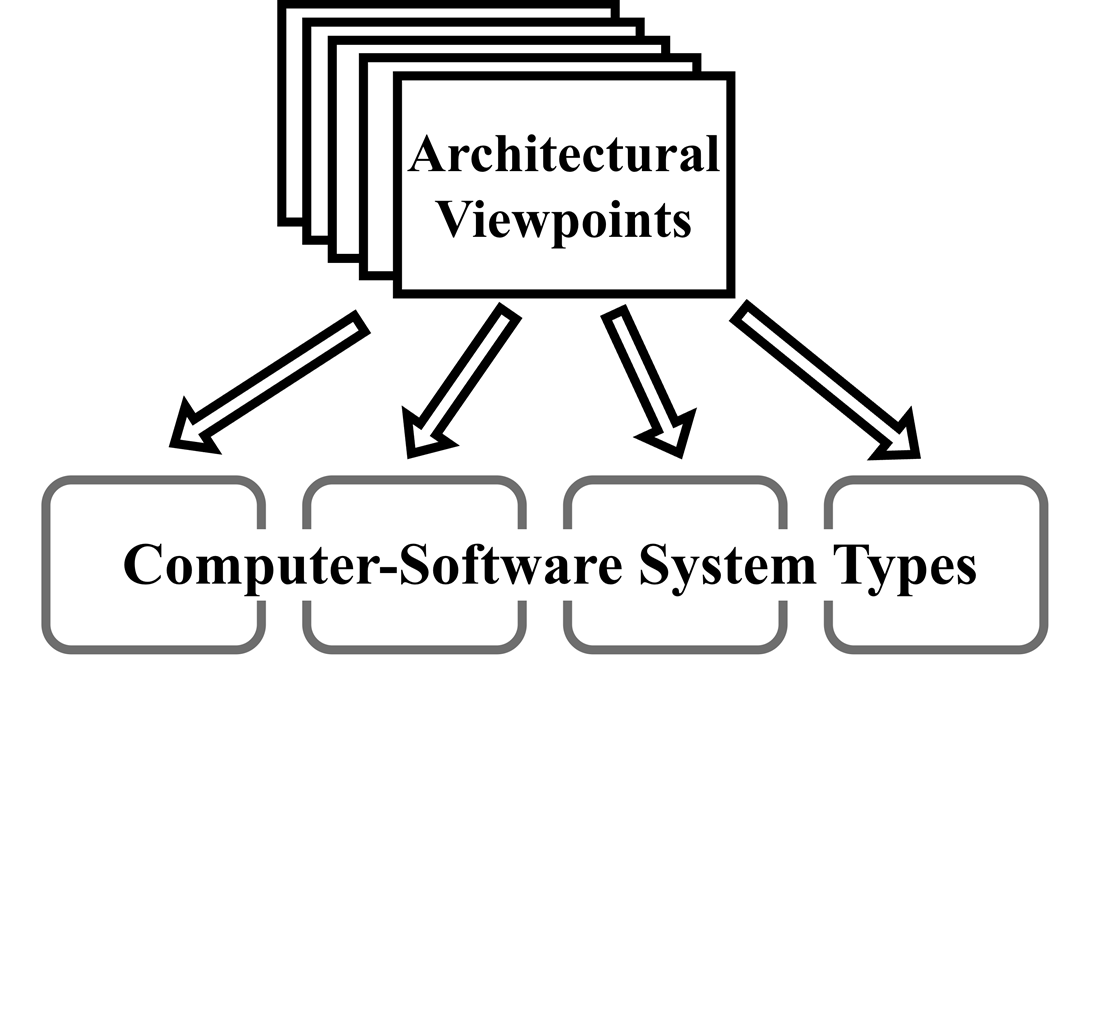
Within the scope of this study, a system-type-centric method of architectural design of computer-software automation systems is proposed. The proposed method introduces a comprehensive viewpoint-oriented architectural documentation model and a reproducible iterative architectural design process.
The method hierarchically structures architectural concerns at different levels, ensuring a systematic transition from abstract to concrete design. By defining a viewpoint applicability matrix across the different system types, the method ensures the creation of relevant, standardized, structured, consistent, traceable and interoperable architectural artifacts.
The method is based on the system-type-centric paradigm and the concepts of standards and approaches focused on architectural viewpoints. This combination is the main distinguishing feature of this method, which ensures the applicability of the method to a wide range of computer software systems, addressing the differences in the architectural nature of different types of systems.
The proposed method increases the interoperability of architectural design artifacts, defines a prescriptive process that structures architectural design and forms the basis for tools for automated AI-assisted architecture generation
References
- Zamikhovskyi, L., Nykolaychuk, M., Levytskyi, I. (2025). Extending the functionality of topologies of Web-oriented control systems for technological objects based on “Open User Communication”. Eastern-European Journal of Enterprise Technologies, 6 (2 (138)), 94–115. https://doi.org/10.15587/1729-4061.2025.348728
- Zamikhovskyi, L., Zamikhovska, O., Ivanyuk, N., Mirzoieva, O., Nykolaychuk, M. (2025). Development of an anti-surge protection system for gas pumping units based on hardware and software vibration monitoring tools. Eastern-European Journal of Enterprise Technologies, 4 (2 (136)), 117–132. https://doi.org/10.15587/1729-4061.2025.337736
- Zamikhovskyі, L., Nykolaychuk, M., Levytskyi, I. (2025). Development of a simulation model of a WEB-oriented servo drive frequency control system based on “Digital Twins” technology. Technology Audit and Production Reserves, 6 (2 (86)), 76–90. https://doi.org/10.15587/2706-5448.2025.345825
- Zamikhovskyi, L., Nykolaychuk, M., Levytskyi, I. (2024). Organizing the automated system of dispatch control over pump units at water pumping stations. Eastern-European Journal of Enterprise Technologies, 5 (2 (131)), 61–75. https://doi.org/10.15587/1729-4061.2024.313531
- Starke, G., Simons, M., Zörner, S., Müller, R. D. (2019). arc42 by Example: Software architecture documentation in practice. Birmingham: Packt Publishing. Available at: https://www.packtpub.com/en-us/product/arc42-by-example-9781839219269
- Brown, S. (2015). The C4 model for visualising software architecture. Leanpub. Available at: https://leanpub.com/visualising-software-architecture
- Bass, L., Clements, P., Kazman, R. (2021). Software Architecture in Practice. Addison-Wesley Professional. Available at: https://www.oreilly.com/library/view/software-architecture-in/9780136885979
- Rozanski, N., Woods, E. (2011). Software Systems Architecture: Working With Stakeholders Using Viewpoints and Perspectives. Boston: Addison-Wesley. Available at: https://www.oreilly.com/library/view/software-systems-architecture/9780132906135
- Kruchten, P. B. (1995). The 4+1 View Model of architecture. IEEE Software, 12 (6), 42–50. https://doi.org/10.1109/52.469759
- Kruchten, P. (2003). Rational Unified Process, The: An Introduction. Addison-Wesley Professional. Available at: https://www.oreilly.com/library/view/rational-unified-process/0321197704/ch17.html
- Rational Unified Process for Systems Engineering. Available at: https://public.dhe.ibm.com/software/rational/web/whitepapers/2003/TP165.pdf
- Cervantes, H., Kazman, R. (2016). Designing Software Architectures: A Practical Approach. Boston: Addison-Wesley Professional. Available at: https://www.oreilly.com/library/view/designing-software-architectures/9780134390857
- Lamm, J. G., Weilkiens, T. (2013). Method for Deriving Functional Architectures from Use Cases. Systems Engineering, 17 (2), 225–236. https://doi.org/10.1002/sys.21265
- System Architecture Framework. Available at: https://saf.gfse.org/
- Dömel, A. (2025). The Robot Architecture Framework - A systematic approach for describing the architecture of complex, autonomous robotic systems. University of Bremen. https://doi.org/10.26092/elib/3825
- Systems Engineering Handbook (NASA/SP-2016-6105 Rev2) (2017). National Aeronautics and Space Administration. Available at: https://ntrs.nasa.gov/citations/20170001761
- Weilkiens, T., Lamm, J. G., Roth, S., Walker, M. (2022). Model‐Based System Architecture. Wiley. https://doi.org/10.1002/9781119746683
- Internet of Things Architecture. Available at: https://cordis.europa.eu/project/id/257521/results
- Hatebur, D., Heisel, M. (2009). Deriving Software Architectures from Problem Descriptions. Software Engineering 2009 - Workshopband. Available at: https://dl.gi.de/items/c3d3e64d-c704-4891-b7ad-9a751caad44e
- Alebrahim, A., Hatebur, D., Heisel, M. (2011). A Method to Derive Software Architectures from Quality Requirements. 2011 18th Asia-Pacific Software Engineering Conference, 322–330. https://doi.org/10.1109/apsec.2011.29
- Reddy, A. R. M., Govindarajulu, P., Naidu, M. M. (2007). A Process Model for Software Architecture. IJCSNS International Journal of Computer Science and Network Security, 7 (4), 272–280. Available at: http://paper.ijcsns.org/07_book/200704/20070439.pdf
- Hofmeister, C., Kruchten, P., Nord, R. L., Obbink, H., Ran, A., America, P. (2007). A general model of software architecture design derived from five industrial approaches. Journal of Systems and Software, 80 (1), 106–126. https://doi.org/10.1016/j.jss.2006.05.024
- Polataiko, I., Zamikhovskyі, L. (2026). Development of system-type-centric paradigm of computer-software systems architectural design for automation systems. Technology Audit and Production Reserves, 1 (2 (87)), 43–56. https://doi.org/10.15587/2706-5448.2026.349943
- Evans, E. (2003). Domain-Driven Design: Tackling Complexity in the Heart of Software. Addison-Wesley Professional. Available at: https://www.oreilly.com/library/view/domain-driven-design-tackling/0321125215
- Vernon, V. (2013). Implementing Domain-Driven Design. Addison-Wesley Professional. Oreilly. Available at: https://www.oreilly.com/library/view/implementing-domain-driven-design/9780133039900
- da Silva, V. T., Noya, R. C., de Lucena, C. J. P. (2005). Using the UML 2.0 activity diagram to model agent plans and actions. Proceedings of the Fourth International Joint Conference on Autonomous Agents and Multiagent Systems, 594–600. https://doi.org/10.1145/1082473.1082563
- MQTT Communication with WinCC Unified (2026). Siemens. Available at: https://support.industry.siemens.com/cs/attachments/110000706/110000706_MQTT_WinCC_Unified_DOC_V1_0_en.pdf
- Ford, N., Parsons, R., Kua, P. (2022). Building Evolutionary Architectures. O'Reilly Media. Available at: https://www.oreilly.com/library/view/building-evolutionary-architectures/9781492097532
- Zhang, Y., Li, R., Liang, P., Sun, W., Liu, Y. (2025). Knowledge-Based Multi-Agent Framework for Automated Software Architecture Design. Proceedings of the 33rd ACM International Conference on the Foundations of Software Engineering, 530–534. https://doi.org/10.1145/3696630.3728493
Downloads
Published
How to Cite
Issue
Section
License
Copyright (c) 2026 Ihor Polataiko, Leonid Zamikhovskyi

This work is licensed under a Creative Commons Attribution 4.0 International License.
The consolidation and conditions for the transfer of copyright (identification of authorship) is carried out in the License Agreement. In particular, the authors reserve the right to the authorship of their manuscript and transfer the first publication of this work to the journal under the terms of the Creative Commons CC BY license. At the same time, they have the right to conclude on their own additional agreements concerning the non-exclusive distribution of the work in the form in which it was published by this journal, but provided that the link to the first publication of the article in this journal is preserved.
A license agreement is a document in which the author warrants that he/she owns all copyright for the work (manuscript, article, etc.).
The authors, signing the License Agreement with TECHNOLOGY CENTER PC, have all rights to the further use of their work, provided that they link to our edition in which the work was published.
According to the terms of the License Agreement, the Publisher TECHNOLOGY CENTER PC does not take away your copyrights and receives permission from the authors to use and dissemination of the publication through the world's scientific resources (own electronic resources, scientometric databases, repositories, libraries, etc.).
In the absence of a signed License Agreement or in the absence of this agreement of identifiers allowing to identify the identity of the author, the editors have no right to work with the manuscript.
It is important to remember that there is another type of agreement between authors and publishers – when copyright is transferred from the authors to the publisher. In this case, the authors lose ownership of their work and may not use it in any way.








