Architectural design of gas transportation automation system based on the system-type-centric method
DOI:
https://doi.org/10.15587/1729-4061.2026.364578Keywords:
architectural design, automation, gas transportation, system-type-centric paradigmAbstract
The object of the study is the architectural design process of a gas transportation automation system at the compressor station level as a multi-aspect heterogeneous computer-software system in the automation domain. This system integrates subsystems of different fundamental architectural natures – ranging from PLC programs to cloud-based analytical systems and information systems with operational logic.
The study is focused on solving the problem of completeness, relevance, and interoperability of architectural design artifacts for complex computer-software automation systems. Existing methods predominantly focus on individual aspects – design patterns, system integration and layering, optimal control, or the implementation of specific capabilities, such as supervisory control. They do not form a single, end-to-end architectural design process for the system as a whole.
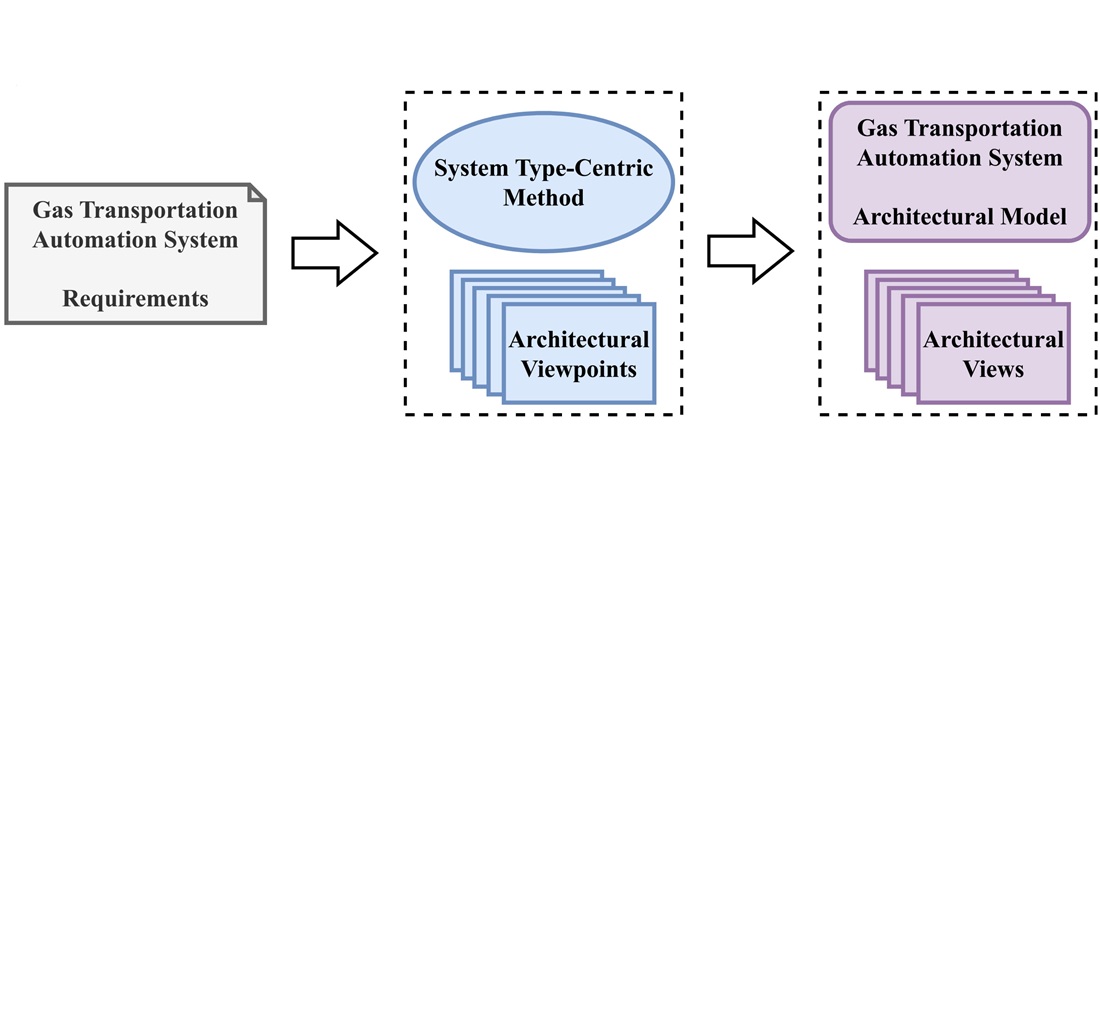
The essence of the obtained results lies in the formation of an architectural model of the system through the execution of the architectural design process using a system-type-centric method. The constructed architectural model is distinguished by the traceability of architectural artifacts and the selection of architectural viewpoints depending on the fundamental nature of the systems, which ensures the coverage of fundamental architectural aspects and achieves the completeness of the architectural description. It is built through the sequential formation of system views from relevant viewpoints.
The results demonstrate the scientific and practical feasibility of the method for the comprehensive design of complex heterogeneous automation systems that combine operational technology (OT) and information technology (IT) levels. From a practical standpoint, the obtained results can be applied as a reference architectural model for the implementation of the method
References
- Williams, T. J. (1990). A Reference Model for Computer Integrated Manufacturing from the Viewpoint of Industrial Automation. IFAC Proceedings Volumes, 23 (8), 281–291. https://doi.org/10.1016/s1474-6670(17)51748-6
- Polataiko, I., Zamikhovskyі, L. (2026). Development of system-type-centric paradigm of computer-software systems architectural design for automation systems. Technology Audit and Production Reserves, 1 (2 (87)), 43–56. https://doi.org/10.15587/2706-5448.2026.349943
- Polataiko, I., Zamikhovskyi, L. (2026). Development of system-type-centric method for architectural design of computer-software automation systems. Eastern-European Journal of Enterprise Technologies, 2 (2 (140)), 65–84. https://doi.org/10.15587/1729-4061.2026.359147
- Gorbijchuk, M. I., Lazoriv, O. T., Lazoriv, A. M. (2020). The computer system for optimal control of natural gas pumping units. Methods and Devices of Quality Control, 2 (45), 90–101. https://doi.org/10.31471/1993-9981-2020-2(45)-90-101
- Damirova, J., Salmanov, V. (2026). Control of compressor and pumping systems in the oil and gas industry using SCADA. ETM Equipment Technologies Materials, 217. https://doi.org/10.36962/etm33022026-25
- Zamikhovskyi, L., Nykolaychuk, M., Levytskyi, I. (2025). Extending the functionality of topologies of Web-oriented control systems for technological objects based on “Open User Communication”. Eastern-European Journal of Enterprise Technologies, 6 (2 (138)), 94–115. https://doi.org/10.15587/1729-4061.2025.348728
- Zamikhovskyi, L., Zamikhovska, O., Ivanyuk, N., Mirzoieva, O., Nykolaychuk, M. (2025). Development of an anti-surge protection system for gas pumping units based on hardware and software vibration monitoring tools. Eastern-European Journal of Enterprise Technologies, 4 (2 (136)), 117–132. https://doi.org/10.15587/1729-4061.2025.337736
- Zamikhovskyі, L., Nykolaychuk, M., Levytskyi, I. (2025). Development of a simulation model of a WEB-oriented servo drive frequency control system based on “Digital Twins” technology. Technology Audit and Production Reserves, 6 (2 (86)), 76–90. https://doi.org/10.15587/2706-5448.2025.345825
- Nykolaychuk, M., Zamikhovskyi, L., Levitskyi, I., Kopei, V., Ropyak, L. (2026). Development of a Simulation Model of a PID Controller Based on Simatic S7 Hardware-Software Tools and “Digital Twin” Technology. Automation, 7 (3), 74. https://doi.org/10.3390/automation7030074
- IEC 62264-1:2013. Enterprise-control system integration - Part 1: Models and terminology. International Electrotechnical Commission. Available at: https://webstore.iec.ch/en/publication/6675
- The Industrial Internet Reference Architecture (IIRA), Version 1.10: An Industry IoT Consortium foundational document (2022). Boston: Industry IoT Consortium. Available at: https://www.iiconsortium.org/wp-content/uploads/sites/2/2022/11/IIRA-v1.10.pdf
- Megow, J. (2020). Reference architecture models for Industry 4.0, smart manufacturing and IoT: An introduction. Berlin: Begleitforschung PAiCE; IIT – Institut für Innovation und Technik in der VDI / VDE Innovation + Technik GmbH. Available at: https://www.digitale-technologien.de/DT/Redaktion/DE/Downloads/Publikation/PAiCE_Leitfaden_Reference_Architecture.pdf?__blob=publicationFile&v=1
- Villafuerte, C., Moncayo, M., Oñate, W. (2026). RAMI 4.0 Architecture for Industrial Traceability with Artificial Intelligence and Integrated Security. Automation, 7 (3), 72. https://doi.org/10.3390/automation7030072
- Folgado, F., Calderón, D., González, I., Calderón, A. (2024). Review of Industry 4.0 from the Perspective of Automation and Supervision Systems: Definitions, Architectures and Recent Trends. Electronics, 13 (4), 782. https://doi.org/10.3390/electronics13040782
- Starke, G., Simons, M., Zörner, S., Müller, R. D., Losch, H. (2019). arc42 by Example: Software architecture documentation in practice. Birmingham: Packt Publishing.
- Brown, S. (2015). The C4 model for visualising software architecture. Leanpub. Available at: https://leanpub.com/visualising-software-architecture
- Kruchten, P. B. (1995). The 4+1 View Model of architecture. IEEE Software, 12 (6), 42–50. https://doi.org/10.1109/52.469759
- Bass, L., Clements, P., Kazman, R. (2021). Software Architecture in Practice. Addison-Wesley Professional.
- Cervantes, H., Kazman, R. (2016). Designing Software Architectures: A Practical Approach. Boston: Addison-Wesley Professional. Available at: https://repo.darmajaya.ac.id/3948/1/Designing%20Software%20Architectures_%20A%20Practical%20Approach%20%28%20PDFDrive%20%29.pdf
- Rozanski, N., Woods, E. (2011). Software Systems Architecture: Working With Stakeholders Using Viewpoints and Perspectives. Boston: Addison-Wesley. Available at: https://ptgmedia.pearsoncmg.com/images/9780321718334/samplepages/032171833X.pdf
- Calderón, D., Folgado, F. J., González, I., Calderón, A. J. (2024). Implementation and Experimental Application of Industrial IoT Architecture Using Automation and IoT Hardware/Software. Sensors, 24 (24), 8074. https://doi.org/10.3390/s24248074
- Villar, E., Martín Toral, I., Calvo, I., Barambones, O., Fernández-Bustamante, P. (2024). Architectures for Industrial AIoT Applications. Sensors, 24 (15), 4929. https://doi.org/10.3390/s24154929
- Gourisetti, S. N. G., Bhadra, S., Sebastian-Cardenas, D. J., Touhiduzzaman, M., Ahmed, O. (2023). A Theoretical Open Architecture Framework and Technology Stack for Digital Twins in Energy Sector Applications. Energies, 16 (13), 4853. https://doi.org/10.3390/en16134853
- Lamm, J. G., Weilkiens, T. (2013). Method for Deriving Functional Architectures from Use Cases. Systems Engineering, 17 (2), 225–236. https://doi.org/10.1002/sys.21265
- System Architecture Framework. (GfSE). Available at: https://saf.gfse.org/
- Evans, E. (2003). Domain-Driven Design: Tackling Complexity in the Heart of Software. Boston: Addison-Wesley Professional. Available at: https://fabiofumarola.github.io/nosql/readingMaterial/Evans03.pdf
- Waqas, M., Jamil, M., Khan, A. A. (2024). Hybrid Power System Design and Dynamic Modeling for Enhanced Reliability in Remote Natural Gas Pipeline Control Stations. Energies, 17 (7), 1763. https://doi.org/10.3390/en17071763
- Nazarenko, I. V., Nikolaychuk, M. Ya., Ferenets, V. D., Sukhanov, D. Ye. (2014). Construction and modeling of unified control systems of actuating mechanisms for objects of gas-transport system. Eastern-European Journal of Enterprise Technologies, 1 (2 (67)), 41–48. https://doi.org/10.15587/1729-4061.2014.21204
- Waqas, M., Jamil, M. (2024). Smart IoT SCADA System for Hybrid Power Monitoring in Remote Natural Gas Pipeline Control Stations. Electronics, 13 (16), 3235. https://doi.org/10.3390/electronics13163235
- Sayghe, A. (2025). Digital Twin-Driven Intrusion Detection for Industrial SCADA: A Cyber-Physical Case Study. Sensors, 25 (16), 4963. https://doi.org/10.3390/s25164963
- Zamikhovskyi, L., Nykolaychuk, M., Levytskyi, I. (2026). Method for building a virtual simulator of the drowworks automated control subsystem of a drilling rig with a WEB interface. IOP Conference Series: Earth and Environmental Science, 1630 (1), 12068. https://doi.org/10.1088/1755-1315/1630/1/012068
- Chen, S., Ebe, F., Morris, J., Lorenz, H., Kondzialka, C., Heilscher, G. (2022). Implementation and Test of an IEC 61850-Based Automation Framework for the Automated Data Model Integration of DES (ADMID) into DSO SCADA. Energies, 15 (4), 1552. https://doi.org/10.3390/en15041552
- Cirani, S., Ferrari, G., Mancin, M., Picone, M. (2018). Virtual Replication of IoT Hubs in the Cloud: A Flexible Approach to Smart Object Management. Journal of Sensor and Actuator Networks, 7 (2), 16. https://doi.org/10.3390/jsan7020016
- Rosioru, S., Mihai, V., Neghina, M., Craciunean, D., Stamatescu, G. (2022). PROSIM in the Cloud: Remote Automation Training Platform with Virtualized Infrastructure. Applied Sciences, 12 (6), 3038. https://doi.org/10.3390/app12063038
- Dobaj, J., Riel, A., Macher, G., Egretzberger, M. (2023). Towards DevOps for Cyber-Physical Systems (CPSs): Resilient Self-Adaptive Software for Sustainable Human-Centric Smart CPS Facilitated by Digital Twins. Machines, 11 (10), 973. https://doi.org/10.3390/machines11100973
- Solomchak, O., Nykolaychuk, M., Solomchak, A. (2024). Modeling and Simulation of Distribution Network with the D-STATCOM and Photovoltaic Power Stations Using MATLAB. 2024 IEEE 5th KhPI Week on Advanced Technology (KhPIWeek), 1–5. https://doi.org/10.1109/khpiweek61434.2024.10878105
- Petrescu, I., Niculae, E., Vulturescu, V., Dimitrescu, A., Ungureanu, L. M. (2025). Transport and Application Layer Protocols for IoT: Comprehensive Review. Technologies, 13 (12), 583. https://doi.org/10.3390/technologies13120583
- Christ, L., Milloch, E., Boshoff, M., Hypki, A., Kuhlenkötter, B. (2023). Implementation of Digital Twin and Real Production System to Address Actual and Future Challenges in Assembly Technology. Automation, 4 (4), 345–358. https://doi.org/10.3390/automation4040020
- Zamikhovskyі L., Nykolaychuk, M., Levytskyi, I. (2026). Development of a simulation model and testing methodology for frequency control systems of an induction drives using Sinamics G220 and Digital Twin technology. Technology Audit and Production Reserves, 3 (2 (89)), 75–90. https://doi.org/10.15587/2706-5448.2026.360983
- Al-Najari, B., Hen, C. K., Siaw Paw, J. K., Marhoon, A. F. (2025). Dynamic Tuning of PLC-Based Built-In PID Controller Using PSO-MANFIS Hybrid Algorithm via OPC Server. Automation, 6 (4), 83. https://doi.org/10.3390/automation6040083
- Rahman, M. A., Shahrior, M. F., Iqbal, K., Abushaiba, A. A. (2025). Enabling Intelligent Industrial Automation: A Review of Machine Learning Applications with Digital Twin and Edge AI Integration. Automation, 6 (3), 37. https://doi.org/10.3390/automation6030037
Downloads
Published
How to Cite
Issue
Section
License
Copyright (c) 2026 Ihor Polataiko, Leonid Zamikhovskyi

This work is licensed under a Creative Commons Attribution 4.0 International License.
The consolidation and conditions for the transfer of copyright (identification of authorship) is carried out in the License Agreement. In particular, the authors reserve the right to the authorship of their manuscript and transfer the first publication of this work to the journal under the terms of the Creative Commons CC BY license. At the same time, they have the right to conclude on their own additional agreements concerning the non-exclusive distribution of the work in the form in which it was published by this journal, but provided that the link to the first publication of the article in this journal is preserved.
A license agreement is a document in which the author warrants that he/she owns all copyright for the work (manuscript, article, etc.).
The authors, signing the License Agreement with TECHNOLOGY CENTER PC, have all rights to the further use of their work, provided that they link to our edition in which the work was published.
According to the terms of the License Agreement, the Publisher TECHNOLOGY CENTER PC does not take away your copyrights and receives permission from the authors to use and dissemination of the publication through the world's scientific resources (own electronic resources, scientometric databases, repositories, libraries, etc.).
In the absence of a signed License Agreement or in the absence of this agreement of identifiers allowing to identify the identity of the author, the editors have no right to work with the manuscript.
It is important to remember that there is another type of agreement between authors and publishers – when copyright is transferred from the authors to the publisher. In this case, the authors lose ownership of their work and may not use it in any way.








