Ідентифікація впливу методів газового дугового зварювання металу на механічні характеристики дуплексної нержавіючої сталі
DOI:
https://doi.org/10.15587/1729-4061.2025.327278Ключові слова:
газовий метал, дуплекс, механічний, удар, зварювання, матеріал, міцність на розрив, корозіяАнотація
Це дослідження оцінює вплив різних методів газового дугового зварювання (ГДЗ) на механічні властивості дуплексної нержавіючої сталі. Основною метою є визначення найбільш ефективних параметрів процесу ГДЗ для покращення механічних властивостей матеріалу, включаючи міцність на розрив, твердість і стійкість до корозії.
Результати цього дослідження дають цінну інформацію про покращення якості зварювання, механічних властивостей і довговічності дуплексних нержавіючих сталей у високоефективних середовищах і корозійних умовах. Такі галузі промисловості, як нафтогазова, суднобудівна та хімічна промисловість, можуть отримати значну вигоду з цих висновків, прийнявши оптимізовані параметри ГДЗ для отримання міцніших і довговічніших зварних з’єднань.
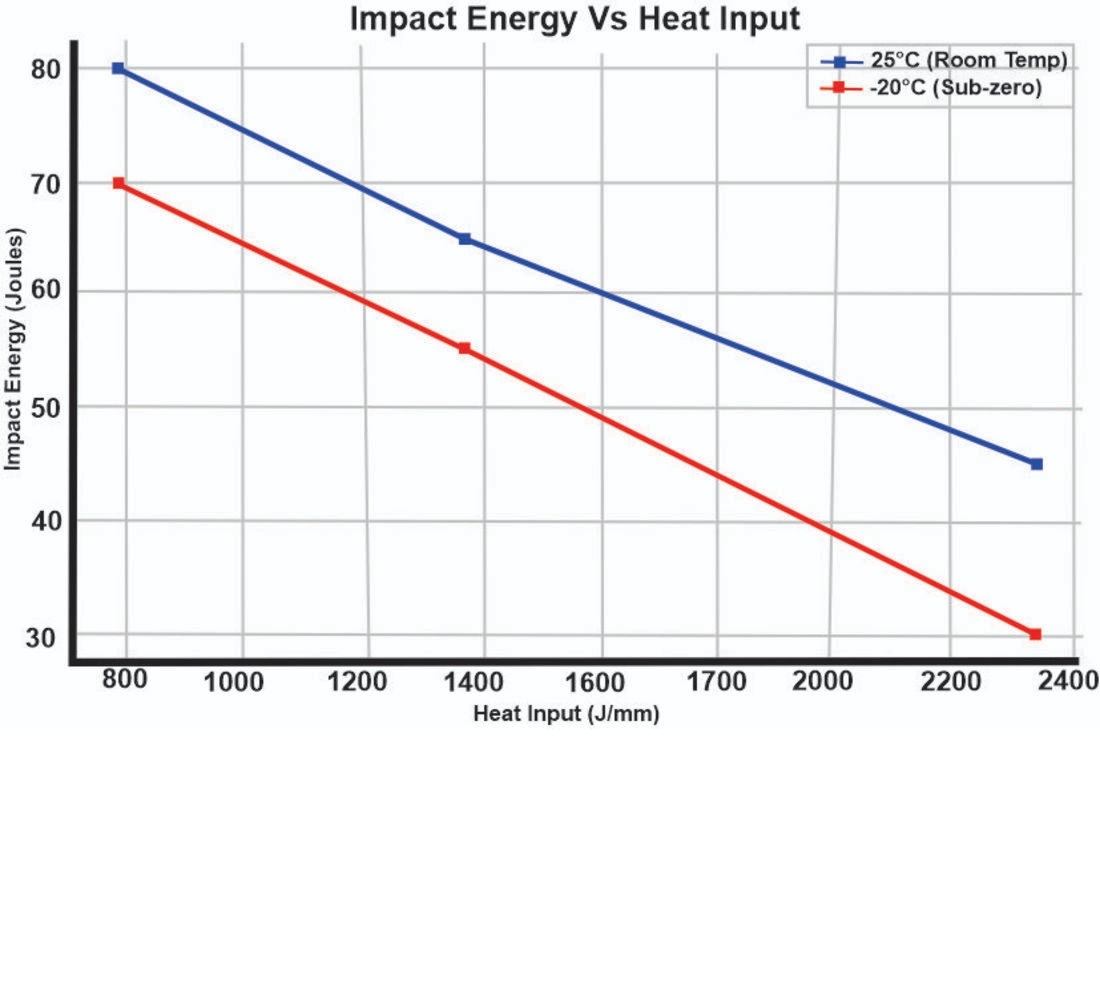
Результати також підкреслюють значний вплив зварювання та термічної обробки на механічні властивості сплаву. Міцність контрольного матеріалу була зареєстрована на рівні 811,47 МН/м2, тоді як зварні зразки показали міцність від 177,07 до 257,32 МН/м2. Енергія удару контрольного матеріалу становила 162,70 Дж, а зварених зразків – від 38,64 Дж до 56,20 Дж.
Крім того, дослідження показує, що термічна обробка для зняття напруги призвела до найвищої міцності (A3=331 МН/м2) порівняно з гартуванням у мастилі (A2=329 МН/м2) і олії німу (A1=222 МН/м2), хоча спостерігалися зміни в міцності матеріалу. Унікальність цього дослідження полягає в його системному підході до кореляції параметрів ГДЗ зі змінами мікроструктури та механічних властивостей. Особливість цього дослідження полягає в його структурованій методології зв’язку параметрів ГДЗ з варіаціями мікроструктури та механічних властивостей, полегшуючи визначення оптимальних умов зварювання
Посилання
- Mousavi Anijdan, S. H., Sabzi, M. (2018). The Effect of Heat Treatment Process Parameters on Mechanical Properties, Precipitation, Fatigue Life, and Fracture Mode of an Austenitic Mn Hadfield Steel. Journal of Materials Engineering and Performance, 27 (10), 5246–5253. https://doi.org/10.1007/s11665-018-3625-y
- Aguirre, H. V. M., Teixeira, F. R., Mota, C. A. M. da, Nascimento, A. S. do. (2021). Evaluation of Dissimilar Welds with the Temper-bead Technique Using ER 316L and ER NiCrMo-3 Electrodes on ASTM A182 F22 Steel. Matéria (Rio de Janeiro), 26 (3). https://doi.org/10.1590/s1517-707620210003.13000
- Alvarães, C. P., Madalena, F. C. A., Souza, L. F. G. de, Jorge, J. C. F., Araújo, L. S., Mendes, M. C. (2019). Performance of the INCONEL 625 alloy weld overlay obtained by FCAW process. Matéria (Rio de Janeiro), 24 (1). https://doi.org/10.1590/s1517-707620190001.0627
- Mousavi Anijdan, S. H., Sabzi, M., Ghobeiti-Hasab, M., Roshan-Ghiyas, A. (2018). Optimization of spot welding process parameters in dissimilar joint of dual phase steel DP600 and AISI 304 stainless steel to achieve the highest level of shear-tensile strength. Materials Science and Engineering: A, 726, 120–125. https://doi.org/10.1016/j.msea.2018.04.072
- Chagas de Souza, G., da Silva, A. L., Tavares, S. S. M., Pardal, J. M., Ferreira, M. L. R., Filho, I. C. (2016). Mechanical properties and corrosion resistance evaluation of superduplex stainless steel UNS S32760 repaired by GTAW process. Welding International, 30 (6), 432–442. https://doi.org/10.1080/09507116.2015.1096527
- Giarollo, D. F., Mazzaferro, C. C. P., Mazzaferro, J. A. E. (2019). Effect of filler material on sliding wear resistance of a structural steel welded by GMAW. Matéria (Rio de Janeiro), 24 (3). https://doi.org/10.1590/s1517-707620190003.0780
- Hosseini, V. A., Valiente Bermejo, M. A., Gårdstam, J., Hurtig, K., Karlsson, L. (2016). Influence of multiple thermal cycles on microstructure of heat-affected zone in TIG-welded super duplex stainless steel. Welding in the World, 60 (2), 233–245. https://doi.org/10.1007/s40194-016-0300-5
- Jafarian, H. R., Sabzi, M., Mousavi Anijdan, S. H., Eivani, A. R., Park, N. (2021). The influence of austenitization temperature on microstructural developments, mechanical properties, fracture mode and wear mechanism of Hadfield high manganese steel. Journal of Materials Research and Technology, 10, 819–831. https://doi.org/10.1016/j.jmrt.2020.12.003
- Kangazian, J., Shamanian, M. (2019). Effect of Pulsed Current on the Microstructure, Mechanical Properties and Corrosion Behavior of Ni-Based Alloy/Super Duplex Stainless Steel Dissimilar Welds. Transactions of the Indian Institute of Metals, 72 (9), 2403–2416. https://doi.org/10.1007/s12666-019-01693-1
- Muthusamy, C., Karuppiah, L., Paulraj, S., Kandasami, D., Kandhasamy, R. (2016). Effect of Heat Input on Mechanical and Metallurgical Properties of Gas Tungsten Arc Welded Lean Super Martensitic Stainless Steel. Materials Research, 19 (3), 572–579. https://doi.org/10.1590/1980-5373-mr-2015-0538
- Mosa, E. S., Morsy, M. A., Atlam, A. (2017). Effect of heat input and shielding gas on microstructure and mechanical properties of austenitic stainless steel 304L. International Research Journal of Engineering and Technology, 4 (12), 370–377.
- Sabzi, M., Dezfuli, S. M. (2018). Drastic improvement in mechanical properties and weldability of 316L stainless steel weld joints by using electromagnetic vibration during GTAW process. Journal of Manufacturing Processes, 33, 74–85. https://doi.org/10.1016/j.jmapro.2018.05.002
- Shamanian, M., Kangazian, J., Szpunar, J. A. (2021). Insights into the microstructure evolution and crystallographic texture of API X-65 steel/UNS S32750 stainless steel dissimilar welds by EBSD analysis. Welding in the World, 65 (5), 973–986. https://doi.org/10.1007/s40194-020-01062-3
- Sabzi, M., Mousavi Anijdan, S. H., Eivani, A. R., Park, N., Jafarian, H. R. (2021). The effect of pulse current changes in PCGTAW on microstructural evolution, drastic improvement in mechanical properties, and fracture mode of dissimilar welded joint of AISI 316L-AISI 310S stainless steels. Materials Science and Engineering: A, 823, 141700. https://doi.org/10.1016/j.msea.2021.141700
- Zhang, Y., Yang, H., Huang, R., Sun, P., Zheng, S., Li, M. et al. (2024). Investigation of microstructure and corrosion resistance of an Al-Zn-Mg-Cu alloy under various ageing conditions. Corrosion Science, 227, 111719. https://doi.org/10.1016/j.corsci.2023.111719
- Karakulov, V. V., Smolin, I., Kulkov, S. N. (2020). About mechanical behaviour of metal matrix composites under shock wave loading. Journal of Physics: Conference Series, 1527 (1), 012020. https://doi.org/10.1088/1742-6596/1527/1/012020
- Yetgin, Ş., Çavdar, Ö., Çavdar, A. (2008). The effects of the fiber contents on the mechanic properties of the adobes. Construction and Building Materials, 22 (3), 222–227. https://doi.org/10.1016/j.conbuildmat.2006.08.022
- Madugu, I. A., Abdulwahab, M., Aigbodion, V. S. (2009). Effect of iron fillings on the properties and microstructure of cast fiber–polyester/iron filings particulate composite. Journal of Alloys and Compounds, 476 (1-2), 807–811. https://doi.org/10.1016/j.jallcom.2008.09.165
- Zhang, Z., Jing, H., Xu, L., Han, Y., Zhao, L., Lv, X., Zhang, J. (2018). Influence of heat input in electron beam process on microstructure and properties of duplex stainless steel welded interface. Applied Surface Science, 435, 352–366. https://doi.org/10.1016/j.apsusc.2017.11.125
- Reza Tabrizi, T., Sabzi, M., Mousavi Anijdan, S. H., Eivani, A. R., Park, N., Jafarian, H. R. (2021). Comparing the effect of continuous and pulsed current in the GTAW process of AISI 316L stainless steel welded joint: microstructural evolution, phase equilibrium, mechanical properties and fracture mode. Journal of Materials Research and Technology, 15, 199–212. https://doi.org/10.1016/j.jmrt.2021.07.154
- Fonseca, G. S. da, Oliveira, P. M. de, Diniz, M. G., Bubnoff, D. V., Castro, J. A. de. (2017). Sigma Phase in Superduplex Stainless Steel: Formation, Kinetics and Microstructural Path. Materials Research, 20 (1), 249–255. https://doi.org/10.1590/1980-5373-mr-2016-0436
- Wang, Y., Xu, L., Han, Y., Zhao, L., Li, H., Hao, K., Ren, W. (2023). Super duplex stainless steel with balance ratio produced by laser directed energy deposition (L-DED). Journal of Manufacturing Processes, 105, 213–218. https://doi.org/10.1016/j.jmapro.2023.09.023
- Maslak, M., Stankiewicz, M., Slazak, B. (2021). Duplex Steels Used in Building Structures and Their Resistance to Chloride Corrosion. Materials, 14 (19), 5666. https://doi.org/10.3390/ma14195666
- Hutchinson, B., Komenda, J., Rohrer, G. S., Beladi, H. (2015). Heat affected zone microstructures and their influence on toughness in two microalloyed HSLA steels. Acta Materialia, 97, 380–391. https://doi.org/10.1016/j.actamat.2015.05.055
- Cao, Y., Zhang, Y. (2025). Control of DE-GMAW through human–robot collaboration. Welding in the World, 69 (5), 1459–1468. https://doi.org/10.1007/s40194-025-01954-2
- Xu, B., Liu, F., Lin, D., Han, X., Chen, X., Wu, L. et al. (2022). Investigation of weld formation and porosity in 5052 aluminium alloy laser-GMA hybrid welding assisted by magnetic field with different orientations. Science and Technology of Welding and Joining, 27 (8), 672–682. https://doi.org/10.1080/13621718.2022.2106022
- Yuan, H., Zhang, Y., Liu, H., Wang, C., Li, Z. (2025). Bond Characteristic-Dependent Viscosity Variations in CaF₂-SiO₂-Al₂O₃-MgO Welding Fluxes. Welding Journal, 104 (04), 107–118. https://doi.org/10.29391/2025.104.009
- Ibrahim, T., Yawas, D. S., Aku, S. Y. (2013). Effects of Gas Metal Arc Welding Techniques on the Mechanical Properties of Duplex Stainless Steel. Journal of Minerals and Materials Characterization and Engineering, 01 (05), 222–230. https://doi.org/10.4236/jmmce.2013.15035
##submission.downloads##
Опубліковано
Як цитувати
Номер
Розділ
Ліцензія
Авторське право (c) 2025 Ahmad Bakhori, Muhammad Rafiq Yanhar, Suhardi Napid

Ця робота ліцензується відповідно до Creative Commons Attribution 4.0 International License.
Закріплення та умови передачі авторських прав (ідентифікація авторства) здійснюється у Ліцензійному договорі. Зокрема, автори залишають за собою право на авторство свого рукопису та передають журналу право першої публікації цієї роботи на умовах ліцензії Creative Commons CC BY. При цьому вони мають право укладати самостійно додаткові угоди, що стосуються неексклюзивного поширення роботи у тому вигляді, в якому вона була опублікована цим журналом, але за умови збереження посилання на першу публікацію статті в цьому журналі.
Ліцензійний договір – це документ, в якому автор гарантує, що володіє усіма авторськими правами на твір (рукопис, статтю, тощо).
Автори, підписуючи Ліцензійний договір з ПП «ТЕХНОЛОГІЧНИЙ ЦЕНТР», мають усі права на подальше використання свого твору за умови посилання на наше видання, в якому твір опублікований. Відповідно до умов Ліцензійного договору, Видавець ПП «ТЕХНОЛОГІЧНИЙ ЦЕНТР» не забирає ваші авторські права та отримує від авторів дозвіл на використання та розповсюдження публікації через світові наукові ресурси (власні електронні ресурси, наукометричні бази даних, репозитарії, бібліотеки тощо).
За відсутності підписаного Ліцензійного договору або за відсутністю вказаних в цьому договорі ідентифікаторів, що дають змогу ідентифікувати особу автора, редакція не має права працювати з рукописом.
Важливо пам’ятати, що існує і інший тип угоди між авторами та видавцями – коли авторські права передаються від авторів до видавця. В такому разі автори втрачають права власності на свій твір та не можуть його використовувати в будь-який спосіб.