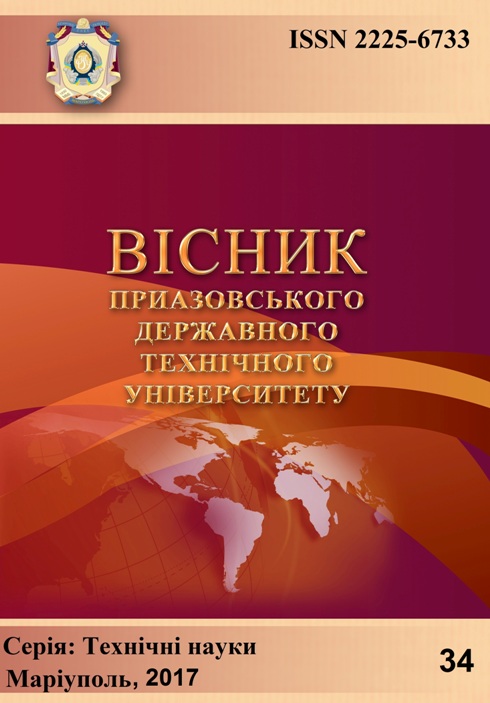
Металографічні дослідження зміцнених шарів після поверхневої обробки висококонцентрованим плазмовим струменем
DOI:
https://doi.org/10.31498/2225-6733.34.2017.105666Ключові слова:
плазмовий гарт, мікроструктура, градієнтний шар, розмір зерна, мартенсит, мікротвердістьАнотація
Досліджувалась мікроструктура вуглецевих і легованих сталей з різним вмістом вуглецю до і після градієнтного зміцнення висококонцентрованим плазмовим струменем. Показано, що отримується після поверхневого гарту структура має значно менші розміри зерен у порівнянні з об'ємним загартуваннямПосилання
- Список использованных источников (ГОСТ):
- Григорьянц А.Г. Методы поверхностной лазерной обработки / А.Г. Григорьянц, А.Н. Сафонов. – М. : Высшая школа, 1987. – 191 с.
- Гуляев А.П. Металловедение / А.П. Гуляев. – М. : Металлургия, 1986. – 544 с.
- Самотугин С.С. Плазменное упрочнение инструментальных материалов / С.С. Самотугин, Л.К. Лещинский. – Донецк : Новый мир, 2002. – 338 с.
- Самотугин С.С. Структура и характер разрушения сварных соединений, наплавленных и упрочненных материалов // С.С. Самотугин, Л.К. Лещинский, Н.Х. Соляник. – Мариуполь : ПГТУ, 1996. – 179 с.
- References:
- Grigoryanc А.G. Metody poverkhnostnoi lazernoi obrabotki [Methods of surface laser treatment]. Мoscow, Vicshaya shkola Publ., 1987. 191p. (Rus.)
- Gulyaev А.P. Metallovedenie [Physical metallurgy]. Мoscow, Меtаllurgiia Publ., 1986. 544 p. (Rus.)
- Samotugin S.S. Plazmennoe uprochnenie instrumentalnykh materialov [Plasma hardening of tool materials]. Donetsk, Noviy mir Publ., 2002. 338 p. (Rus.)
- Samotugin S.S. Struktura i kharakter razrusheniia svarnikh soedinenii, naplavlennykh i uprochnionnikh materiallov [The structure and nature of the destruction of the welded joints, weld and hardened materials]. Mariupol, PGTU Publ., 1996. 179 p. (Rus.)
##submission.downloads##
Як цитувати
Номер
Розділ
Ліцензія
Журнал "Вісник Приазовського державного технічного університету. Серія: Технічні науки" видається під ліцензією СС-BY (Ліцензія «Із зазначенням авторства»).
Дана ліцензія дозволяє поширювати, редагувати, поправляти і брати твір за основу для похідних навіть на комерційній основі із зазначенням авторства. Це найзручніша з усіх пропонованих ліцензій. Рекомендується для максимального поширення і використання неліцензійних матеріалів.

Автори, які публікуються в цьому журналі, погоджуються з наступними умовами:
1. Автори залишають за собою право на авторство своєї роботи та передають журналу право першої публікації цієї роботи на умовах ліцензії Creative Commons Attribution License, яка дозволяє іншим особам вільно розповсюджувати опубліковану роботу з обов'язковим посиланням на авторів оригінальної роботи та першу публікацію роботи в цьому журналі.
2. Автори мають право укладати самостійні додаткові угоди, які стосуються неексклюзивного поширення роботи в тому вигляді, в якому вона була опублікована цим журналом (наприклад, розміщувати роботу в електронному сховищі установи або публікувати у складі монографії), за умови збереження посилання на першу публікацію роботи в цьому журналі.