Моделювання бізнес-процесів щодо супроводу вступної кампанії у ДВНЗ «Приазовський державний технічний університет»
DOI:
https://doi.org/10.31498/2225-6733.49.1.2024.321210Ключові слова:
структурно-функціональне моделювання, нотація IDEF0, моделювання бізнес-процесів в освітній сфері, бізнес-процеси щодо супроводу вступної кампанії, приймальна комісія, заклад вищої освіти, ДВНЗ «ПДТУ»Анотація
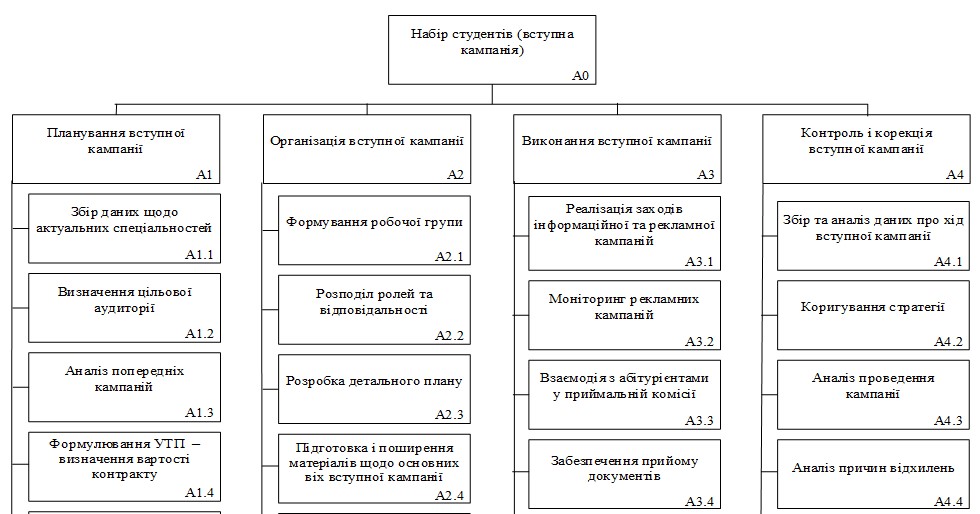
У статті розглянуто застосування структурно-функціонального моделювання в освітній сфері з метою оптимізації основних бізнес-процесів. Враховуючи тенденцію на зменшення кількості вступників до ДВНЗ «Приазовський державний технічний університет», що намітилася за підсумками вступної кампанії 2024 року, проведено докладний аналіз чинної моделі керування внутрішньою системою забезпечення якості освіти. Виявлено місце вступної кампанії у цій системі, проаналізовано взаємодію з іншими бізнес-процесами задля переосмислення цього досвіду та пошуку нової бізнес-моделі набору студентів на навчання. Розроблено структурно-функціональну модель бізнес-процесу вступної кампанії у ДВНЗ «ПДТУ» «AS-IS» («ЯК Є») з позицій приймальної комісії та з огляду на її подальший аналіз та впровадження заходів реінжинірингу. Для побудови моделі бізнес-процесу вступної кампанії було залучено методологію SADT, а саме: стандарт функціонального моделювання і опису бізнес-процесів – IDEF0. Проєктування в нотації IDEF0 контекстної моделі «Набір студентів (вступна кампанія)» відбило загальну картину бізнес-процесу, визначило його зовнішні та внутрішні зв'язки, способи взаємодії з підсистемами та функціями, що супроводжують кожен етап вступної кампанії. У результаті виокремлення компонентів моделі першої декомпозиції проведено ідентифікацію та опис підпроцесів бізнес-процесу «Набір студентів (вступна кампанія)». Графічно представлено функціональні блоки, що відображають життєві цикли процесу вступної кампанії («Планування вступної кампанії»; «Організація вступної кампанії»; «Виконання вступної кампанії»; «Контроль і корекція вступної кампанії»), охарактеризовано кожний із них. На другому рівні декомпозиції розбудовано дерево вузлів бізнес-процесів та визначено субпроцеси, що є складниками підпроцесів. Створена модель «AS-IS» («ЯК Є») базується на реальному стані справ та передбачає її подальшу оптимізацію, тобто побудову моделі «TO-BE» («ЯК БУДЕ»)
Посилання
- Нетепчук В. В. Розробка моделі системи управління закладом вищої освіти з використанням методики процесного менеджменту та стандарту ISO 9001-2015. Вісник Національного університету водного господарства та природокористування. Економічні науки. 2021. Т. 2. № 94. С. 112-127. DOI: https://doi.org/10.31713/ve2202111.
- Андрусенко С. І., Бугайчук О. С. Процесна модель роботи приймальної комісії вищого навчального закладу. Вісник Національного транспортного університету. 2011. Вип. 24. Том 2. С. 63-66.
- Андрусенко С. І., Бугайчук О.С. Процесна модель діяльності вищого навчального закладу з прийому студентів. Управління проектами, системний аналіз і логістика. 2012. Вип. 9. С. 7-13.
- Макоєдова В. Моделювання супроводу вступної кампанії закладу вищої освіти. Інформаційні технології та суспільство. Вип. 1 (7), 2023. С. 44-49. DOI: https://doi.org/10.32689/maup.it.2023.1.6.
- Коломієць М. Б., Мирний Р. Ф. Вступна кампанія закладу вищої освіти як система. Вісник Глухівського національного педагогічного університету імені Олександра Довженка. Серія: Педагогічні науки. 2017. № 3. С. 105-111.
##submission.downloads##
Опубліковано
Як цитувати
Номер
Розділ
Ліцензія

Ця робота ліцензується відповідно до Creative Commons Attribution 4.0 International License.
Журнал "Вісник Приазовського державного технічного університету. Серія: Технічні науки" видається під ліцензією СС-BY (Ліцензія «Із зазначенням авторства»).
Дана ліцензія дозволяє поширювати, редагувати, поправляти і брати твір за основу для похідних навіть на комерційній основі із зазначенням авторства. Це найзручніша з усіх пропонованих ліцензій. Рекомендується для максимального поширення і використання неліцензійних матеріалів.

Автори, які публікуються в цьому журналі, погоджуються з наступними умовами:
1. Автори залишають за собою право на авторство своєї роботи та передають журналу право першої публікації цієї роботи на умовах ліцензії Creative Commons Attribution License, яка дозволяє іншим особам вільно розповсюджувати опубліковану роботу з обов'язковим посиланням на авторів оригінальної роботи та першу публікацію роботи в цьому журналі.
2. Автори мають право укладати самостійні додаткові угоди, які стосуються неексклюзивного поширення роботи в тому вигляді, в якому вона була опублікована цим журналом (наприклад, розміщувати роботу в електронному сховищі установи або публікувати у складі монографії), за умови збереження посилання на першу публікацію роботи в цьому журналі.