Optimization of garlic cultivation land selection using PCA and K-means approach in spatial intelligent system
DOI:
https://doi.org/10.15587/1729-4061.2025.325340Keywords:
spatial land, garlic cultivation, machine learning, principal component analysis, k-meansAbstract
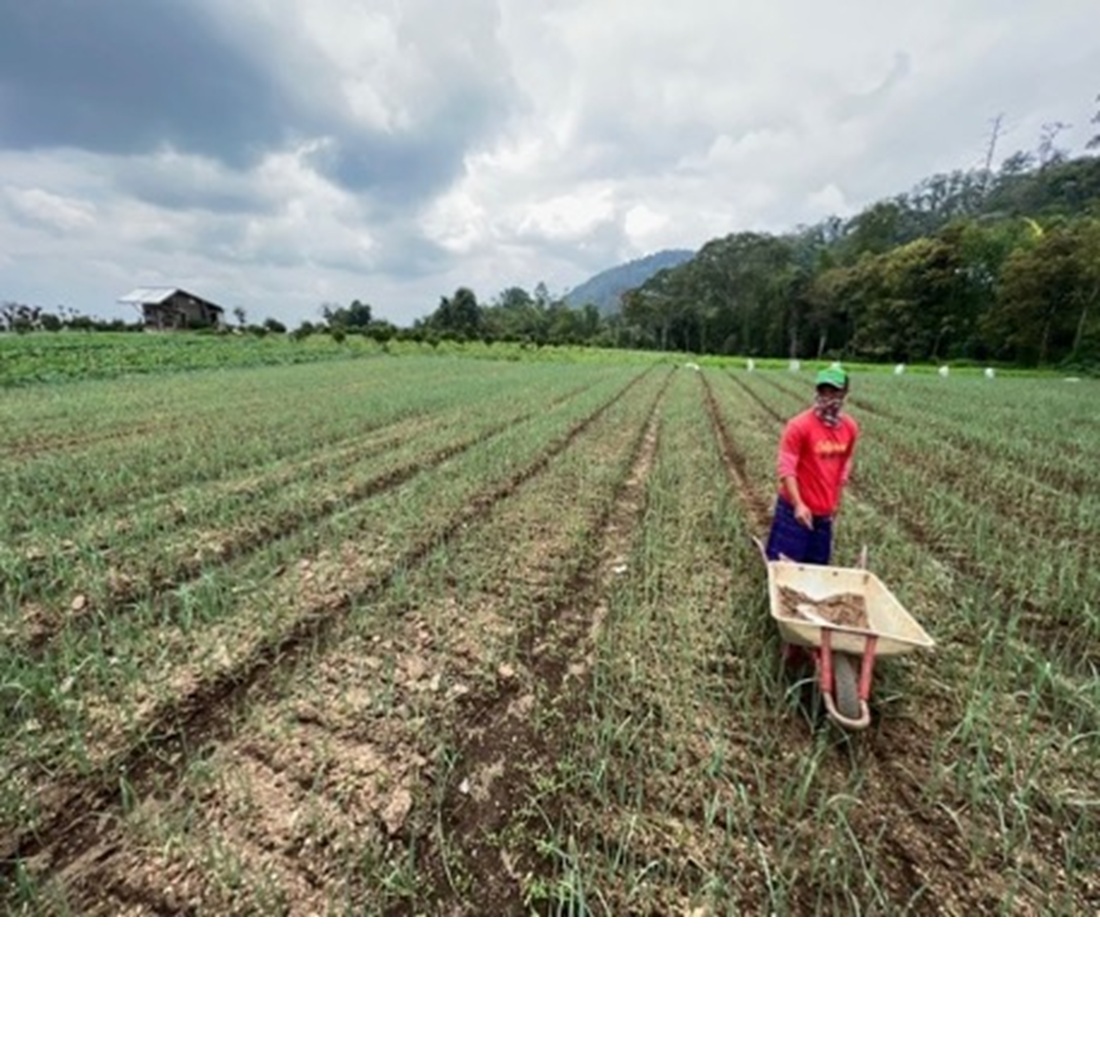
The object of this research is agricultural land in highland areas that have the potential to be planted with garlic. The main problem solved is the difficulty of identifying and selecting optimal land for planting garlic efficiently and objectively, especially in large and geographically complex areas. Special focus is given to data and spatial parameters that affect land welfare. In addition, planting garlic can be a promising business opportunity, especially in areas that have environmental conditions that support its growth. However, garlic production in Indonesia is often unable to meet market demand, resulting in dependence on imports. This is a common problem that can increase the price of garlic on the market. This study aims to increase crop yields and resource utilization efficiency, but also provide adaptive solutions to climate challenges and support national food security by using principal component analysis (PCA) and K-means. Researchers use principal component analysis (PCA) to reduce data dimensions or simplify complex input variables such as altitude, rainfall, temperature, soil type, and others-without losing important information. After that, the K-means clustering algorithm was used to group the areas into several land suitability classes based on the results of the dimension reduction from PCA. The PCA and K-Means methods help in data-based decision making for more efficient agricultural land development. The clustering results can be used by farmers, governments, and agribusiness companies to determine the most suitable locations for planting garlic. The results of the spatial study of garlic cultivation land using PCA and K-means successfully determined spatial land by conducting a classification test with a test accuracy using Inerta of 0.49% and using the Silhouette Score test of 0.89%
References
- Selvia, A., Dharanib, D., Gobikac, T., Harinid, S., Nithya, N. (2021). Onion Yield Prediction Based on Machine Learning. Turkish Journal of Computer and Mathematics Education (TURCOMAT), 12 (2). https://doi.org/10.17762/turcomat.v12i2.1972
- Choi, J., Cho, S., Choi, S., Jung, M., Lim, Y., Lee, E. et al. (2024). Genotype-Driven Phenotype Prediction in Onion Breeding: Machine Learning Models for Enhanced Bulb Weight Selection. Agriculture, 14 (12), 2239. https://doi.org/10.3390/agriculture14122239
- Tori, H., Dyanasari, Kholil, A. Y. (2023). Prospect Analysis of Onion (allium cepa L) Production in Indonesia. Indonesian Journal of Agriculture and Environmental Analytics, 2 (1), 1–14. https://doi.org/10.55927/ijaea.v2i1.2705
- Sugiartini, E., Eris, F. R., Pancaningsih, E., Nurviani, O., Herawati, N. (2021). Studies on Cultivation of Several Varieties of Onion (Allium ascalonicum L.) under Plastic Shade during Rainy Season in Jakarta. IOP Conference Series: Earth and Environmental Science, 715 (1), 012044. https://doi.org/10.1088/1755-1315/715/1/012044
- Utami, I. R. P., Roessali, W., Gayatri, S. (2023). Sustainability Analysis Of Onion Cultivation In Demak District, Central Java Province. Agrisocionomics: Jurnal Sosial Ekonomi Pertanian, 7 (3), 660–670. https://doi.org/10.14710/agrisocionomics.v7i3.17401
- Razali, Nasution, Z., Rahmawaty, Hanum, C. (2023). Effect of Soil Texture on the Productivity of Two Shallot Varieties. Indonesian Journal of Agricultural Research, 6 (01), 43–50. https://doi.org/10.32734/injar.v6i01.8217
- Gomes, J. D. J., Widaryanto, E., Ariffin, Wicaksono, K. P. (2019). The Test of Genotype Adaptation of Several Garlic Varieties on the Highland. OnLine Journal of Biological Sciences, 19 (4), 203–212. https://doi.org/10.3844/ojbsci.2019.203.212
- Mukhibah, D., Sitanggang, I. S., -, A. (2023). Classification of Garlic Land Based on Growth Phase using Convolutional Neural Network. International Journal of Advanced Computer Science and Applications, 14 (6). https://doi.org/10.14569/ijacsa.2023.01406100
- Ugarkovic, A., Oreski, D. (2022). Supervised and Unsupervised Machine Learning Approaches on Class Imbalanced Data. 2022 International Conference on Smart Systems and Technologies (SST), 159–162. https://doi.org/10.1109/sst55530.2022.9954646
- Nurjulaiha, S., Kurniawan, R., Dikananda, A. R., Suprapti, T. (2025). Optimizing Naïve Bayes Algorithm Through Principal Component Analysis To Improve Dengue Fever Patient Classification Model. Journal of Artificial Intelligence and Engineering Applications (JAIEA), 4 (2), 1005–1015. https://doi.org/10.59934/jaiea.v4i2.798
- Abed Mohammed, A., Sumari, P., Attabi, kassem. (2024). Hybrid K-means and Principal Component Analysis (PCA) for Diabetes Prediction. International Journal of Computing and Digital Systems, 15 (1), 1719–1728. https://doi.org/10.12785/ijcds/1501121
- Jansson, N. F., Allen, R. L., Skogsmo, G., Tavakoli, S. (2022). Principal component analysis and K-means clustering as tools during exploration for Zn skarn deposits and industrial carbonates, Sala area, Sweden. Journal of Geochemical Exploration, 233, 106909. https://doi.org/10.1016/j.gexplo.2021.106909
- Rafrin, M., Muh. Agus, Putri Ayu Maharani (2024). IoT-Based Irrigation System Using Machine Learning for Precision Shallot Farming. Jurnal RESTI (Rekayasa Sistem Dan Teknologi Informasi), 8 (2), 216–222. https://doi.org/10.29207/resti.v8i2.5579
- Kalpana, P., Smitha, L., Madhavi, D., Nabi, S. A., Kalpana, G., Kodati, S. (2024). A Smart Irrigation System Using the IoT and Advanced Machine Learning Model. International Journal of Computational and Experimental Science and Engineering, 10 (4). https://doi.org/10.22399/ijcesen.526
- Wulandari, E., Al Hakim, R. R., Saputri, L. D., Syahdiar, I. A., Pangestu, A., Jaenul, A. (2021). Mr. Rytem, An IoT-Based Smart Irrigation System Application Design for Cultivation Engineering of Allium sativum Garlic in Lowland Conditions. Prosiding Seminar Nasional Teknik Elektro, Sistem Informasi, dan Teknik Informatika. Available at: https://www.researchgate.net/publication/351270518_Mr_Rytem_An_IoT-Based_Smart_Irrigation_System_Application_Design_for_Cultivation_Engineering_of_Allium_sativum_Garlic_in_Lowland_Conditions
- Liu, J., Yuan, J., Cui, J., Liu, Y., Liu, X. (2022). Contour Resampling-Based Garlic Clove Bud Orientation Recognition for High-Speed Precision Seeding. Agriculture, 12 (9), 1334. https://doi.org/10.3390/agriculture12091334
- Sitanggang, I. S., Nurkholis, A., Annisa, Agmalaro, M. A. (2019). Garlic Land Suitability System based on Spatial Decision Tree. Proceedings of the International Conferences on Information System and Technology, 206–210. https://doi.org/10.5220/0009908002060210
- Jiang, Y., Wang, T., Zhao, H., Shao, X., Cui, W., Huang, K., Li, L. (2019). Big Data Analysis Applied in Agricultural Planting Layout Optimization. Applied Engineering in Agriculture, 35 (2), 147–162. https://doi.org/10.13031/aea.12790
- Rathor, A. S., Choudhury, S., Sharma, A., Nautiyal, P., Shah, G. (2024). Empowering vertical farming through IoT and AI-Driven technologies: A comprehensive review. Heliyon, 10 (15), e34998. https://doi.org/10.1016/j.heliyon.2024.e34998
- Mohammed, M. A., Akawee, M. M., Saleh, Z. H., Hasan, R. A., Ali, A. H., Sutikno, T. (2023). The effectiveness of big data classification control based on principal component analysis. Bulletin of Electrical Engineering and Informatics, 12 (1), 427–434. https://doi.org/10.11591/eei.v12i1.4405
- Iliyas, I. I., Boukari, S., Gital, A. Y. (2024). A Proposed Multilayer Perceptron Model and Kernel Principal Analysis Component for the Prediction of Chronic Kidney Disease. International Journal of Artificial Intelligence, 11 (2), 99–113. https://doi.org/10.36079/lamintang.ijai-01102.783
- Ahmad, I. A., Jawad Al-Nayar, M. M., Mahmood, A. M. (2023). A comparative study of Gaussian mixture algorithm and K-means algorithm for efficient energy clustering in MWSN. Bulletin of Electrical Engineering and Informatics, 12 (6), 3727–3735. https://doi.org/10.11591/eei.v12i6.5707
- Oti, E. U., Olusola, M. O., Eze, F. C., Enogwe, S. U. (2021). Comprehensive Review of K-Means Clustering Algorithms. International Journal of Advances in Scientific Research and Engineering, 07 (08), 64–69. https://doi.org/10.31695/ijasre.2021.34050
- Guslendra, G., Defit, S., Bastola, R. (2021). K-Means and K-NN Methods For Determining Student Interest. International Journal of Artificial Intelligence Research, 6 (1). https://doi.org/10.29099/ijair.v6i1.222
- Astorino, A., Gorgone, E., Gaudioso, M., Pallaschke, D. (2011). Data preprocessing in semi-supervised SVM classification. Optimization, 60 (1-2), 143–151. https://doi.org/10.1080/02331931003692557
- Sami, O., Elsheikh, Y., Almasalha, F. (2021). The Role of Data Pre-processing Techniques in Improving Machine Learning Accuracy for Predicting Coronary Heart Disease. International Journal of Advanced Computer Science and Applications, 12 (6). https://doi.org/10.14569/ijacsa.2021.0120695
- Park, H.-J., Koo, Y.-S., Yang, H.-Y., Han, Y.-S., Nam, C.-S. (2024). Study on Data Preprocessing for Machine Learning Based on Semiconductor Manufacturing Processes. Sensors, 24 (17), 5461. https://doi.org/10.3390/s24175461
Downloads
Published
How to Cite
Issue
Section
License
Copyright (c) 2025 Desilia Selvida, Annisa Fadhillah Pulungan, Ade Sarah Huzaifah

This work is licensed under a Creative Commons Attribution 4.0 International License.
The consolidation and conditions for the transfer of copyright (identification of authorship) is carried out in the License Agreement. In particular, the authors reserve the right to the authorship of their manuscript and transfer the first publication of this work to the journal under the terms of the Creative Commons CC BY license. At the same time, they have the right to conclude on their own additional agreements concerning the non-exclusive distribution of the work in the form in which it was published by this journal, but provided that the link to the first publication of the article in this journal is preserved.
A license agreement is a document in which the author warrants that he/she owns all copyright for the work (manuscript, article, etc.).
The authors, signing the License Agreement with TECHNOLOGY CENTER PC, have all rights to the further use of their work, provided that they link to our edition in which the work was published.
According to the terms of the License Agreement, the Publisher TECHNOLOGY CENTER PC does not take away your copyrights and receives permission from the authors to use and dissemination of the publication through the world's scientific resources (own electronic resources, scientometric databases, repositories, libraries, etc.).
In the absence of a signed License Agreement or in the absence of this agreement of identifiers allowing to identify the identity of the author, the editors have no right to work with the manuscript.
It is important to remember that there is another type of agreement between authors and publishers – when copyright is transferred from the authors to the publisher. In this case, the authors lose ownership of their work and may not use it in any way.





