Визначення впливу мікропрофілю сільських доріг на довговічність кузова автобуса при перевезенні пасажирів
DOI:
https://doi.org/10.15587/1729-4061.2025.325773Ключові слова:
довговічність кузова автобуса, імітаційне моделювання, пасажир, сільські дороги, мікропрофіль дорогиАнотація
Об’єкт дослідження – довговічність кузова автобуса під час перевезення пасажирів по сільським дорогам.
Згідно європейської класифікації, загальна протяжність доріг України, що відповідає першій категорії, не перевищує 5%. Тобто всі інші 95% доріг мають рівень якості, що не відповідає нормативним умовам експлуатації. Зокрема в сільській місцевості експлуатація автобусів здійснюється як по зношеному асфальтно-бетонному покриттю, так і по ґрунтовим та гравійним дорогам. Такі умови експлуатації додатково призводять до інтенсивного зношування автобусів та суттєво погіршують довговічність їх кузовів. Проблему щодо визначення впливу зношених та ґрунтових доріг на довговічність кузова автобуса при перевезенні пасажирів у сільській місцевості дозволяє вирішити процедура оцінювання довговічності, що запропонована у даній статті.
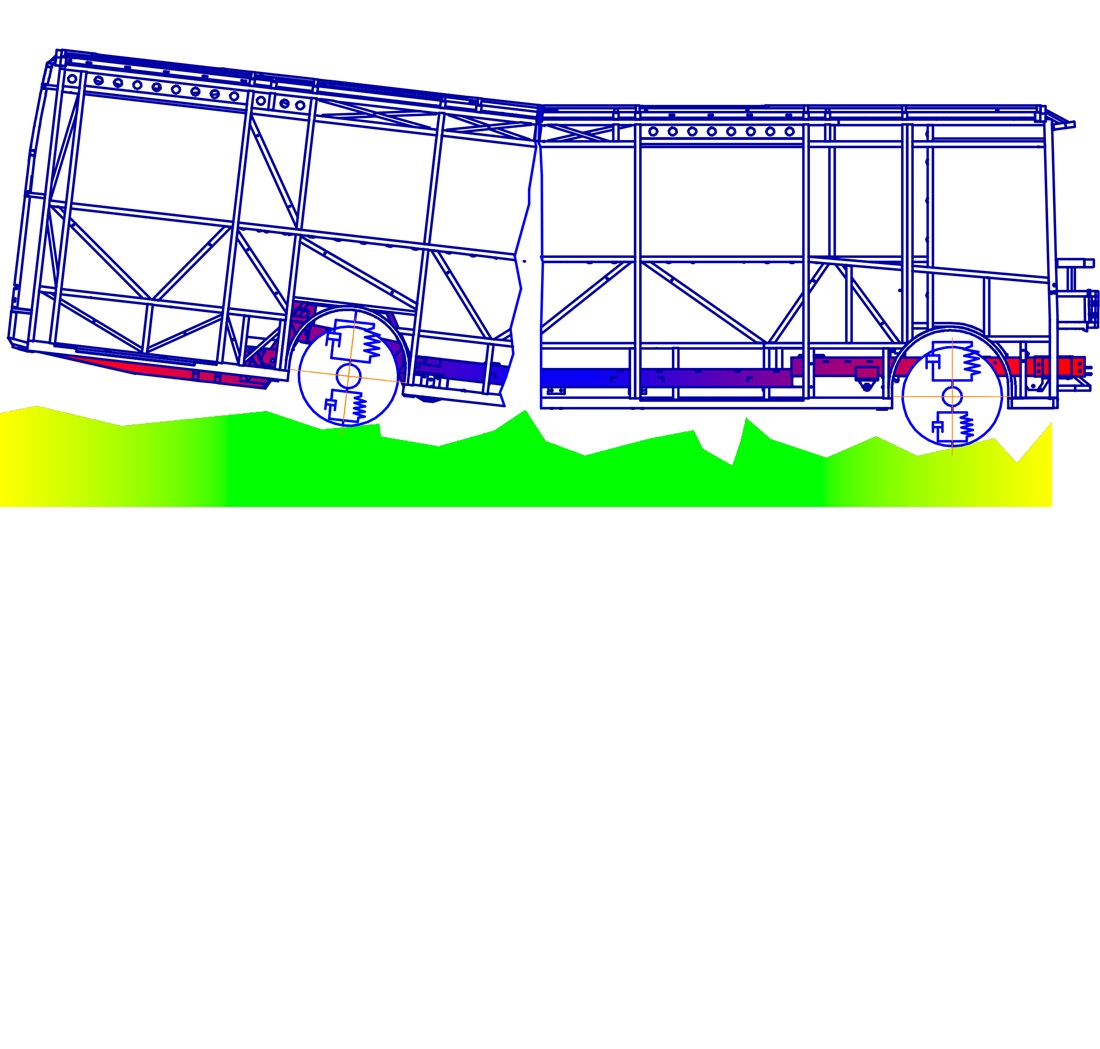
В роботі наведено закономірності, які дозволяють прогнозувати деградацію матеріалу кузова автобуса, що впливають на довговічність кузова. Обґрунтовано та наведено чинники впливу при експлуатації автобусів по сільських маршрутах. В результаті моделювання показано, що при експлуатації автобусів по сільських дорогах тріщини каркасу основи кузова виникають при пробігах, що менші у 3,8 – 13,1 раз ніж при нормативно допустимих умовах експлуатації. Запропонована процедура оцінювання довговічності кузова автобуса при перевезенні пасажирів по сільських дорогах дозволяють передбачити погіршення фізико-механічних властивостей елементів каркасу кузова автобуса та вжити заходів на етапі проєктування щодо підвищення їх надійності та довговічності
Посилання
- Regulation No 66 of the Economic Commission for Europe of the United Nations (UN/ECE) – Uniform provisions concerning the approval of large passenger vehicles with regard to the strength of their superstructure. Available at: https://eur-lex.europa.eu/eli/reg/2011/66(2)/oj
- Ruban, D., Kraynyk, L., Ruban, H., Hrubel, M., Duzhyi, R., Babaryha, A. (2022). Development of technological principles of technical control of bus bodies during operation based on passive safety conditions. Eastern-European Journal of Enterprise Technologies, 6 (1 (120)), 91–100. https://doi.org/10.15587/1729-4061.2022.268178
- Ruban, D., Kraynyk, L., Ruban, H., Sosyk, A., Shcherbyna, A., Dudarenko, O., Artyukh, A. (2021). Forecasting the durability of public transport bus bodies depending on operating conditions. Eastern-European Journal of Enterprise Technologies, 4 (1 (112)), 26–33. https://doi.org/10.15587/1729-4061.2021.238171
- Ruban, D., Kraynyk, L. (2017). Research of change of structure of material longerons to framework of basket of bus in the conditions of exploitation. Suchasni tekhnolohiyi v mashynobuduvanni ta transporti, 2 (9), 139–143. Available at: http://nbuv.gov.ua/UJRN/ctmbt_2017_2_23
- Ruban, D., Kraynyk, L. (2018). Methodology of predictive estimation of lifetime buses. Suchasni tekhnolohiyi v mashynobuduvanni ta transporti, 2 (11), 117–121. Available at: http://nbuv.gov.ua/UJRN/ctmbt_2018_2_22
- Mitschke, M., Wallentowitz, H. (2014). Dynamik der Kraftfahrzeuge. Springer-Verlag, 919. https://doi.org/10.1007/978-3-658-05068-9
- Farahani, B. V., Ramos, N. V., Moreira, P. M. G. P., Cunha, R., Costa, A., Maia, R., Rodrigues, R. M. (2022). Passive Safety Solutions on Transit Buses: Experimental and Numerical Analyses. Procedia Structural Integrity, 37, 668–675. https://doi.org/10.1016/j.prostr.2022.01.136
- Boutar, Y., Naïmi, S., Mezlini, S., Carbas, R. J. C., da Silva, L. F. M., Ben Sik Ali, M. (2021). Cyclic fatigue testing: Assessment of polyurethane adhesive joints’ durability for bus structures’ aluminium assembly. Journal of Advanced Joining Processes, 3, 100053. https://doi.org/10.1016/j.jajp.2021.100053
- Kepka, M., Kepka, M., Václavík, J., Chvojan, J. (2019). Fatigue life of a bus structure in normal operation and in accelerated testing on special tracks. Procedia Structural Integrity, 17, 44–50. https://doi.org/10.1016/j.prostr.2019.08.007
- Kepka, M., Kepka, M., Dzugan, J., Konopik, P. (2019). Practical notes for assessing the fatigue life of bodyworks of buses and trolleybuses. Procedia Structural Integrity, 19, 595–603. https://doi.org/10.1016/j.prostr.2019.12.064
- Kepka, M., Kepka, M. (2020). Accelerated fatigue testing on special tracks as new part of methodology for bus/trolleybus development. Engineering Failure Analysis, 118, 104786. https://doi.org/10.1016/j.engfailanal.2020.104786
- Sabadka, D., Molnar, V., Fedorko, G., Knezo, D. (2023). Research on failure resistance of vehicle’s skeletons. Engineering Failure Analysis, 144, 106950. https://doi.org/10.1016/j.engfailanal.2022.106950
- Dassault Systèmes. Matlab Corporation. Available at: https://www.matlab.com/
- Brovtsyn, Y. N. (2015). Modeling of surface microprofile of fields and roads. Sbornik nauchnyh trudov. IAEP, 86, 59–68.
- Ruban, D., Lanets, O., Kraynyk, L., Kovalyshyn, S., Ruban, H., Madleňák, R., Maciaszczyk, M. (2024). Predictive Assessment of Bus Body Life in the Matlab Simulink Software Environment. Communications - Scientific Letters of the University of Zilina, 26 (1), B22–B30. https://doi.org/10.26552/com.c.2024.003
- Ruban, D. P. (2020). Mathematical Model of Forecasting Durability of Bus Bodies and Checking it for Adequacy. Visnyk of Vinnytsia Politechnical Institute, 150 (3), 81–89. https://doi.org/10.31649/1997-9266-2020-150-3-81-89
- Troschenko, V. T., Sosnovskiy, L. A. (1987). Soprotivlenie ustalosti metallov i splavov. Ch. 1. Kyiv: Naukova dumka, 504.
##submission.downloads##
Опубліковано
Як цитувати
Номер
Розділ
Ліцензія
Авторське право (c) 2025 Dmytro Ruban, Lybomyr Krainyk, Hanna Ruban, Stepan Khimka, Oleg Sukach, Vladyslav Khotunov, Viktor Shevchuk, Ihor Dufanets, Оlexandr Artyukh

Ця робота ліцензується відповідно до Creative Commons Attribution 4.0 International License.
Закріплення та умови передачі авторських прав (ідентифікація авторства) здійснюється у Ліцензійному договорі. Зокрема, автори залишають за собою право на авторство свого рукопису та передають журналу право першої публікації цієї роботи на умовах ліцензії Creative Commons CC BY. При цьому вони мають право укладати самостійно додаткові угоди, що стосуються неексклюзивного поширення роботи у тому вигляді, в якому вона була опублікована цим журналом, але за умови збереження посилання на першу публікацію статті в цьому журналі.
Ліцензійний договір – це документ, в якому автор гарантує, що володіє усіма авторськими правами на твір (рукопис, статтю, тощо).
Автори, підписуючи Ліцензійний договір з ПП «ТЕХНОЛОГІЧНИЙ ЦЕНТР», мають усі права на подальше використання свого твору за умови посилання на наше видання, в якому твір опублікований. Відповідно до умов Ліцензійного договору, Видавець ПП «ТЕХНОЛОГІЧНИЙ ЦЕНТР» не забирає ваші авторські права та отримує від авторів дозвіл на використання та розповсюдження публікації через світові наукові ресурси (власні електронні ресурси, наукометричні бази даних, репозитарії, бібліотеки тощо).
За відсутності підписаного Ліцензійного договору або за відсутністю вказаних в цьому договорі ідентифікаторів, що дають змогу ідентифікувати особу автора, редакція не має права працювати з рукописом.
Важливо пам’ятати, що існує і інший тип угоди між авторами та видавцями – коли авторські права передаються від авторів до видавця. В такому разі автори втрачають права власності на свій твір та не можуть його використовувати в будь-який спосіб.