Identifying the factors affecting the extraction of phenolic compounds in wine production
DOI:
https://doi.org/10.15587/1729-4061.2026.354826Keywords:
mash temperature, maceration, polyphenols, polyphenol extraction, antioxidants, tannins, catechins, inert gas, anthocyaninsAbstract
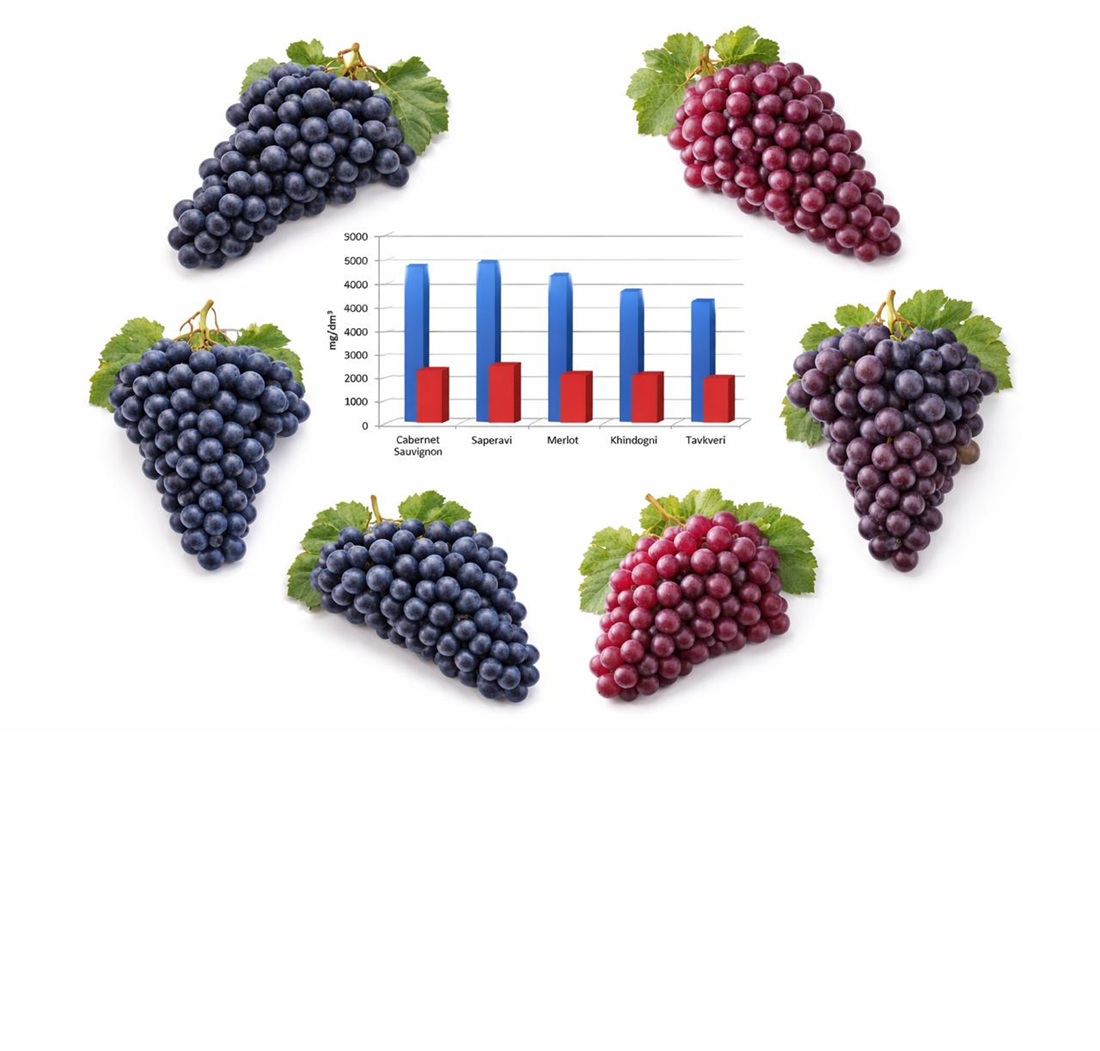
The object of the study is red grape varieties rich in phenolic compounds, the wine samples obtained from them, and the physicochemical and mechanical means used during the extraction process. Although several studies have been conducted on the extraction of phenolic compounds into juice and wine, the impact of mechanical methods-based on maceration for different durations, alcoholic extraction at various degrees of darkness, thermal treatment, enzyme preparations, and agitation-on extraction, as well as the effect of different storage conditions on the total content of phenolic compounds and anthocyanins, has not been studied.
In the case of the Khindogni variety, during alcoholic treatment of the pomace up to 6% alcohol, phenolic compounds were not distinctly perceptible. The experimental wine material showed higher color intensity in pomace treated with 10% and 18% alcohol than the control. Comparison of different methods (thermal, enzyme preparations, etc.) indicated that enzymatic treatment (Trenol Color DF, dose 2.0 mg/dm3) provided more efficient extraction. Agitation increased the extraction of phenolic compounds by more than 1.24 times. During 6 months of storage, the mass concentration of phenolic compounds in Syrah wine material decreased by 21.3%, and anthocyanins decreased by 16.4%.
The problem of producing red wines rich in phenolic compounds and anthocyanins is addressed through the application of physicochemical and mechanical methods, including alcoholic extraction of pomace for varying maceration periods, thermal treatment, enzyme and agitation effects, and storage under different conditions. The obtained results can be applied in winemaking operations.
References
- Spinei, M., Oroian, M. (2022). The Influence of Extraction Conditions on the Yield and Physico-Chemical Parameters of Pectin from Grape Pomace. Polymers, 14 (7), 1378. https://doi.org/10.3390/polym14071378
- Errichiello, F., Cucciniello, R., Tomasini, M., Falivene, L., Gambuti, A., Cassiano, C., Forino, M. (2024). Efficient and selective extraction of oleanolic acid from grape pomace with dimethyl carbonate. Green Chemistry, 26 (19), 10177–10188. https://doi.org/10.1039/d4gc03624g
- Wiedemair, V., Zlöbl, D., Bach, K. (2023). Application of a Designed Mixed Model Approach for Antioxidant Extraction from Pomace. Food Analytical Methods, 16 (8), 1347–1357. https://doi.org/10.1007/s12161-023-02507-3
- Boudebouz, A., Hermoso, J.-F., Martí, E., Ninot, A., Boqué, R., Mestres, M. et al. (2024). Exploring the relevance of the type of horizontal separator to optimize the extraction efficacy for the Arbequina variety. Frontiers in Plant Science, 15. https://doi.org/10.3389/fpls.2024.1395701
- Fidriyanto, R., Singh, B. P., Manju, K. M., Widyastuti, Y., Goel, G. (2023). Multivariate analysis of structural and functional properties of fibres from apple pomace using different extraction methods. Food Production, Processing and Nutrition, 5 (1). https://doi.org/10.1186/s43014-022-00119-8
- Cendrowski, A., Studnicki, M., Kalisz, S. (2024). Impact of Different Solvents and Temperatures on the Extraction of Bioactive Compounds from Rose Fruits (Rosa rugosa) Pomace. Applied Sciences, 14 (2), 691. https://doi.org/10.3390/app14020691
- Wang, C., You, Y., Huang, W., Zhan, J. (2024). The high-value and sustainable utilization of grape pomace: A review. Food Chemistry: X, 24, 101845. https://doi.org/10.1016/j.fochx.2024.101845
- Zhao, Y., Liu, D., Zhang, J., Shen, J., Cao, J., Gu, H. et al. (2024). Improving Soluble Phenolic Profile and Antioxidant Activity of Grape Pomace Seeds through Fungal Solid-State Fermentation. Foods, 13 (8), 1158. https://doi.org/10.3390/foods13081158
- Ferreira-Santos, P., Nobre, C., Rodrigues, R. M., Genisheva, Z., Botelho, C., Teixeira, J. A. (2024). Extraction of phenolic compounds from grape pomace using ohmic heating: Chemical composition, bioactivity and bioaccessibility. Food Chemistry, 436, 137780. https://doi.org/10.1016/j.foodchem.2023.137780
- Silva, J. T. do P., Borges, M. H., de Souza, C. A. C., Fávaro-Trindade, C. S., Sobral, P. J. do A., de Oliveira, A. L., Martelli-Tosi, M. (2024). Grape Pomace Rich-Phenolics and Anthocyanins Extract: Production by Pressurized Liquid Extraction in Intermittent Process and Encapsulation by Spray-Drying. Foods, 13 (2), 279. https://doi.org/10.3390/foods13020279
- Fraterrigo Garofalo, S., Demichelis, F., Peletti, V., Picco, L., Tommasi, T., Fino, D. (2024). Comparative study of polyphenol extraction using physical techniques and water as a solvent: a sustainable approach for the valorization of apple pomace. Environmental Science and Pollution Research, 32 (48), 27915–27928. https://doi.org/10.1007/s11356-024-34637-4
- Plaza, A., Rodríguez, L., Concha-Meyer, A. A., Cabezas, R., Zurob, E., Merlet, G., Palomo, I., Fuentes, E. (2023). Effects of Extraction Methods on Phenolic Content, Antioxidant and Antiplatelet Activities of Tomato Pomace Extracts. Plants, 12 (5), 1188. https://doi.org/10.3390/plants12051188
- Sabahi, S., Abbasi, A., Mortazavi, S. A. (2024). Phenolic components from carrot (Daucus carota L.) pomace: Optimizing the extraction and assessing its potential antioxidant and antimicrobial activities. Heliyon, 10 (17), e36971. https://doi.org/10.1016/j.heliyon.2024.e36971
- de Andrade Bulos, R. B., de Souza, C. O., de Quadros, C. P., Leme, O. A. D., Corrêa, L. C., Oliveira, M. B. P. P. et al. (2025). Impact of Drying and Storage Conditions on the Bioactive and Nutritional Properties of Malolactic Wine Lees. Foods, 14 (22), 3852. https://doi.org/10.3390/foods14223852
- Ye, Z., Shi, J., Harrison, R., Hider, R., Bekhit, A. E.-D. A. (2023). Studies on the Effect of Oxidation on Bioactivity of Phenolics and Wine Lees Extracts. Antioxidants, 12 (4), 931. https://doi.org/10.3390/antiox12040931
- Athanasiou, P. E., Patila, M., Fotiadou, R., Chatzikonstantinou, A. V., Stamatis, H. (2024). Valorization of Wine Lees: Assessment of Antioxidant, Antimicrobial and Enzyme Inhibitory Activity of Wine Lees Extract and Incorporation in Chitosan Films. Waste and Biomass Valorization, 15 (10), 5657–5672. https://doi.org/10.1007/s12649-024-02524-1
- Azevedo, J., Pinto, J., Teixeira, N., Oliveira, J., Cabral, M., Guedes de Pinho, P. et al. (2022). The Impact of Storage Conditions and Bottle Orientation on the Evolution of Phenolic and Volatile Compounds of Vintage Port Wine. Foods, 11 (18), 2770. https://doi.org/10.3390/foods11182770
- Garcia, L., Martet, E., Suc, L., Garcia, F., Saucier, C. (2024). Analysis of targeted phenolic ageing markers in Syrah red wines during bottle ageing: Influence of cork oxygen transfer rate. Food Chemistry, 443, 138491. https://doi.org/10.1016/j.foodchem.2024.138491
- Pichler, A., Ivić, I., Babić, J., Mesić, J., Ćorković, I., Marković, T., Kopjar, M. (2024). Phenolic Profile, Antioxidant Activity, Chemical Composition, and Elements of Merlot Wine Stored in Toasted Oak Barrels. Foods, 13 (24), 4100. https://doi.org/10.3390/foods13244100
- Fataliyev, H., Gadimova, N., Huseynova, S., Isgandarova, S., Heydarov, E., Mammadova, S. (2024). Enrichment of functional drinks using grape pomace extracts, analysis of physicochemical indicators. Eastern-European Journal of Enterprise Technologies, 3 (11 (129)), 37–45. https://doi.org/10.15587/1729-4061.2024.307039
- Fataliyev, H., Isgandarova, S., Gadimova, N., Mammadova, A., Ismailov, M., Mammadzade, M. (2024). Identification of the effect of ripening conditions on the yield of rose hips and their processed products. Eastern-European Journal of Enterprise Technologies, 4 (11 (130)), 26–35. https://doi.org/10.15587/1729-4061.2024.309597
- Fataliyev, H., Mammadzade, M., Ismayılov, M., Gadimova, N., Mammadova, N., Musayev, T. (2025). Identifying the factors affecting the preparation of wine material from cherry fruits. Eastern-European Journal of Enterprise Technologies, 2 (11 (134)), 77–88. https://doi.org/10.15587/1729-4061.2025.326471
- Fataliyev, H., Lezgiyev, Y., Aghazade, Y., Gadimova, N., Heydarov, E., Ismailov, M. (2024). Identifying the influence of various technological techniques on the indicators of the composition of bunches and wine samples of the madras grape variety. Eastern-European Journal of Enterprise Technologies, 6 (11 (132)), 50–62. https://doi.org/10.15587/1729-4061.2024.318532
- Fataliyev, H. K. (2012). Winemaking practicum. Baku: Elm, 327. Available at: https://anl.az/el/Kitab/2013/Azf-272480.pdf
- Fataliyev, H. K. (2011). Wine technology. Baku: Elm, 586. Available at: https://anl.az/el/264414.pdf
- Sheskin, D. J. (2020). Handbook of Parametric and Nonparametric Statistical Procedures. Chapman and Hall/CRC. https://doi.org/10.1201/9780429186196
- Gadimova, N., Fataliyev, H., Heydarov, E., Lezgiyev, Y., Isgandarova, S. (2023). Development of a model and optimization of the interaction of factors in the grain malting process and its application in the production of functional beverages. Eastern-European Journal of Enterprise Technologies, 5 (11 (125)), 43–56. https://doi.org/10.15587/1729-4061.2023.289421
Downloads
Published
How to Cite
Issue
Section
License
Copyright (c) 2026 Hasil Fataliyev, Elnur Heydarov, Mehman Ismayilov, Natavan Gadimova, Konul Baloghlanova, Shabnam Fataliyeva

This work is licensed under a Creative Commons Attribution 4.0 International License.
The consolidation and conditions for the transfer of copyright (identification of authorship) is carried out in the License Agreement. In particular, the authors reserve the right to the authorship of their manuscript and transfer the first publication of this work to the journal under the terms of the Creative Commons CC BY license. At the same time, they have the right to conclude on their own additional agreements concerning the non-exclusive distribution of the work in the form in which it was published by this journal, but provided that the link to the first publication of the article in this journal is preserved.
A license agreement is a document in which the author warrants that he/she owns all copyright for the work (manuscript, article, etc.).
The authors, signing the License Agreement with TECHNOLOGY CENTER PC, have all rights to the further use of their work, provided that they link to our edition in which the work was published.
According to the terms of the License Agreement, the Publisher TECHNOLOGY CENTER PC does not take away your copyrights and receives permission from the authors to use and dissemination of the publication through the world's scientific resources (own electronic resources, scientometric databases, repositories, libraries, etc.).
In the absence of a signed License Agreement or in the absence of this agreement of identifiers allowing to identify the identity of the author, the editors have no right to work with the manuscript.
It is important to remember that there is another type of agreement between authors and publishers – when copyright is transferred from the authors to the publisher. In this case, the authors lose ownership of their work and may not use it in any way.








