Investigation of patterns associated with the effect of soil and climatic conditions at the absheron peninsula on the quality indicators of introduced grape varieties and wine samples prepared from them
DOI:
https://doi.org/10.15587/1729-4061.2026.358676Keywords:
Absheron Peninsula, terroir, grape varieties, grape ripening, wine, quality indicatorsAbstract
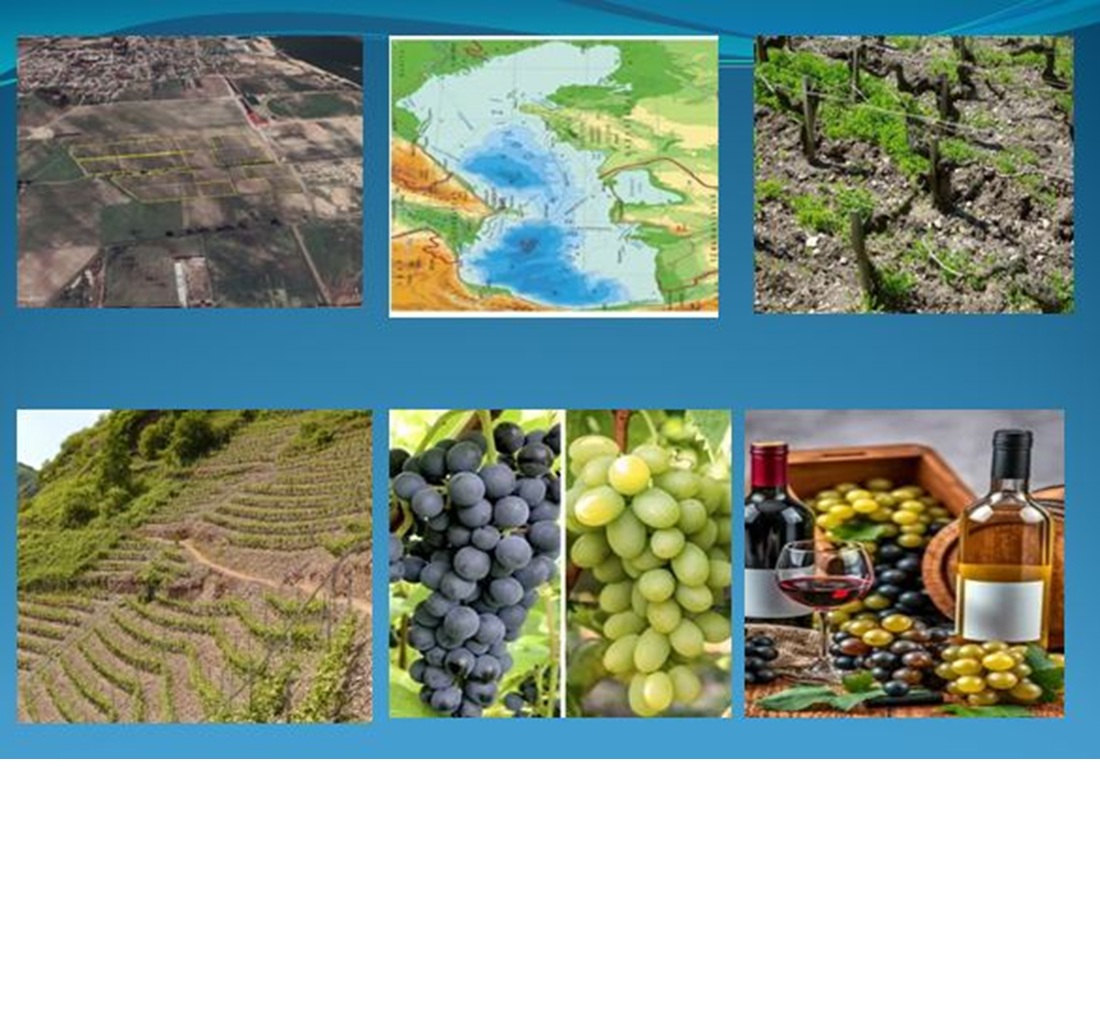
This study examines wine samples made from introduced grape varieties grown on the Absheron Peninsula. The influence of the specific marine terroir on the ripening processes of introduced grape varieties and the formation of their biochemical composition remains poorly understood under the conditions of the Absheron Peninsula. Systematic data on the sugar-acid balance, phenolic complex, and technological parameters of wines produced from these varieties under local conditions are lacking.
Therefore, a comprehensive assessment of the ripening dynamics of grape varieties cultivated in the terroir of the Absheron Peninsula was conducted; the quality parameters of wines produced from these varieties were examined. Parameters such as mass concentration of sugars, titratable acidity, and pH were determined in the grape berries. Wine samples were analyzed for ethanol by volume, residual sugar, titratable and volatile acids, extract, total and free sulfur dioxide, total phenolic compounds, anthocyanins, and tannins.
Marine factors, which shape the specific terroir, have a significant impact on the biochemical composition of grapes and the quality of wine. The highest mass concentration of sugars was found for Cabernet Sauvignon (23.2 g/100 cm3), while the highest titratable acidity was noted in Rkatsiteli (4.8 g/L). The interaction of topography, sea winds, solar radiation, and temperature played a key role in shaping the sugar-acid balance of grapes. The marine terroir creates favorable environmental conditions for the production of high-quality, competitive industrial grapes, confirming the industry's potential for sustainable development in the region.
References
- Mercader, R. J., Isaacs, R. (2004). Phenophase-Dependent Growth Responses to Foliar Injury inVitis labruscanaBailey var. Niagara during Vineyard Establishment. American Journal of Enology and Viticulture, 55 (1), 1–6. https://doi.org/10.5344/ajev.2004.55.1.1
- Smart, R., Robinson, M. (1991). Sunlight into wine: A handbook for wine grape Canopy Arrangement. Winetitles. Available at: https://www.amazon.com/Sunlight-Handbook-Grape-Canopy-Arrangement/dp/1875130101
- Jones, G. V., White, M. A., Cooper, O. R., Storchmann, K. (2005). Climate Change and Global Wine Quality. Climatic Change, 73 (3), 319–343. https://doi.org/10.1007/s10584-005-4704-2
- Coombe, B. G., Mccarthy, M. G. (2000). Dynamics of grape berry growth and physiology of ripening. Australian Journal of Grape and Wine Research, 6 (2), 131–135. https://doi.org/10.1111/j.1755-0238.2000.tb00171.x
- Keller, M. (2010). The science of grapevines: Anatomy and physiology. Academic Press. https://doi.org/10.1016/c2009-0-01866-2
- White, P. J. (2012). Ion Uptake Mechanisms of Individual Cells and Roots. Marschner’s Mineral Nutrition of Higher Plants, 7–47. https://doi.org/10.1016/b978-0-08-057187-4.50008-4
- Teixeira, A., Eiras-Dias, J., Castellarin, S., Gerós, H. (2013). Berry Phenolics of Grapevine under Challenging Environments. International Journal of Molecular Sciences, 14 (9), 18711–18739. https://doi.org/10.3390/ijms140918711
- Waterhouse, A. L. (2002). Wine Phenolics. Annals of the New York Academy of Sciences, 957 (1), 21–36. https://doi.org/10.1111/j.1749-6632.2002.tb02903.x
- Huseynov, M. A., Aghayev, U. J. (2024). Qualitative parameters of grapevine (Vitis vinifera L.) Cultivars grown in the Mountainous Shirvan Region of Azerbaijan. SABRAO Journal of Breeding and Genetics, 56 (5), 1994–2003. https://doi.org/10.54910/sabrao2024.56.5.22
- Asadullayev, R. A., Salimov, V. S., Huseynov, M. A. (2024). Grapes with fungal infection during long-term storage. SABRAO Journal of Breeding and Genetics, 56 (5), 2026–2032. https://doi.org/10.54910/sabrao2024.56.5.25
- Huseynov, M., Mirzoev, G., Sadigov, R., Bilgin, A (2026). Genetic diversity and distribution of macrozoobenthos species in South Caspian Sea sector of Azerbaijan. SABRAO Journal of Breeding and Genetics, 58 (1), 171–180. https://doi.org/10.54910/sabrao2026.58.1.16
- Van Leeuwen, C., Trégoat, O., Choné, X., Bois, B., Pernet, D., Gaudillère, J.-P. (2009). Vine water status is a key factor in grape ripening and vintage quality for red Bordeaux wine. How can it be assessed for vineyard management purposes? OENO One, 43 (3), 121. https://doi.org/10.20870/oeno-one.2009.43.3.798
- Bramley, R. G. V., Ouzman, J., Boss, P. K. (2011). Variation in vine vigour, grape yield and vineyard soils and topography as indicators of variation in the chemical composition of grapes, wine and wine sensory attributes. Australian Journal of Grape and Wine Research, 17 (2), 217–229. https://doi.org/10.1111/j.1755-0238.2011.00136.x
- Downey, M. O., Dokoozlian, N. K., Krstic, M. P. (2006). Cultural Practice and Environmental Impacts on the Flavonoid Composition of Grapes and Wine: A Review of Recent Research. American Journal of Enology and Viticulture, 57 (3), 257–268. https://doi.org/10.5344/ajev.2006.57.3.257
- Spayd, S. E., Tarara, J. M., Mee, D. L., Ferguson, J. C. (2002). Separation of Sunlight and Temperature Effects on the Composition ofVitis viniferacv. Merlot Berries. American Journal of Enology and Viticulture, 53 (3), 171–182. https://doi.org/10.5344/ajev.2002.53.3.171
- Shukurova, V., Huseynov, M., Salimov, V., Gasimova, A. (2026). Establishing the patterns of influence of environmental conditions on the biochemical indicators of grape must and the wine produced from it. Technology Audit and Production Reserves, 1 (3 (87)), 29–37. https://doi.org/10.15587/2706-5448.2026.353015
- Sadigov, R. A., Mirzayev, G. S., Gurbanova, F. H., Muhammad, D. (2026). Determination of diagnostic indicators in alluvial meadow-forest soils formed in the shamkirchay reservoir basin. SABRAO Journal of Breeding and Genetics, 58 (1), 463–473. https://doi.org/10.54910/sabrao2026.58.1.43
- Jackson, R. S. (2008). Wine science: Principles and applications. Academic Press. https://doi.org/10.1016/b978-0-12-373646-8.x5001-x
- Weil, R. R., Brady, N. C. (2017). The nature and properties of soils. Pearson. Available at: https://www.researchgate.net/publication/301200878_The_Nature_and_Properties_of_Soils_15th_edition
- Jackson, R. S. (2014). Wine science: Principles and applications. Academic Press.
- Marschner, P. (Ed.) (2012). Marschner’s mineral nutrition of higher plants. Academic Press. https://doi.org/10.1016/c2009-0-63043-9
- Kok, D., Bahar, E., Korkutal, I., Celik, S. (2004). From precision viticulture standpoint some technological progresses. Bulg. J. Agric. Sci., 10, 43–46. Available at: http://www.agrojournal.org/10/01-08.htm
- Suarez, D. L. (2011). Irrigation Water Quality Assessments. Agricultural Salinity Assessment and Management, 343–370. https://doi.org/10.1061/9780784411698.ch11
- Ayers, R. S., Westcot, D. W. (1989). Water quality for agriculture. FAO Irrigation and Drainage Paper, 29, 174. Available at: https://www.fao.org/4/t0234e/T0234E00.htm
- Aurand, J. M. (2017). Determination of the 13C/C12 isotope ratios of glucose, fructose, glycerol and ethanol in products of vitivinicultural origin by high-performance liquid chromatography coupled to isotope ratio mass spectrometry. Resolution OIV-OENO 479-2017. OIV. Available at: https://www.oiv.int/public/medias/5363/oiv-oeno-479-2017-en.pdf
- Information of meteorological stations in 2024. Average monthly air temperature, in centigrade. Available at: https://stat.gov.az/source/environment/en/001_2en.xls
- Salimov, V. S., Huseynov, M. A., Shukurov, A. S. (2022). Grapes: agrotechnical, agrochemical, and integrated pest control measures. SAPFİR-15, 784.
- Huseynov, M. A., Shukurov, A. S., Salimov, V. S., Adilov, A. A., Mirzoev, G. S., Sadigov, R. A. et al. (2025). Quality characteristics of technical grape (Vitis vinifera L.) cultivars grown under environmental conditions of the mountains and sea. SABRAO Journal of Breeding and Genetics, 57 (6), 2564–2573. https://doi.org/10.54910/sabrao2025.57.6.29
- Kazimova, I., Omarova, E., Nabiyev, A., Gasimova, A. (2024). Comparative analysis of the composition of Bayan Shirey, Rkatsiteli and Cabernet Sauvignon grape varieties for production of brandy wine materials. Ukrainian Food Journal, 13 (4), 694–707. https://doi.org/10.24263/2304-974x-2024-13-4-5
Downloads
Published
How to Cite
Issue
Section
License
Copyright (c) 2026 Movlud Huseynov, Afet Gasimova, Vugar Salimov, Garay Mirzayev, Gultakin Gasimova, Umida Majnunlu

This work is licensed under a Creative Commons Attribution 4.0 International License.
The consolidation and conditions for the transfer of copyright (identification of authorship) is carried out in the License Agreement. In particular, the authors reserve the right to the authorship of their manuscript and transfer the first publication of this work to the journal under the terms of the Creative Commons CC BY license. At the same time, they have the right to conclude on their own additional agreements concerning the non-exclusive distribution of the work in the form in which it was published by this journal, but provided that the link to the first publication of the article in this journal is preserved.
A license agreement is a document in which the author warrants that he/she owns all copyright for the work (manuscript, article, etc.).
The authors, signing the License Agreement with TECHNOLOGY CENTER PC, have all rights to the further use of their work, provided that they link to our edition in which the work was published.
According to the terms of the License Agreement, the Publisher TECHNOLOGY CENTER PC does not take away your copyrights and receives permission from the authors to use and dissemination of the publication through the world's scientific resources (own electronic resources, scientometric databases, repositories, libraries, etc.).
In the absence of a signed License Agreement or in the absence of this agreement of identifiers allowing to identify the identity of the author, the editors have no right to work with the manuscript.
It is important to remember that there is another type of agreement between authors and publishers – when copyright is transferred from the authors to the publisher. In this case, the authors lose ownership of their work and may not use it in any way.








