Виявлення закономірності впливу ґрунтово-кліматичних умов апшеронського півострова на якісні показники інтродукованих сортів винограду та зразків вин, виготовлених із них
DOI:
https://doi.org/10.15587/1729-4061.2026.358676Ключові слова:
Апшеронський півострів, теруар, сорти винограду, дозрівання винограду, вино, якісні показникиАнотація
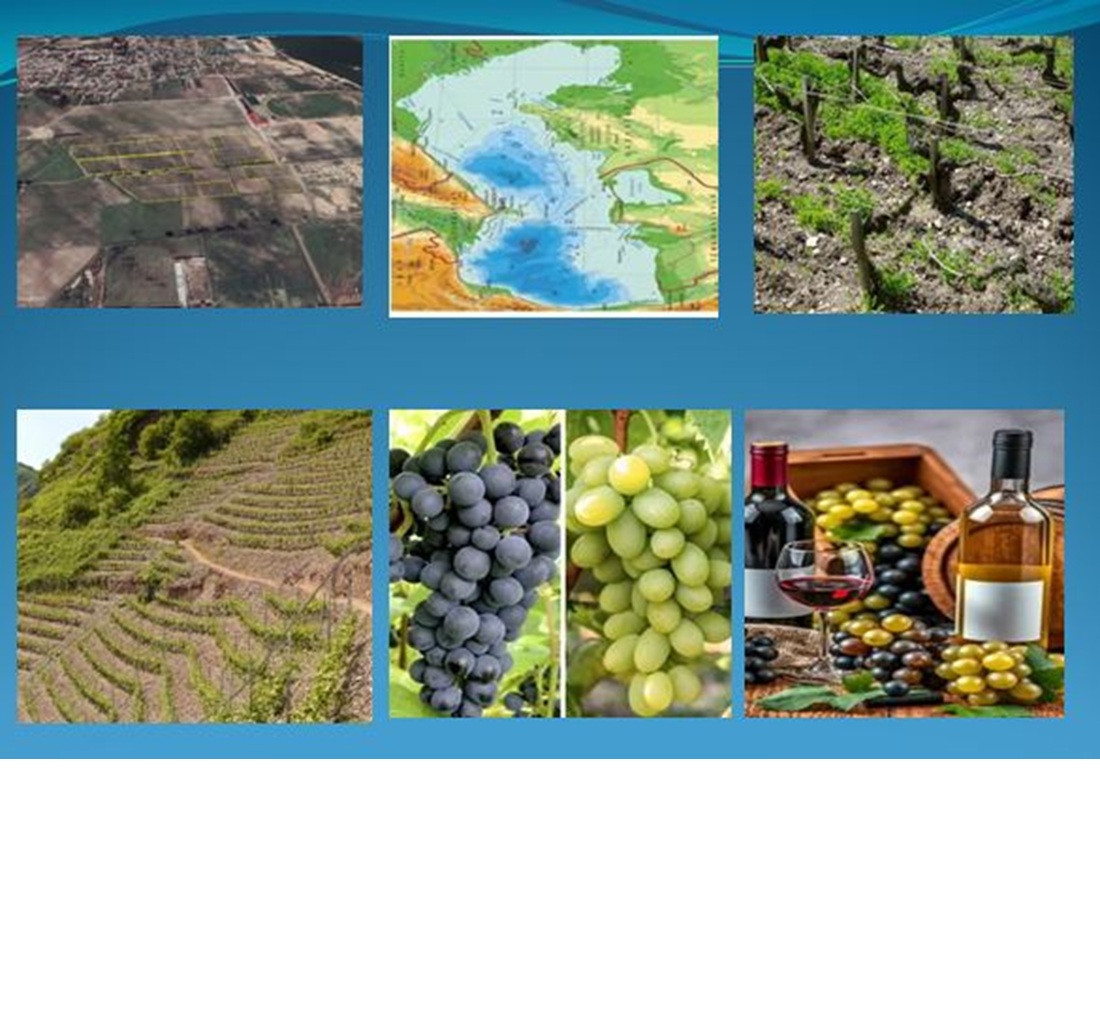
Об’єктом дослідження є зразки вин, виготовлені з інтродукованих сортів винограду, вирощених на Апшеронському півострові. В умовах Апшеронського півострова залишається недостатньо вивченим вплив специфічного морського теруару на процеси дозрівання інтродукованих сортів винограду та формування їхнього біохімічного складу. Відсутні системні дані щодо цукрово-кислотного балансу, фенольного комплексу та технологічних показників вин, отриманих із цих сортів у локальних умовах.
Тому було проведено комплексну оцінку динаміки дозрівання сортів винограду, культивованих в умовах теруару Апшеронського півострова, а також досліджено якісні показники вин, вироблених із зазначених сортів. У ягодах винограду визначено такі показники, як масова концентрація цукрів, титрована кислотність і показник pH. У зразках вин – об’ємну частку етилового спирту, залишковий цукор, титровані та леткі кислоти, екстракт, загальний і вільний вміст діоксиду сірки, загальні фенольні сполуки, антоціани та таніни.
Вплив морських факторів, що формують специфічний теруар, істотно позначається на біохімічному складі винограду та якісних показниках вина. Найвищу масову концентрацію цукрів виявлено у сорту Каберне Совіньйон (23,2 г/100 см³), тоді як найбільша титрована кислотність зафіксована у сорту Ркацителі (4,8 г/л). Взаємодія факторів рельєфу, морських вітрів, сонячної радіації та температурного режиму відіграла ключову роль у формуванні цукрово-кислотного балансу винограду. Морський теруар створює сприятливі екологічні умови для виробництва високоякісного технічного винограду та конкурентоспроможної виноробної продукції, що підтверджує потенціал сталого розвитку галузі в регіоні.
Посилання
- Mercader, R. J., Isaacs, R. (2004). Phenophase-Dependent Growth Responses to Foliar Injury inVitis labruscanaBailey var. Niagara during Vineyard Establishment. American Journal of Enology and Viticulture, 55 (1), 1–6. https://doi.org/10.5344/ajev.2004.55.1.1
- Smart, R., Robinson, M. (1991). Sunlight into wine: A handbook for wine grape Canopy Arrangement. Winetitles. Available at: https://www.amazon.com/Sunlight-Handbook-Grape-Canopy-Arrangement/dp/1875130101
- Jones, G. V., White, M. A., Cooper, O. R., Storchmann, K. (2005). Climate Change and Global Wine Quality. Climatic Change, 73 (3), 319–343. https://doi.org/10.1007/s10584-005-4704-2
- Coombe, B. G., Mccarthy, M. G. (2000). Dynamics of grape berry growth and physiology of ripening. Australian Journal of Grape and Wine Research, 6 (2), 131–135. https://doi.org/10.1111/j.1755-0238.2000.tb00171.x
- Keller, M. (2010). The science of grapevines: Anatomy and physiology. Academic Press. https://doi.org/10.1016/c2009-0-01866-2
- White, P. J. (2012). Ion Uptake Mechanisms of Individual Cells and Roots. Marschner’s Mineral Nutrition of Higher Plants, 7–47. https://doi.org/10.1016/b978-0-08-057187-4.50008-4
- Teixeira, A., Eiras-Dias, J., Castellarin, S., Gerós, H. (2013). Berry Phenolics of Grapevine under Challenging Environments. International Journal of Molecular Sciences, 14 (9), 18711–18739. https://doi.org/10.3390/ijms140918711
- Waterhouse, A. L. (2002). Wine Phenolics. Annals of the New York Academy of Sciences, 957 (1), 21–36. https://doi.org/10.1111/j.1749-6632.2002.tb02903.x
- Huseynov, M. A., Aghayev, U. J. (2024). Qualitative parameters of grapevine (Vitis vinifera L.) Cultivars grown in the Mountainous Shirvan Region of Azerbaijan. SABRAO Journal of Breeding and Genetics, 56 (5), 1994–2003. https://doi.org/10.54910/sabrao2024.56.5.22
- Asadullayev, R. A., Salimov, V. S., Huseynov, M. A. (2024). Grapes with fungal infection during long-term storage. SABRAO Journal of Breeding and Genetics, 56 (5), 2026–2032. https://doi.org/10.54910/sabrao2024.56.5.25
- Huseynov, M., Mirzoev, G., Sadigov, R., Bilgin, A (2026). Genetic diversity and distribution of macrozoobenthos species in South Caspian Sea sector of Azerbaijan. SABRAO Journal of Breeding and Genetics, 58 (1), 171–180. https://doi.org/10.54910/sabrao2026.58.1.16
- Van Leeuwen, C., Trégoat, O., Choné, X., Bois, B., Pernet, D., Gaudillère, J.-P. (2009). Vine water status is a key factor in grape ripening and vintage quality for red Bordeaux wine. How can it be assessed for vineyard management purposes? OENO One, 43 (3), 121. https://doi.org/10.20870/oeno-one.2009.43.3.798
- Bramley, R. G. V., Ouzman, J., Boss, P. K. (2011). Variation in vine vigour, grape yield and vineyard soils and topography as indicators of variation in the chemical composition of grapes, wine and wine sensory attributes. Australian Journal of Grape and Wine Research, 17 (2), 217–229. https://doi.org/10.1111/j.1755-0238.2011.00136.x
- Downey, M. O., Dokoozlian, N. K., Krstic, M. P. (2006). Cultural Practice and Environmental Impacts on the Flavonoid Composition of Grapes and Wine: A Review of Recent Research. American Journal of Enology and Viticulture, 57 (3), 257–268. https://doi.org/10.5344/ajev.2006.57.3.257
- Spayd, S. E., Tarara, J. M., Mee, D. L., Ferguson, J. C. (2002). Separation of Sunlight and Temperature Effects on the Composition ofVitis viniferacv. Merlot Berries. American Journal of Enology and Viticulture, 53 (3), 171–182. https://doi.org/10.5344/ajev.2002.53.3.171
- Shukurova, V., Huseynov, M., Salimov, V., Gasimova, A. (2026). Establishing the patterns of influence of environmental conditions on the biochemical indicators of grape must and the wine produced from it. Technology Audit and Production Reserves, 1 (3 (87)), 29–37. https://doi.org/10.15587/2706-5448.2026.353015
- Sadigov, R. A., Mirzayev, G. S., Gurbanova, F. H., Muhammad, D. (2026). Determination of diagnostic indicators in alluvial meadow-forest soils formed in the shamkirchay reservoir basin. SABRAO Journal of Breeding and Genetics, 58 (1), 463–473. https://doi.org/10.54910/sabrao2026.58.1.43
- Jackson, R. S. (2008). Wine science: Principles and applications. Academic Press. https://doi.org/10.1016/b978-0-12-373646-8.x5001-x
- Weil, R. R., Brady, N. C. (2017). The nature and properties of soils. Pearson. Available at: https://www.researchgate.net/publication/301200878_The_Nature_and_Properties_of_Soils_15th_edition
- Jackson, R. S. (2014). Wine science: Principles and applications. Academic Press.
- Marschner, P. (Ed.) (2012). Marschner’s mineral nutrition of higher plants. Academic Press. https://doi.org/10.1016/c2009-0-63043-9
- Kok, D., Bahar, E., Korkutal, I., Celik, S. (2004). From precision viticulture standpoint some technological progresses. Bulg. J. Agric. Sci., 10, 43–46. Available at: http://www.agrojournal.org/10/01-08.htm
- Suarez, D. L. (2011). Irrigation Water Quality Assessments. Agricultural Salinity Assessment and Management, 343–370. https://doi.org/10.1061/9780784411698.ch11
- Ayers, R. S., Westcot, D. W. (1989). Water quality for agriculture. FAO Irrigation and Drainage Paper, 29, 174. Available at: https://www.fao.org/4/t0234e/T0234E00.htm
- Aurand, J. M. (2017). Determination of the 13C/C12 isotope ratios of glucose, fructose, glycerol and ethanol in products of vitivinicultural origin by high-performance liquid chromatography coupled to isotope ratio mass spectrometry. Resolution OIV-OENO 479-2017. OIV. Available at: https://www.oiv.int/public/medias/5363/oiv-oeno-479-2017-en.pdf
- Information of meteorological stations in 2024. Average monthly air temperature, in centigrade. Available at: https://stat.gov.az/source/environment/en/001_2en.xls
- Salimov, V. S., Huseynov, M. A., Shukurov, A. S. (2022). Grapes: agrotechnical, agrochemical, and integrated pest control measures. SAPFİR-15, 784.
- Huseynov, M. A., Shukurov, A. S., Salimov, V. S., Adilov, A. A., Mirzoev, G. S., Sadigov, R. A. et al. (2025). Quality characteristics of technical grape (Vitis vinifera L.) cultivars grown under environmental conditions of the mountains and sea. SABRAO Journal of Breeding and Genetics, 57 (6), 2564–2573. https://doi.org/10.54910/sabrao2025.57.6.29
- Kazimova, I., Omarova, E., Nabiyev, A., Gasimova, A. (2024). Comparative analysis of the composition of Bayan Shirey, Rkatsiteli and Cabernet Sauvignon grape varieties for production of brandy wine materials. Ukrainian Food Journal, 13 (4), 694–707. https://doi.org/10.24263/2304-974x-2024-13-4-5
##submission.downloads##
Опубліковано
Як цитувати
Номер
Розділ
Ліцензія
Авторське право (c) 2026 Movlud Huseynov, Afet Gasimova, Vugar Salimov, Garay Mirzayev, Gultakin Gasimova, Umida Majnunlu

Ця робота ліцензується відповідно до Creative Commons Attribution 4.0 International License.
Закріплення та умови передачі авторських прав (ідентифікація авторства) здійснюється у Ліцензійному договорі. Зокрема, автори залишають за собою право на авторство свого рукопису та передають журналу право першої публікації цієї роботи на умовах ліцензії Creative Commons CC BY. При цьому вони мають право укладати самостійно додаткові угоди, що стосуються неексклюзивного поширення роботи у тому вигляді, в якому вона була опублікована цим журналом, але за умови збереження посилання на першу публікацію статті в цьому журналі.
Ліцензійний договір – це документ, в якому автор гарантує, що володіє усіма авторськими правами на твір (рукопис, статтю, тощо).
Автори, підписуючи Ліцензійний договір з ПП «ТЕХНОЛОГІЧНИЙ ЦЕНТР», мають усі права на подальше використання свого твору за умови посилання на наше видання, в якому твір опублікований. Відповідно до умов Ліцензійного договору, Видавець ПП «ТЕХНОЛОГІЧНИЙ ЦЕНТР» не забирає ваші авторські права та отримує від авторів дозвіл на використання та розповсюдження публікації через світові наукові ресурси (власні електронні ресурси, наукометричні бази даних, репозитарії, бібліотеки тощо).
За відсутності підписаного Ліцензійного договору або за відсутністю вказаних в цьому договорі ідентифікаторів, що дають змогу ідентифікувати особу автора, редакція не має права працювати з рукописом.
Важливо пам’ятати, що існує і інший тип угоди між авторами та видавцями – коли авторські права передаються від авторів до видавця. В такому разі автори втрачають права власності на свій твір та не можуть його використовувати в будь-який спосіб.