Identifying the financial and economic advantages of integrated use of mineral raw materials at the enterprise
DOI:
https://doi.org/10.15587/1729-4061.2025.325419Keywords:
financial and economic advantages, integrated use of mineral raw materials, resource conservation, diversification, mining industryAbstract
The object of the study is financial and economic indicators of the integrated use of mineral raw materials at the enterprise. The problem of economic substantiation of the feasibility of integrated use of mineral raw materials at the microeconomic level, which is urgent for the creation of a green economy, has been solved.
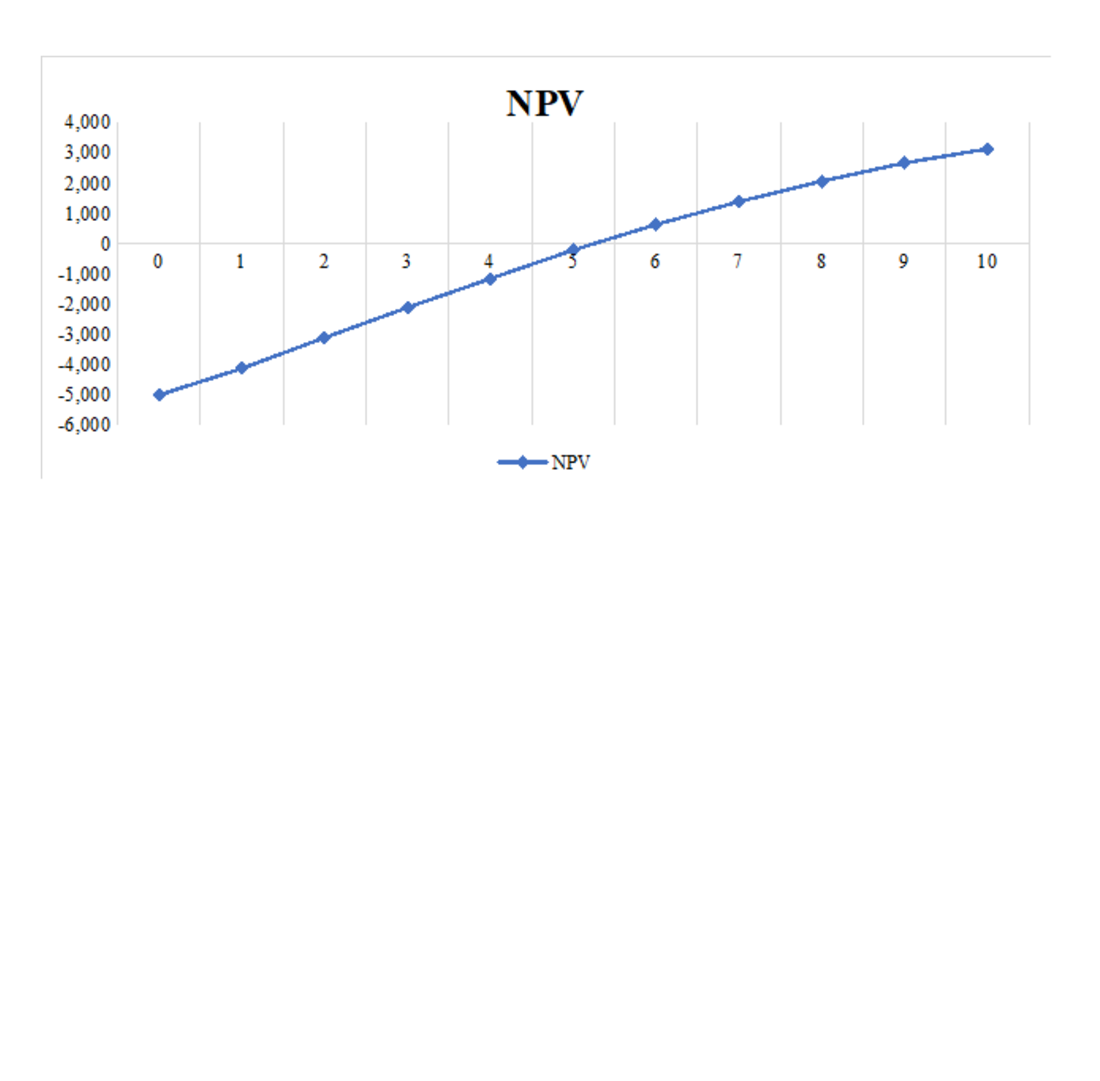
The analysis demonstrates high financial and economic efficiency of the proposed solution. The average 10-year OIBDA to revenue ratio is 55.0 %, net profit to revenue ratio is 30 % and IRR is 23.79 %, which ensures high sustainability of the project in terms of operating activities and allows its financing at the expense of revenue. Although the project requires substantial investments, it is characterized by a relatively quick payback period: 5 years and 8 months at a WACC rate of 15 %. This indicates that the project is sufficiently attractive for investors. The implementation of the project reduces CO2 emissions by 49,481 tons and waste by 15,834 tons in 10 years, and saves energy by 885,135 kWh, ensuring green economy priorities.
The method of discounted cash flows was used to analyze the economic efficiency of the project implementation.
The peculiarities of the obtained results are that a financial model was developed for the assessment, the advantage of which is the accounting of all major cash flows of the project, which ensures the interests of the enterprise.
The results of the study can be used in making managerial decisions to rationalize the use of raw materials at enterprises, as well as by government agencies for green economy programs
References
- Abildayeva, A., Turgumbayeva, K., Blumberga, D. (2021). Systematization of Material Flows of Natural and Secondary Raw Materials of Phosphorus Industry of the Republic of Kazakhstan. Environmental and Climate Technologies, 25 (1), 894–906. https://doi.org/10.2478/rtuect-2021-0067
- Schrijvers, D., Hool, A., Blengini, G. A., Chen, W.-Q., Dewulf, J., Eggert, R. et al. (2020). A review of methods and data to determine raw material criticality. Resources, Conservation and Recycling, 155, 104617. https://doi.org/10.1016/j.resconrec.2019.104617
- Mineral Resources Economics 2 (2021). Wiley. https://doi.org/10.1002/9781119882121
- Nursapina, K., Kuangaliyeva, T., Uryngaliyeva, A., Ibadildin, N., Serikbayev, S., Tulegenova, A., Kenzhin, Z. (2024). Mutual influence of energy efficiency and innovation activity in the industrial sector of the economy. Eastern-European Journal of Enterprise Technologies, 2 (13 (128)), 6–14. https://doi.org/10.15587/1729-4061.2024.299654
- Brunet, N. D., Longboat, S. (2023). Local Communities and the Mining Industry. Routledge. https://doi.org/10.4324/9781003182375
- Adams, R. G., Gilbert, C. L., Stobart, C. G. (2019). Modern Management in the Global Mining Industry. Emerald Publishing Limited. https://doi.org/10.1108/9781789737875
- Tazhibekova, K., Shametova, A., Urazbekov, A., Akhmetzhanov, B., Akenov, S., Tulupova, S. (2020). Enhancing eco-economic efficiency of mineral deposit exploration to achieve sustainable development in the mining industry of Kazakhstan. Progress in Industrial Ecology, An International Journal, 14 (3/4), 212. https://doi.org/10.1504/pie.2020.113425
- Henckens, T. (2021). Governance of the World’s Mineral Resources. Elsevier. https://doi.org/10.1016/c2020-0-01047-9
- Mineral Resources Economics 1 (2021). Wiley. https://doi.org/10.1002/9781119850861
- Benndorf, J. (2020). Closed Loop Management in Mineral Resource Extraction. In SpringerBriefs in Applied Sciences and Technology. Springer International Publishing. https://doi.org/10.1007/978-3-030-40900-5
- Hund, K., La Porta, D., Fabregas, T. P., Laing, T., Drexhage, J. (2023). Minerals for Climate Action: The Mineral Intensity of the Clean Energy Transition. The World Bank Group. https://doi.org/10.1596/40002
- Jhariya, M. K., Meena, R. S., Meena, S. N. (Eds.) (2022). Natural Resources Conservation and Advances for Sustainability. Elsevier. https://doi.org/10.1016/c2019-0-03763-6
- Purvis, B., Mao, Y., Robinson, D. (2018). Three pillars of sustainability: in search of conceptual origins. Sustainability Science, 14 (3), 681–695. https://doi.org/10.1007/s11625-018-0627-5
- Bashir, M. F., Shahbaz, M., Malik, M. N., Ma, B., Wang, J. (2023). Energy transition, natural resource consumption and environmental degradation: The role of geopolitical risk in sustainable development. Resources Policy, 85, 103985. https://doi.org/10.1016/j.resourpol.2023.103985
- Erdoğan, S., Çakar, N. D., Ulucak, R., Danish, Kassouri, Y. (2020). The role of natural resources abundance and dependence in achieving environmental sustainability: Evidence from resource‐based economies. Sustainable Development, 29 (1), 143–154. https://doi.org/10.1002/sd.2137
- Hammarstrom, J. M., Kreiner, D. C., Dicken, C. L., Woodruff, L. G. (2023). National map of focus areas for potential critical mineral resources in the United States. Fact Sheet. https://doi.org/10.3133/fs20233007
- Critical Raw materials resilience: charting a path towards greater security and sustainability (2020). European Commission. Available at: https://ec.europa.eu/docsroom/documents/42849
- Satapathy, S., Mishra, M., Das, M. R. (2024). Sustainable Waste Management Practices for the Mining Sector Through Recycling of Mining Waste. In SpringerBriefs in Earth System Sciences. Springer Nature Switzerland. https://doi.org/10.1007/978-3-031-67932-2
- Chauhan, G., Kaur, P. J., Pant, K. K., Nigam, K. D. P. (2020). Sustainable Metal Extraction from Waste Streams. Wiley. https://doi.org/10.1002/9783527826704
- Downs, T. J., Roa, A. C., Dixon, K. C., Duff, P., Pasay, E., Silverfine, H. (2020). The Case for Integrative Sustainable Development Practice Based on the Minas Conga Gold-Mining Experience in Peru. Journal of Geoscience and Environment Protection, 08 (05), 17–40. https://doi.org/10.4236/gep.2020.85002
- European Geological Data Infrastructure. EDGI. Available at: http://www.europe-geology.eu/
- Lèbre, É., Corder, G. D., Golev, A. (2017). Sustainable practices in the management of mining waste: A focus on the mineral resource. Minerals Engineering, 107, 34–42. https://doi.org/10.1016/j.mineng.2016.12.004
- Sonderegger, T., Berger, M., Alvarenga, R., Bach, V., Cimprich, A., Dewulf, J. et al. (2020). Mineral resources in life cycle impact assessment – part I: a critical review of existing methods. The International Journal of Life Cycle Assessment, 25 (4), 784–797. https://doi.org/10.1007/s11367-020-01736-6
- Zhao, Y., Gu, X., Qiu, J., Zhang, S., Guo, Z., Sun, X. (2022). Recycling of arsenic-containing biohydrometallurgy waste to produce a binder for cemented paste backfill: Co-treatment with oil shale residue. Journal of Environmental Management, 319, 115621. https://doi.org/10.1016/j.jenvman.2022.115621
- Wang, C., Xiong, D. (2021). Leaching assessment of aerated concrete made of recycled shale gas drilling cuttings: Particular pollutants, physical performance and environmental characterization. Journal of Cleaner Production, 282, 125099. https://doi.org/10.1016/j.jclepro.2020.125099
- Speight, J. (2020). Shale Oil and Gas Production Processes. Gulf Professional Publishing. https://doi.org/10.1016/c2015-0-02189-x
- Adamson, J., Irha, N., Adamson, K., Steinnes, E., Kirso, U. (2010). Effect of oil shale ash application on leaching behavior of arable soils: an experimental study. Oil Shale, 27 (3), 250. https://doi.org/10.3176/oil.2010.3.06
- Gavin, M. J., Perdew, W. E.., Hill, H. H. (1921). Notes on the oil-shale industry with particular reference to the Rocky Mountain district. Washington, D.C.: U.S. Dept. of the Interior, Bureau of Mines.
Downloads
Published
How to Cite
Issue
Section
License
Copyright (c) 2025 Tana Abylaikhanova, Zhadyra Kinasheva, Aliya Dossanova, Mainur Ordabayeva, Yerzhan Domalatov, Raikhan Mugauina, Assel Apysheva, Gulnafiz Bekbussinova

This work is licensed under a Creative Commons Attribution 4.0 International License.
The consolidation and conditions for the transfer of copyright (identification of authorship) is carried out in the License Agreement. In particular, the authors reserve the right to the authorship of their manuscript and transfer the first publication of this work to the journal under the terms of the Creative Commons CC BY license. At the same time, they have the right to conclude on their own additional agreements concerning the non-exclusive distribution of the work in the form in which it was published by this journal, but provided that the link to the first publication of the article in this journal is preserved.
A license agreement is a document in which the author warrants that he/she owns all copyright for the work (manuscript, article, etc.).
The authors, signing the License Agreement with TECHNOLOGY CENTER PC, have all rights to the further use of their work, provided that they link to our edition in which the work was published.
According to the terms of the License Agreement, the Publisher TECHNOLOGY CENTER PC does not take away your copyrights and receives permission from the authors to use and dissemination of the publication through the world's scientific resources (own electronic resources, scientometric databases, repositories, libraries, etc.).
In the absence of a signed License Agreement or in the absence of this agreement of identifiers allowing to identify the identity of the author, the editors have no right to work with the manuscript.
It is important to remember that there is another type of agreement between authors and publishers – when copyright is transferred from the authors to the publisher. In this case, the authors lose ownership of their work and may not use it in any way.








