Аналіз та обґрунтування вибору моделі для моніторингу параметрів транспортного засобу та прогнозування технічного обслуговування
DOI:
https://doi.org/10.31498/2225-6733.49.1.2024.321206Ключові слова:
прогностичне технічне обслуговування, моніторинг, нейронні мережі, прогнозування ремонту, Big DataАнотація
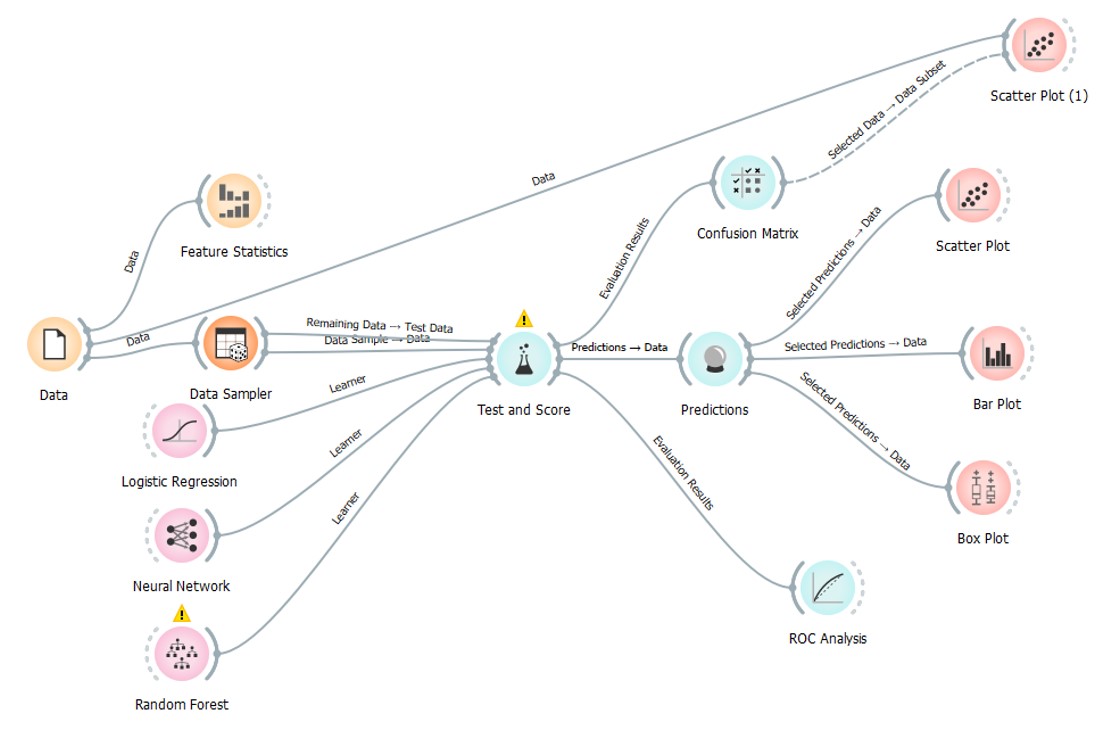
Сьогодні обладнання транспортних засобів надають величезні масиви даних для контролю технічного стану. Процес експлуатації транспортного засобу (ТЗ) постійно пов’язаний з природнім зносом вузлів та компонентів, що, в свою чергу, призводить до погіршення технічних та експлуатаційних характеристик. Для надійності роботи ТЗ потрібен якісний моніторинг компонентів при технічному обслуговуванні (ТО) та діагностування несправностей. Під моніторингом та діагностуванням мається на увазі процес технічного обслуговування з майбутнім виявленням дефектів у системах ТЗ. Аналітика отриманої інформації з використанням технологій Big Data стає вкрай важливою для аналізу та обробки більших обсягів даних, особливо для прогнозування виходу з ладу механізмів. Прогнозоване технічне обслуговування працює краще, ніж ремонт або профілактичне ТО. Відповідно, прогнозування на основі аналізу даних є набагато ефективнішим з точки зору оцінювання експлуатаційної стійкості вузлів в реальному часі та попередження можливих збоїв у їх роботі. Для більш якісного виявлення можливих дефектів доцільно використовувати нейронні мережі, завдяки яким можна отримати більше даних відповідно до технічного стану ТЗ, до показників, що передаються з бортового комп’ютеру. Використовуючи реальні дані з багатьох датчиків і звіти про несправності в роботі вузлів та агрегатів ТЗ, моделі машинного навчання можуть досліджувати патерни інформації і створювати прогнозовані моделі несправностей на основі моніторингу стану в реальному часі. Така інформація передана до системи від ТЗ обробляється за допомогою нейронних мереж та на виході отримуємо більш якісний аналіз стану ТЗ на предмет несправностей, що підвищує якість технічного обслуговування. У статті розглянуто особливості діагностування сучасних ТЗ, наведено можливі варіанти отримання даних з ТЗ та приклад розробки нейронної мережі з налаштуванням оптимальних параметрів машинного навчання і для прогностичної діагностики за допомогою наявних даних
Посилання
- Грицук В. Ю., Грицук Ю. В. Прогностичне обслуговування в автомобільному сервісі: використання IOT та BIG DATA. Енергетичні установки та альтернативні джерела енергії : зб. тез та доповідей міжнародної конференції, м. Харків, 11-12 березня 2024 р. Харків: ФОП Бровін О.В., 2024. С. 264-266.
- Грицук В. Ю., Пронін С. В. Перспективи впровадження прогностичного обслуговування транспортних засобів на основі машинного навчання. Сучасний стан досліджень в сфері ІТ : матеріали Всеукр. наук.-практ. конф. здобувачів вищої освіти та молодих учених, м. Харків, 19 квітня 2024 р. Харків: ХНАДУ, 2024. С. 77-81.
- Особливості моніторингу стану транспортних засобів з використанням бортових діагностичних комплексів / В. П. Матейчик та ін. Управління проектами, системний аналіз і логістика. 2014. Вип. 13. С. 126-138.
- The peculiarities of monitoring road vehicle performance and environmental impact / I. Kuric et al. MATEC Web of Conferences. 2018. Vol. 244. Pp. 1-7. DOI: https://doi.org/10.1051/matecconf/201824403003.
- Survey of smartphone-based sensing in vehicles for intelligent transportation system applications / Engelbrecht J., Booysen M. J., Bruwer F. J., van Rooyen G.-J. IET Intelligent Transport Systems. 2015. Vol. 9. № 10. Pp. 924-935. DOI: https://doi.org/10.1049/iet-its.2014.0248.
- Baek S. H., Jang J. W. Implementation of integrated OBD-II connector with external network. Information Systems. 2015. Vol. 50. Pp. 69-75. DOI: https://doi.org/10.1016/j.is.2014.06.011.
- Design and Implementation of a Wireless OBD Il Fleet Management System / R. Malekian et al. IEEE Sensors Journal. 2017. Vol. 17. № 4. Pp. 1154-1164. DOI: https://doi.org/10.1109/JSEN.2016.2631542.
- Türker G. F., Kutlu A. Survey of Smartphone applications based on OBD-ll for Intelligent Transportation Systems. International journal of engineering research and applications. 2016. Vol. 6. Iss. 1. Pp. 69-73.
- Big IoT Data Analytics: Architecture, Opportunities, and Open Research Challenges / M. Marjani et al. IEEE Access. 2017. Vol. 5. Pp. 5247-5261. DOI: https://doi.org/10.1109/ACCESS.2017.2689040.
- Machine learning predictive model for Industry 4.0 / I.S. Candanedo et al. Knowledge Management in Organizations : Proceedings of the 13th International Conference, Žilina, Slovakia, 6-10 August 2018. Pp. 501-510. DOI: https://doi.org/10.1007/978-3-319-95204-8_42.
- Deep Learning in Industry 4.0 – Brief Overview / J. Hernavs et al. Journal of Production Engineering. 2018. Vol. 21. Pp. 1-5. DOI: https://doi.org/10.24867/JPE-2018-02-001.
- Kazi K. Reverse Engineering’s Neural Network Approach to human brain. Journal of Communication Engineering & Systems. 2022. Vol. 12. Iss. 2. Pp. 17-24. DOI: https://doi.org/10.37591/joces.v12i2.951.
- Kazi K. Model for Agricultural Information system to improve crop yield using IoT. Journal of Open Source Developments. 2022. Vol. 9. Iss. 2. Pp. 16-24.
- Announcement system in Bus / N. Salunke et al. Journal of Image Processing and Intelligent Remote Sensing. 2022. Vol. 2. Iss. 6. Pp. 1-10. DOI: https://doi.org/10.55529/jipirs.26.1.10.
- Sending notification to someone missing you through smart watch / D. Vishwanath Swami et al. International Journal Of Information Technology & Computer Engineering (IJITC). 2022. Vol 2. Iss. 8. Pp. 19-24. DOI: https://doi.org/10.55529/ijitc.25.19.24.
- Reliability analysis for automobile engines: Conditional inference trees / S. Wang et al. Procedia CIRP. 2018. Vol. 72. Pp. 1392-1397. DOI: https://doi.org/10.1016/j.procir.2018.03.065.
- Gayathri T. A Survey on Vehicle Health Monitoring and Prediction System. International Journal of Computer Science Trends and Technology (IJCST). 2017. Vol. 5. Iss. 3. Pp. 191-193.
- Інформаційні системи моніторингу технічного стану автомобілів / В.П. Волков та ін. Харків : ФЛП Панов А.М., 2018. 299 с.
- The Complex Application of Monitoring and Express Diagnosing for Searching Failures on Common Rail System Units / I. Gritsuk et al. SAE Technical Paper. 2018. DOI: https://doi.org/10.4271/2018-01-1773.
- Information Security Risk Management of Vehicles / D. Klets et al. SAE Technical Paper. 2018. DOI: https://doi.org/10.4271/2018-01-0015.
- Пути улучшения современной системы диагностирования автомобилей / В.В. Аулин та ін. Підвищення надійності машин і обладнання : матеріали міжнар. наук.-практ. конф., м. Кропивницький, 17-19 квіт. 2019 р. Кропивницький : ЦНТУ, 2019. С. 218-223.
- Павленко В. М., Кужель В. П., Хорін М. Є. Сутність автомобільної діагностики при впровадженні експертних систем. Вісник машинобудування. 2020. № 2(12). С. 85-92. DOI: https://doi.org/10.31649/2413-4503-2020-12-2-85-92.
- Шокарев О. М., Болтянська Н. І. Засоби діагностики сучасних автотранспортних засобів. Технічне забезпечення інноваційних технологій в агропромисловому комплексі : ІІ Міжнародна науково-практична конференція, м. Кропивницький, 27 листопада 2020 р. ТДАУ ім. Д. Моторного. С. 450-454.
- Nalina V., Jayarekha P. Real Time Automated Vehicle Monitoring and Control System Using Internet of Vehicles. International Journal of Computer Sciences and Engineering. 2018. Vol. 6. Pp. 491-494. DOI: https://doi.org/10.26438/ijcse/v6i3.491494.
- Kusumaningrum D., Kurniati N., Santosa B. Machine Learning for Predictive Maintenance. Proceedings of the International Conference on Industrial Engineering and Operations Management, Sao Paulo, Brazil, 5-8 April 2021. Рp. 2348-2356.
- Vehicle Maintenance Data. URL: https://www.kaggle.com/datasets/chavindudulaj/vehicle-maintenance-data (дата звернення 31.08.2024).
- Multi-agent deep reinforcement learning-based maintenance optimization for multi-dependent component systems / P. Do et al. Expert Systems with Applications. 2024. Vol. 245. Article 123144. DOI: https://doi.org/10.1016/j.eswa.2024.123144.
- Ali Y. H. Artificial Intelligence Application in Machine Condition Monitoring and Fault Diagnosis. Artificial Intelligence. Ch. 14. 2018. DOI: https://doi.org/10.5772/intechopen.74932.
- Singh S. K., Singh A. K. A study: OBD III standard and its predecessors OBD I and OBD II. Design Engineering. 2021. Pp. 1-11.
- Data Control in the Diagnostics and Forecasting the State of Complex Technical Systems / D. S. Shibaev et al. Herald of advanced information technology. 2019. Vol. 2. Iss. 3. Pp. 183-196. DOI: https://doi.org/10.15276/hait.03.2019.2.
- Analysis and structuring diagnostic large volume data of technical condition of complex equipment in transport / V.V. Vyuzhuzhanin et al. IOP Conf. Series: Materials Science and Engineering. 2020. Vol. 776. Pp. 1-12. doi: https://doi.org/10.1088/1757-899X/776/1/012049.
- Cognitive Model of the Internal Combustion Engine / V. Vychuzhanin et al. SAE Technical Paper. 2018. DOI: https://doi.org/10.4271/2018-01-1738.
- Ghosh A. Possibilities and Challenges for the Inclusion of the Electric Vehicle (EV) to Reduce the Carbon Footprint in the Transport Sector: A Review. Energies. 2020. Vol. 13. Article 2602. DOI: https://doi.org/10.3390/en13102602.
- Higher Layer Protocols. URL: https://kvaser.com/about-can/higher-layer-protocols/ (дата звернення 10.09.2024).
- Items included in the J1939 Standards Collection. URL: https://www.sae.org/standards/development/ground-vehicle/sae-j1939-standards-collection-on-the-web (дата звернення 31.08.2024).
- Vehicle Remote Health Monitoring and Prognostic Maintenance System / U. Shafi et al. Journal of Advanced Transportation. 2018. Vol. 2018. Pp. 1-10. DOI: https://doi.org/10.1155/2018/8061514.
- Impact of Driver Behaviour on Fuel Consumption: Classification, Evaluation and Prediction Using Machine Learning / P. Ping et al. IEEE Access. 2019. Vol. 7. Pp. 78515-78532. DOI: https://doi.org/10.1109/ACCESS.2019.2920489.
- Basak S., Sengupta S., Dubey A. Mechanisms for Integrated Feature Normalization and Remaining Useful Life Estimation Using LSTMs Applied to Hard-Disks. 2019 IEEE International Conference on Smart Computing (SMARTCOMP), Washington, DC, USA, 12-15 June 2019. Pp. 208-216. DOI: https://doi.org/10.1109/SMARTCOMP.2019.00055.
- In-Vehicle Communication Cyber Security: Challenges and Solutions / Rathore R. S., Hewage C., Kaiwartya O., Lloret J. Sensors. 2022. Vol. 22. Article 6679. DOI: https://doi.org/10.3390/s22176679.
- Development of a sensor-based learning approach to prognostics in intelligent vehicle health monitoring / I. S. Cole et al. PHM-2008 : Proceedings of the 2008 International Conference on Prognostics and Health Management, Denver, USA, 06-09 October 2008. Pp. 1-7. DOI: https://doi.org/10.1109/PHM.2008.4711441.
- Predicting the need for vehicle compressor repairs using maintenance records and logged vehicle data / Prytz R., Nowaczyk S., Rognvaldsson T., Byttner S. Engineering Applications of Artifi-cial Intelligence. 2015. Vol. 41. Pp. 139-150. DOI: https://doi.org/10.1016/j.engappai.2015.02.009.
- Remote vehicle state of health monitoring and its application to vehicle no-start prediction / Y. Zhang et al. AUTOTESTCON : Proceedings of the International Automatic Testing Conference, Anaheim, CA, USA, 14-17 September 2009. Pp. 88-93. DOI: https://doi.org/10.1109/AUTEST.2009.5314011.
- Naryal E., Kasliwal P. Real time vehicle health monitoring and driver information display system based on CAN and Android. International Journal of Advance Foundation and Research in Computer. 2014. Vol. 1. Iss. 11. Pp. 76-84.
- A fuzzy diagnosis of multi-fault state based on information fusion from multiple sensors / H. Xue et al. Journal of Vibroengineering. 2016. Vol. 18. Iss. 4. Pp. 2135-2148. DOI: https://doi.org/10.21595/jve.2016.16712.
- Dubois D., Prade H. Possibility Theory: An Approach to Computerized Processing of Uncertainty. Plenum Press, New York, USA, 1988. 280 p.
- Data Mining Fruitful and Fun. URL: https://orangedatamining.com/ (дата звернення 31.08.2024)
- Automotive Vehicles Engine Health Dataset. URL: https://www.kaggle.com/datasets/parvmodi/automotive-vehicles-engine-health-dataset/data (дата звернення 31.08.2024).
- The Application of Random Forest to Predictive Maintenance / R. Kizito et al. Proceedings of the 2018 IISE Annual Conference, Orlando, Florida, USA, 19-22 May 2018. Pp. 354-359.
- Krizhevsky A., Sutskever I., Hinton G. E. ImageNet classification with deep convolutional neural networks. Advances in Neural Information Processing Systems. 2012. Vol. 25(2). Pp. 1097-1105. DOI: https://doi.org/10.1145/3065386.
- Ruder S., Park S.M., Sim K.B. An overview of gradient descent optimization algorithms. 2017. DOI: https://doi.org/10.48550/arXiv.1609.04747.
- Reyad M., Sarhan A. M., Arafa M. A modified Adam algorithm for deep neural network optimization. Neural Computing and Applications. 2023. Vol. 35(23). Pp. 17095-17112. DOI: https://doi.org/10.1007/s00521-023-08568-z.
- Reddi S. J., Kale S., Kumar S. On the Convergence of Adam and beyond. ICLR 2018 : the Sixth International Conference on Learning Representations, Vancouver, Canada, Mon Apr 30 April - 3 May 2018. Pp. 1-23. DOI: https://doi.org/10.48550/arXiv.1904.09237.
- Chicco D., Jurman G. The advantages of the Matthews correlation coefficient (MCC) over F1 score and accuracy in binary classification evaluation. BMC Genomics. 2020. Vol. 21. Article 6. DOI: https://doi.org/10.1186/s12864-019-6413-7.
##submission.downloads##
Опубліковано
Як цитувати
Номер
Розділ
Ліцензія

Ця робота ліцензується відповідно до Creative Commons Attribution 4.0 International License.
Журнал "Вісник Приазовського державного технічного університету. Серія: Технічні науки" видається під ліцензією СС-BY (Ліцензія «Із зазначенням авторства»).
Дана ліцензія дозволяє поширювати, редагувати, поправляти і брати твір за основу для похідних навіть на комерційній основі із зазначенням авторства. Це найзручніша з усіх пропонованих ліцензій. Рекомендується для максимального поширення і використання неліцензійних матеріалів.

Автори, які публікуються в цьому журналі, погоджуються з наступними умовами:
1. Автори залишають за собою право на авторство своєї роботи та передають журналу право першої публікації цієї роботи на умовах ліцензії Creative Commons Attribution License, яка дозволяє іншим особам вільно розповсюджувати опубліковану роботу з обов'язковим посиланням на авторів оригінальної роботи та першу публікацію роботи в цьому журналі.
2. Автори мають право укладати самостійні додаткові угоди, які стосуються неексклюзивного поширення роботи в тому вигляді, в якому вона була опублікована цим журналом (наприклад, розміщувати роботу в електронному сховищі установи або публікувати у складі монографії), за умови збереження посилання на першу публікацію роботи в цьому журналі.