Обґрунтування впливу метеорологічних та топографічних умов на розповсюдження хмари забрудненого повітря
DOI:
https://doi.org/10.31498/2225-6733.49.2.2024.321366Ключові слова:
методика, аварія, метеорологічні умови, прогнозування, небезпечно хімічні речовини, нормативне-правове забезпеченняАнотація
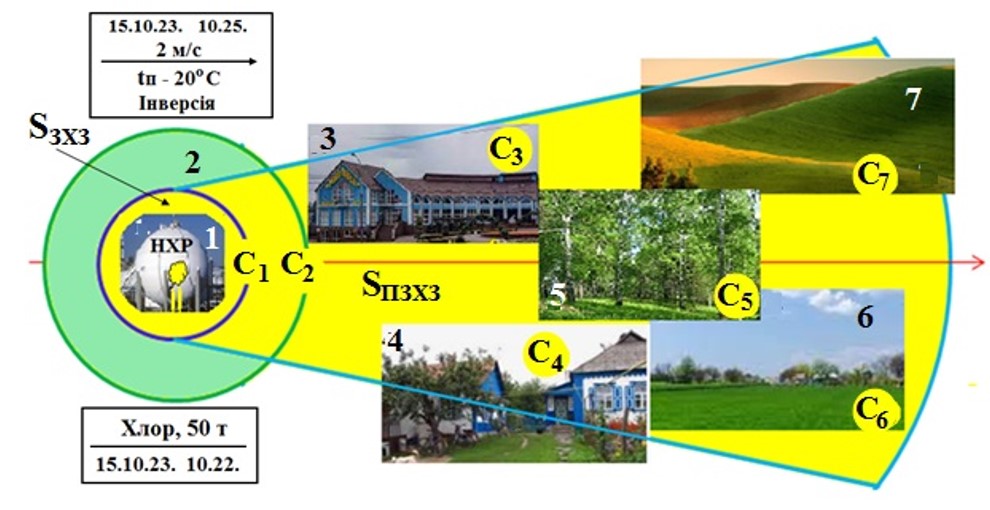
Мета. Обґрунтування суттєвого впливу метеорологічних умов та характеру місцевості (топографічні умови) на характер поведінки небезпечно хімічних речовин (НХР) в атмосфері (навколишньому середовищі) при аварії на хімічно-небезпечному об’єкті (ХНО) з її виливом (викидом) з урахуванням того, що ці умови можуть змінюватися у просторі і часі. Методика. Використані загальні та спеціальні методи теоретичних та розрахункових методів дослідження, нормативно-правові документи з охорони праці. Висновки. При зміні метеорологічних умов (ступеня вертикальної стійкості та швидкості вітру, температури повітря) змінюється також швидкість перенесення переднього фронту хмари зараженого повітря. Це, в свою чергу, змінює глибину перенесення повітряних мас і, відповідно, змінює масштаби зони фактичного хімічного забруднення. До основних змінних, що визначають формування рівня забруднення атмосфери, відносяться напрям переносу хмари НХР, швидкість їх перенесення, атмосферна стійкість і пов'язана з нею ступінь вертикального перемішування шкідливих домішок, термічний стан повітряної маси, від якого залежить початковий підйом викидів, вимивання НХР опадами, акумуляція їх у туманах, інерційний фактор. Зона хімічного забруднення – це територія, на якій небезпечні хімічні речовини перебувають в концентраціях, небезпечних для людини та інших живих організмів, що знаходяться в цій зоні. З урахуванням цього фактора і необхідно приймати рішення щодо рятувальних робіт, адже на кожній складовій ділянці забрудненої території будуть різні концентрації НХР. При виборі заходів та способів захисту населення необхідно враховувати не тільки фізико-хімічні та токсичні властивості НХР, масштаби забруднення, а і метеорологічні умови та характер місцевості, на якій будуть проводитися аварійно-рятувальні роботи. Наукова новизна. Запропоновано спосіб прогнозування впливу метеорологічних умов та характеристики місцевості за умов надзвичайної ситуації небезпечних хімічних речовин в приземному шарі атмосфери. Запропоновано доповнення до нормативних і правових документів з цивільного захисту. Практична цінність. Розроблені рекомендації сприятимуть врахування метеорологічних умов та характеру місцевості при прогнозуванні масштабів розповсюдження хмари забрудненого повітря при аварії з НХР та правовому регулюванню цивільного захисту з діючими нормами законодавства у сфері цивільної безпеки
Посилання
- Методика прогнозування наслідків виливу (викиду) небезпечних хімічних речовин під час аварії на хімічно небезпечному об'єкті і транспорті : наказ Міністерства внутрішніх справ України від 29.11.2019 р. № 1000. URL: https://zakon.rada.gov.ua/laws/show/z0440-20#Text (дата звернення: 15.06.2024).
- Методика прогнозування наслідків виливу (викиду) небезпечних хімічних речовин при ава-ріях на промислових об`єктах і транспорті : наказ Міністерства України з питань надзви-чайних ситуацій та у справах захисту населення від наслідків Чорнобильської катастрофи, Міністерства аграрної політики України, Міністерства економіки України, Міністерства екології та природних ресурсів України від 27.03.2001 р. № 73/82/64/122. URL: https://zakon.rada.gov.ua/laws/show/z0326-01#Text (дата звернення: 10.06.2024).
- ДСТУ 3513:2021. Метеорологія. Терміни та визначення основних понять. [Чинний від 2021-11-01]. Київ : ДП «Український науково-дослідний і навчальний центр проблем стандартизації, сертифікації та якості», 2021.
- ДСТУ 3992-2000. Кліматологія. Терміни та визначення основних понять. [Чинний від 2000-10-31]. Вид. офіц. Київ : Держспоживстандарт України, 2001. 40 с.
- Настанова з метеорологічного прогнозування. Київ: Український гідрометеорологічний центр, 2019. 35 с. URL: https://www.meteo.gov.ua/f/pro_nas/normatuvni_akt/Nastanova%20z%20meteoprognozuvannia.pdf (дата звернення: 08.05.2024).
- Сипко В. Г., Кондратюк В. М., Плис М. М. Щодо впорядкування деяких положень методи-ки прогнозування наслідків аварій на ХНО. Сучасні проблеми професійної та цивільної безпеки : тези доповідей I Міжнародної наук.-практ. інтернет-конф., м. Дніпро, 28 квіт. 2020 р. Дніпро : ДВНЗ «УДХТУ», 2020. С. 109-111.
- Зауваження та пропозиції щодо «Методики прогнозування наслідків виливу (викиду) небезпечних хімічних речовин під час аварії на хімічно небезпечному об'єкті і транспорті» / Мітіна Н. Б., Музика І. А., Плис М. М., Сипко В. Г. Сучасні проблеми професійної та цивільної безпеки : тези доповідей IІ Міжнародної наук.-практ. інтернет-конф., м. Дніпро, 24 квіт. 2022 р. Дніпро : ДВНЗ «УДХТУ», 2022. С. 50-60.
- Плис М. М., Мітіна Н. Б., Малиновська Н. В. Прогнозування та оцінка хімічної обстановки на хімічно небезпечних об'єктах: навч. посіб. Дніпро: ДВНЗ «УДХТУ», 2024. 135 с.
- Аналіз методики прогнозування наслідків аварії на хімічно небезпечних об’єктах на предмет її практичного використання за призначенням / Н. Б. Мітіна та ін. Український журнал будівництва та архітектури. 2022. № 5. С. 60-68. DOI: https://doi.org/10.30838/J.BPSACEA.2312.251022.60.893.
- Стрілець В. В. Попередження надзвичайних ситуацій терористичного характеру, пов’язаних з малооб’ємним вибухом небезпечних хімічних речовин: дис. ... канд. техн. наук : 21.02.03. Харків, 2020. 194 с.
- Фізичні особливості розповсюдження забруднюючих речовин в атмосферному повітрі за умов надзвичайної ситуації на АЕС / О. О. Попов та ін. Ядерна та радіаційна безпека. 2019. Вип. 4(84). С. 88-98. DOI: https://doi.org/10.32918/nrs.2019.4(84).11.
- Бортняк О. М., Школьний М. П., Осипчук М. М. Аналітичні дослідження розповсюдження в атмосферному повітрі шкідливих речовин, що містяться у викидах стаціонарних джерел промислових підприємств нафтогазового комплексу. Нафтогазова енергетика. 2013. № 1(19). С. 15-25.
- Аверин Г. В. Анализ опасностей аммиачных компрессорных установок методом построения «дерева отказов». Екологічна безпека. 2008. Вип. 3-4/2008(3-4). С. 9-16.
##submission.downloads##
Опубліковано
Як цитувати
Номер
Розділ
Ліцензія

Ця робота ліцензується відповідно до Creative Commons Attribution 4.0 International License.
Журнал "Вісник Приазовського державного технічного університету. Серія: Технічні науки" видається під ліцензією СС-BY (Ліцензія «Із зазначенням авторства»).
Дана ліцензія дозволяє поширювати, редагувати, поправляти і брати твір за основу для похідних навіть на комерційній основі із зазначенням авторства. Це найзручніша з усіх пропонованих ліцензій. Рекомендується для максимального поширення і використання неліцензійних матеріалів.

Автори, які публікуються в цьому журналі, погоджуються з наступними умовами:
1. Автори залишають за собою право на авторство своєї роботи та передають журналу право першої публікації цієї роботи на умовах ліцензії Creative Commons Attribution License, яка дозволяє іншим особам вільно розповсюджувати опубліковану роботу з обов'язковим посиланням на авторів оригінальної роботи та першу публікацію роботи в цьому журналі.
2. Автори мають право укладати самостійні додаткові угоди, які стосуються неексклюзивного поширення роботи в тому вигляді, в якому вона була опублікована цим журналом (наприклад, розміщувати роботу в електронному сховищі установи або публікувати у складі монографії), за умови збереження посилання на першу публікацію роботи в цьому журналі.